 Ferndale Siding
 Bellingham's Climate Puts Real Stress on a Home's Exterior
Bellingham sits where the Puget Sound lowlands meet the foothills, close enough to the water that salt-laden air is part of daily life for a lot of homes, and wet enough that "dry season" is a relative term. Whatcom County gets a marine climate that keeps things mild year-round, but mild doesn't mean easy on a house. It means persistent moisture, wind-driven rain that hits siding at an angle instead of just running off, and long stretches of gray, humid weather that never quite let a wall assembly dry out completely before the next system rolls in.
We're based just up the road in Ferndale, and we've worked on homes throughout Whatcom County long enough to know that Bellingham's exterior problems aren't random — they're climate-driven and predictable. Salt air accelerates corrosion on fasteners and metal trim. Driving rain finds every gap in flashing and caulking. And moss doesn't need much of an excuse to take hold on anything that stays damp and shaded, which describes a lot of siding, trim, and roofing in this area for a good chunk of the year.
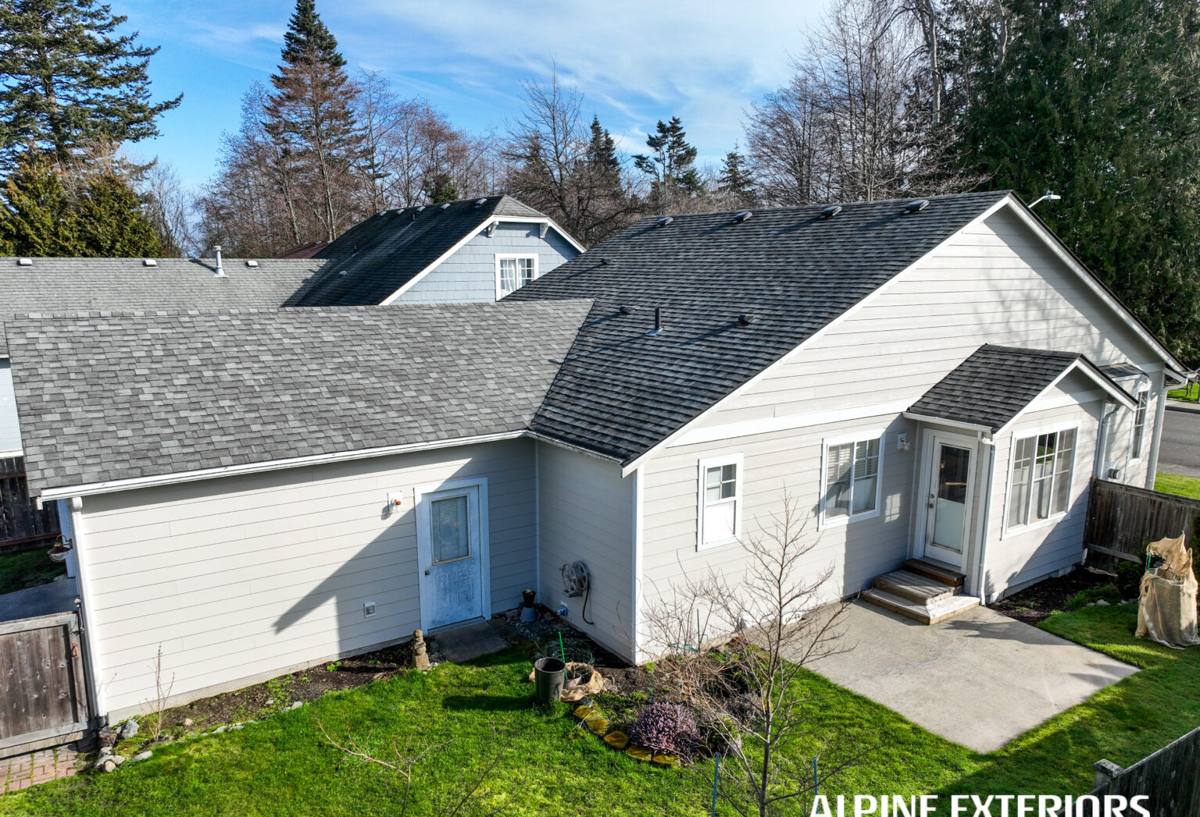
What We Typically See on Bellingham Homes
Moisture That Doesn't Let Up
Unlike a lot of the country, this area doesn't get a hard dry season that lets building materials fully rest. Wood-based siding products — cedar, primed spruce, and similar — depend on periodic drying to stay stable. When that drying window keeps getting interrupted by the next rain event, you get swelling, cupping, and eventually rot at the most vulnerable points: butt joints, bottom edges, and anywhere caulking has started to fail.
Moss and Algae
Bellingham's tree cover and cloud cover are great for a lot of things and terrible for siding that can't shed moisture quickly. Moss and algae growth on north-facing walls, under eaves, and in shaded side yards is common, and once it establishes on a porous or textured surface, it's a maintenance cycle that never really ends — power wash it off this year, watch it creep back next year.
Salt Air Near the Water
Homes closer to Bellingham Bay deal with airborne salt that speeds up corrosion on nails, screws, and any exposed metal trim or flashing. It also interacts with paint and coatings over time, which is part of why we pay close attention to fastener choice and flashing details, not just the siding panel itself.
Why We Only Install James Hardie Fiber Cement Siding
We get asked fairly often why we don't offer vinyl, LP SmartSide, or other engineered wood options. The honest answer is that we made a call, based on what holds up in this specific climate, to standardize on one product system rather than sell whatever a homeowner asks for.
Vinyl is inexpensive and low-maintenance in the sense that it doesn't need painting, but it's a petroleum-based product that can warp or become brittle over time, and it doesn't hold up well to the kind of impact or wind exposure some Whatcom County properties see. Engineered wood products like LP SmartSide use wood strand technology with a resin binder, which performs reasonably well when installation details are followed exactly — but any wood-based product is inherently more sensitive to sustained moisture exposure than fiber cement, and sustained moisture is exactly what this climate delivers. We'd rather not install a product where the margin for installation error is that thin, in a climate that doesn't forgive mistakes.
James Hardie fiber cement is cement, sand, and cellulose fiber — it's non-combustible, it doesn't feed moss and algae the way organic wood fiber can, and it's engineered specifically for the swelling and moisture issues that wood-based sidings face. It costs more upfront than vinyl and generally more than engineered wood. We think the trade-off is worth it for a house that's going to sit through forty or more Bellingham winters.
James Hardie's Climate-Engineered Product Lines
James Hardie doesn't make one generic siding product — they engineer regional formulations, and the Pacific Northwest falls under their HZ5 climate zone designation, built around moisture and freeze-thaw performance rather than the fire- and moisture-resistance blend used in hotter, drier regions. That distinction matters more here than most homeowners realize.
| Product Line | Best Use | Notes for Bellingham |
|---|---|---|
| HardiePlank lap siding | Most common choice, traditional lap look | Available in smooth or cedar-textured finish; handles driving rain well when lapped and flashed correctly |
| HardiePanel vertical siding | Modern/board-and-batten looks, accent walls | Popular for garages, gables, and contemporary remodels |
| HardieShingle | Shingle-style accents, historic character | Works well on Craftsman and cottage-style homes common in this area |
| HardieTrim | Fascia, corner boards, window trim | Pairs with any of the above for a finished, uniform system |
All of it comes with a factory-applied ColorPlus finish baked on under controlled conditions, which holds color more consistently than field-applied paint and resists the fading and chalking that gray, low-sun climates like ours can accelerate on lesser coatings. Hardie backs the product with a strong transferable limited warranty, which matters if a homeowner sells within the coverage period — something to actually confirm in writing rather than assume.
Fiber Cement vs. the Alternatives, Side by Side
| Factor | James Hardie Fiber Cement | Vinyl | Engineered Wood (LP SmartSide, etc.) |
|---|---|---|---|
| Moisture tolerance | High — cement-based, resists swelling | Doesn't absorb moisture, but can trap it behind panels if not flashed well | Moderate — sensitive to sustained wet exposure |
| Moss/algae resistance | Doesn't feed organic growth; surface can still need washing | Similar — non-organic surface | More prone to surface growth being organic-based |
| Fire rating | Non-combustible | Combustible | Combustible |
| Color retention | Factory ColorPlus finish, long fade resistance | Can fade and become brittle with UV/age | Requires field paint, needs repainting over time |
| Upfront cost | Higher | Lowest | Mid-range |
| Installation sensitivity | Moderate — correct fastening and clearances matter | Low | High — moisture management is critical |
Installation Details We Don't Skip
Fiber cement performs the way it's rated to perform only when it's installed correctly, and a lot of the failures we get called out to inspect on other contractors' work trace back to shortcuts at install, not the product itself. In a climate like Bellingham's, we're especially strict about:
- Proper starter strip and clearance from grade, decks, and roof lines so water has somewhere to go
- Correct fastener type and spacing — stainless or coated fasteners matter more this close to the water
- Rain-screen or drainage plane behind the siding so any moisture that does get past the surface can drain and dry
- Flashing at every window, door, and penetration, not just caulking over gaps
- Properly lapped joints and sealed butt joints to shed wind-driven rain instead of catching it
- Following Hardie's published fastening and clearance specs, which is what keeps the manufacturer's warranty valid
None of this is exotic. It's just detail work that takes longer to do right, and it's the difference between siding that looks good for a season and siding that holds up through decades of Whatcom County weather.
More Than Siding: Roofing, Windows, and Decks
Siding rarely fails in isolation — a roof leak, a failed window seal, or a rotting deck ledger board can all send moisture into a wall system that otherwise would have been fine. Because we handle roofing, windows, and decks in addition to siding, we look at a Bellingham home's exterior as one connected system rather than a siding job with blinders on. A roof inspection during a siding estimate, for example, often catches flashing or gutter issues that would undermine new siding within a few years if left alone. Window replacement done alongside a siding project also lets us integrate flashing and trim properly the first time, instead of working around old, possibly failing window flashing later.
A Practical Maintenance Checklist for Bellingham Homeowners
- Rinse siding annually, focusing on north-facing and shaded walls where moss and algae build up fastest
- Keep gutters clear so overflow doesn't run directly down exterior walls
- Trim back vegetation and tree limbs that keep siding shaded and damp
- Inspect caulking around windows, doors, and trim joints each fall before the wet season sets in
- Watch for soft spots, discoloration, or bubbling paint, especially near the ground and around deck ledgers — early signs of moisture intrusion
- If you're near the water, rinse salt residue off metal trim and fasteners periodically
Why a Local Crew Makes a Difference
A crew that works Whatcom County year-round knows what a Bellingham winter actually does to a house, not just what a spec sheet says. We know which details matter more here than they would in a drier climate, we're available if something needs a warranty follow-up, and we're not driving in from out of the area to chase a one-off job. That local accountability is part of why we stand behind both the product and the installation.
If you're weighing a siding project in Bellingham — or want a second opinion on roofing, windows, or a deck alongside it — we're happy to take a look and give you a straightforward, no-pressure estimate. There's no obligation, and you'll walk away with a clear picture of what your home actually needs.