 Ferndale Siding
 What Blaine and Ferndale Homes Are Up Against
Blaine sits right on the water at the northern edge of Whatcom County, close enough to the Canadian border that the marine influence is part of daily life. Ferndale, a short drive south, shares that same weather system — persistent moisture, a long wet season, and enough salt-laden air near the shoreline to matter for anything nailed to the outside of a house. If you've owned a home out here for more than a few years, you've probably already noticed it: paint that fails faster than it should, trim that stays damp longer than it looks like it should, and green growth on the north side of the house that keeps coming back no matter how many times you scrub it off.
None of that is unusual for this part of Washington. It's just what the climate does. The difference is in how a home's exterior is built and installed to handle it — and that's where a lot of siding problems in this area actually start.
Salt Air: The Slow, Quiet Damage
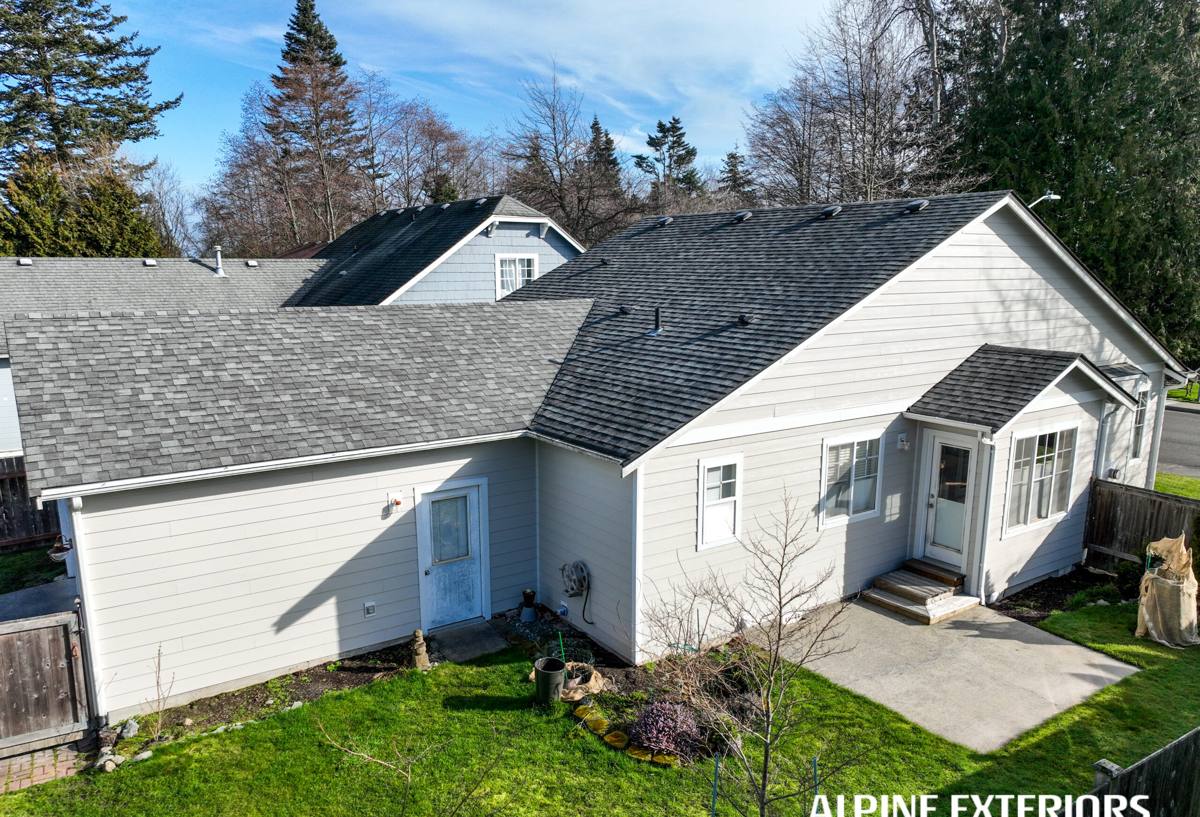
Homes closer to the water in Blaine deal with airborne salt in a way that inland properties don't. Salt air doesn't cause dramatic failures overnight — it works slowly, settling on exterior surfaces and accelerating corrosion on fasteners, flashing, and metal trim. Over years, that shows up as rust streaks bleeding through paint, corroded nail heads telegraphing through siding, and finish coats that chalk and fade faster than the manufacturer's warranty would suggest they should.
Wood-based siding products are particularly vulnerable here. Salt-laden moisture gets into end grain and seams, and once it's in, it doesn't leave quickly. Untreated or under-treated fasteners are often the first thing to go, and a failed fastener at the coast is a faster problem than the same failed fastener inland, simply because there's more salt in the air working against it around the clock.
Where Salt Exposure Shows Up First
- Fastener heads and any exposed metal trim or flashing
- Corners and seams where caulking is the only thing keeping moisture out
- South and west-facing walls that take the brunt of wind off the water
- Painted wood surfaces, where finish failure exposes bare material to salt air directly
Driving Rain and Wind-Driven Moisture
Whatcom County doesn't get the heaviest rainfall totals in Western Washington, but what it does get often arrives sideways. Storms moving in off the water bring wind-driven rain that doesn't just fall on a house — it gets pushed into laps, seams, and any gap in the siding system that isn't properly sealed and flashed. This is a different kind of stress than straight-down rain. It tests the actual water management of the wall assembly, not just the surface material.
This is where installation quality matters as much as the product itself. A siding system with the right water-resistant barrier, correctly lapped flashing, and proper gaps for drainage will shed wind-driven rain without issue. The same product installed with shortcuts — tight-to-the-trim clearances, missing flashing, caulk used in place of proper detailing — will let moisture in eventually, regardless of what the siding itself is made of. We see this pattern often enough on inspections that it's worth homeowners understanding: a siding failure is very often an installation failure, not just a material one.
Moss Season: Longer Here Than Most Homeowners Realize
Between the mild temperatures, the persistent moisture, and the amount of tree cover common to lots in and around Ferndale, moss and algae growth on exteriors isn't a seasonal nuisance — it's close to a year-round condition on shaded or north-facing walls. Moss holds moisture against whatever it's growing on, and on organic siding materials that means sustained dampness exactly where it does the most damage: right at the surface where paint, primer, or factory coatings are supposed to be doing their job.
Roofs get the most attention for moss because it's visible from the street, but siding, especially under eaves and on walls that don't get much direct sun, deals with the same growth pattern. A siding material that can't tolerate sustained surface moisture without swelling, softening, or absorbing it into the substrate is fighting a losing battle against a climate that simply doesn't dry out walls quickly in the shade.
Practical Steps That Reduce Moss and Moisture Buildup
- Keep gutters clear so runoff isn't sheeting down siding walls
- Trim back vegetation and tree limbs that shade walls and restrict airflow
- Address roof-to-wall flashing details before they let water track behind siding
- Choose a siding material engineered to resist moisture absorption, not just repel it on the surface
Why We Only Install James Hardie Fiber Cement
We get asked fairly often why we don't offer vinyl, LP SmartSide, or a cedar or primed wood option alongside Hardie. The honest answer is that after years of working on homes in this exact climate — salt air near the water, driving rain off the strait, moss season that barely lets up — we stopped seeing a good case for installing anything else long-term.
James Hardie fiber cement is engineered specifically for moisture-heavy climates like this one. It's non-combustible, it doesn't swell or rot when it stays damp, and it holds its factory-applied ColorPlus finish far longer than field-applied paint holds up on wood-based products exposed to this much airborne moisture and salt. Hardie's HZ5 product line is built for exactly the kind of climate zone Whatcom County sits in — a materials engineering response to real regional weather patterns, not a generic siding product sold everywhere.
We're not saying other siding products don't have a place somewhere. Vinyl has its market. LP SmartSide has genuine fans. Cedar has a look some homeowners love. But for a coastal Whatcom County home dealing with salt air, wind-driven rain, and a moss season that doesn't really end, we've made the call that Hardie fiber cement gives homeowners the best combination of durability, low maintenance, and a warranty that actually holds up to what this climate does to a house.
How Common Siding Materials Hold Up to This Climate
| Material | Salt Air Resistance | Wind-Driven Rain | Moss / Moisture Tolerance |
|---|---|---|---|
| James Hardie Fiber Cement | Strong, engineered for coastal exposure | Excellent when properly installed | Non-organic, resists sustained moisture |
| Vinyl | Can chalk and fade near salt exposure | Prone to gaps allowing moisture behind panels | Doesn't rot, but traps moisture behind it |
| LP SmartSide | Wood-based, sensitive to sustained moisture | Requires precise sealing at seams | Vulnerable if coating is compromised |
| Cedar / Primed Wood | Needs frequent refinishing near salt air | High maintenance to keep sealed | Most susceptible to organic growth |
Siding Doesn't Work Alone — The Whole Exterior Matters
A house is a system. Siding, roofing, windows, and decks all interact with the same water and weather, and a weak point in one usually shows up as damage somewhere else. Roof flashing that's failing will send water behind siding it never should touch. Windows that aren't properly flashed will leak into wall cavities regardless of how good the siding is. Decks exposed to the same driving rain and moss conditions need the same kind of climate-aware material and installation thinking.
Because we handle siding, roofing, windows, and decks, we look at a home's exterior as one connected system rather than a series of unrelated projects. That matters most in a climate like this one, where water finds the weakest transition point — roof to wall, window to siding, deck ledger to house — and works on it patiently, season after season.
Why a Local Crew Makes a Real Difference
Siding installation guidance from a manufacturer is written for a wide range of climates. What a crew that actually works in Whatcom County brings is judgment about how those general guidelines need to be applied here — where extra flashing attention matters most, which wall orientations take the worst of the weather off the water, and where moss and shade are going to be an ongoing maintenance factor no matter what material goes up.
A crew that only occasionally works this far north and this close to the coast doesn't build that judgment. It comes from repetition — seeing how houses in Blaine and Ferndale actually age, what fails first, and what installation details hold up over the long run in this specific combination of salt, rain, and shade.
What to Look For in a Local Exterior Contractor
- Experience specifically with coastal Whatcom County conditions, not just general Western Washington work
- Clear explanation of flashing and water management details, not just material choice
- A manufacturer-backed warranty that's actually transferable and meaningful
- Willingness to talk through trade-offs of different siding materials honestly, including the ones they don't install
- Local references and a track record of return visits for warranty or maintenance work, not just new installs
Getting Started
If you're noticing early wear on your home's exterior — fading, staining, moss creeping up a shaded wall, or trim that never seems to fully dry out — it's worth having a local crew take a look before those small signs turn into a larger repair. We'd be glad to walk your property, talk through what we're seeing, and put together a free, no-pressure estimate for your siding, roofing, window, or deck project. Fill out the form below and we'll get in touch.