 Ferndale Siding
 Custer Sits Right Where Puget Sound Weather Gets Tested
Custer is a small, spread-out community north of Ferndale, tucked between farmland, timber, and the shoreline influence of Birch Bay and the Strait of Georgia. Homes here get a version of Whatcom County weather that's a little harsher than what you'd find further inland: salt-laden air moving off the water, long stretches of driving rain in the fall and winter, and shaded, damp lots that stay wet for weeks at a time. None of that is dramatic on any single day. It's the accumulation, year after year, that determines whether a home's exterior holds up or starts showing problems by year eight or ten.
We work across the Ferndale area, and Custer is one of the communities where we see the clearest evidence of what marine exposure does to the wrong siding material. This page covers what local homes tend to face, how our siding, roofing, window, and deck work is approached for this specific environment, and why we install only one type of siding material on every home we side.
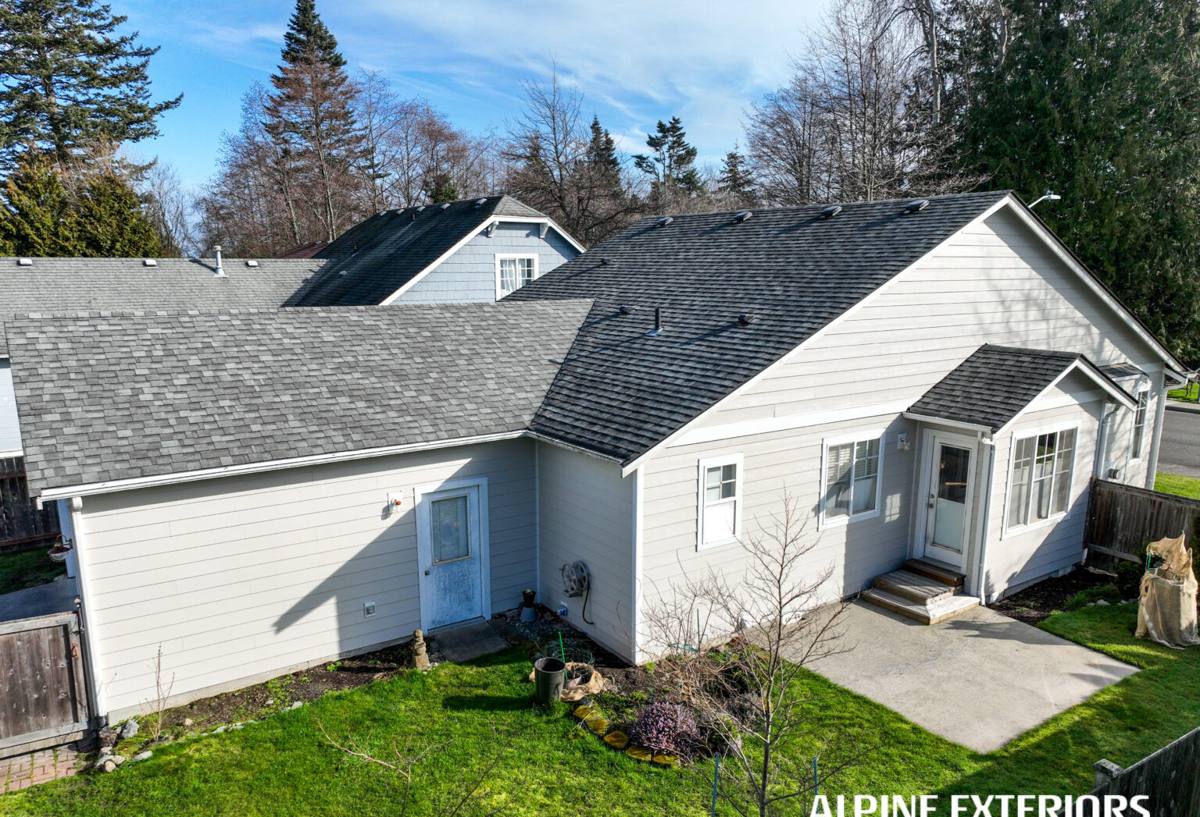
What Salt Air and Coastal Moisture Actually Do to a House
"Salt air" isn't just a coastal cliché. Airborne salt is mildly corrosive and hygroscopic, meaning it pulls moisture out of the air and holds it against whatever surface it lands on. On a house, that means fasteners, flashing, and siding surfaces spend more time damp than they would a few miles further from open water. Combine that with Western Washington's rain volume and you get a longer effective "wet season" than most of the country deals with.
Why This Matters More for Some Materials Than Others
Wood-based products swell and shrink with moisture cycles, and repeated wetting accelerates rot at joints, butt seams, and anywhere caulk has failed. Vinyl doesn't rot, but it can warp, fade unevenly under coastal sun and salt exposure, and it isn't fire-resistant. Fiber cement, by contrast, doesn't absorb moisture the way wood does and doesn't soften or deform with temperature swings, which is a large part of why we've standardized on it for this region.
Moss Season Is Longer Here Than People Expect
Whatcom County's combination of mild temperatures, high humidity, and long shaded stretches through fall, winter, and spring creates ideal conditions for moss and algae growth on north-facing walls, under eaves, and anywhere sun doesn't reach for most of the day. On wood or wood-composite siding, trapped moss holds moisture directly against the substrate, which is exactly the condition that leads to soft spots and rot over time. On fiber cement, moss and algae can still grow on the surface, but because the substrate itself isn't organic, surface growth doesn't translate into structural decay the same way — routine washing keeps it in check rather than fighting a slow-motion failure underneath.
Our Services for Custer Homes
We handle the full exterior envelope, not just siding, because on a coastal-influenced property these systems all interact. A roof leak that goes unnoticed for a season will show up as siding damage. A window flashed incorrectly will feed water behind the wall assembly regardless of how good the siding is.
- Siding — full tear-off and re-side, or targeted repair and repaint prep, always with attention to the water-resistive barrier underneath.
- Roofing — replacement and repair, with an eye toward how roof edges, valleys, and penetrations tie into siding and trim.
- Windows — replacement with correct flashing integration, which matters more here than the window brand itself.
- Decks — built and repaired for a climate where lumber sees near-constant damp cycling for months at a time.
Because we do all four, we can look at a Custer property as one connected system rather than four separate trades that don't talk to each other.
Why We Install Only James Hardie Fiber Cement Siding
We get asked fairly often why we don't offer vinyl, LP SmartSide, or other fiber cement brands. It's a fair question, and the honest answer is that we made a standard, not a sales pitch.
Non-Combustible and Dimensionally Stable
James Hardie siding is fiber cement — it doesn't burn, and it doesn't expand and contract with moisture the way wood-based products do. In a climate where a house might be genuinely wet for weeks at a stretch, that stability matters more than it does in a drier region.
Climate-Engineered Product Lines
Hardie makes region-specific formulations — its HZ5 line, for example, is engineered for markets with more freeze-thaw cycling and moisture exposure, which fits the Pacific Northwest better than a one-size-fits-all product.
ColorPlus Factory Finish
Instead of field-painting after installation, ColorPlus is baked on at the factory in controlled conditions, which gives more even coverage and better fade resistance than a job-site paint job exposed to Whatcom County humidity before it's fully cured.
Warranty That Follows the House
Hardie's warranty is transferable to a future owner, which matters to buyers and to resale value — something worth factoring in even if you're not planning to sell anytime soon.
We're not saying every other product is a bad product in general. We're saying that for the specific combination of salt air, sustained rain, and moss exposure that Custer and the surrounding Ferndale area deal with, fiber cement from Hardie is the material we're willing to stand behind and warranty our labor on.
What Correct Installation Looks Like in This Environment
Material choice only gets you halfway. Installation quality determines whether that material performs for 30+ years or fails early despite being the right product on paper.
Water Management Behind the Siding
A correctly installed weather-resistive barrier, properly lapped flashing at every window and door, and rainscreen or drainage gap detailing where called for all matter more in a wet coastal climate than in a dry one. Water that gets behind the cladding needs somewhere to drain and dry out.
Fastening and Clearances
Hardie specifies fastener types, spacing, and minimum clearances from grade, decks, and roof lines. Skipping these specs is one of the most common ways a fiber cement installation underperforms — the material gets blamed for what was actually an installation shortcut.
Caulking and Joint Treatment
Butt joints, trim transitions, and penetrations need the right sealant, applied correctly, and checked periodically. In a climate with this much annual rainfall, a neglected joint is where moisture problems start.
Cost Factors for Custer and Nearby Areas
Every property is different, but these are the variables that tend to move the price on a project in this area:
| Factor | Why It Matters Here |
|---|---|
| Home size and wall complexity | More corners, gables, and trim details mean more labor and material waste factor |
| Existing siding removal | Tear-off and disposal of old wood or vinyl adds time versus a bare-wall install |
| Substrate condition | Rot repair from prior moisture damage is common on older coastal-exposed homes |
| Siding profile and trim package | Lap width, shingle-style accents, and trim detail level affect material cost |
| Access and site conditions | Tree cover, slope, and driveway access affect equipment and labor time |
| Combined scope | Bundling siding with roofing, windows, or decks can reduce mobilization overlap |
We walk every property in person before quoting, because a Custer lot tucked under fir trees with heavy moss exposure is a different job than an open, sun-exposed property a mile away, even if the square footage is similar.
Why a Local Crew Matters
A crew that works Whatcom County regularly knows which details actually matter here — where moss builds up fastest, which wall orientations take the worst of the driving rain, how much clearance to leave at grade given how wet the ground stays. That's the kind of judgment that doesn't come from a spec sheet; it comes from having worked on enough homes in this specific area to see the same failure patterns repeat and to build in the fixes as standard practice, not an upsell.
Maintenance Checklist for Coastal-Influenced Homes
Whatever siding a home has, a little seasonal attention goes a long way in this climate:
- Rinse siding annually to remove salt residue and slow algae/moss buildup, especially on north- and west-facing walls
- Keep gutters clear so overflow doesn't run down the siding face or pool at the base of walls
- Trim back vegetation and tree limbs that keep wall sections shaded and damp
- Inspect caulking at trim and window joints every year or two and re-seal where it's cracked or pulled away
- Check deck ledger boards and fasteners for moisture damage, since decks see similar wet-cycling stress
- Address roof leaks quickly — a small roof issue becomes a siding and sheathing issue if it's ignored
If you're weighing a siding, roofing, window, or deck project on a Custer property, we're happy to take a look and walk you through what your specific home is dealing with. The estimate is free, there's no pressure attached, and you'll get a straight answer about what actually needs attention versus what can wait.