 Ferndale Siding
 Why This Comparison Matters in Whatcom County
If you're re-siding a home in Ferndale, you've almost certainly run into two products dominating the conversation: vinyl and fiber cement. Both are sold as "low-maintenance" siding, both come in dozens of colors, and both get installed all over Whatcom County every year. But they are not interchangeable products, and the differences show up most clearly in exactly the conditions we deal with here — salt air rolling in off Bellingham Bay and the Strait of Georgia, driving rain off the water, and a moss season that can stretch from October through May.
This page lays out the real trade-offs, not marketing claims. We install only James Hardie fiber cement siding, so you should know that going in. But the goal here is to give you enough honest information to make your own call — including what vinyl does well, because it does some things well.
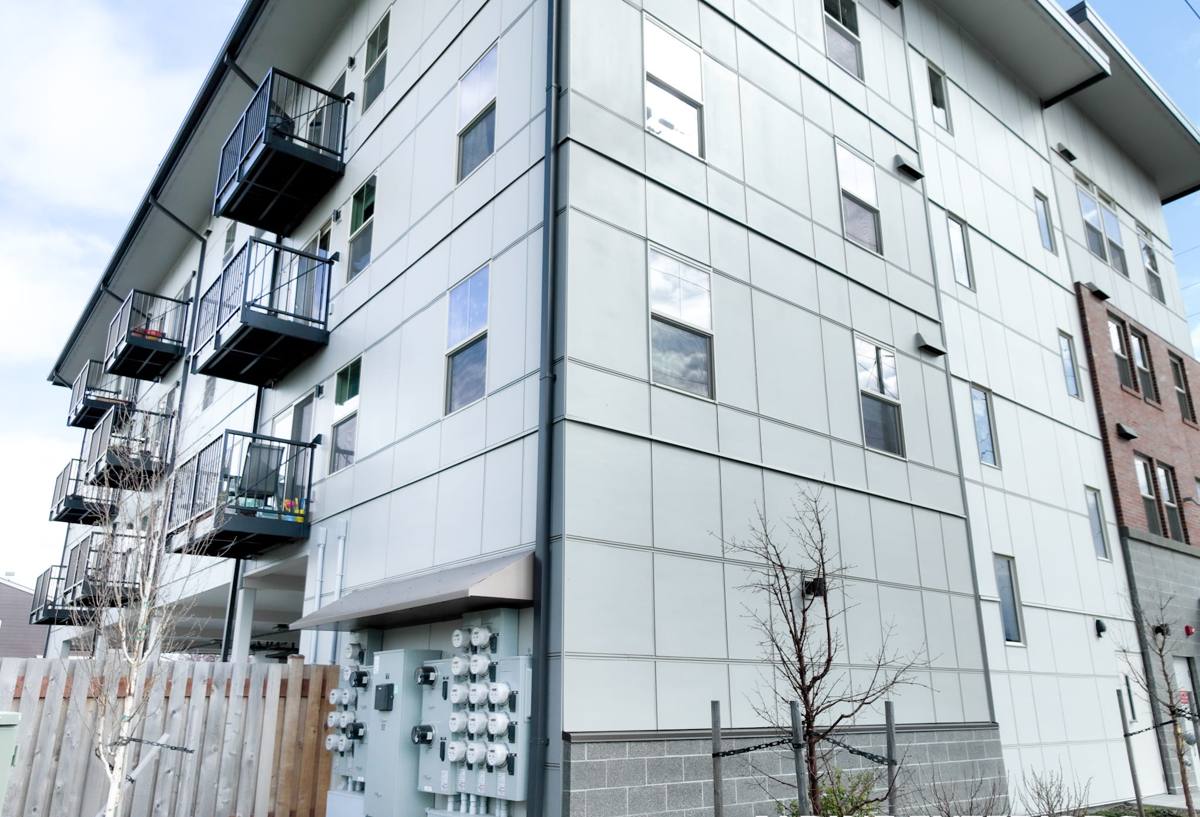
What Vinyl Siding Gets Right
Vinyl has stayed popular for real reasons. It's worth being straight about them:
- Lower upfront material and labor cost — vinyl is lighter and faster to install, which usually shows up as real savings on your quote.
- No painting required — color is mixed through the material, not applied as a surface coating.
- Reasonably weather-resistant — modern vinyl handles rain fine when it's installed correctly with proper flashing and drainage behind it.
- Wide availability — most siding crews in the Pacific Northwest can install it, and replacement panels are easy to source.
If budget is the deciding factor and you're planning to move in a few years, vinyl is a legitimate, honest choice. We're not going to pretend otherwise.
Where Vinyl Struggles in Our Climate
Moisture Behind the Panels
Vinyl siding is designed to be a rain screen, not a sealed barrier — water is expected to get behind it, and the house wrap and flashing underneath are doing the real work of keeping your walls dry. That's a fine system when it's installed with real attention to detail. The problem is that vinyl is unforgiving of shortcuts: gaps at seams, undersized flashing, or panels nailed too tight all become moisture pathways. In a climate like Ferndale's, where driving rain off the water and long stretches of damp weather are the norm rather than the exception, those shortcuts catch up with a house faster than they would in a drier region.
Heat and Impact Behavior
Vinyl softens in direct heat and can warp or buckle if a dark color absorbs too much sun, or if a grill or reflective window glare hits it directly. It also becomes brittle in cold snaps and can crack on impact — a thrown rock, a ladder bump, a hard hailstone. Once a panel cracks, matching the exact color years later is often difficult because vinyl fades unevenly and older color runs get discontinued.
The Moss and Algae Factor
This is the one that catches a lot of Whatcom County homeowners off guard. Vinyl's smooth, slightly porous surface — especially on north-facing walls and anything shaded by trees or a neighboring structure — is a good substrate for algae and moss growth during our long wet season. It's not a structural problem, but it means regular pressure washing to keep the siding looking clean, and homeowners who skip that maintenance end up with green-streaked walls within a few years.
What Fiber Cement Does Differently
James Hardie fiber cement is a fundamentally different material — it's a mix of cement, sand, and cellulose fiber, pressed and cured into planks or panels, then finished. That composition changes its behavior in ways that matter directly for this climate:
| Factor | Vinyl | James Hardie Fiber Cement |
|---|---|---|
| Moisture resistance | Relies on drainage plane behind panels | Engineered HZ formulations resist moisture damage directly in the material |
| Impact resistance | Can crack or shatter, especially in cold | Dense, rigid board resists dents and cracking |
| Fire behavior | Combustible, can melt/warp near heat | Non-combustible |
| Color stability | Fades over time, no repainting option (color is the material) | ColorPlus factory finish is baked on and warrantied against fading/peeling |
| Wind/impact rating | Can flex, warp, or blow off in high wind if under-fastened | Rated for high wind exposure when installed to spec |
| Typical lifespan installed correctly | 20-30 years | 30-50+ years |
| Upfront cost | Lower | Higher |
The wind and moisture columns matter more here than they would somewhere inland. A house facing the water in Ferndale or out toward Birch Bay takes more sustained wind-driven rain over a winter than a comparable house in, say, eastern Washington. Fiber cement's rigidity and moisture-engineered composition are a direct answer to that exposure.
Why We Standardized on Hardie
We made a decision as a company to install only James Hardie fiber cement — not LP SmartSide, not vinyl, not Cemplank or Allura, not primed spruce or cedar. That's a narrower offering than most siding contractors run, and it's worth explaining why.
Every one of those alternative products has a legitimate use case somewhere. But once we started evaluating them specifically against Whatcom County's salt air, sustained rain, and moss-heavy shoulder seasons, the trade-offs kept landing the same way: either the moisture tolerance wasn't there, the finish required more homeowner maintenance than we were comfortable promising, or the warranty structure put more risk back on the homeowner than we thought was fair. Hardie's HZ10 product line specifically is engineered for cold and moist climate zones, which the Pacific Northwest falls squarely into. Standardizing on one system also means our crews install it constantly — the same flashing details, the same fastening patterns, the same finish work — rather than switching techniques project to project. That repetition is where installation quality actually comes from.
The Installation Question — Bigger Than the Product
Here's something both vinyl and fiber cement salespeople tend to underplay: the product matters less than the installation. A poorly installed fiber cement job with a wrong nailing pattern, missing kick-out flashing, or panels butted too tight will trap moisture and fail early, regardless of how good the material is. A carefully installed vinyl job, with proper overlaps and flashing, will genuinely outperform a rushed fiber cement job.
That said, fiber cement gives you less room for a bad installer to hide problems — if it's done wrong, it tends to show up sooner (cracking, staining, gapping) rather than silently rotting behind the wall. Vinyl's forgiving-looking surface can mask a bad job for years before water damage becomes visible.
What to Ask Any Contractor Before Hiring
- What's your specific flashing detail at windows, doors, and roof-to-wall intersections?
- Are you manufacturer-certified to install the product you're proposing?
- What does the warranty actually cover — material only, or labor too, and for how long?
- Can you walk me through your fastening pattern and why it's appropriate for this house's exposure?
- Who's doing the actual install — your crew, or subcontracted labor?
Cost Over the Life of the Siding
Vinyl's lower upfront cost is real, but it's not the whole financial picture. Fiber cement's ColorPlus finish is warrantied against fading and doesn't need repainting on the same cycle that primed wood or field-painted products do. Its longer service life also means fewer full re-siding cycles over the time you own the home. Vinyl's ongoing costs are mostly maintenance — periodic washing to manage moss and algae, and eventual replacement when panels crack, fade unevenly, or a wind event tears sections loose.
Neither product is "free" over 30 years. The honest way to think about it: vinyl trades a lower purchase price for more maintenance and a shorter lifespan; fiber cement trades a higher purchase price for less maintenance and a longer lifespan. Which one is the better deal depends on how long you plan to own the house and how much you value not thinking about your siding for the next two decades.
Making the Call for Your House
If you're planning to sell within a few years and budget is tight, vinyl is a defensible, honest choice — we won't tell you otherwise. If you're staying long-term, especially in a home with real exposure to wind-driven rain off the water, direct sun on a south or west wall, or shaded north-facing walls prone to moss, fiber cement's durability and lower maintenance burden tend to pay for the cost difference over time.
We're not going to install vinyl for you — that's a line we've drawn as a company — but we'll always tell you honestly if fiber cement isn't the right fit for your budget or timeline, and point you toward what to look for elsewhere.
If you'd like to see how James Hardie siding would look and perform on your specific home, we're happy to come take a look and put together a straightforward, no-pressure estimate.