 Ferndale Siding
 What Primed Wood Siding Actually Is
Primed spruce siding is solid wood board siding, milled from spruce or a similar softwood, that comes from the mill with a factory primer coat instead of raw, unfinished wood. It's been a staple in the Pacific Northwest for generations because it's straightforward to work with, it takes paint well, and it gives a home that traditional lap-siding look a lot of buyers in Whatcom County want. You'll still see it specified on new construction, especially where a builder is trying to hit a lower material cost or match an existing wood-sided neighborhood.
We get asked about it regularly, usually by homeowners comparing bids or by people who grew up in a wood-sided house and want the same look on their next one. This page is our honest answer for why, after years of doing exterior work in Ferndale and the rest of Whatcom County, primed spruce is not a product we install anymore.
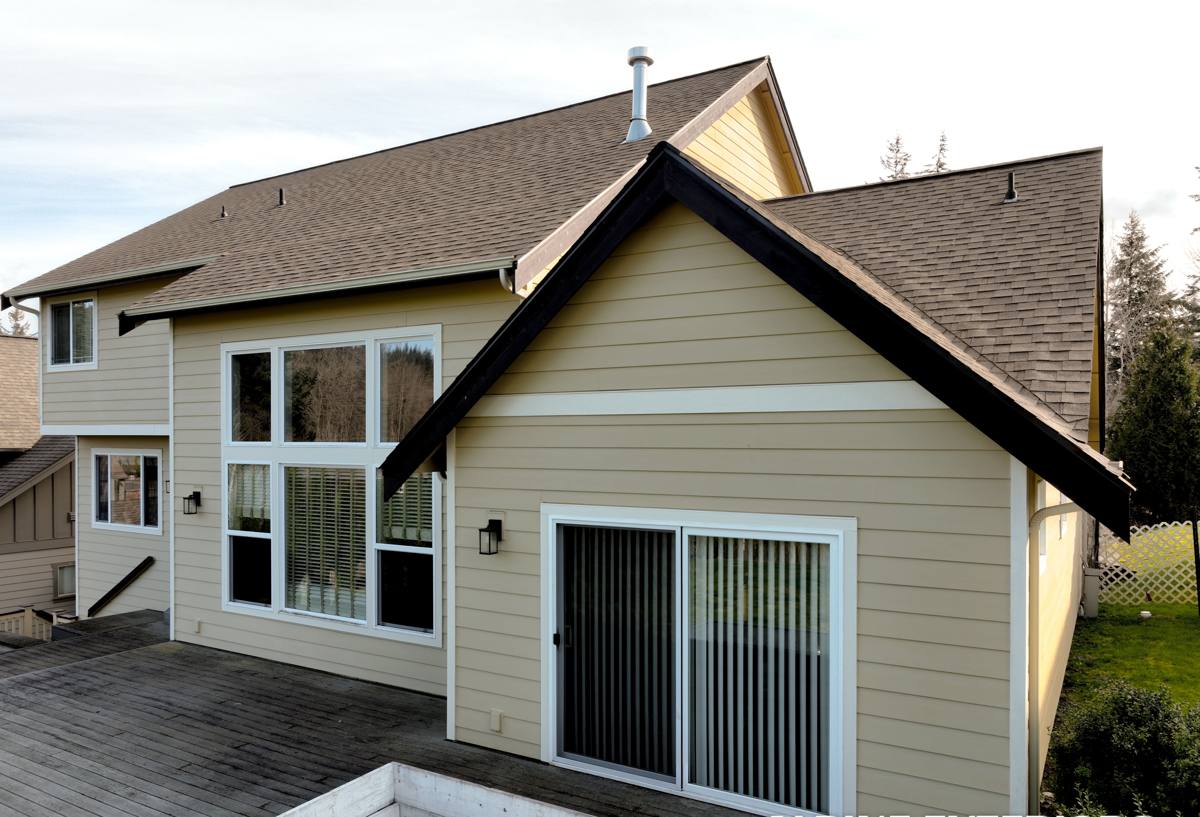
What Primed Spruce Gets Right
We're not going to pretend this is a bad product with nothing going for it. Primed wood siding has real strengths, and they're worth naming before we get into the trade-offs:
- Lower upfront material cost than most fiber cement or engineered wood options
- A genuine, traditional wood grain and profile that some homeowners specifically want
- Easy to cut, fit, and repair with basic carpentry tools
- Familiar to most painting contractors, so touch-up work is rarely hard to find
- Renewable material, which matters to some homeowners on principle
If cost and that specific wood look are the top priorities, and the homeowner is fully prepared for the upkeep, primed wood is a legitimate choice. Our decision not to install it isn't about the product being a scam or junk. It's about what we've seen happen to it over time in this specific climate, and what that means for the homeowner's wallet and time.
Why Whatcom County's Climate Is Hard on Primed Wood
Ferndale sits close enough to the Strait of Georgia and Bellingham Bay that salt air is a real factor on exterior materials here, not a coastal-town cliché. Salt-laden moisture accelerates the breakdown of paint films and speeds corrosion on fasteners and trim hardware. Combine that with the driving rain that comes through on winter storms — rain that hits siding at an angle instead of falling straight down — and you get water finding its way into every seam, lap joint, and nail hole that isn't perfectly sealed.
Then there's moss. Whatcom County's long wet season, especially the stretch from October through April, keeps north- and shade-facing wall surfaces damp for extended periods. Moss and algae don't just look bad on wood siding — they hold moisture against the surface, which keeps the wood wet longer after every rain event and works against whatever protection the paint film is providing.
None of this is unique to Ferndale, but it's more pronounced here than in a drier inland climate. Wood siding installed in eastern Washington can go longer between maintenance cycles than the same product installed a few blocks from the water in Whatcom County.
What "Primed" Actually Protects Against
It's worth being precise about what a factory primer coat does and doesn't do. Primer is a base layer meant to help topcoat paint adhere — it is not a finished, weather-sealed surface. Until a full paint system goes on and the board is properly sealed on all six sides (including the back and the cut ends), primed wood is still bare, absorbent wood underneath a thin protective layer. Any lapse in that system, and moisture has a direct path in.
The Maintenance Reality Homeowners Don't Always Hear Upfront
This is the core of why we stopped installing it. Primed wood siding is a system that depends on ongoing homeowner maintenance to perform, not a product you install once and leave alone. In a climate with the rain and moss exposure Ferndale gets, that maintenance schedule tends to be tighter than most homeowners expect when they're comparing initial bids.
| Maintenance Task | Typical Frequency in This Climate | Consequence If Skipped |
|---|---|---|
| Full repaint / recoat | Every 5-8 years, sometimes sooner on sun- or salt-exposed walls | Paint film cracks and lets water behind it, accelerating rot |
| Caulk inspection and renewal at joints/trim | Annually | Water tracks into seams and end grain, hidden rot begins |
| Moss and algae removal | 1-2 times per year on shaded elevations | Prolonged surface moisture, paint failure, staining |
| Spot repair of dings and cracked boards | As needed, but promptly | Exposed raw wood becomes a moisture entry point |
Every item on that list is manageable in isolation. The problem is they don't happen in isolation — they're a recurring, permanent line item in a homeowner's yearly to-do list for as long as the siding is on the house. Skip one cycle because of a busy year or a tight budget, and you're not just deferring cosmetic work, you're letting moisture get a foothold in a material that rots.
Moisture Behavior and Rot Risk
Wood is hygroscopic — it absorbs and releases moisture with changes in humidity and temperature. That's normal for wood as a building material, but it's also exactly why paint film integrity matters so much. Once the paint cracks, chips, or pulls away at a seam, the wood underneath starts cycling between wet and dry, which is the exact condition that leads to rot, cupping, and fastener pull-through over time.
The most common failure point we've seen isn't the flat face of the board — it's the end grain at butt joints and around window and door trim. End grain absorbs water far faster than the face of the board, and if it wasn't back-primed and sealed correctly during installation, it becomes a wick that pulls moisture straight into the board regardless of how well the front face is maintained.
Installation Sensitivity
Primed wood siding is far less forgiving of installation shortcuts than most homeowners realize. Getting a durable result requires:
- Back-priming and sealing every cut end on site, not just relying on the factory primer on the face
- Correct lap and gap spacing to allow for wood movement without opening gaps that catch water
- Proper flashing and drainage detailing behind the siding, especially at windows, doors, and butt joints
- Corrosion-resistant fasteners set to the right depth — overdriven nails crack the primer and create entry points
- A full, correctly applied paint system within the manufacturer's recommended window after installation
Any one of these steps done poorly shortens the siding's service life, often in ways that don't show up until years later when the damage is already done. That sensitivity to installation quality, stacked on top of the ongoing maintenance burden, is a lot of risk for a homeowner to carry for a product that, face to face, doesn't cost dramatically less than better-performing alternatives once you account for the paint cycles.
Warranty Structure
Primed wood siding warranties are typically limited to material defects in the board itself — manufacturing flaws, not performance in the field — and they generally don't cover paint failure, moisture damage, or rot, since those outcomes are considered dependent on installation and homeowner maintenance rather than the product. That's a reasonable position for a manufacturer to take given how much field performance depends on factors outside their control, but it also means the homeowner is carrying most of the long-term risk once the siding is up.
This is one of the clearest contrasts with the product we install instead. James Hardie backs its fiber cement siding with a strong transferable warranty, and ColorPlus factory-finished products include coverage on the finish itself, not just the substrate. That's a meaningfully different risk position for a homeowner to be in over a 20- or 30-year ownership horizon.
Why We Standardized on James Hardie Instead
We install James Hardie fiber cement exclusively, and the reasoning connects directly to everything above. Hardie's fiber cement doesn't absorb and release moisture the way wood does, so it isn't subject to the same wet-dry cycling that drives rot in solid wood boards. It's non-combustible, which matters for wildfire-adjacent insurance considerations even in a wetter climate like ours. The HZ5 product line is engineered specifically for climates with sustained moisture exposure, which describes Whatcom County's rainy season and coastal air about as well as any region in the country. And ColorPlus factory finish means the color coat is baked on under controlled conditions before the boards ever reach a jobsite, rather than depending on field paint application holding up against driving rain and salt air.
None of that makes fiber cement maintenance-free — it still needs periodic inspection and caulk upkeep like any exterior product. But it removes the single biggest variable in wood siding's long-term performance in this climate: paint film integrity as the only thing standing between the weather and a material that rots when it fails.
Questions Worth Asking Before You Choose Primed Wood Siding
- Who is responsible for back-priming and sealing cut ends during installation, and can they show you how it's done?
- What's the realistic repaint interval for your home's specific exposure — sun, shade, and wind-driven rain sides all differ?
- Does the warranty cover paint failure and moisture damage, or only manufacturing defects in the board?
- Who is doing the annual caulk inspection and moss removal, and is that cost built into your long-term budget?
- How does the total cost compare over 20 years once repaint cycles are factored in, not just the installed price today?
If you're weighing primed wood siding against fiber cement for a home in Ferndale or anywhere else in Whatcom County, we're glad to walk through what we've seen work and not work in this climate. Reach out for a free, no-pressure estimate — we'll look at your home's specific exposure and give you a straight answer, whether that means Hardie or something else entirely.