 Ferndale Siding
 LP SmartSide shows up on a lot of bid sheets in Whatcom County because it's a reasonable-looking, mid-priced engineered wood siding that a lot of contractors are comfortable installing quickly. We used to install it too. We don't anymore, and homeowners in Ferndale who ask us why deserve a straight answer instead of a sales pitch. This page is that answer: what LP SmartSide actually is, where it performs fine, where it struggles in our specific climate, and why we now put James Hardie fiber cement on every home we side.
What LP SmartSide Actually Is
LP SmartSide is an engineered wood product, not a solid wood or fiber cement product. Manufacturers take wood strands or fibers, bind them with resin, and press them into panels or lap siding under heat. LP treats the outer layer with a proprietary SmartGuard process that includes zinc borate, which resists fungal decay and insect damage better than untreated OSB or older generations of engineered wood siding. That's a genuine improvement over the hardboard sidings that gave engineered wood a bad reputation in the 1990s.
Where it still lands, structurally, is closer to wood than to masonry. The core material is wood strands and resin. Wood, even engineered and treated wood, moves with moisture. It swells, it dries, and if water gets past the factory-applied surface treatment through a cut edge, a missed caulk joint, or a fastener hole, that moisture has a wood-based core to work into.
Why Contractors Like Installing It
- Lighter than fiber cement, so it's faster to handle and cut on site
- Cuts with standard wood blades — no silica dust control required like fiber cement
- Lower material cost per square than premium fiber cement lines
- Comes primed and ready for field paint, which some crews prefer over factory-finish systems
None of that is dishonest marketing. Those are real advantages, and they're exactly why LP SmartSide has a legitimate place in drier, more moderate climates. Whatcom County isn't one of those climates.
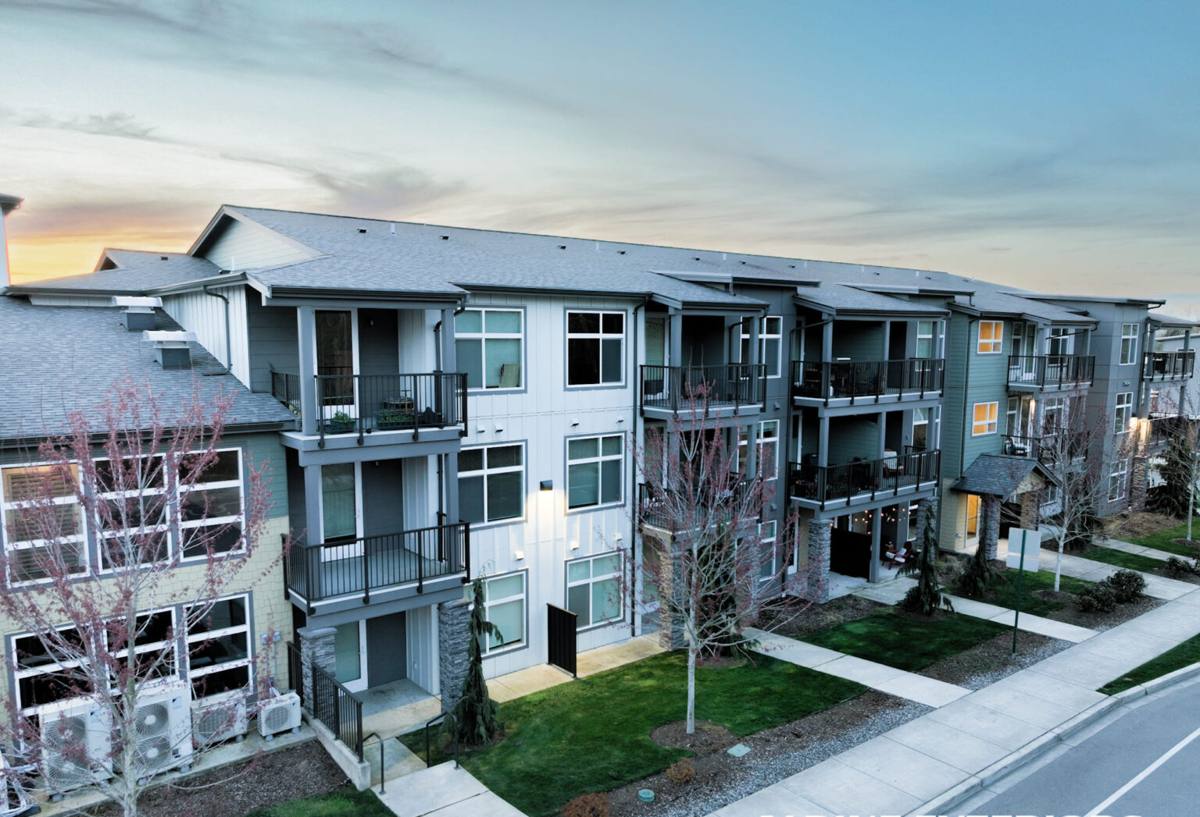
The Ferndale Climate Problem
Ferndale sits close enough to Bellingham Bay and the Strait of Georgia that salt-laden marine air is part of daily weather, not an occasional event. Combine that with the long, wet fall-through-spring stretch typical of Whatcom County, and you get a specific set of stresses that engineered wood siding was not originally designed around.
| Climate Factor | Effect on Engineered Wood Siding |
|---|---|
| Salt-laden marine air | Accelerates breakdown of paint film and exposed fasteners; salt holds moisture against the surface longer than dry air would |
| Driving rain off Georgia Strait | Wind-driven water finds lap joints, cut ends, and fastener penetrations that face away from typical rain patterns elsewhere |
| Extended moss and algae season | Constant surface moisture from shade and moss growth keeps the wood-strand core damp for longer stretches each year |
| Mild winters, minimal freeze-dry cycling | Moisture that gets in doesn't reliably freeze out or evaporate quickly — it lingers in the core |
None of these factors are exotic. They're just the ordinary weather pattern for this part of Washington. But they add up to more cumulative moisture exposure than the SmartGuard treatment and factory primer were stress-tested against in LP's own installation literature, which is why the manufacturer's own instructions are so specific about gaps, caulking, and ground clearance in the first place.
Where the Failures Actually Start
We're not going to make unverified claims about products failing in the field — that's not our call to make about a manufacturer's product line, and it wouldn't be fair. What we will say is that LP SmartSide's own installation manual is unusually strict, and for good reason: the product's long-term performance depends heavily on details that are easy for any crew to get wrong once, and only wrong once.
The Details That Matter
- Cut-edge sealing: every field cut has to be primed or sealed before installation, or that exposed wood-strand edge becomes the entry point for moisture
- Caulk joints: butt joints and panel seams rely on caulk staying intact for the life of the siding — caulk is a maintenance item, not a permanent seal
- Ground clearance: minimum clearance from grade, decks, and roof lines has to be maintained exactly, or splashback keeps the bottom edge wet
- Fastener placement: nails driven at the wrong angle or depth can crack the surface treatment and open a moisture path
- Paint maintenance: the factory primer is not a finish coat — it requires field paint within a manufacturer-specified window and repainting on a regular cycle after that
Every one of these is manageable with a careful, well-trained crew doing a first installation. The problem is what happens ten or fifteen years down the road, after a homeowner has repainted once or twice, after a deck got added that changed clearance, after a caulk joint nobody remembered to inspect finally opened up. Fiber cement has a wider margin for that kind of ordinary wear. Engineered wood has a narrower one, because the material underneath the treated surface is still wood.
How James Hardie Compares as a Material
James Hardie fiber cement siding is made from Portland cement, sand, and cellulose fiber, cured into a rigid board. There's no wood-strand core to swell, no organic material for moss or fungus to feed on, and the board itself is non-combustible — a genuine consideration in a state that has seen more wildfire smoke and ember exposure in recent years, even on the wetter west side.
Hardie's ColorPlus finish is baked on at the factory under controlled conditions, not applied on site with a brush and hope. That finish carries its own multi-decade warranty against fading and peeling, which shifts the maintenance math significantly compared to a field-painted product. And Hardie's HZ5 product line is specifically engineered for climates with more moisture exposure and freeze-thaw cycling — which describes the Pacific Northwest better than a one-size-fits-all national spec does.
Side-by-Side: What Actually Changes Day to Day
| Factor | LP SmartSide | James Hardie Fiber Cement |
|---|---|---|
| Core material | Engineered wood strand + resin | Cement, sand, cellulose fiber |
| Combustibility | Combustible (wood-based) | Non-combustible |
| Finish | Factory primer, field-painted | Factory-cured ColorPlus finish |
| Repaint cycle | Typically needed within 7-10 years | Finish warranty runs decades before repaint is needed |
| Moisture behavior | Core can absorb and hold moisture if surface is compromised | Does not rot, swell, or feed fungal growth |
| Insect resistance | Treated, but still organic material | Not a food source for insects |
| Typical material cost | Lower | Moderate to higher |
The Warranty Difference Is Bigger Than It Looks
Warranty length gets thrown around as a marketing number, but the structure matters more than the number. LP's warranty on SmartSide is meaningful, but like most wood-based product warranties, it includes provisions around proper installation, maintenance, and field-painting compliance that can affect a claim if those steps weren't documented and followed exactly over the years. James Hardie's warranty, especially on the ColorPlus factory finish, is less dependent on the homeowner maintaining an ongoing paint cycle correctly, because there's no field-applied finish coat to maintain in the first place. For a homeowner in Ferndale who doesn't want to think about their siding again for a long time, that's a real difference in what the warranty actually protects against.
Why We Made This Our Standard
We didn't stop installing LP SmartSide because it's a bad product everywhere. We stopped because we install siding on homes in a specific climate — salt air rolling in off the water, driving rain through the fall and winter, a moss season that runs longer here than it does twenty miles inland — and we got tired of being the crew that has to explain, years later, why a caulk joint or a cut edge is the reason a wall section needs attention. Standardizing on one material lets us install it the same correct way every time, train our crew to one spec instead of five, and stand behind a warranty that isn't riding on a homeowner's repaint schedule.
That's the honest version: this is our professional standard, not a claim that every other product on the market is defective. Other contractors reasonably make different calls. We made ours based on what we've seen hold up on Whatcom County homes over time.
What to Ask Before You Choose a Siding Material
Whatever material you land on, and whoever you hire, these are the questions worth asking before a contract gets signed:
- What is the core material, and how does it behave when it stays wet for extended periods?
- Does the finish come factory-applied, or will it need field paint — and on what cycle?
- What does the manufacturer's warranty actually require of you to stay valid?
- What ground clearance, flashing, and caulking details does this product require, and will the crew document that they followed them?
- How does this material handle the specific combination of salt air, driving rain, and shaded moss growth common in this area?
- Is the product rated or warrantied differently for coastal or high-moisture climates?
Get a Straight Answer for Your Home
Every home in Ferndale sits a little differently — some closer to the water, some more shaded, some with more wind exposure than others. If you're weighing siding options and want a straightforward look at what your specific property needs, we're happy to walk the exterior with you and give you a free, no-pressure estimate with our honest read on it.