 Ferndale Siding
 Homes in and around Lummi Nation sit close enough to Bellingham Bay and the Strait of Georgia that the weather off the water shapes almost every exterior decision worth making. Salt-laden air, wind-driven rain that comes in sideways off the water, and a moss season that can stretch from October well into spring all put steady pressure on siding, trim, roofing, and anything made of wood. We've been working exteriors throughout Whatcom County long enough to know that what holds up in a drier inland neighborhood doesn't always hold up out here, and we build our recommendations around that difference rather than a one-size-fits-all approach.
This page covers how we think about siding, roofing, window, and deck work for homes in the Lummi Nation service area, what the local climate actually does to a house over time, and why we standardized on James Hardie fiber cement siding instead of the wood, vinyl, or composite products still common on older homes here.
What Coastal Whatcom County Weather Does to a House
The stretch of coastline around Lummi Nation and greater Ferndale sees a combination of conditions that's tougher on building exteriors than most inland parts of the county. It's worth breaking down individually, because each factor attacks a house in a different way.
Salt Air and Corrosion
Airborne salt from Bellingham Bay and the Strait doesn't just affect boats and metal railings. It settles on siding, fasteners, and trim, and over years it accelerates corrosion on anything not rated for a marine-influenced environment. Cheap or exposed fasteners rust and streak. Untreated or thin-gauge metal flashing pits and fails early. Paint film on lower-grade siding breaks down faster near the water than it would ten or fifteen miles inland.
Driving Rain
Wind off the water routinely pushes rain sideways rather than straight down, which means it hits vertical wall surfaces, works into seams, and finds its way behind poorly lapped siding or under-flashed windows. A siding system's water-shedding detailing — how it laps, how it's flashed at penetrations, how it drains — matters more here than it does in a sheltered inland lot.
Moss, Mildew, and a Long Damp Season
Whatcom County's wet season is long, and homes near Lummi Nation often sit under tree cover or in shaded, low-airflow spots where moisture lingers. That combination is exactly what moss, algae, and mildew need to take hold on roofing, siding, and decking. Wood-based products are especially vulnerable — moss and mildew don't just look bad, they hold moisture against the surface and accelerate rot underneath.
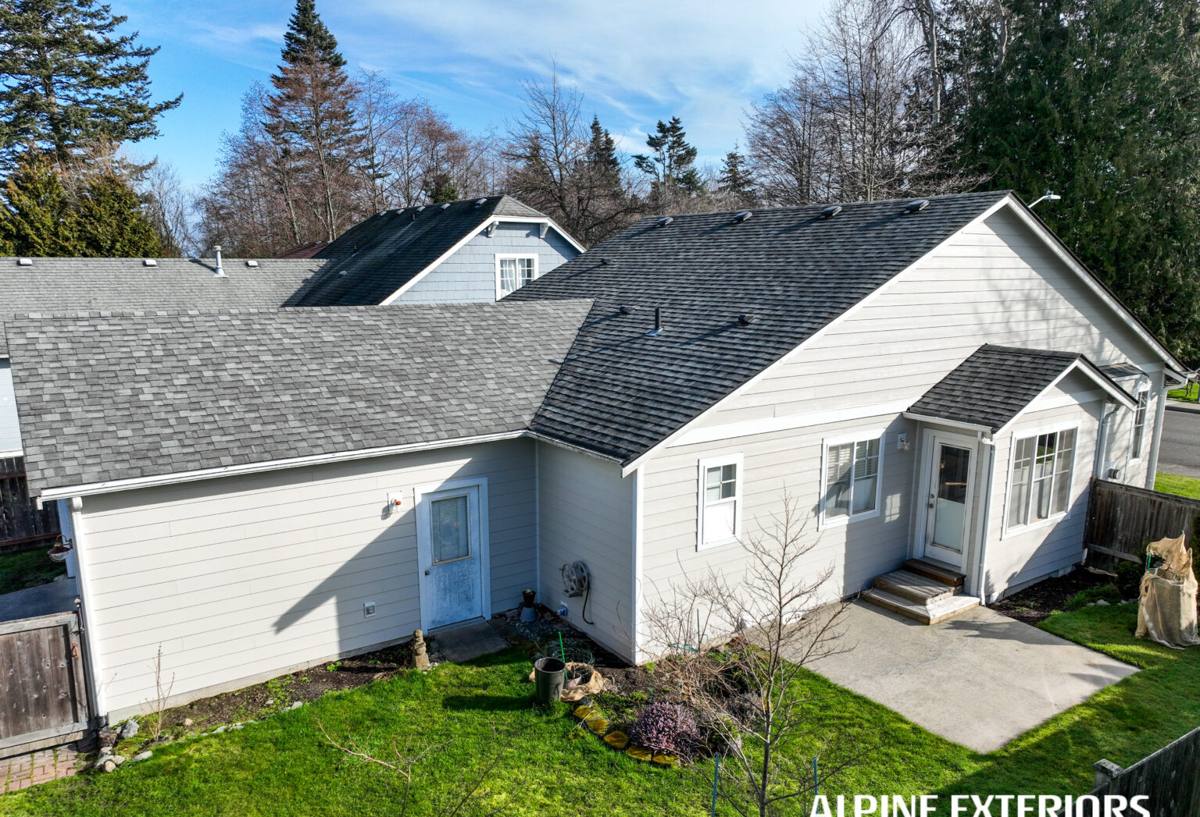
Siding: Why We Install James Hardie and Nothing Else
We made a deliberate decision as a company to install only James Hardie fiber cement siding. We don't install vinyl, LP SmartSide, Cemplank, Allura, primed spruce, or cedar. That's not a marketing line — it's a standard we hold to because of what we've seen happen to other products in exactly this kind of coastal, wet climate.
What the Other Products Get Right — and Where They Fall Short Here
Vinyl siding is inexpensive and low-maintenance in mild, dry climates, but it can warp or become brittle with temperature swings, and it relies heavily on trim and seams that aren't as forgiving of the driving rain this area sees. Engineered wood products like LP SmartSide use treated wood strand technology and can perform reasonably well when installation and maintenance are perfect, but they remain wood-based, and wood-based siding is more sensitive to sustained moisture exposure and requires more diligent upkeep than fiber cement — a real burden in a climate with as long a wet season as ours. Primed wood species like spruce, and untreated cedar, look excellent when new but demand the most ongoing maintenance of all: regular repainting, caulking, and moisture monitoring, because bare or lightly primed wood is the most vulnerable material of the group to rot, insects, and moss colonization.
Why Hardie Fits This Climate
James Hardie fiber cement siding is non-combustible and dimensionally stable, meaning it doesn't expand, contract, warp, or rot the way wood products can. It's engineered from cement, sand, and cellulose fiber, which gives it a resistance to moisture-driven failure that wood and wood-composite sidings can't match. Hardie also makes climate-specific HZ5 product lines engineered for regions with harsher weather exposure, and its ColorPlus factory-applied finish is baked on under controlled conditions rather than field-painted, which gives it better fade and wear resistance than a job-site paint job — a real advantage when salt air is already working against any painted surface. Backed by a strong transferable warranty and a track record of holding up when installed to spec, it's the product we're willing to put our name behind on homes in this area.
Roofing, Windows, and Decks: The Rest of the Envelope
Siding doesn't work in isolation — it's one piece of a home's exterior envelope, and in a climate like this one, the roof, windows, and any exterior deck structure all face the same moss, moisture, and salt exposure.
Roofing
Roofs near Lummi Nation deal with the same long damp season as siding does, and moss growth on roofing is one of the most common issues we see on older homes in the area. Proper ventilation, flashing detail at valleys and penetrations, and material choice all affect how well a roof resists moss colonization and how long it lasts before needing attention.
Windows
Window flashing and sealant integrity matter more here than in drier parts of the state, simply because driving rain finds any weak point in the flashing around a window opening. When we replace siding, we always check window flashing and integration at the same time — a new siding install is the best opportunity to correct flashing issues that would otherwise sit hidden behind the old siding.
Decks
Exterior decks take a similar beating from moss and sustained moisture, especially in shaded yards common around this area. Material choice, proper drainage away from ledger boards, and fastener quality all affect how long a deck lasts before rot or corrosion becomes a problem.
Why a Local Crew Matters for This Area
Working this stretch of coastline regularly means we already know what to look for before we start a project: where moss tends to build up fastest, which wall orientations take the worst of the driving rain, and where salt exposure typically does the most damage to fasteners and flashing. That local pattern recognition shapes how we detail flashing, where we pay extra attention to sealant and lap work, and which product lines we recommend for a given lot. A crew unfamiliar with this specific coastal exposure can do competent work and still miss the details that matter most out here.
Comparing Siding Options for This Climate
| Factor | Vinyl | Engineered Wood (LP SmartSide) | Cedar / Primed Spruce | James Hardie Fiber Cement |
|---|---|---|---|---|
| Moisture resistance | Moderate | Moderate, wood-based | Low without diligent upkeep | High |
| Salt air durability | Moderate | Moderate | Low | High |
| Maintenance burden | Low | Moderate | High | Low |
| Fire resistance | Low | Moderate | Low | Non-combustible |
| Finish longevity | Fades over time | Field-painted, wears sooner | Field-painted, wears sooner | Factory ColorPlus finish |
What to Look for When Vetting a Siding Contractor
Whether you go with us or someone else, a few basics apply to any exterior contractor working near the water in Whatcom County:
- Ask specifically how they detail flashing around windows, doors, and roof-to-wall transitions — this is where driving rain causes the most damage.
- Confirm they're familiar with fastener and flashing corrosion resistance appropriate for coastal salt exposure, not just standard inland-grade materials.
- Ask how they handle moss and moisture on the existing wall assembly before new siding goes up, not just what goes on top.
- Get manufacturer certification details in writing if fiber cement siding is being installed — proper installation affects warranty coverage.
- Ask for a clear explanation of why a given product was recommended for your specific lot, orientation, and shade conditions — not a generic pitch.
What a Project Typically Involves
Every home is different, but a siding replacement in this area generally follows the same sequence: an on-site assessment of the existing siding, moisture, and flashing condition; a discussion of product and color options; removal of old siding with attention to what's found underneath (rot, moisture damage, or flashing issues often only become visible once the old material is off); correction of any underlying issues; installation of new flashing and house wrap where needed; and installation of the new siding to manufacturer specification. For homes near Lummi Nation specifically, we pay particular attention to wall orientations facing open water or prevailing wind, since those elevations typically need the most careful flashing and lap detail.
Get a Free, No-Pressure Estimate
If you're weighing a siding, roofing, window, or deck project for a home in the Lummi Nation area, we're happy to take a look and give you a straight assessment of what your home's exterior is facing and what it would take to fix it right. There's no pressure and no obligation — just fill out the form below to get started.