 Ferndale Siding
 Building Exteriors for an Island in the Salish Sea
Lummi Island sits out in the Salish Sea, reachable only by ferry, and that isolation shapes everything about how a home there needs to be built and maintained. Homes on the island face a more aggressive version of the same weather that hits the rest of Whatcom County: salt-laden air off the water, driving rain that comes in sideways during winter storms, and a moss season that can stretch most of the year under tree cover. We're based in Ferndale and have worked exteriors up and down this stretch of coastline, so we know the island isn't just "another job in the county" — it takes different planning, different material choices, and a crew that shows up prepared rather than improvising once they're off the ferry.
This page covers what we see on Lummi Island homes, how our siding, roofing, window, and deck work adapts to that environment, and why we install James Hardie fiber cement siding exclusively rather than the vinyl, LP SmartSide, or cedar products some homeowners ask about.
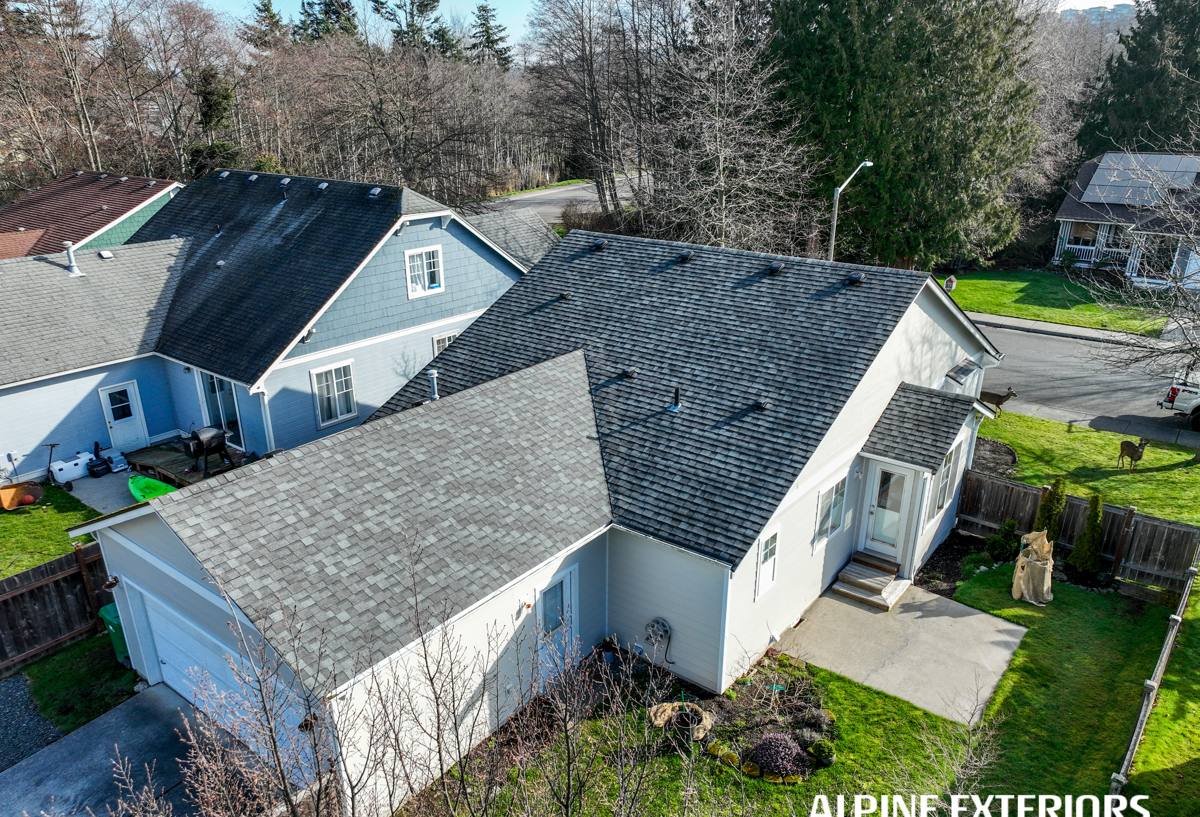
What Salt Air, Rain, and Moss Actually Do to a House
Salt Air and Corrosion
Waterfront and near-waterfront homes take on airborne salt that settles on siding, trim, fasteners, and flashing. Over years, that salt exposure accelerates corrosion on lower-quality metal fasteners and hardware, and it can pit or discolor finishes that weren't engineered to handle it. It's one reason fastener selection and flashing details matter as much as the siding material itself on island and waterfront jobs.
Driving Rain
Storms moving through the Strait of Georgia and the San Juans hit Lummi Island with wind-driven rain that pushes water sideways into seams, laps, and trim joints that would stay dry in a calmer inland setting. Siding systems that rely on face-sealed caulk joints instead of proper water-shedding overlaps and flashing tend to fail faster here, showing up as staining, soft trim, or interior moisture years down the road.
Moss and Shade
A lot of island lots sit under a canopy of fir and cedar, which means north- and west-facing walls can stay damp for days after a storm. Moss and algae take hold on any siding material that holds moisture at the surface, and once established they hold even more water against the wall — a cycle that degrades paint film and, on wood-based products, the substrate underneath.
Why We Only Install James Hardie Fiber Cement
We made a deliberate decision as a company to install James Hardie siding exclusively — not vinyl, not LP SmartSide, not Cemplank, not Allura, not primed spruce or cedar. That's not a marketing gimmick; it's a standard we hold because of what we've seen play out on real homes in this climate over time.
Fiber cement is non-combustible, which matters more each year as wildfire smoke and ember exposure become a bigger part of Pacific Northwest summers. It doesn't rot, and it doesn't feed moss the way wood-based siding can once the surface coating wears. Hardie's HZ5 product line is engineered specifically for climates like ours — the freeze-thaw cycles, sustained moisture, and marine exposure common to Whatcom County and the islands around it. The factory-applied ColorPlus finish is baked on under controlled conditions, which gives it better fade and moisture resistance than a field-applied paint job, and it comes with a real transferable warranty that follows the house, not just the original owner.
None of this means other products are junk — vinyl is inexpensive and low-maintenance in mild conditions, LP SmartSide has real fans, and cedar has genuine curb appeal. But each comes with trade-offs — vinyl can warp or crack in temperature swings and doesn't hold paint if you ever want a different color, engineered wood products are more sensitive to installation quality and ongoing maintenance, and cedar demands a maintenance schedule most owners underestimate. On an island where a repair crew is a ferry ride away and not a same-day fix, we'd rather put a material on the wall that's forgiving of the climate and doesn't demand constant upkeep to perform.
Coastal Siding Material Comparison
| Material | Moisture/Salt Resistance | Moss Resistance | Maintenance | Fire Rating |
|---|---|---|---|---|
| James Hardie fiber cement | Engineered for marine climates (HZ5) | Doesn't feed moss growth | Occasional wash, no repainting for years | Non-combustible |
| Vinyl | Fair; can warp with heat/cold cycling | Surface growth washes off but recurs | Low, but limited repair/color options | Combustible, can melt/deform |
| LP SmartSide (engineered wood) | Sensitive to sustained moisture exposure | Can support growth if coating wears | Moderate; caulk and coating upkeep | Combustible |
| Cedar | Absorbs moisture, prone to cupping/rot over time | Prone to moss without regular treatment | High; refinishing every few years | Combustible |
Working on an Island: Logistics That Matter
Any contractor can quote a Lummi Island job. Fewer plan for what it actually takes to run one well. Materials, crew, and equipment all move on the ferry schedule, which means a project needs tighter sequencing than a mainland job — you don't want a crew standing around because a material delivery missed the last sailing, and you don't want half-finished siding exposed to a storm because the schedule ran loose. Being based in Ferndale means we're already close to the crossing point, which keeps our scheduling realistic instead of optimistic, and it means a callback or warranty visit isn't a major undertaking for either side.
We also plan weather windows more conservatively on island jobs. Open wall sections need to be weather-tight before conditions turn, and on a site where "just run to the truck for more house wrap" isn't an option, we bring what we need and sequence the work so the building envelope isn't left exposed longer than necessary.
Beyond Siding: Roofing, Windows, and Decks
Siding is only part of how an island home holds up. We handle the full exterior envelope, and on Lummi Island in particular, these systems all have to work together against the same salt air and driving rain:
Roofing
A roof system takes the brunt of wind-driven rain first, and the flashing details where the roof meets walls, chimneys, and dormers are usually where leaks actually start — not the field of the roofing material itself. We pay close attention to those transitions, especially where roof and siding work intersect.
Windows
Older or poorly flashed windows are a common source of hidden moisture intrusion on coastal homes. When we're already opening up a wall for siding work, it's often the right time to address window flashing or replacement rather than sealing over a problem that will resurface.
Decks
Outdoor living space on the island means a deck that faces the same salt exposure and moss pressure as the siding. Fastener choice, board spacing for drainage, and proper ledger flashing all matter more here than they would on a drier, more sheltered inland lot.
What a Project on Lummi Island Looks Like
We start with an on-site look at the home's exposure — which walls take the weather, where moisture or moss is already showing, and what the existing siding or trim tells us about how the house has performed over time. From there we scope the work, plan material and crew logistics around the ferry, and sequence the job so the house isn't left open to weather any longer than it has to be. On tear-off jobs we also check the sheathing and framing underneath once the old siding is off, since that's often the first real look anyone's had at the wall's condition in years.
Signs an Island Home May Need Exterior Attention
- Dark streaking or green growth on north- or shade-facing walls
- Soft or spongy trim around windows, doors, or corner boards
- Paint that's chalking, peeling, or failing faster than expected
- Visible gaps, cracking, or warping in existing siding panels
- Interior stains or musty smells near exterior walls after storms
- Rust streaks below fasteners or metal flashing
- Roof-to-wall flashing that looks patched, caulked over, or corroded
Maintenance That Actually Fits an Island Home
Even low-maintenance siding benefits from a periodic check, especially in a spot where a small problem can sit unnoticed longer between visits. A yearly rinse to knock back surface moss and grime, a walk-around to check caulking at trim and penetrations, and a look at gutters and downspouts to make sure water is actually leaving the roof and walls rather than pooling near the foundation all go a long way. None of this requires a specialist visit every year, but skipping it on a coastal property tends to catch up with a house faster than it would inland.
A Local Crew You Can Actually Reach
There's a real difference between a contractor who drives up from out of the area for a bid and one who's based a short ferry ride from your door. We know this stretch of Whatcom County's weather because we work in it year-round, and if a warranty question or a storm-damage concern comes up after the job is done, we're not hard to reach. That matters more on an island than almost anywhere else in the county.
If you're weighing a siding, roofing, window, or deck project on Lummi Island, we're glad to take a look and put together a straightforward, no-pressure estimate — no invented urgency, just an honest read on what your home needs and what it would take to do the work right.