 Ferndale Siding
 What ColorPlus Actually Is
ColorPlus is not paint that gets rolled or sprayed onto siding after it's hung on your house. It's a factory-applied, baked-on finish that James Hardie cures onto the board in a controlled plant environment before it ever leaves the facility. The color goes through multiple coats and heat-cured baking cycles, which produces a much tougher, more uniform bond between finish and fiber cement than anything achievable with a paint sprayer and a ladder in a Ferndale driveway. That distinction matters more here than in a lot of places, because Whatcom County throws a specific combination of stress at exterior finishes: salty marine air off Bellingham Bay and the Strait of Georgia, long stretches of driving rain, and a moss and algae season that can run most of the year on shaded north- and west-facing walls.
Field-applied paint, even good paint, cures in whatever conditions the day gives it — cool, damp, or otherwise. ColorPlus is cured in a factory to a consistent spec every time. That's the whole premise behind the product, and it's the reason we standardized on it instead of offering site-painted fiber cement or other siding materials as an equal option.
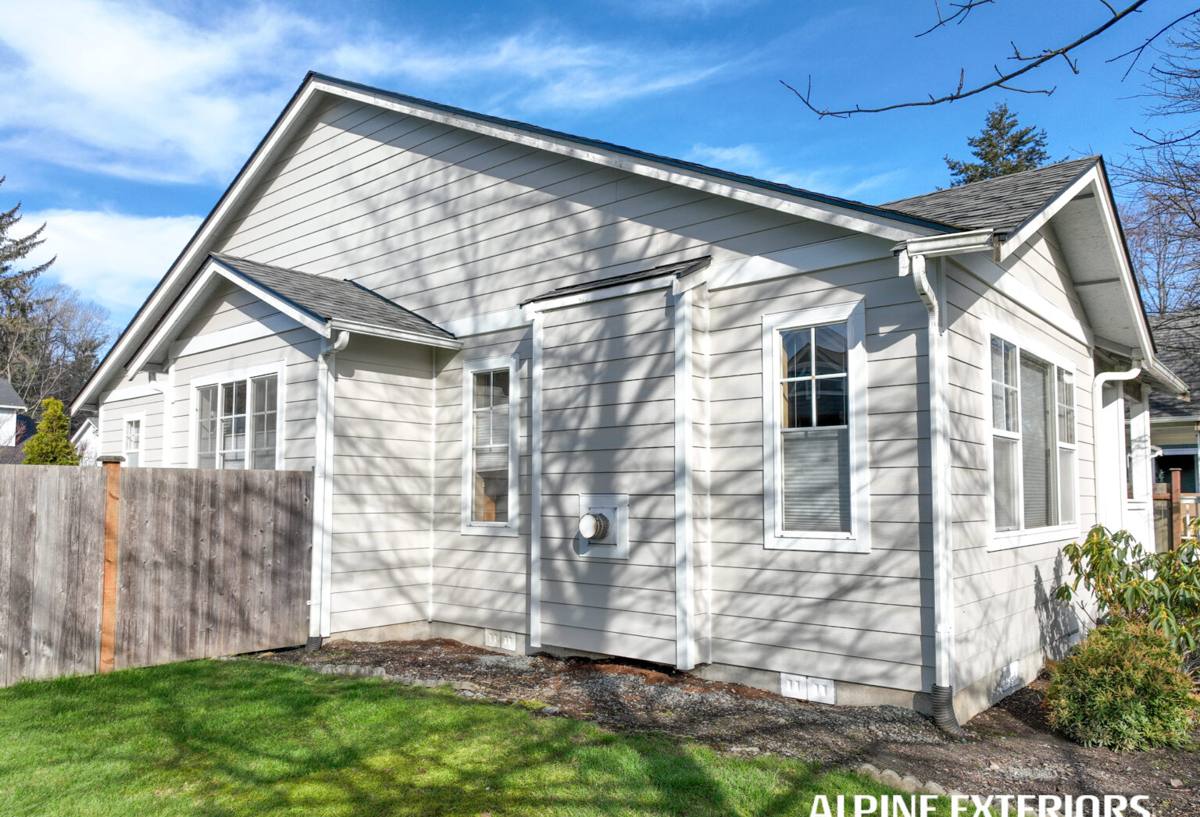
How the Finish Is Built
ColorPlus uses a multi-coat process: a primer coat, then color coats, with baking between stages. The result is a finish that's more resistant to fading, chipping, and cracking than standard field-applied paint, and one that's designed to expand and contract with the fiber cement substrate rather than separately from it. That last part is the detail homeowners usually miss — paint applied on-site sits on top of the board and moves at its own rate with temperature and humidity swings. A factory finish is engineered to move with the board, which cuts down on the hairline cracking and peeling you sometimes see at butt joints and cut edges on older or lower-grade siding jobs.
It doesn't mean the finish is indestructible. Cut edges exposed during installation still need factory-matched touch-up paint or Hardie's edge sealer, and any place a fastener, flashing, or trim board interrupts the factory finish is a place moisture can find a way in if it's not detailed correctly. The finish is only as good as the installation around it.
The Color Palette and How It's Organized
James Hardie offers ColorPlus in two general tiers, and it's worth understanding the difference before you start picking swatches:
- Statement Collection — a curated set of colors, generally the deeper and more saturated shades, professionally engineered for maximum fade resistance and typically carrying the longer finish warranty.
- Classic and regional palettes — a broader range of standard shades, from crisp whites and warm neutrals to muted blues and greens, sized to what tends to work well regionally and architecturally.
Colors are designed as coordinated systems — a field color, trim colors, and accent options that are meant to be used together, which takes a lot of the guesswork out of matching trim to siding to shingle-style accents. That coordination shows up a lot in Ferndale's mix of architecture: craftsman-style homes near downtown, newer builds out toward Grandview or Sunset Ridge, and farmhouses out in the county all lean on different parts of the palette, but the system is built so none of those combinations look accidental.
ColorPlus vs. Field-Painted Fiber Cement
| Factor | ColorPlus (factory finish) | Field-applied paint |
|---|---|---|
| Cure environment | Controlled plant conditions, consistent every board | Whatever the weather is that day — an issue in a region with 150+ rain days a year |
| Coverage uniformity | Even coat thickness, back and edges included on most profiles | Depends on applicator skill and number of coats actually applied |
| Fade resistance | Engineered and warrantied against fading for a set term | Typically not warrantied by the paint manufacturer for fade on this substrate |
| Repaint interval | Often 15 years or more before repainting is needed | Commonly 5-8 years in wet coastal climates |
| Upfront cost | Built into the material cost | Lower material cost, added labor cost at install and again at every repaint |
The trade-off is straightforward: ColorPlus costs a bit more upfront than unfinished board that gets field-painted, but it shifts the maintenance burden years or even decades down the road. In a climate that's actively working against exterior finishes almost year-round, that shift is worth more here than it would be somewhere dry.
Where Color Shows Up Across the Product Line
ColorPlus isn't limited to one board profile. It's available across the products most commonly used on Ferndale homes:
- HardiePlank lap siding — the standard horizontal siding look, available in several exposure widths and surface textures (smooth or cedar-grain).
- HardiePanel vertical siding — used for board-and-batten looks or modern vertical facades.
- HardieShingle siding — staggered or straight-edge panels that mimic a shingled look without the maintenance shingles usually demand.
- HardieTrim boards — window and door surrounds, corner boards, and fascia, finished to match or intentionally contrast the field color.
Because trim and field siding both come through the same factory finishing process, color and sheen match across the whole exterior — something that's genuinely hard to pull off with mixed materials or hand-mixed paint batches.
Why This Matters More in Whatcom County Than Elsewhere
Ferndale sits close enough to the water that salt-laden air is a routine part of the weather, not an occasional event. Salt air accelerates the breakdown of lower-grade paint films and can pit or dull finishes that aren't formulated to resist it. Add in Whatcom County's rain totals — driving, wind-blown rain off the Strait more than gentle showers — and you get a lot of hours per year where siding is wet, drying, and getting wet again. That cycle is exactly what causes field-applied paint to eventually crack and let water behind the finish.
Then there's moss. Shaded, north-facing walls under tree cover — common on wooded lots around Ferndale and unincorporated Whatcom County — stay damp longer and grow moss and algae more readily than sun-exposed walls. A factory-cured finish doesn't stop moss from growing on a surface, but it does mean the surface underneath the growth isn't itself degrading the way an aging paint film can. That makes periodic soft-washing far less risky, since you're cleaning a durable factory finish rather than gently trying to preserve a thin field-applied coat.
The ColorPlus Warranty
James Hardie backs ColorPlus finishes with a technology warranty separate from the substrate warranty on the fiber cement itself. In practical terms, that means the board and the finish are each covered on their own terms, and the finish warranty specifically addresses issues like peeling, cracking, and chipping of the factory coating when the product is installed according to Hardie's specifications. Warranty terms and lengths vary by product line and finish tier, and they're transferable to a new owner if you sell the home within the coverage period — worth mentioning to a buyer if you're listing a house with ColorPlus siding on it. As with any manufacturer warranty, correct installation is a condition of coverage, which is one more reason installation quality isn't a place to cut corners.
Choosing a Color for a Ferndale Home
A few practical things worth thinking through before settling on a shade:
- Sun exposure — a color that reads one way on a south-facing wall in full sun can look noticeably different on a shaded north wall; look at sample boards outdoors, not just under indoor lighting.
- Neighborhood and architecture — some Ferndale neighborhoods and county developments carry HOA guidelines on exterior color; check before ordering.
- Roof and stone/masonry tones already on the house — coordinating rather than clashing saves a repaint headache later.
- Trim contrast — a lighter or darker trim color against the field siding can make architectural details like window trim and corner boards stand out, or recede, depending on the look you want.
- Long-term commitment — because ColorPlus is durable and not meant to be repainted every few years, pick a color you're prepared to live with for well over a decade.
Maintaining ColorPlus Color Over Time
ColorPlus is low-maintenance, not no-maintenance. To keep it looking right through Whatcom County's wet seasons:
- Rinse siding with a garden hose and soft brush once or twice a year to clear off salt residue, pollen, and general grime.
- Soft-wash (low-pressure, not a pressure washer aimed directly at siding) to remove moss and algae on shaded walls before it builds up.
- Keep gutters clear and downspouts directed away from siding to avoid constant splash-back or overflow staining in one spot.
- Trim back vegetation and tree limbs that keep a wall shaded and damp longer than the rest of the house.
- Touch up any cut edges, fastener heads, or scuffs promptly with Hardie-matched touch-up paint rather than letting bare fiber cement sit exposed.
If Touch-Up or Repainting Is Ever Needed
Even with a 15-plus year finish life, there are situations where a homeowner eventually wants to repaint — a color change, storm damage to a section, or simply extending the life of an older installation. ColorPlus siding can be repainted with quality exterior acrylic paint when the time comes, following proper surface prep. That's a very different scenario than starting with unfinished board and needing to paint the entire house within the first few years just to get it protected in the first place.
If you're weighing a full siding replacement or want to talk through which ColorPlus line and color fits your Ferndale home, we're happy to walk the property, look at sun exposure and existing finishes, and put together a free, no-pressure estimate — no obligation either way.