 Ferndale Siding
 Siding Built for Sumas, Washington
Sumas sits at the far edge of Whatcom County, tucked against the Canadian border in the Nooksack River valley below Sumas Mountain. It's a smaller, tighter-knit community than the county's bigger towns, surrounded by farmland and river bottom, and it deals with a weather pattern that's genuinely its own. Homeowners here aren't fighting the exact same conditions as a house on Bellingham Bay, but they're not getting off easy either. Between the valley humidity, the seasonal rain, and the wind that funnels through the Sumas Gap in winter, exterior materials in this area take a real beating over the years.
We're based out of Ferndale and work throughout Whatcom County, including Sumas. We install James Hardie fiber cement siding exclusively, and we also handle roofing, windows, and decks — the full building envelope, not just one piece of it. This page covers what Sumas homes tend to face and how we approach siding, roofing, windows, and decks for houses out this way.
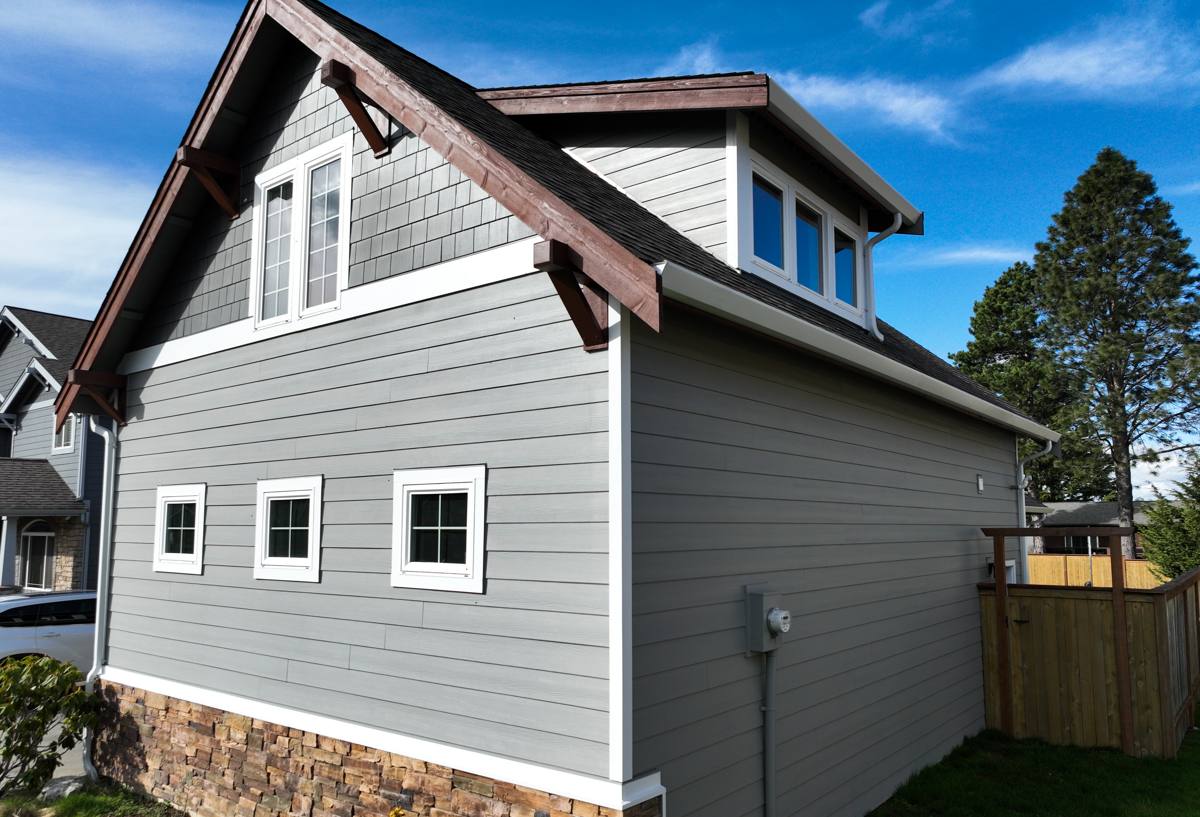
What the Local Climate Does to Siding
The Sumas Gap Wind
One thing that sets Sumas apart from the rest of Whatcom County is the wind. The Sumas Gap is a low pass in the terrain that connects the Fraser River Valley in British Columbia to the Nooksack lowlands on the U.S. side. When cold, dense air builds up over the interior in winter, it funnels through that gap and picks up speed on its way through — these are sometimes called outflow winds, and Sumas gets more of them than most towns in the county. That wind doesn't just rattle windows; it drives rain sideways into wall assemblies and stresses siding joints, fasteners, and trim in ways a calmer site never would.
Valley Moisture and a Long Moss Season
Sitting low in a river valley near farmland means Sumas holds onto moisture longer than higher, more exposed ground. Combined with the marine-influenced weather that reaches across Whatcom County — driving rain through the fall and winter, and long stretches of overcast, humid air — siding, roofing, and trim here go through a genuinely long moss and mildew season. Anything that traps water against its surface, or that swells and softens when it stays wet, is working against the odds in this kind of setting.
Freeze-Thaw Cycling
Winters near the border dip colder than they do closer to the water, and Sumas sees more freeze-thaw cycling than towns nearer Bellingham Bay. Materials that absorb moisture and then freeze are more prone to cracking, checking, and edge damage over repeated cycles. It's not extreme cold by national standards, but it's enough that installation quality and material choice both matter more here than they would in a milder microclimate.
Why We Only Install James Hardie Siding
We get asked fairly often why we don't offer vinyl, LP SmartSide, cedar, or other fiber cement brands like Cemplank or Allura. It's a fair question, and the honest answer is that we made a professional call after years of installing and repairing exteriors in this climate, and we'd rather stand behind one product we trust completely than offer several we have reservations about.
What We Weighed
- Vinyl siding is affordable and low-maintenance, but it expands and contracts with temperature swings, can crack in hard freezes, and isn't rated to stop wind-driven rain the way a properly flashed fiber cement system is.
- LP SmartSide is engineered wood — it performs well when it stays dry and is maintained on schedule, but wood-based products depend heavily on unbroken paint film and caulking to keep moisture out, which is a harder standard to hold in a long wet season.
- Cedar and primed spruce look great fresh off the truck, but they need real ongoing upkeep — restaining, recaulking, and moisture monitoring — to avoid rot, and that maintenance burden is steep for a lot of homeowners.
- Other fiber cement brands (Cemplank, Allura) are legitimate competitors to Hardie, but we don't have the manufacturer training, warranty backing, or track record with them that we have with Hardie, so we don't install them.
James Hardie is non-combustible, doesn't swell or rot from moisture the way wood-based products can, and comes with a factory-applied ColorPlus finish that's baked on rather than field-painted — which matters in a climate where paint film is under constant assault from rain and humidity. It's also engineered in climate-specific formulations, which is relevant to a place like Sumas where wind-driven moisture is a real factor.
The James Hardie System
HZ10 vs. HZ5 Engineering
Hardie manufactures its siding in different formulations tuned to different climate zones — HZ10 for wetter, milder coastal and Pacific Northwest conditions, and HZ5 for regions with harsher freeze cycles. For a valley town like Sumas that sees both driving marine rain and colder winter snaps than the coastline, getting the right product line and the right installation detailing (proper clearances, flashing, and fastener patterns) matters more than the marketing on the product line itself.
ColorPlus Finish
Rather than site-applied paint, ColorPlus siding comes from the factory with a baked-on, UV-cured finish that holds color and resists fading, chipping, and peeling far longer than field-applied paint typically does. In a region with this much annual rainfall, that's a real advantage — less caulking and repainting maintenance over the life of the siding.
Warranty
James Hardie backs its siding with a strong, transferable limited warranty, and ColorPlus finishes carry their own separate finish warranty. Warranty terms are only as good as the installation behind them, though — improper flashing or fastening can void coverage regardless of the product, which is why installation detail matters as much as the material choice.
Comparing Siding Options for a Sumas Home
| Material | Moisture Behavior | Maintenance | Typical Lifespan* |
|---|---|---|---|
| James Hardie Fiber Cement | Does not rot or swell; factory-cured finish resists moisture damage | Low — periodic washing, no repainting for years | 30+ years with proper install |
| Vinyl | Doesn't absorb water but can warp/crack with temperature swings and wind loads | Low, but panels are hard to color-match if replaced | 20-30 years |
| LP SmartSide (Engineered Wood) | Performs well dry; vulnerable at cut edges and failed caulk joints | Moderate — caulk and paint upkeep on a schedule | 20-30 years with diligent maintenance |
| Cedar / Primed Spruce | Absorbs moisture readily; prone to rot without upkeep | High — restaining/sealing every few years | Varies widely with maintenance |
*Lifespan figures are general industry ranges, not guarantees — actual performance depends heavily on installation quality, exposure, and upkeep.
More Than Siding: Roofing, Windows, and Decks
Siding is only one piece of what keeps a Sumas home dry and comfortable. We also handle roofing, window replacement, and deck construction, because an exterior only performs as well as its weakest connection point. Flashing where a roofline meets siding, window integration, and deck ledger attachment are all places where water intrusion actually happens — treating the building envelope as one connected system, rather than a stack of separate trades, is how those failure points get avoided.
Roofing
A roof in poor condition undermines even the best siding job, since water that gets behind flashing or through a compromised roof edge will eventually find its way into wall assemblies. We evaluate roof condition as part of any full exterior project.
Windows
Window replacement done alongside siding work lets us integrate flashing and water management properly the first time, instead of working around an existing installation that may already have gaps.
Decks
Decks attached to the house need the same attention to moisture management as the siding does — a poorly flashed ledger board is one of the more common sources of hidden rot on homes in wet climates like this one.
Why a Local Crew Matters in a Town Like Sumas
Sumas is small enough that it doesn't get the contractor attention that bigger Whatcom County towns do, and that can mean longer waits or crews unfamiliar with the specific way weather behaves in this part of the valley. Working out of Ferndale, we're close enough to be responsive, and we're familiar with how the Sumas Gap wind and the valley's moisture patterns affect installation decisions — things like fastener spacing, flashing details, and clearance from grade that matter more here than in a calmer, drier location.
What to Look for When Hiring a Siding Contractor
- Manufacturer training or certification specific to the product being installed, not just general carpentry experience
- A written scope that specifies flashing details, house wrap or weather-resistive barrier, and fastener type — not just "siding installed"
- Proof of active licensing and insurance, verifiable through Washington's contractor lookup
- A clear explanation of warranty terms — both the manufacturer's product warranty and the contractor's workmanship warranty
- Willingness to walk you through why a given product fits your specific site conditions, rather than a one-size-fits-all pitch
- References or examples of completed work in similar climate conditions
Get a Free Estimate
If you're weighing a siding, roofing, window, or deck project for a home in Sumas, we're happy to take a look and talk through what actually makes sense for your house and your budget — no pressure, no obligation. Fill out the form below and we'll get in touch to schedule a free estimate.