 Ferndale Siding
 Siding Built for Everson's Weather, Not Just Its Looks
Everson sits along the Nooksack River in the farmland east of Bellingham, and homes here deal with a different kind of wear than a house tucked into a dry, sunny climate. Long stretches of fall and winter rain, valley fog that settles in and doesn't burn off until midday, and a moss season that seems to run most of the year all put steady pressure on exterior surfaces. Add in the periodic high water that comes with living near the Nooksack corridor, and you have a climate that rewards durable materials and punishes anything installed as an afterthought.
We're based in Ferndale and work throughout Whatcom County, including Everson and the surrounding river-valley communities. Siding here isn't just about curb appeal — it's the first line of defense between a house and a genuinely wet, humid, moss-friendly environment. That's the lens we bring to every estimate.
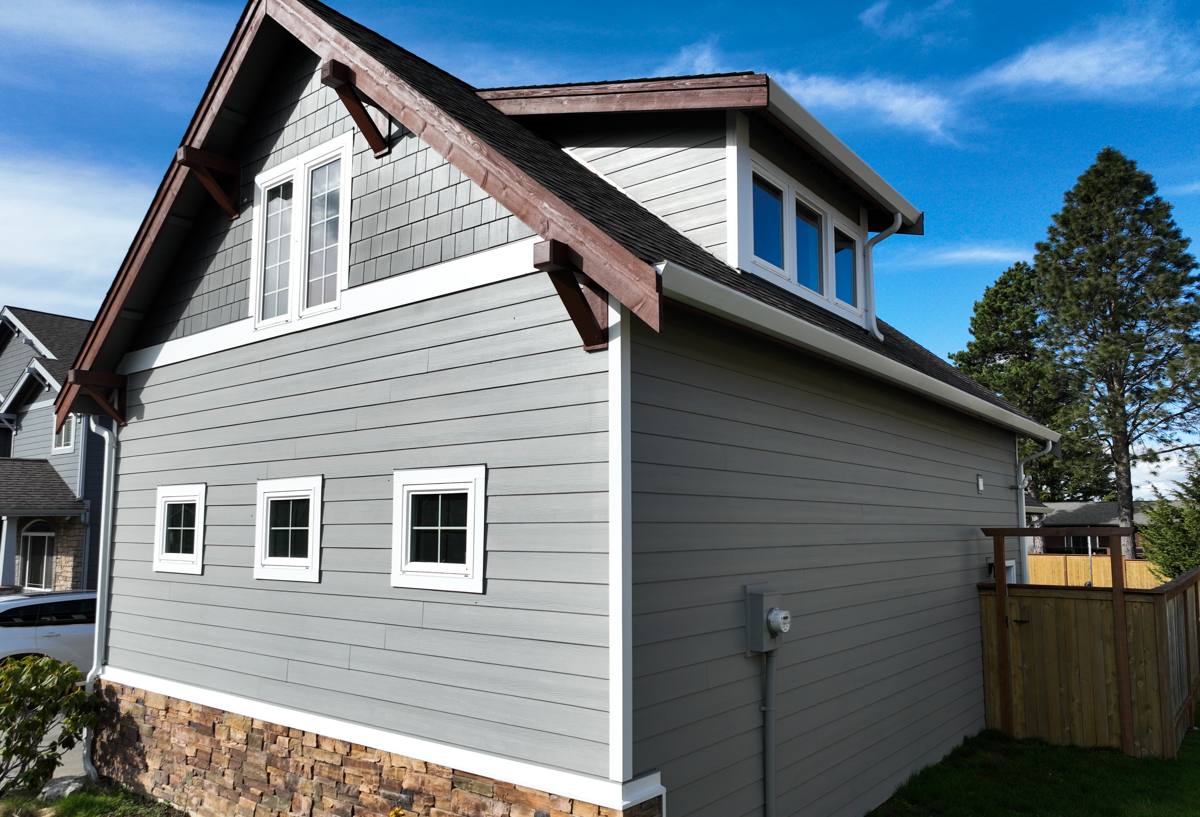
What This Climate Actually Does to Siding
Moisture That Doesn't Let Up
It's not one big storm that damages siding in Whatcom County — it's months of low-grade saturation. Wood-based products absorb moisture at seams, fastener holes, and butt joints, and if that moisture doesn't fully dry between rain events, it starts to soften the material from the inside. Over several winters, that shows up as swelling, delamination, or soft spots, especially on north- and west-facing walls that get the least sun exposure.
Moss, Algae, and Shade
Everson's mix of tree cover, river-valley humidity, and long overcast stretches is close to ideal for moss and algae growth. On porous or textured siding, that growth holds moisture against the surface and accelerates whatever deterioration is already happening. On painted wood products, it also stains the finish in a way that's difficult to fully clean off.
Freeze-Thaw Cycling
Whatcom County winters aren't brutally cold, but they do dip below freezing often enough, right after periods of heavy rain, to matter. Materials that have absorbed water and then freeze can crack, swell, or separate at the surface. It's a slow process, but it's cumulative, and it's one of the main reasons siding that looks fine in year three can look tired by year eight.
Why We Install Only James Hardie Fiber Cement
We made a deliberate decision as a company to install James Hardie fiber cement siding exclusively. We don't install vinyl, LP SmartSide, Cemplank, Allura, primed spruce, or cedar. That's not a marketing position — it's a standard we hold because of what we've seen these materials do, and not do, in exactly this kind of climate.
Built for Moisture, Not Just Weather
Fiber cement doesn't absorb water the way wood-based or wood-composite products do, and it doesn't soften or swell when it stays wet for extended periods. That matters directly in a place like Everson, where "extended periods of wet" describes most of the year. James Hardie also engineers regional HZ product lines specifically for climates like ours, accounting for moisture exposure rather than treating the whole country the same way.
ColorPlus Factory Finish
Hardie's ColorPlus finish is baked on at the factory under controlled conditions, rather than painted on site. It resists fading and holds up to the kind of prolonged damp, shaded exposure that causes field-applied paint to fail early. For homeowners tired of repainting siding every several years, that's a real, practical difference.
Non-Combustible Material
Fiber cement is non-combustible, which matters increasingly in Washington as wildfire smoke and dry-season fire risk become part of the broader conversation, even in wetter counties like ours. It's one more reason we're comfortable standing behind it as the only product we put on a home.
A Warranty Structure That Holds Up
James Hardie backs its siding with a strong, transferable warranty, which matters both for your own peace of mind and for resale value down the road. A warranty is only as good as the product and the installation behind it, which is why correct installation to manufacturer spec is non-negotiable on every job we do.
How Fiber Cement Compares to Other Common Siding Materials
| Material | Moisture Behavior | Maintenance | Fire Rating |
|---|---|---|---|
| James Hardie fiber cement | Doesn't swell or rot; engineered for wet climates | Low — factory finish, no repainting cycle | Non-combustible |
| Vinyl | Doesn't absorb water, but can warp, crack in cold, and trap moisture behind it if installed poorly | Low, but color fades and can't be repainted easily | Combustible |
| LP SmartSide / wood composite | Wood-based core is moisture-sensitive at seams and cuts | Moderate to high — finish and seams need monitoring | Combustible |
| Cedar / primed spruce | Absorbs and releases moisture readily; prone to rot without upkeep | High — regular sealing, staining, or painting | Combustible |
Every material on this list has a legitimate place in the market, and homeowners choose them for real reasons — cost, appearance, familiarity. We simply concluded that for the way Everson and Whatcom County weather behaves, fiber cement is the one we're willing to put our name behind.
Full Exterior Service, Not Just Siding
Siding rarely fails in isolation. Roof flashing, window trim, and deck ledger connections all interact with the siding around them, and moisture problems often start at those transitions rather than in the middle of a wall. We handle siding, roofing, windows, and decks as a company, which means when we're on an Everson property for a siding job, we're looking at the whole exterior envelope, not just one component.
Where Problems Actually Start
- Roof-to-wall flashing that's undersized or missing, letting water track down behind siding
- Window trim and flashing that wasn't properly integrated during a past remodel
- Deck ledger boards bolted directly to the house without adequate flashing
- Old fastener penetrations from satellite dishes, lighting, or signage that were never sealed
Catching these during a siding project, rather than after new siding is already installed over them, is a big part of why the sequencing and inspection at the start of a job matter as much as the material choice.
What a Siding Project in Everson Looks Like
Assessment
We start by walking the exterior and, where needed, opening up a section of existing siding to look at the sheathing and framing underneath. In a river-valley climate, hidden moisture damage is common enough that we don't assume it isn't there just because the surface looks okay.
Tear-Off vs. Overlay
Full tear-off is almost always the right call when there's any sign of moisture intrusion, since it lets us inspect and repair the sheathing directly. Overlay is occasionally appropriate on sound, dry substrates, but we'll tell you plainly if we think it's cutting a corner your house can't afford in this climate.
Installation to Spec
James Hardie publishes specific installation requirements — fastener spacing, clearances, flashing details, caulking practices — and those details are what actually determine whether the warranty holds and whether the siding performs the way it's engineered to. This is where a lot of the real value in hiring an experienced local crew shows up, since it's invisible once the job is finished.
What Drives the Cost of a Siding Project
| Factor | Why It Matters |
|---|---|
| Home size and wall complexity | More corners, gables, and trim details mean more labor and material cuts |
| Tear-off vs. overlay | Tear-off costs more upfront but allows sheathing repair and a clean warranty |
| Hardie product line (lap, shingle, panel) | Different profiles and textures carry different material and install costs |
| Existing damage found underneath | Rotted sheathing or framing found during tear-off adds necessary repair work |
| Site access | Rural lots, long driveways, or tight setbacks affect staging and labor time |
We give straightforward, itemized estimates so you can see exactly what's driving the number, rather than a single lump figure.
Signs Your Siding Needs Attention
- Soft or spongy spots when you press on the siding, especially near the bottom of walls
- Visible moss or algae growth that keeps returning after cleaning
- Peeling, bubbling, or chalky paint that needs redoing more often than it used to
- Warping, cupping, or visible gaps at seams and corners
- Rising energy bills that suggest the wall assembly isn't performing the way it should
- Staining on interior walls near exterior corners, which often points to a flashing or siding failure outside
Any one of these on its own might not be urgent. Several together, especially on an older home, are worth a proper look before another wet season passes.
Why a Local Crew Matters
We're a Ferndale-based crew that works Whatcom County day in and day out, which means we're not guessing at how a house in Everson behaves differently from one in downtown Bellingham or out toward the coast. River-valley humidity, agricultural surroundings, and the specific way moss and shade interact on rural lots are things you learn by working the area repeatedly, not from a general contractor passing through. It also means if a question comes up six months after the job, or a warranty item needs a look, we're a short drive away, not a call center in another state.
If you're weighing a siding project on your Everson home, we're happy to walk the exterior with you, point out what we actually see, and put together a clear, no-pressure estimate. There's no obligation, and you'll leave the conversation with a better sense of what your house needs, not just a sales pitch.