 Ferndale Siding
 Two Very Different Materials, One Decision
Homeowners in Ferndale often come to us with a straight question: what's the real difference between fiber cement and engineered wood siding, and why does our crew only install one of them? It's a fair question, and it deserves a straight answer instead of a sales pitch. Both products are legitimate upgrades over old cedar or aging vinyl. They are not the same material, though, and they don't age the same way once they're facing Whatcom County weather for fifteen or twenty years.
This page walks through what each product is made of, where each one tends to succeed or struggle, and why our company standardized on James Hardie fiber cement rather than carrying both. We install siding for a living in this specific climate, not a generalized one, and that's the lens we use.
What LP SmartSide Gets Right
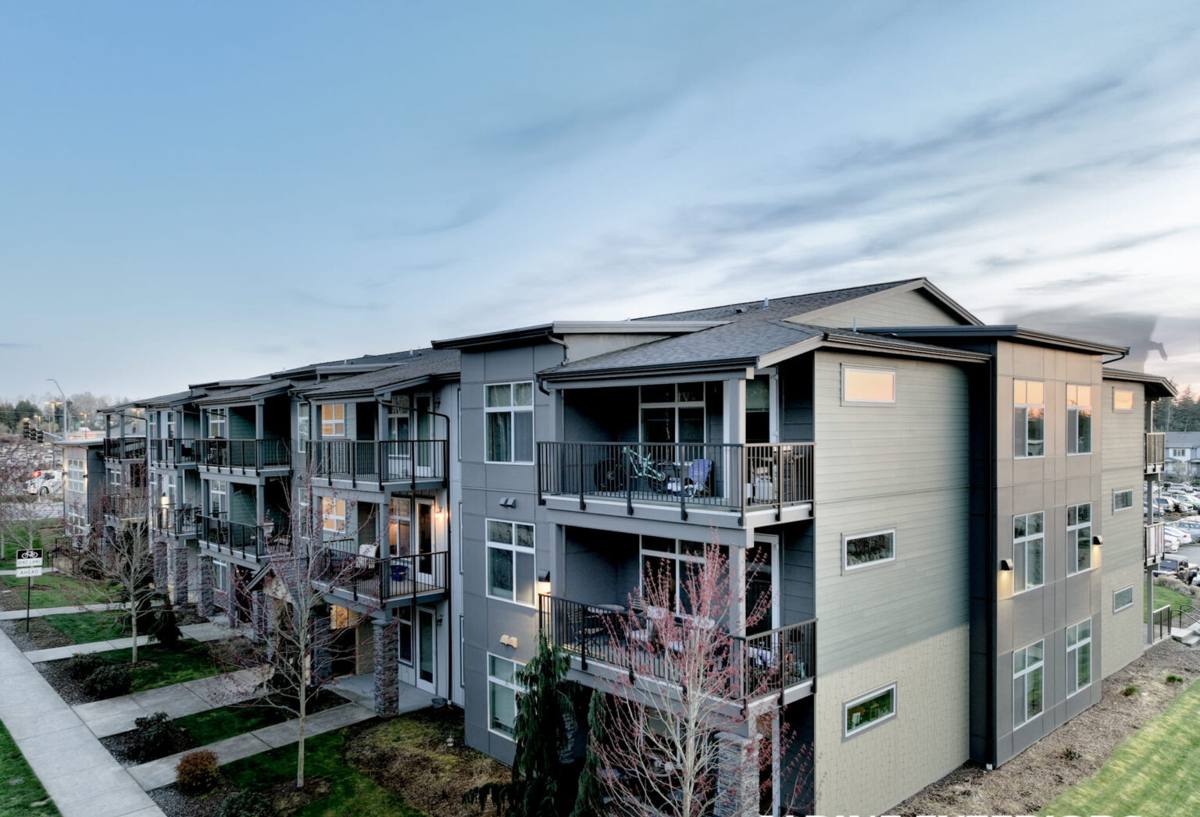
LP SmartSide is an engineered wood product — strand-based, built from wood fiber bonded with resins under heat and pressure, then treated with a zinc borate coating for insect and fungal resistance. It's not the same as the primed spruce or plain cedar boards of decades past, and it would be dishonest to lump it in with those. It's lighter than fiber cement, easier on installers' bodies, holds a nail well, and in a lot of markets it's a genuinely durable, cost-effective siding choice with a real manufacturer warranty behind it.
Where it performs best is in drier, more moderate climates, or on homes where the building envelope, flashing, and maintenance schedule are all handled correctly and consistently for the life of the product. That last part is the catch.
Where Engineered Wood Runs Into Trouble
Engineered wood is still a wood-based product at its core. That means its long-term performance depends heavily on keeping water away from cut edges, panel seams, and any spot where the factory coating gets breached during installation or over time. A few realities matter here:
- Any field cut, notch, or fastener penetration needs to be sealed correctly and re-sealed as the home ages — miss that step and moisture has a direct path into the substrate.
- Prolonged, repeated wetting is the one condition wood-based siding is least tolerant of, regardless of the resin treatment.
- Maintenance is not optional — it's part of the product's design assumption, and it has to happen on schedule, not "when we get around to it."
- Once moisture does get in at an edge or seam, swelling and softening can spread before it's visible from the outside.
None of that makes it a bad product everywhere. It makes it a product that asks a lot of its installation detailing and its owner's follow-through, year after year, in a climate that doesn't always cooperate.
What Fiber Cement Is Actually Made Of
James Hardie fiber cement siding is a completely different material family: portland cement, sand, and cellulose fiber, cured into a rigid, non-combustible board. There's no wood grain to swell, no resin bond to break down under repeated wetting, and no insect food source. It's heavier and requires different tools and technique to install correctly, but the trade-off is a material that doesn't share engineered wood's core vulnerability — moisture absorption into a wood-fiber substrate.
That doesn't mean fiber cement is maintenance-free or installation-proof. It still needs correct flashing, proper clearances, and factory-spec fastening. But its failure modes are different, and in our experience, more forgiving of the kind of weather Whatcom County actually delivers.
Why Whatcom County's Climate Changes the Math
Ferndale sits close enough to Bellingham Bay and the Salish Sea that salt-laden air is a real factor on siding, trim, and fasteners — not a coastal-town cliché. Layer on the driving rain that comes through on a wind-driven system off the water, and siding here takes on wind-blown moisture from angles that a lot of installation details and product data sheets don't fully account for. Then there's moss season, which in this part of Washington isn't a two-week nuisance — it's a stretch of the year long enough that anything organic on a north-facing wall or shaded elevation gets a real chance to take hold.
Put those three things together — salt air, driving rain, and a long moss season — and you get a climate that rewards materials and finishes that don't feed biological growth and don't depend on an unbroken maintenance streak to keep water out. That's the environment we're actually installing into, not a showroom.
James Hardie Product Lines and the ColorPlus Finish
Hardie isn't one product — it's a system, and the details matter:
| Line | Best Use | Notable Feature |
|---|---|---|
| HardiePlank Lap Siding | Most homes, primary field siding | Available in multiple styles and textures |
| HardieShingle | Accent gables, dormers | Staggered or straight-edge shingle profiles |
| HardiePanel | Modern vertical siding, board-and-batten | Large-format vertical panels |
| HardieTrim | Corners, window and door trim | Matches ColorPlus finish system |
Hardie also engineers its products by climate zone (HZ5 and HZ10 designations), which affects moisture resistance and freeze-thaw performance specification by region. And the ColorPlus finish — a factory-applied, baked-on coating — is a meaningful upgrade over field-painting: it's more consistent, more fade-resistant, and it's backed by its own finish warranty separate from the substrate warranty. We spec Hardie products and colors to the region they're going into rather than treating every job the same.
Fire and Wildfire Consideration
Fiber cement is non-combustible. That's not the primary reason homeowners in Whatcom County choose it — this isn't dry wildfire country — but it's a real, permanent difference from any wood-based or wood-fiber product, and it's worth knowing even here.
Installation Sensitivity — Why Correct Install Matters for Both
To be fair to engineered wood, most of the failures we've seen traced back to installation, not the product itself: wrong fastener pattern, unsealed cut edges, missing flashing at butt joints, siding installed too close to grade or a deck surface. Fiber cement has its own installation-sensitive points — proper gapping, correct nailing depth, factory-spec caulking at penetrations — and a poorly installed Hardie job will underperform a well-installed SmartSide job every time.
The difference is what happens when installation isn't perfect, or when a maintenance step gets missed a few years down the road. Fiber cement's margin for error, particularly around moisture, is wider. That margin is the whole reason we standardized on one product rather than carrying both and installing whichever costs less.
Cost Over the Life of the Siding
Upfront material and labor cost is usually lower for engineered wood than for fiber cement. That comparison looks different once you factor in the full ownership period:
| Factor | LP SmartSide | James Hardie Fiber Cement |
|---|---|---|
| Typical upfront cost | Lower | Higher |
| Repainting need | Field-painted; repainting cycle applies | ColorPlus factory finish resists fading; longer repaint interval |
| Moisture sensitivity | Higher — edges/seams need ongoing sealing | Lower — cement substrate doesn't absorb like wood fiber |
| Insect/rot resistance | Treated but wood-based | Non-organic, not a food source |
| Warranty structure | Manufacturer warranty, product-specific | Long-term transferable warranty; separate finish warranty on ColorPlus |
We don't have a stake in inflating either column — this is simply why, for the homes we put our name on, the long-run column carries more weight than the day-one number.
A Practical Checklist Before You Choose
Whatever material you land on, these are the questions worth asking before signing a contract:
- Is the installer certified or specifically trained on the exact product being installed, not siding in general?
- What is the manufacturer's warranty, and is it transferable if you sell the home?
- Who is responsible for caulking, sealing, and touch-up maintenance after installation — and how often does it need to happen?
- How does the product handle a north-facing, shaded wall in a long wet season?
- What happens at cut edges, seams, and penetrations — are they factory-sealed or field-sealed?
- Does the color finish come from the factory or get applied on-site, and what's the fade/touch-up plan?
Why We Put Hardie on Homes, Not Both
We could carry multiple siding lines and quote whatever a homeowner wants. We chose not to, because a contractor who installs everything ends up being an expert in nothing, and because we're not willing to install a product in this climate that asks for a maintenance commitment we can't control after we drive away. James Hardie fiber cement's non-combustible core, ColorPlus factory finish, climate-engineered product lines, and strong transferable warranty match what a Ferndale roofline actually has to survive — salt air off the water, driving rain, and a moss season that doesn't let up. That's the whole reason behind the choice, and it's why it's the only siding we put our name behind.
If you're weighing a siding replacement in Ferndale or elsewhere in Whatcom County, we're happy to walk your specific home and give you a straight, no-pressure estimate — no obligation, just an honest look at what your walls are dealing with.