 Ferndale Siding
 Vinyl Is the Most Popular Siding in America — That Doesn't Make It the Right Choice Here
If you've priced out siding for a home in Ferndale, you've almost certainly gotten a vinyl quote. It's the most-installed siding material in the country, and there's a reason for that: it's inexpensive to manufacture, fast to install, and never needs paint. For a lot of climates, that's a reasonable trade-off. We just don't think it's a good one for homes sitting between Bellingham Bay and the Nooksack lowlands, where salt-laden air, sideways rain, and months of shade and moss put a different kind of stress on an exterior than vinyl was designed to handle.
We're a fiber cement contractor. We install James Hardie products exclusively, and we turn down vinyl siding jobs on purpose. This page explains the actual trade-offs — not scare tactics, not manufacturer bashing, just the reasoning a Whatcom County homeowner deserves before committing to twenty-plus years of exterior.
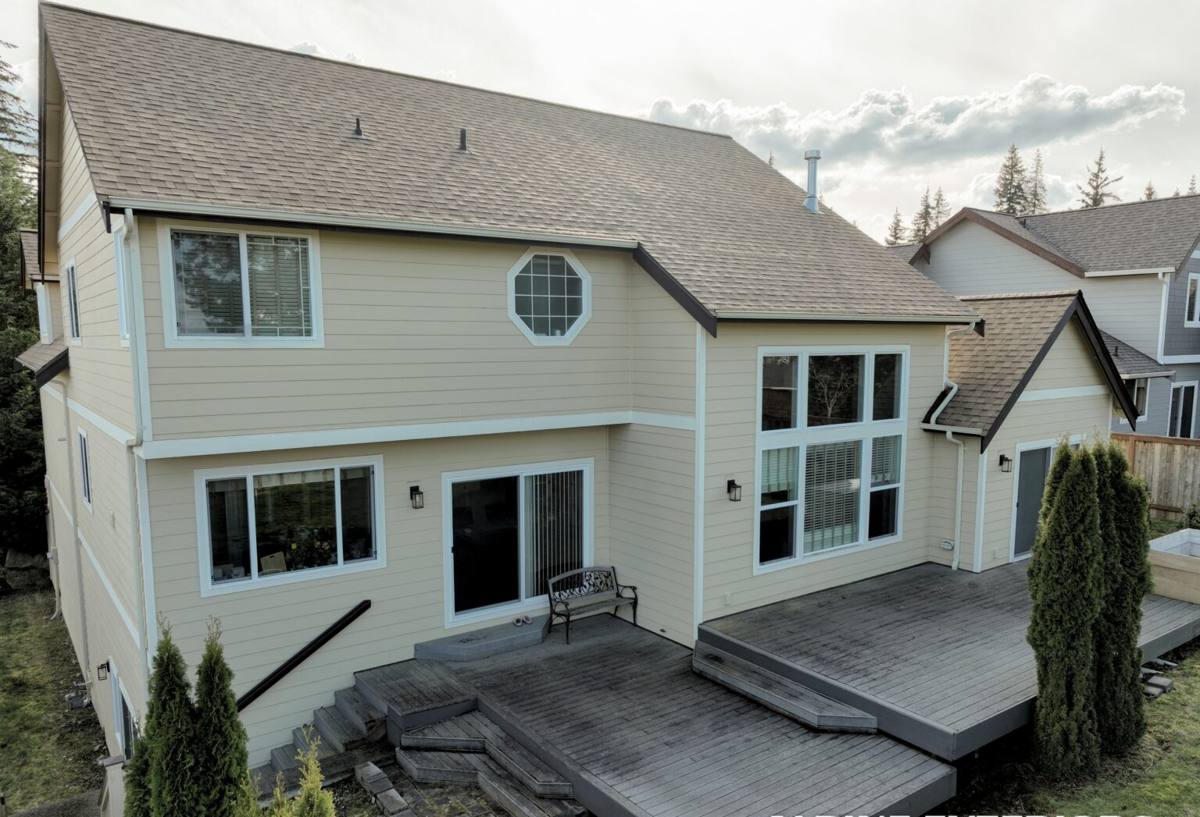
What Vinyl Siding Actually Gets Right
Fair is fair. Vinyl siding has real advantages, and pretending otherwise wouldn't be honest:
- Low upfront material cost compared to almost every other cladding option.
- No painting required — the color runs through the panel, not just on the surface.
- Lightweight, which makes it fast and less labor-intensive to hang.
- Decent moisture resistance as a material itself — PVC doesn't rot or absorb water the way wood does.
If you're in a dry inland climate with mild winters and no salt exposure, vinyl can perform acceptably for a long time. That's just not the environment most Ferndale homes sit in.
Where Whatcom County's Climate Works Against Vinyl
Salt Air Off the Bay and the Strait
Ferndale sits close enough to Bellingham Bay and the Strait of Georgia that salt-laden marine air is a regular part of the weather here, especially on west- and south-facing elevations that catch the prevailing wind. Salt air doesn't rot vinyl the way it corrodes bare metal, but it does accelerate the breakdown of the plasticizers that keep PVC flexible. Over years of exposure, panels get more brittle, more prone to cracking on impact, and more likely to show stress cracks around fastener slots and corner posts.
Driving Rain and Wind-Driven Moisture
Vinyl siding is installed as an overlapping shell, not a sealed membrane — it's designed to shed water, not block it outright, and it relies on a drainage plane behind it to manage anything that gets past the panels. In a climate with a lot of straight-down rain, that works fine. In a climate with sustained wind-driven rain off the water, water gets pushed sideways and upward into laps and J-channels more often, which puts real pressure on the housewrap, flashing, and trim details behind the siding — details that are only as good as the crew that installed them.
The Long Moss Season
Whatcom County's shaded, damp stretches from fall through spring are exactly the conditions moss and algae like. Vinyl's slightly textured, low-gloss surface gives organic growth something to hold onto, particularly on north-facing walls and anywhere tree cover keeps siding from drying out between rain events. It's cosmetic, not structural, but it means more frequent washing to keep a home looking cared for — and pressure washing vinyl too aggressively can crack panels or blow water behind them.
Heat, Cold, and the Physics of PVC
Vinyl is a plastic, and plastic moves with temperature more than most exterior materials. On a sunny day, dark-colored vinyl panels can get hot enough to expand noticeably, and on a hard frost — which the region gets its share of in winter — that same material stiffens and contracts. This is normal, expected behavior, and manufacturers design panels with slotted nail holes specifically to allow that movement. But it means vinyl has to be hung loosely enough to expand and contract freely, correctly nailed (not too tight, not too loose), and it means a wall that looks straight and tight the day it's installed can start to show waviness, buckling, or gapping years later as the material cycles through hundreds of expansion swings.
Installation Sensitivity: Why the Installer Matters as Much as the Product
Vinyl siding is genuinely forgiving to install badly and still look fine on installation day. The problems show up later. Panels nailed too tight restrict the expansion the material needs and buckle in the first hot summer. Panels nailed too loose rattle in wind and can blow off in a storm. J-channels and starter strips that aren't set with the right reveal telegraph every imperfection in the wall behind them. Because vinyl is so cheap and fast to hang, it attracts a lot of low-bid, high-volume installation — and the material's own tolerances mean sloppy work doesn't always announce itself for a year or two.
We're not willing to put our name on a product where correct installation is that easy to fake in the short term and that consequential in the long term.
What Happens to Vinyl Over 15 to 20 Years
Even well-installed vinyl siding ages in ways worth knowing about before you buy:
- Fading — UV exposure gradually dulls the color, especially on darker shades and south-facing walls, and there's no refinishing option since there's no separate paint layer to redo.
- Brittleness — older panels crack more easily on impact from hail, a stray baseball, or ladder contact during gutter cleaning.
- Warping near heat sources — panels near barbecue grills, dark trim, or reflective window glass can visibly deform.
- Discontinued colors and profiles — replacing a single damaged panel gets harder as a product line ages out, sometimes forcing a full re-side to match.
Vinyl vs. Fiber Cement: A Side-by-Side Look
| Factor | Vinyl Siding | James Hardie Fiber Cement |
|---|---|---|
| Core material | PVC plastic | Cement, sand, and cellulose fiber |
| Combustibility | Melts/burns under fire exposure | Non-combustible |
| Salt air resistance | Plasticizers degrade over time | No plasticizers to break down |
| Moss/algae resistance | Textured surface holds growth | ColorPlus finish sheds growth more readily |
| Impact resistance | Cracks, especially when older/cold | Rigid, resists denting and cracking |
| Color | Molded-in color, fades with UV | Factory-baked ColorPlus finish, repaintable if ever needed |
| Movement with temperature | High — requires loose-hang installation | Minimal expansion/contraction |
| Typical upfront cost | Lower | Higher |
| Warranty structure | Prorated, often non-transferable | Long-term, transferable Hardie warranty |
Why We Standardized on James Hardie Instead
We made a decision as a company to install one siding system and install it well, rather than offer every product on the market and hope each crew gets it right. James Hardie fiber cement is non-combustible, which matters in a region that sees wildfire smoke and drought stress even outside the driest interior parts of the state. It's engineered in climate-specific HZ formulations, so the product spec'd for a wet coastal climate like ours is actually different from what gets shipped to Arizona. The ColorPlus factory finish is baked on under controlled conditions — not job-site painted — and it's formulated to resist the UV fading and moss staining that give vinyl trouble in exactly the conditions Whatcom County produces most of the year. And the warranty is structured to transfer to a future homeowner, which matters if you ever sell.
None of that makes fiber cement zero-maintenance or foolproof — it still has to be installed to spec, with correct clearances, flashing, and caulking, or any siding product will underperform. But it gives us a material we're comfortable standing behind for the specific weather this area throws at a house.
Questions Worth Asking Before You Choose a Siding Product
- How does this material handle sustained wind-driven rain, not just average rainfall?
- What happens to its color and surface texture after 10-15 years of UV and moisture exposure?
- Is the warranty transferable if I sell the house?
- How forgiving is this product of installation mistakes — and how do I vet the crew doing the work?
- Is the material combustible, and does that matter for my insurance or peace of mind?
- Does the manufacturer offer a version engineered for a wet coastal climate specifically?
The Bottom Line
Vinyl siding isn't a bad product in the abstract — it's a product built around a set of trade-offs that make more sense in drier, milder climates than the one Ferndale sits in. Between the salt air, the driving rain, and the long stretches of damp shade that feed moss growth here, we've made the call that fiber cement gives homeowners a better twenty-year outcome, even at a higher upfront cost. We'd rather explain that reasoning honestly than install something we don't think will hold up.
If you're weighing siding options for a home in Ferndale or anywhere else in Whatcom County, we're happy to walk your property, talk through what your specific exposure looks like, and give you a straightforward, no-pressure estimate for Hardie siding — use the form below to get started.