 Ferndale Siding
 Siding in Fairhaven: Built for a Salt Air, Rain, and Moss Climate
Homes near Fairhaven sit close enough to the water and the moisture patterns of Whatcom County that exterior materials get tested every single year, not just in the odd bad storm. Salt-laden air off the water, long stretches of driving rain from fall through spring, and a moss season that seems to start earlier every year all combine to put real pressure on siding, trim, roofing, and anything wood-based on the outside of a house. Ferndale Siding Contractors works this stretch of Whatcom County regularly, and we've built our whole approach around what actually survives here long-term, not just what looks good on installation day.
This page is about what that means specifically for a Fairhaven-area home: what to watch for, how we handle the work, and why we've narrowed our siding installations down to one product system instead of offering the usual lineup of options.
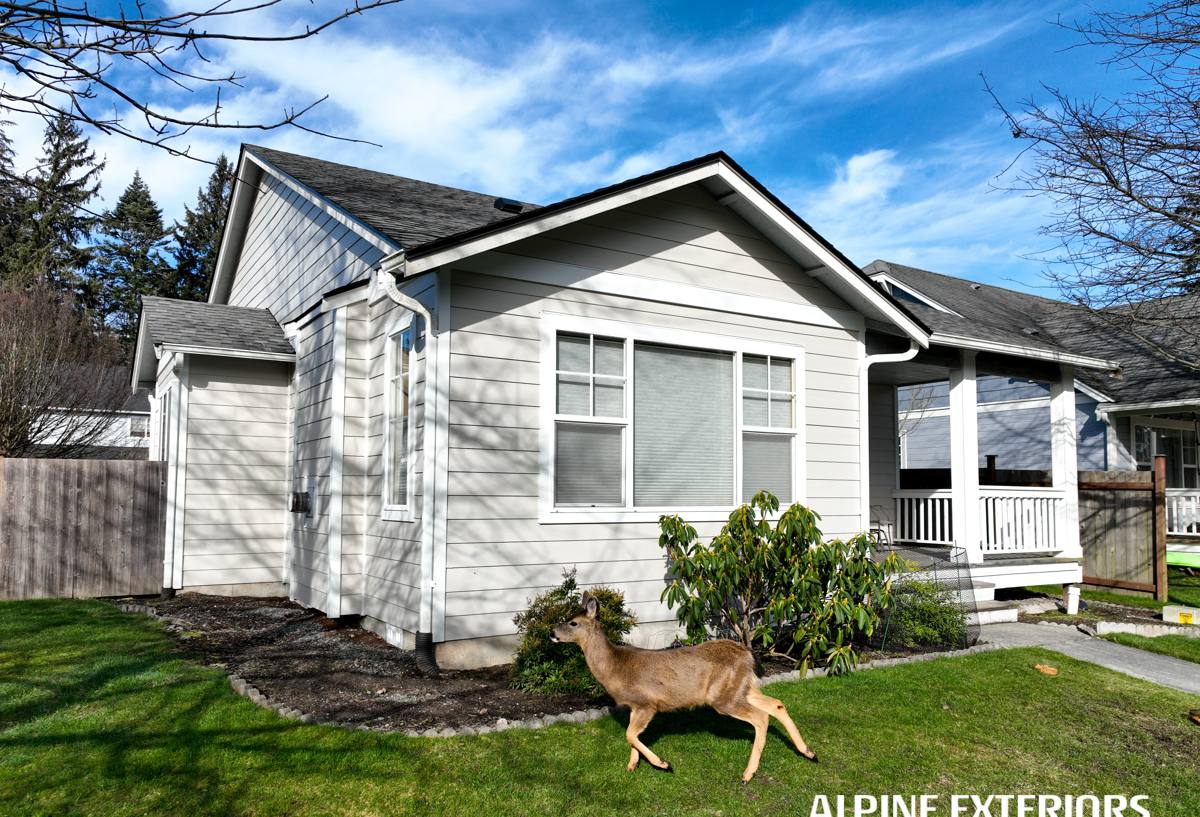
What the Local Climate Does to a House Over Time
Salt Air and Corrosion
Proximity to saltwater doesn't just affect metal fasteners and flashing — it accelerates the breakdown of paint films, caulking, and lower-grade composite materials faster than the same products would wear inland. Salt-carrying air settles on horizontal surfaces, window sills, and anywhere water sits after a rain, and over years that slow chemical wear shows up as chalking paint, degraded caulk joints, and premature fading on anything not engineered for coastal-adjacent exposure.
Driving Rain and Wind-Driven Moisture
Whatcom County doesn't get the heaviest single-storm rainfall totals in the state, but it gets a lot of days of steady, wind-pushed rain, especially in the fall and winter months. That matters more for siding performance than an occasional downpour, because wind-driven rain gets forced sideways and upward into laps, seams, and butt joints that a purely vertical rain would never reach. Siding materials and installation details that aren't built for that kind of exposure tend to show water intrusion problems years before they would in a drier, calmer climate.
Moss, Algae, and Prolonged Dampness
The long wet season here means siding, trim, and roofing surfaces can stay damp for days at a stretch, especially on north-facing walls and anything shaded by trees or neighboring structures. That prolonged dampness is exactly what moss and algae need to establish themselves. Once organic growth takes hold on a porous or wood-based surface, it holds moisture against that surface even longer, which speeds up rot, paint failure, and structural decay in a feedback loop that gets harder to break the longer it's ignored.
Why We Only Install James Hardie Fiber Cement Siding
We get asked fairly often why we don't offer vinyl, LP SmartSide, or other fiber cement brands alongside James Hardie. The honest answer is that we made a standardization decision based on what holds up in this specific climate over decades, not what's cheapest to quote or fastest to install.
James Hardie fiber cement is non-combustible, dimensionally stable in wet-dry cycling, and manufactured with a factory-applied ColorPlus finish that's engineered to resist fading and cracking far longer than field-applied paint. It doesn't feed mold or moss the way wood-based products can, and it doesn't have the seam and expansion vulnerabilities that make vinyl a poor match for high-wind, high-moisture coastal-adjacent conditions. We're not saying every other product is unusable everywhere — we're saying that for the specific combination of salt air, driving rain, and long wet seasons that Fairhaven-area homes deal with, Hardie is the product we're willing to put our name behind and warranty.
Narrowing to one manufacturer also means our crews install it constantly. There's no learning curve, no guessing on manufacturer-specific fastening patterns or clearances — just consistent, correct installation every time.
The James Hardie Product Lines We Work With
| Product Line | Best Use | Notable Feature |
|---|---|---|
| HardiePlank Lap Siding | Most common wall application | Traditional lap profile, multiple textures and exposures |
| HardiePanel Vertical Siding | Board-and-batten and modern facades | Large-format vertical panels, fewer horizontal seams |
| HardieTrim | Corners, window and door surrounds, fascia | Matches ColorPlus finish, resists moisture at edges |
| HardieShingle | Accent gables, dormers | Staggered or straight-edge shingle profiles |
All of these are available in the HZ5 climate-engineered formulation appropriate for the Pacific Northwest, which is manufactured to perform in wetter, more variable climates than the standard HZ10 formulation used in drier regions.
How We Approach a Fairhaven-Area Siding Project
Inspection and Assessment
Before we talk about new siding, we look at what's actually happening on the house now — where moss and algae are concentrated, whether there's soft trim or sheathing behind existing siding, how the current drainage and flashing details are performing, and which walls take the worst weather exposure. That assessment shapes the whole plan, not just the material choice.
Moisture Management Comes First
Correct water-resistive barrier installation, properly lapped house wrap, and correctly flashed windows, doors, and penetrations matter more to long-term performance than the siding material itself. Fiber cement siding installed over a compromised moisture barrier will still fail early. We treat the barrier and flashing details as the foundation of the job, not an afterthought.
Installation to Manufacturer Specification
James Hardie's warranty and real-world performance both depend on installation done to spec — correct fastener type and placement, proper clearances from grade, roof lines, and decks, and correctly caulked or flashed joints. We follow those specs closely because that's what determines whether the product performs for decades or develops problems in year five.
Coordinated Work Where It Makes Sense
Because we also handle roofing, windows, and decks, siding replacement is often a good time to address related issues in one project instead of three separate ones — a roofline that's channeling water onto a wall, windows that are past their sealing life, or a deck ledger connection that needs attention. We'll flag those when we see them, but we don't push work that isn't needed.
Signs a Fairhaven-Area Home May Need Siding Attention
- Persistent moss or algae streaking on north- or shade-facing walls that keeps returning after cleaning
- Paint that's chalking, peeling, or bubbling faster than expected for its age
- Soft spots, visible cracking, or warping in existing siding boards or trim
- Caulk joints that have shrunk, cracked, or separated from the siding
- Visible gaps or separation at seams, corners, or butt joints
- Interior signs like musty smells, peeling interior paint, or stains near exterior walls
- Siding that's noticeably faded or discolored compared to when it was installed
Cost Factors for a Siding Project in This Area
| Factor | Why It Affects Cost |
|---|---|
| Home size and wall complexity | More square footage and more corners, gables, and dormers mean more material and labor |
| Existing substrate condition | Rot or moisture damage found underneath old siding needs repair before new siding goes on |
| Siding profile and trim detail | Board-and-batten, shingle accents, and custom trim add labor beyond a plain lap install |
| Access and site conditions | Multi-story walls, tight lot lines, or difficult staging affect labor time |
| Paint vs. factory finish | ColorPlus factory-finished product costs more upfront but avoids repainting cycles |
We give real numbers after we've actually looked at the house — broad averages you find online rarely reflect what a specific project needs once substrate condition and detail work are factored in.
Why a Local Crew Matters Here
Whatcom County's coastal-adjacent microclimates aren't uniform. A wall exposure that's fine a few miles inland can be a genuine problem zone closer to open water, and a crew that only works drier regions of the state may not build in the moisture-management margin that this area actually needs. Working this ground regularly means we know which details to over-build rather than build to the bare minimum — deeper flashing laps, more conservative clearances, and material choices that account for how much time a wall spends wet, not just how much rain falls on paper.
It also means we're a known, findable crew if a warranty question or a maintenance question comes up five or ten years down the road, not a name from a one-time out-of-area bid.
Maintenance Once New Siding Is Installed
James Hardie siding is lower-maintenance than wood or many composite products, but "lower-maintenance" isn't "no-maintenance" in this climate. A yearly rinse-down to clear moss spores and organic buildup before it establishes, a periodic check of caulk joints and trim connections, and prompt attention to any gutter or drainage issue that's dumping extra water onto a wall will keep the material performing at its best for the long haul. None of that requires repainting the way wood siding eventually does, since the ColorPlus finish is baked in at the factory.
If you're seeing moss, fading, soft trim, or just want an honest read on how your current siding is holding up against Fairhaven's weather, we're happy to take a look. Reach out for a free, no-pressure estimate using the form below.