 Ferndale Siding
 Siding in Sandy Point: Built for a Waterfront Address
Sandy Point sits close to the water on the Whatcom County coastline near Ferndale, and that proximity to the Strait of Georgia shapes almost everything about how a house ages out there. Homes in this area don't just deal with typical Pacific Northwest rain — they deal with salt-laden air blowing off the water, near-constant wind exposure, and a wet season that can stretch on for months at a time. Siding, trim, and fasteners that would hold up fine a few miles inland can wear out much faster this close to the shoreline.
We work throughout Ferndale and the surrounding Whatcom County communities, and Sandy Point is one of the areas where material choice and installation quality matter the most. This page walks through what the local climate actually does to exterior building materials, how we handle siding, roofing, windows, and decks for waterfront and near-waterfront properties, and why we've standardized on one siding product instead of offering a menu of options.
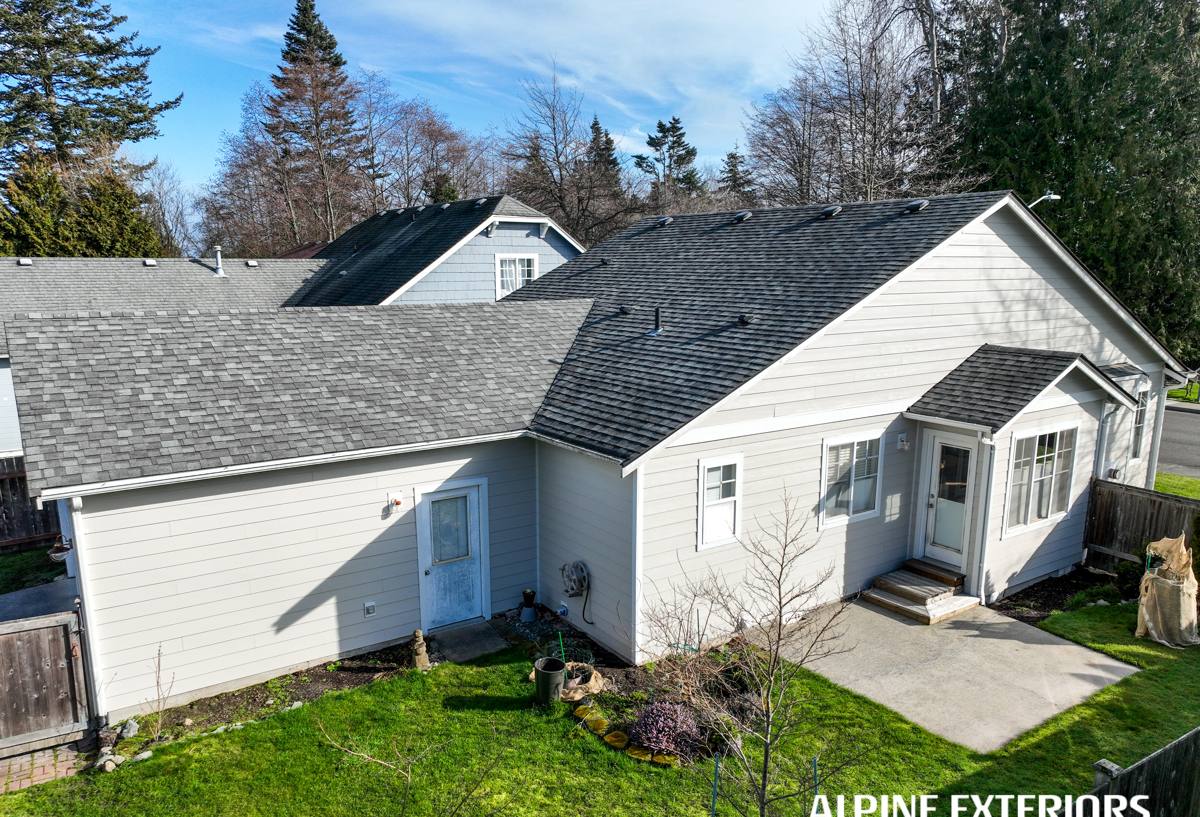
What Sandy Point's Coastal Climate Does to a House
Salt Air and Corrosion
Airborne salt is corrosive to a lot of the hardware that holds a house together — nails, screws, flashing, and even some trim materials. Over years of exposure, salt air can accelerate rust and corrosion on lower-grade fasteners and metal components, which is one reason we pay close attention to fastener specification and flashing details on every coastal job, not just the siding material itself.
Driving Rain and Wind-Driven Moisture
Open water means wind, and wind means rain doesn't just fall straight down — it drives sideways into walls, especially on the water-facing sides of a home. That kind of exposure puts extra stress on butt joints, seams, window and door flashing, and any spot where the water-resistive barrier behind the siding could be compromised. A siding system that's marginal on moisture performance in a sheltered inland location can fail much faster under sustained wind-driven rain.
Moss, Mildew, and a Long Wet Season
Whatcom County's wet season runs long, and shaded or north-facing walls near mature trees or dense landscaping can stay damp for extended stretches. That's ideal territory for moss and mildew growth on siding surfaces, especially anything with a porous or wood-based finish. Moss holds moisture against the wall longer than it would otherwise sit there, which compounds the problem over time.
Why We Only Install James Hardie Fiber Cement
We made a deliberate decision to install only James Hardie fiber cement siding — not vinyl, not LP SmartSide, not Cemplank or Allura, not primed spruce or cedar. That's not because those products don't have a place in the industry; it's because after years of installing and repairing siding in this climate, Hardie's combination of moisture performance, factory-cured finish, and non-combustible composition is what we're comfortable standing behind on a waterfront home.
| Factor | What Matters in Sandy Point's Climate |
|---|---|
| Moisture behavior | Fiber cement doesn't swell, rot, or delaminate the way wood-based products can under sustained wind-driven rain |
| Finish durability | ColorPlus factory finish is baked on and warrantied, reducing repaint cycles versus field-applied paint on wood siding |
| Fire resistance | Non-combustible core is a meaningful upgrade over vinyl or wood in wildfire-adjacent seasons |
| Pest and rot resistance | Cement-based composition doesn't feed insects or fungal growth the way wood substrates can |
| Long-term cost | Higher upfront cost than vinyl, offset by lower maintenance and repaint frequency over the ownership period |
To be fair to the alternatives: vinyl siding is inexpensive and low-maintenance in mild conditions, and LP SmartSide has real engineering behind its treated-strand technology. But vinyl can become brittle and can distort under repeated wind loading over decades near open water, and any wood-based product — including engineered wood — depends heavily on caulking and paint maintenance staying ahead of moisture intrusion. On a property exposed to salt air and driving rain, we'd rather not sell a homeowner a product that needs near-perfect maintenance discipline to perform. Hardie's fiber cement composition and factory finish give us a system we can install once and expect to perform for decades with normal upkeep.
Installing Siding Correctly on a Waterfront Property
Prep and Moisture Management
Correct installation starts before a single piece of siding goes up. That means verifying the water-resistive barrier is continuous and properly lapped, checking sheathing condition, and making sure every penetration — vents, hose bibs, electrical, window and door openings — has proper flashing integrated into the drainage plane. On a home this close to the water, we don't cut corners here; a good barrier behind the siding is what keeps wind-driven rain from becoming a rot problem years down the road.
Fasteners and Flashing Specification
Given the salt air exposure, fastener choice matters more here than it does further inland. We follow James Hardie's fastening specifications closely, including corrosion-resistant fastener requirements, and pay close attention to flashing metal compatibility so dissimilar metals aren't set up to corrode each other over time.
Joints, Gaps, and Caulking
Hardie's installation guidelines call for specific gapping and sealing at butt joints, trim intersections, and terminations. Skipping or rushing these details is one of the most common ways a fiber cement job underperforms — the material itself is excellent, but installation quality is what determines whether it lives up to its warranty and its expected lifespan.
Beyond Siding: Roofing, Windows, and Decks for Sandy Point Homes
Siding is only one piece of a home's exterior envelope, and we handle the rest of it too — roofing, windows, and decks — because they all interact with the same coastal conditions.
Roofing
A roof near the water deals with the same wind and driving rain as the siding below it, plus additional UV and moss exposure on any shaded slopes. Proper underlayment, flashing at valleys and penetrations, and ventilation all matter more when the weather is working against the roof more aggressively than it would inland.
Windows
Window flashing and integration with the siding's water-resistive barrier is one of the most common failure points on any home, coastal or not. When we replace windows, we make sure the flashing ties properly into the surrounding wall assembly rather than treating it as a separate task from the siding work.
Decks
Decks on waterfront and near-waterfront properties take a beating from moisture, sun, and salt air simultaneously. Fastener corrosion resistance and proper drainage beneath the deck surface are just as important as the decking material itself.
Signs Your Sandy Point Home May Need New Siding
A lot of siding problems near the water show up gradually, and it's easy to write off early symptoms as cosmetic. Some things worth a closer look:
- Soft or spongy spots when you press on siding, especially near the bottom courses or window sills
- Persistent moss or dark streaking on shaded or north-facing walls that comes back soon after cleaning
- Visible rust staining running down from fasteners or metal trim
- Paint that's peeling, bubbling, or chalking faster than it should for its age
- Warping, cupping, or separation at siding seams and butt joints
- Gaps opening up around window and door trim
- A noticeably higher heating bill that might point to moisture-compromised insulation behind the siding
Why a Local Whatcom County Crew Matters
Working this close to the water isn't the same as a typical inland Ferndale job, and a crew that installs siding across a wide range of inland conditions without regular exposure to salt air and coastal wind loading can miss details that matter here — fastener corrosion resistance, flashing metal compatibility, and the extra attention wind-driven rain demands at joints and penetrations. We work throughout Whatcom County regularly enough to know which details deserve extra attention on a property like this, and we're close enough to come back quickly if a question comes up after the job is done.
What to Expect From Us
We start with an on-site walkthrough to look at your home's current siding condition, exposure to wind and water, and any trouble spots around windows, trim, or the roofline. From there we put together a straightforward plan and a clear estimate — no pressure, no inflated scare tactics about what your existing siding is doing wrong. If James Hardie fiber cement is the right fit for your project, which for most homes in this area it is, we'll walk you through the product lines, colors, and what correct installation involves so you know exactly what you're getting.
If you're weighing a siding, roofing, window, or deck project for a home in Sandy Point or elsewhere around Ferndale, we're happy to come take a look and put together a free, no-pressure estimate using the form below.