 Ferndale Siding
 Marietta sits low along Bellingham Bay in Whatcom County, just south of Ferndale, where the water is never far from the front door. That location is part of what makes the neighborhood a good place to live — and part of what makes it a hard place to keep a house looking good. Salt-laden air off the bay, wind-driven rain that comes in sideways more often than straight down, and a shade-and-moisture pattern that keeps moss going strong most of the year all put steady pressure on a home's exterior. Ferndale Siding Contractors works this area regularly, and we've built our approach around what actually holds up here, not what looks good in a showroom.
What Marietta's Climate Does to a House
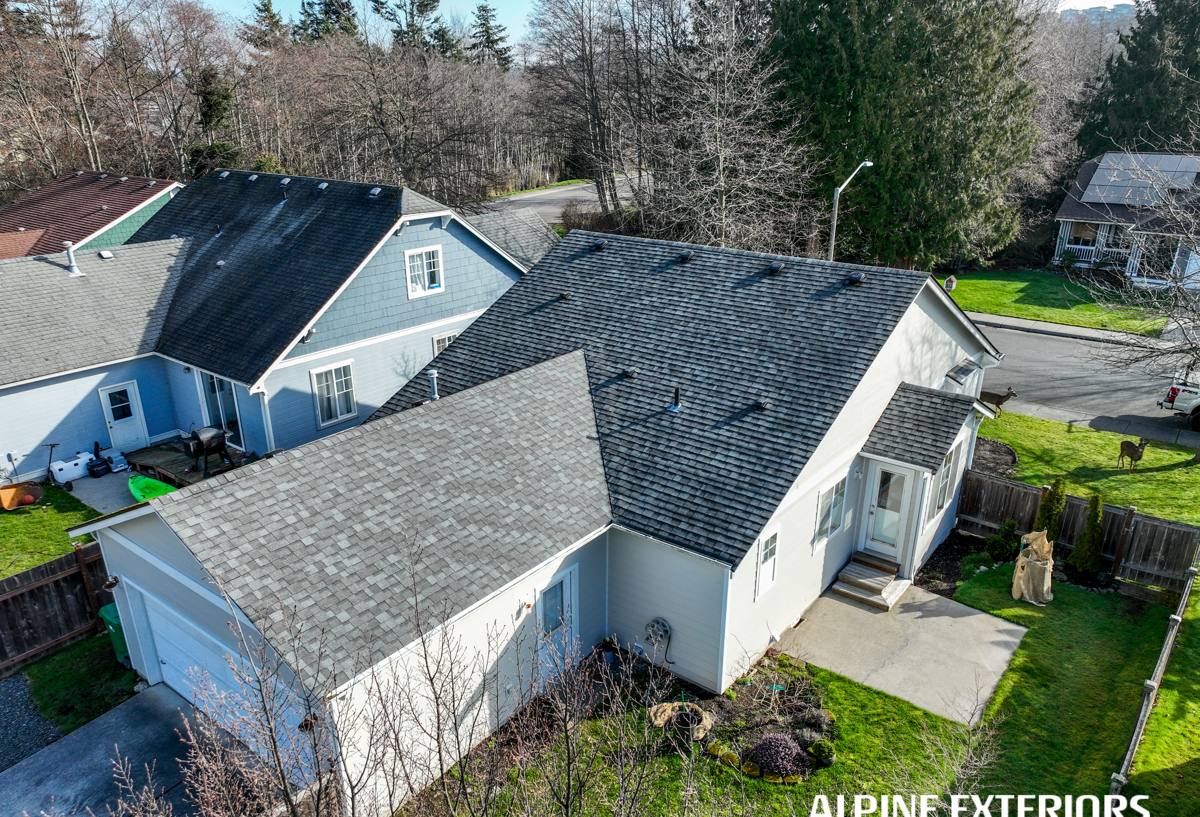
Every coastal Whatcom County neighborhood deals with rain. Marietta deals with rain plus salt air plus a lot of tree cover and low light in the wetter months, and that combination is tougher on siding, trim, roofing, and decking than most homeowners realize until they're dealing with the results.
Salt Air and Slow Corrosion
Homes close to Bellingham Bay pick up airborne salt that settles on every exterior surface. It doesn't cause dramatic damage overnight, but it accelerates corrosion on fasteners, flashing, and metal trim, and it can speed up the breakdown of coatings and finishes that aren't rated to handle it. Over years, that slow chemical wear shows up as rust streaking, pitted hardware, and paint that fails earlier than it would a few miles inland.
Wind-Driven Rain
Whatcom County gets a lot of rain, but the way it arrives near the water matters more than the total volume. Wind off the bay pushes rain sideways into wall assemblies, around window and door openings, and up under lap siding edges that would stay dry in a calmer setting. Water-resistive barriers, flashing details, and caulking that would be adequate on a sheltered lot can get overwhelmed on a more exposed one.
Moss, Shade, and Trapped Moisture
Between tree cover and the marine layer, many Marietta lots stay damp and shaded for long stretches of the year. That's ideal growing conditions for moss and algae on roofs, siding, and decking. Beyond the cosmetic issue, moss holds moisture against a surface far longer than open air would, which is exactly the condition that rots wood trim, degrades OSB sheathing, and shortens the life of anything not built to shed water fast.
Why We Standardized on James Hardie Fiber Cement
Ferndale Siding Contractors installs one siding system: James Hardie fiber cement. We don't install vinyl, LP SmartSide, Cemplank, Allura, primed spruce, or cedar, and in a climate like Marietta's, that's a deliberate call, not a sales preference.
Fiber cement is cement, sand, and cellulose fiber — it doesn't feed moss the way wood-based products can, it doesn't soften or swell when it takes on water the way engineered wood siding can if a seam fails, and it doesn't get brittle or fade the way vinyl does under years of UV and salt exposure. Hardie's ColorPlus finish is baked on at the factory under controlled conditions, which gives it better fade and chip resistance than field-applied paint, and it holds up well against the kind of coastal weathering Marietta sees. Hardie also engineers regional product lines (HZ5 for climates like ours) specifically for moisture and temperature cycling, and backs the material with a strong transferable warranty.
None of that means other products are junk — it means we looked at what this specific climate does to a house over 20, 30, and 40 years, and we chose to install the material that gives homeowners here the best odds of a low-maintenance exterior for the long haul.
How Fiber Cement Compares
| Material | Moisture Behavior in Wet Climates | Moss/Algae Resistance | Finish Durability |
|---|---|---|---|
| James Hardie Fiber Cement | Does not rot, swell, or absorb water like wood-based products | Does not feed moss growth; smooth surfaces shed easily | Factory-baked ColorPlus finish resists fading and chipping |
| Vinyl Siding | Sheds water but can warp or crack with temperature swings and impact | Textured profiles can hold moss and algae over time | Color is through the material but fades and chalks with UV/salt exposure |
| LP SmartSide / Engineered Wood | Vulnerable at cut edges and seams if caulking or paint fails | Wood-based substrate can support moss/mildew if moisture gets in | Field-applied paint needs more frequent maintenance |
| Cedar / Primed Spruce | Natural wood movement; needs consistent sealing to resist rot | Organic material is a natural moss and mildew host | Requires the most frequent recoating of any option here |
How We Approach a Marietta Siding Project
Every home on the bay is a little different depending on how exposed it is to wind and salt, how much shade it gets, and what condition the existing wall assembly is in. Our process starts with a real look at those specifics, not a one-size-fits-all quote.
What a Typical Project Involves
- On-site inspection of existing siding, trim, flashing, and any visible moisture or moss damage
- Assessment of wall sheathing condition once old siding is removed — this is where hidden rot or past water intrusion shows up
- Installation or repair of the water-resistive barrier and flashing details around windows, doors, and penetrations before any new siding goes on
- Hardie fiber cement installation to manufacturer spec, including correct fastening, clearances, and caulking practices suited to a coastal exposure
- Final walk-through covering care and maintenance specific to a bay-adjacent property
The flashing and moisture-barrier work matters as much as the siding itself. Fiber cement is a durable material, but it's still installed over a wood-framed wall, and a house near Bellingham Bay depends on the details behind the siding — not just the siding — to actually stay dry.
More Than Siding: Roofing, Windows, and Decks
Siding rarely fails in isolation in a climate like this. Roofing, windows, and decks all take the same salt air, wind-driven rain, and moss pressure, and problems in one area often show up as damage in another — a leaking roof valley can stain siding below it, and a failed window flashing can rot the wall cavity around it even if the siding itself looks fine.
Roofing
Roofs in Marietta deal with the same moss growth issue as siding, plus the added wear of salt air on metal flashing and fasteners. We look at roof condition as part of any exterior project, since a roof that's shedding granules or holding moss is usually sending water somewhere it shouldn't be.
Windows
Window flashing and sealant are one of the most common failure points on wind-exposed homes. Replacing siding without addressing failing window flashing just reinstalls the same problem behind new material, so we treat window integration as part of the siding job, not a separate afterthought.
Decks
Decks facing the bay take direct sun, salt spray, and standing moisture in the shoulder seasons, all at once. Fastener corrosion, board cupping, and ledger-board rot where the deck meets the house are the issues we see most, and they track closely with the same wind and moisture patterns that affect siding.
Why a Local Crew Matters Here
A crew that mostly works drier, more sheltered inland neighborhoods can still do competent work, but they won't have the same instinct for what a bay-facing wall in Marietta actually needs — where wind-driven rain tends to concentrate, how much moss pressure to expect on a shaded north-facing wall, or how quickly salt air degrades certain fasteners and finishes. That instinct comes from working this specific stretch of Whatcom County repeatedly, seeing how houses here age, and adjusting installation details accordingly rather than applying a generic spec sheet.
Being local also means being reachable. If a question comes up during a project or a concern surfaces afterward, you're dealing with a crew that's a short drive away and familiar with your property, not a call center.
What Drives the Cost of a Project
Every home is different, and we don't quote sight-unseen, but a few factors consistently move the price on Marietta exterior projects more than others.
| Factor | Why It Matters |
|---|---|
| Existing sheathing condition | Hidden rot or water damage found once old siding is removed adds repair work before new siding can go on |
| Home size and wall complexity | More corners, dormers, and trim detail means more labor and material cutting |
| Siding profile and accessories | Lap width, trim style, and features like soffit or fascia work change material and labor cost |
| Access and site conditions | Tight lots, slopes, or limited staging area near the water can affect scheduling and labor time |
| Scope beyond siding | Bundling roofing, window, or deck work with a siding project can be more efficient than separate projects later |
Maintaining a Hardie Exterior in a Bay-Adjacent Climate
One of the practical advantages of fiber cement in this environment is how little upkeep it demands compared to wood-based sidings, but "low-maintenance" isn't "no-maintenance." A periodic rinse to clear salt residue and organic buildup, keeping gutters and downspouts clear so water isn't dumping onto walls, and trimming back vegetation that keeps a wall shaded and damp all go a long way. Caulking at trim joints and penetrations is worth a visual check every year or two, since that's a common spot for water to find its way in regardless of what siding material sits on top of it.
Getting Started
If you're weighing a siding project in Marietta — or dealing with a roof, window, or deck issue that's tied into the same moisture pressure — we're glad to take a look and give you a straight answer about what your home actually needs. Reach out for a free, no-pressure estimate, and we'll walk the property with you before recommending anything.