 Ferndale Siding
 Board & Batten Siding for Kendall Homes
Kendall sits inland from the Ferndale core, tucked against the foothill country that leads up toward Mount Baker, with the Nooksack River drainage running through the area. It's a different setting than the flatter, more exposed parts of Whatcom County, but it shares the same demanding weather pattern: long wet seasons, driving rain that comes in sideways during winter storms, and enough shade and humidity in the tree-lined lots to keep moss and algae established on north-facing walls for months at a time. Board and batten siding has become a popular choice out here because of its clean, vertical look on farmhouse-style and craftsman homes, but it's also one of the least forgiving siding profiles when it's installed wrong. The vertical battens create dozens of extra seams and fastening points compared to a standard lap siding job, and every one of those seams is a potential water entry point if it isn't detailed correctly.
We install board and batten siding for homeowners throughout the Kendall area, and we do it with one material: James Hardie fiber cement. This page walks through what board and batten actually requires to hold up in this climate, how we approach the work, and why the installation details matter more here than almost anywhere else on a house.
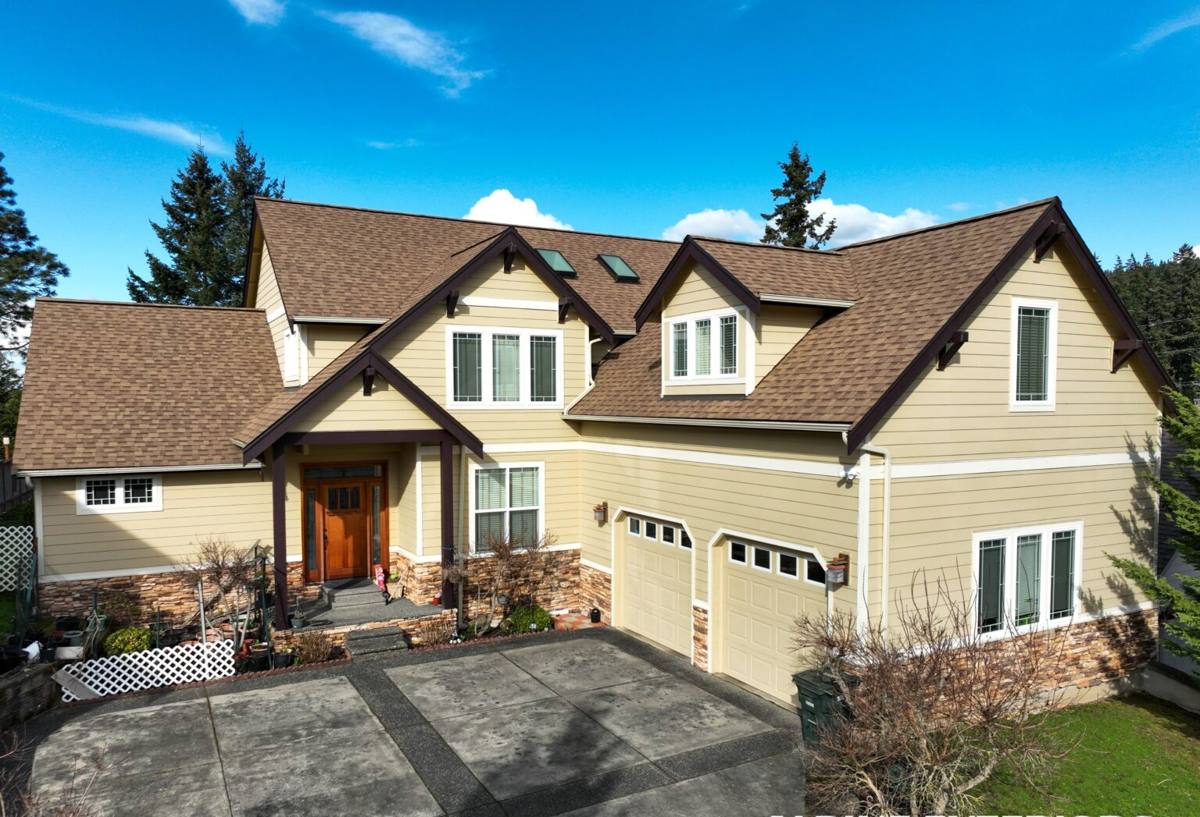
What This Climate Does to Board and Batten Siding
Board and batten's appeal is the shadow-line look — wide flat panels with narrow vertical battens covering the seams. That look depends entirely on the battens staying flat, straight, and tightly sealed against the panel underneath. In a wetter inland climate like Kendall's, a few specific failure patterns show up again and again on homes where the siding wasn't installed with this in mind:
- Moisture trapped behind battens — if battens are face-nailed directly against the panel with no drainage path, water that gets behind the batten has nowhere to go and sits against the substrate.
- Moss and algae bloom in shaded bays — tree cover common on Kendall lots keeps certain wall sections damp for extended stretches, and rough or absorbent siding surfaces give moss a foothold.
- Batten cupping and separation — wood and composite battens that absorb moisture unevenly will cup, twist, or pull away from the panel over a few seasons, opening gaps at exactly the point the design depends on staying tight.
- Fastener corrosion and staining — the persistent damp season means any fastener that isn't corrosion-resistant will eventually bleed rust streaks down the face of the siding.
None of these are exotic problems. They're the predictable result of board and batten being installed like a simple decorative overlay instead of a full water-managed siding system.
What a Correct Board and Batten Job Actually Involves
Drainage plane and water-resistive barrier
Every board and batten installation we do starts with a continuous water-resistive barrier over the sheathing, lapped correctly at seams and around openings. Behind that, we use a drainage gap so that any moisture that does work its way behind the panel has a path down and out instead of sitting against the wall assembly. This is the single biggest difference between a board and batten job that lasts and one that doesn't — and it's invisible once the siding is up, which is exactly why it's the detail some installers skip.
Panel and batten fastening
James Hardie's board and batten systems are engineered as a matched assembly — flat panel underneath, vertical batten on top, with fastening patterns and spacing specified for the product. We follow Hardie's published fastening schedules for the region's exposure conditions rather than improvising spacing, and we use corrosion-resistant fasteners throughout so rust staining isn't a five-year problem.
Flashing and penetrations
Every window, door, hose bib, light fixture, and vent penetration is a place where water wants to get behind the siding. Board and batten's vertical seams mean there are more of these transition points per square foot of wall than with horizontal lap siding, so flashing detail work takes longer and matters more. We flash every penetration and every horizontal transition (like a water table at the foundation line or a transition to a different siding style) before the siding goes on, not after.
Expansion gaps and caulking
Fiber cement moves slightly with temperature and moisture changes, and board and batten needs correctly sized gaps at trim, corners, and butt joints so the material isn't fighting itself. We use exterior-grade sealant rated for the movement and follow Hardie's joint treatment guidance rather than caulking everything solid, which just creates new cracking points.
Why We Install James Hardie Board and Batten Only
Board and batten is available in several materials, and we get asked regularly why we don't offer it in vinyl, engineered wood, or real cedar. The honest answer is that we've standardized on James Hardie fiber cement because it holds up to this specific set of problems better than the alternatives, not because the other materials are worthless.
Vinyl board and batten
Vinyl board and batten panels are lightweight and inexpensive, and in a dry climate they can perform reasonably well. In a wet, shaded, moss-prone environment like Kendall's, vinyl's weak points show up faster: it can warp or bow with temperature swings, the panel-and-batten seams are more prone to gapping over time, and vinyl doesn't hold paint if a homeowner ever wants to change the color — you replace it instead. It's also more vulnerable to impact cracking in cold weather.
Engineered wood (LP SmartSide) and real cedar
Wood-based board and batten, whether engineered strand product or solid cedar, gives you the most traditional look, but wood is the material most affected by the exact conditions this area produces: sustained moisture, shade, and moss growth. Both require ongoing sealing, staining, or painting to keep water out at cut edges and seams, and the vertical batten joints on a wood system are prone to swelling and separating if maintenance slips even one season. Cedar in particular is a beautiful, legitimate product — we simply don't think it's the right long-term bet for most Kendall homeowners who don't want a recurring maintenance schedule.
Why Hardie's board and batten system
James Hardie fiber cement is non-combustible, dimensionally stable, and engineered specifically for Pacific Northwest moisture exposure through its HZ5 product line. The factory-applied ColorPlus finish is baked on under controlled conditions rather than field-painted, which means the color holds and the finish resists the moss and mildew staining that plain-primed products pick up faster. It also carries a strong transferable warranty when installed to Hardie's specifications — which is exactly why our installation details above aren't optional extras, they're what keeps that warranty valid and the siding performing for decades.
Board and Batten Material Comparison
| Material | Moisture Resistance | Moss/Algae Resistance | Maintenance | Typical Lifespan |
|---|---|---|---|---|
| James Hardie Fiber Cement | Excellent — engineered for wet climates | High — factory finish resists staining | Occasional wash | 30+ years |
| Vinyl | Fair — prone to warping, seam gapping | Moderate — traps moisture behind panels | Periodic wash; no repainting option | 15-25 years |
| Engineered Wood (LP SmartSide) | Good if sealed and maintained | Moderate — needs consistent upkeep | Repaint/reseal on a schedule | 20-25 years with upkeep |
| Cedar | Fair — absorbs moisture at seams | Low without regular treatment | Frequent staining/sealing | 15-25 years with heavy upkeep |
Our Process for Kendall Homeowners
We approach every board and batten project the same methodical way, whether it's a full re-side or an addition that needs to match existing siding:
- On-site assessment — we walk the exterior, check the existing wall assembly and any moisture damage, and take real measurements rather than estimating from a photo.
- Design and layout plan — batten spacing and panel layout get planned around window and door locations so reveals line up cleanly, not adjusted on the fly.
- Water-resistive barrier and drainage plane installation — this happens before a single piece of visible siding goes up.
- Flashing at every penetration and transition — done ahead of the siding, never patched in afterward.
- Panel and batten installation — following Hardie's fastening schedule and expansion gap specifications.
- Final inspection and cleanup — we walk the finished job with the homeowner before we consider it done.
What to Ask Before You Hire Anyone for Board and Batten
Board and batten's clean look hides installation quality well for the first year or two — the problems show up later, when it's expensive to fix. A short checklist worth going through with any contractor:
- Do they install a drainage gap behind the battens, or fasten battens flush against the panel?
- What fastening schedule are they using, and is it the manufacturer's spec for this exposure zone?
- Who flashes penetrations and transitions, and is that done before siding installation?
- Are they factory-certified or specifically trained on the siding system they're installing?
- Does their warranty cover installation workmanship separately from the manufacturer's material warranty?
- Can they explain why they chose this material over the alternatives, in plain terms?
If a contractor can't answer the drainage and flashing questions specifically, that's worth pausing on — those two details are what separate board and batten siding that lasts thirty years from siding that needs rework in five.
Why a Local Crew Matters in Kendall
Kendall's mix of tree cover, river-bottom humidity, and inland exposure isn't identical to siding conditions closer to the water or out in the open flats of the county. A crew that regularly works this specific stretch of Whatcom County has a working sense of which walls need extra attention to shade and moisture, how local permitting and inspection typically goes, and what actually fails on homes out here versus what's a non-issue. That local familiarity doesn't replace good installation practice — it just means fewer surprises and a job planned around the conditions your house actually faces.
If you're planning a board and batten project in Kendall, we're glad to walk your property, look at what's there now, and talk through options honestly — no pressure, no hard sell. Reach out for a free estimate using the form below.