 Ferndale Siding
 Exterior Work Built for Kendall's Climate
Kendall sits inland from the coast but still lives under the same wet blanket that covers the rest of Whatcom County for eight or nine months of the year. Homes here deal with a maritime climate that brings driving rain off the Pacific, salt-laden air pulled in from Bellingham Bay and the Strait of Georgia, and a moss season that can start in October and not let go until June. Add in the tree cover and foothill terrain common around Kendall, and you get exterior surfaces that stay damp longer than they would in a more open, sun-exposed neighborhood. That combination of prolonged moisture, shade, and organic buildup is exactly what wears down the wrong siding material, and it's exactly what we plan for on every job we run out here.
We're a local exterior contractor working the Ferndale area and the surrounding Whatcom County communities, including Kendall. We install siding, roofing, windows, and decks, and we do it with an eye toward what actually survives a Pacific Northwest winter, not just what looks good the day it goes up.
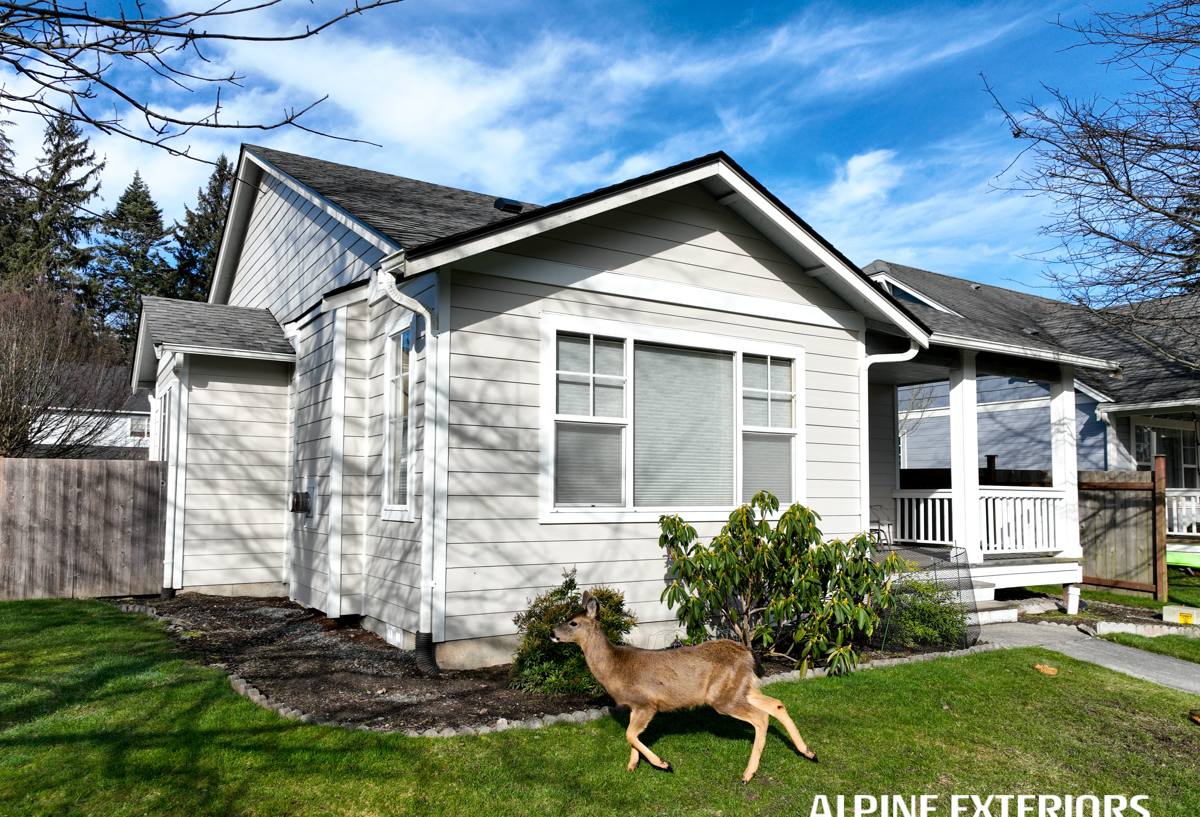
What Kendall Homes Are Up Against
Moisture That Doesn't Quit
Western Washington doesn't get hurricanes, but it gets something arguably harder on a house: months of low-intensity, sideways-driven rain combined with fog and heavy dew. Wall assemblies here rarely get a real chance to dry out between storms. Any siding product that absorbs water, swells, or relies on paint film integrity to stay sealed is working against the clock from day one.
Moss, Algae, and Organic Growth
Shaded lots, tree-lined properties, and north-facing walls around Kendall are prime real estate for moss and algae. It's not just cosmetic — organic growth holds moisture against the siding surface, and on porous or wood-based materials that constant dampness accelerates rot and paint failure long before the siding would otherwise need replacing.
Salt Air and Corrosion
Even communities set back from the water get salt-laden air moving through on the prevailing westerlies. Over years, that salt exposure accelerates corrosion on fasteners, flashing, and any metal components in your exterior assembly, and it degrades certain coatings faster than manufacturers' warranty testing assumes for drier climates.
Temperature Swings and UV
Whatcom County isn't extreme, but it does cycle between damp cold winters and warmer, drier summer stretches. Materials that expand and contract with moisture content — rather than staying dimensionally stable — take a slow beating from that cycle, showing up as cracked caulk joints, warped boards, and paint that peels at the seams.
Why We Standardized on One Product
We used to install a wider range of siding products. We don't anymore, and it wasn't a marketing decision — it was a callback decision. We got tired of going back out to homes a few years after installation to deal with swelling, moss staining, caulk failure, and paint peeling on products that looked fine in the showroom but couldn't handle a real Whatcom County winter. Today we install James Hardie fiber cement siding exclusively, because it's the one product line that consistently holds up to the conditions we just described, without needing constant homeowner maintenance to stay that way.
James Hardie fiber cement is a blend of cement, sand, and cellulose fiber, engineered to be non-combustible and dimensionally stable. It doesn't absorb water the way wood-based composite products can, it doesn't attract pests, and it holds paint and factory finish far longer than wood or many composite alternatives because it isn't fighting moisture-driven expansion and contraction underneath the coating.
What We Don't Install, and Why
We get asked why we don't offer LP SmartSide, vinyl, or cedar anymore. Each has a place in the market and none of them are junk — but here's our honest read after years of callbacks in this climate:
- Vinyl siding is affordable and low-maintenance in the sense that it doesn't need painting, but it's a thin plastic product that can crack in cold snaps, fade under UV over time, and it telegraphs every wave in the wall behind it. In a wind-driven rain event, vinyl's lap-and-gap installation style is also more prone to water intrusion behind the panel than a properly caulked and sealed fiber cement system.
- LP SmartSide (engineered wood strand siding) performs reasonably when installation and maintenance are followed to the letter, but it's a wood-based product at its core. In a climate where wall assemblies rarely fully dry out, any breach in the factory coating — a nail pop, a scuff, an unsealed cut edge — becomes an entry point for the kind of moisture that leads to swelling and edge rot.
- Cedar and primed spruce are beautiful, traditional Pacific Northwest materials, but real wood siding demands a maintenance schedule most homeowners underestimate: regular refinishing, caulk inspection, and prompt repair of any moisture entry point. In a moss-heavy, shaded environment like parts of Kendall, that maintenance burden goes up, not down.
We'd rather tell you that upfront than sell you a product we know we'll be repairing in five years.
The James Hardie System We Install
ColorPlus Technology
Most of our Hardie installations use ColorPlus factory-applied finish rather than field paint. It's baked on in a controlled environment, adheres better than a job-site paint job, and comes with its own finish warranty. That matters in a climate where field-applied paint has to cure in unpredictable, often damp conditions.
HZ5 Climate Engineering
James Hardie makes region-specific product formulations, and Western Washington falls under their HZ5 zone, engineered for wetter, more variable climates. That's a meaningful distinction from a generic all-climate siding product — it's built with this exact kind of weather in mind.
Board and Panel Options
Depending on the look you want for the home, we install lap siding, board-and-batten, shingle-style panels, and trim to match. Fiber cement holds a crisp shadow line and straight reveal better than most wood-composite products, which tends to look sharper for longer as the home ages.
Comparing the Options Side by Side
| Factor | Vinyl | LP SmartSide | Cedar / Primed Spruce | James Hardie Fiber Cement |
|---|---|---|---|---|
| Moisture resistance | Moderate; can trap water behind panels | Moderate; vulnerable at breached coating | Low without diligent maintenance | High; non-organic, doesn't swell |
| Moss/algae resistance | Surface growth possible, doesn't structurally harm panel | Growth can accelerate substrate damage | Prone to staining and rot under growth | Resists structural damage from surface growth |
| Fire resistance | Melts/deforms under heat | Combustible (wood-based) | Combustible | Non-combustible |
| Finish longevity | Fades, no repaint option | Factory finish, moderate lifespan | Needs repainting/staining every few years | ColorPlus finish rated for extended service life |
| Typical maintenance | Low, but limited repair options | Moderate; coating inspection important | High; regular refinishing required | Low; occasional wash and caulk check |
Why a Local Crew Matters for Kendall
Siding, roofing, windows, and decks all have to work together as one weather-tight system, and the details that make that system hold up are regional. A crew that installs in a dry climate half the year doesn't think about the same flashing details, house-wrap laps, and caulk joint placement that matter here, where wind-driven rain tests every seam. We install to the specifications that hold up under Whatcom County conditions, including the extra attention to butt joints, kick-out flashing at roof-wall intersections, and clearance from grade and roof lines that keeps moisture from wicking into the bottom of the siding — a detail that matters even more on shaded, tree-covered lots like many around Kendall.
We're also close enough to actually show up. If a warranty question comes up, if a storm knocks something loose, or if you just want someone to walk the exterior with you before winter, we're not driving in from three counties away.
What a Full Exterior Job Typically Involves
- Inspection of existing siding, sheathing, and any moisture damage before quoting
- Removal of old siding and repair of any compromised sheathing found underneath
- Installation or verification of proper weather-resistive barrier (house wrap)
- Correct flashing at windows, doors, and roof-wall intersections
- James Hardie panel or lap installation per manufacturer fastening and clearance specs
- Trim, corner, and joint detailing sealed to shed water, not trap it
- Final inspection and cleanup
Roofing, Windows, and Decks — The Rest of the Envelope
Siding is only one piece of keeping a Kendall-area home dry. A roof with aging or failing flashing will send water down behind even the best siding job, which is why we also handle roof repair and replacement, and why we check roof-to-wall transitions any time we're quoting siding work. Old, single-pane or poorly sealed windows are another common moisture and energy loss point in older homes in this area — we install replacement windows as part of a full exterior upgrade or on their own. And for decks, we deal with the same core enemy: standing water and prolonged dampness against structural wood, so we build and repair decks with drainage and material choices suited to a climate that doesn't dry out quickly.
Cost Factors Homeowners Should Know
We don't post fake price lists because every home is different, but the real cost drivers on a Kendall-area siding job are consistent:
| Cost Factor | Why It Matters |
|---|---|
| Extent of sheathing repair | Moisture damage found once old siding comes off can add scope |
| Home size and wall complexity | Cutouts, dormers, and multiple stories add labor time |
| Siding profile chosen | Board-and-batten and shingle-style styles take more install time than lap |
| Trim and accent detail level | More corner boards, banding, and color contrast add material and labor |
| Access and site conditions | Steep lots, tree cover, and tight setbacks affect staging and scaffolding needs |
The only way to get real numbers is a walk-through, which is why we quote every job in person rather than over the phone.
What to Ask Before You Hire Anyone
Whether you call us or someone else, a few questions will tell you a lot about a contractor working in this climate:
- Are they licensed and insured to work in Washington, and can they show proof without hesitation?
- Do they inspect sheathing condition before quoting, or just measure the outside and give a number?
- What's their plan for flashing at windows, doors, and roof intersections — can they explain it, not just say "we handle it"?
- Is the manufacturer's warranty registered in your name after the job, and what does it actually cover?
- Do they have a documented process for moisture-prone or shaded lots, or is every job treated the same?
If you're in Kendall or anywhere else around Ferndale and want an honest look at what your siding, roof, windows, or deck actually need, we'll come out, walk the property, and give you a straight answer — no pressure, no obligation. Fill out the form below to get a free estimate.