 Ferndale Siding
 Roofing in Sandy Point Has Its Own Set of Problems
Sandy Point sits close enough to the water that salt air is part of daily life, and that changes how a roof ages. Add in Whatcom County's long, wet winters and the moss season that seems to stretch further every year, and you've got a roofing environment that's tougher on materials than most inland neighborhoods ever see. A roof repair here isn't just patching a leak — it's addressing why that leak started in the first place, and salt, moisture, and organic growth are almost always part of the answer.
We've worked on homes throughout the Sandy Point area long enough to know the patterns: north-facing slopes that never fully dry out, fastener corrosion that shows up years before you'd expect it inland, and moss colonies that get a foothold in valleys and under overlapping shingles where nobody's looking. None of that is unusual for the area. It's just what a roof out here has to deal with, and repairs need to account for it.
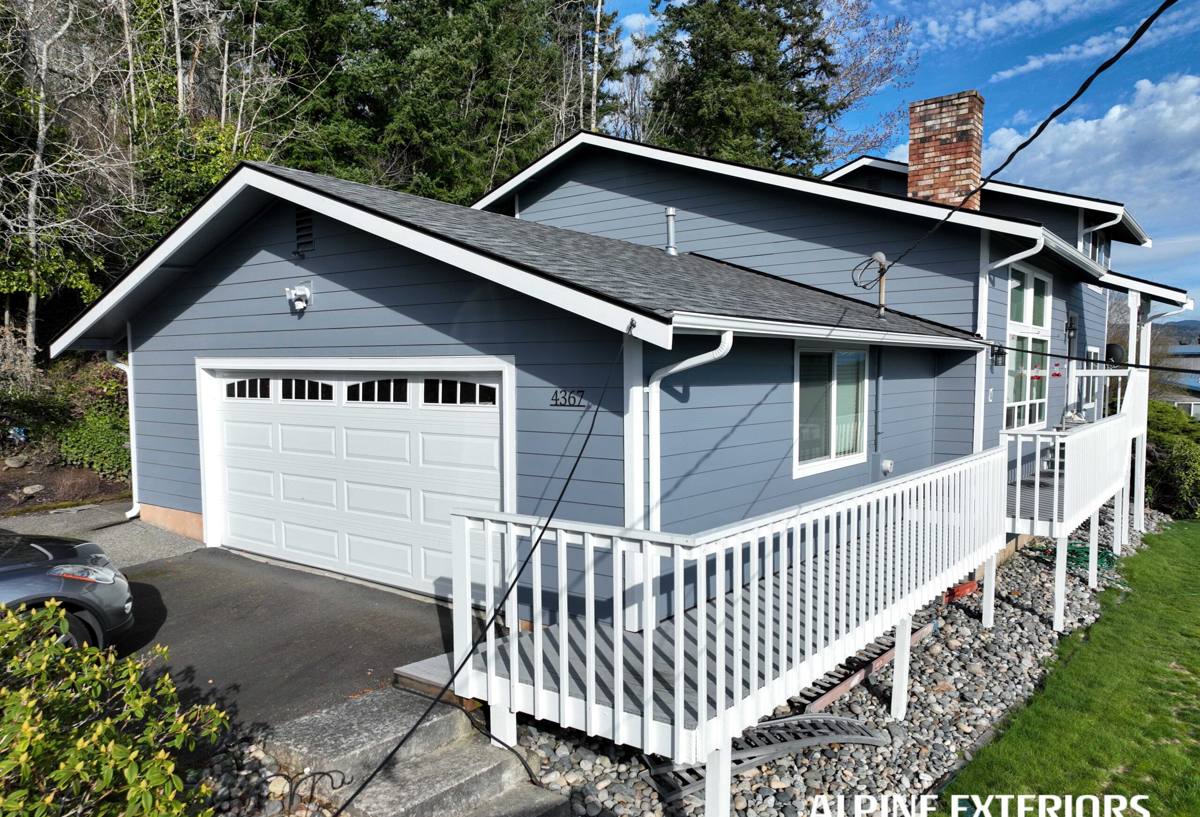
Why Salt Air and Moisture Change the Repair Approach
Salt Air and Metal Components
Flashing, fasteners, vents, and gutter hardware all take a beating from salt-laden air. Standard galvanized fasteners can start showing rust streaks well before a roof's expected lifespan is up, and once corrosion starts on flashing seams, water finds its way underneath. When we repair a roof in Sandy Point, we look hard at every metal component — not just the shingles or panels — because a corroded flashing detail is often the real source of a leak that looks like it's coming from somewhere else.
Driving Rain and Wind-Driven Water
Storms off the water don't just drop rain straight down — wind pushes it sideways, up under laps, and into any gap in flashing or underlayment that a calm-weather rain would never reach. That's why a repair that only addresses the visible hole or missing shingle can fail again in the next windstorm. We check the surrounding courses, the flashing laps, and the underlayment condition, not just the spot where water showed up inside the house.
Moss, Algae, and the Long Wet Season
Whatcom County's mild, damp climate is close to ideal for moss growth, and Sandy Point's tree cover and shade patterns can make it worse on certain roof sections. Moss holds moisture against the roofing material, lifts shingle edges, and works its way into seams over time. A roof repair that doesn't include moss removal and treatment in the affected area is only solving half the problem — the moss will simply come back and cause the same damage again.
Common Roof Repair Needs We See in This Area
- Flashing failures at chimneys, skylights, and roof-to-wall transitions, often corrosion-related
- Moss-damaged shingles on shaded or north-facing slopes, especially near tree lines
- Wind-lifted or missing shingles after winter storm systems
- Valley leaks where debris and moss trap water against the roofing material
- Gutter and edge damage from ice, debris buildup, or corroded hardware
- Soft or damaged decking discovered once a persistent leak is opened up
- Vent boot cracking from age and UV exposure between rain events
What a Correct Roof Repair Actually Involves
Diagnosis Before Anything Else
The single biggest mistake in roof repair is treating the symptom instead of the cause. Water stains on a ceiling can originate several feet away from where they appear, especially on a sloped roof, so we trace the path — checking flashing, valleys, penetrations, and decking condition before we decide what actually needs fixing. A repair based on a guess usually means a callback within a year.
Matching Materials and Technique
Once we know the cause, the repair itself needs to match the existing roofing system correctly — same shingle type and exposure, proper flashing technique, correct fastener placement and spacing. A patch that doesn't tie into the surrounding roofing the right way just creates a new weak point. We also replace corroded fasteners and flashing rather than reusing hardware that's already showing early signs of salt damage.
Addressing the Decking, Not Just the Surface
If a leak has been active for a while, the plywood or OSB decking underneath may be softened or delaminated. Covering that over with new shingles without replacing the compromised decking is a short-term fix that fails again, usually at the worst time. Part of a proper repair is checking decking condition in the repair area and replacing any section that's no longer structurally sound.
Moss and Debris Treatment
Where moss or algae contributed to the damage, the repair includes removing growth from the affected area, clearing debris from valleys and gutters, and treating the surface to slow regrowth. Skipping this step means the same conditions that caused the original damage are still in place.
Our Process for Sandy Point Roof Repairs
- Free on-site assessment — we inspect the roof, identify the actual source of the problem, and check surrounding areas for related issues
- Clear explanation — we walk you through what we found, what needs to happen, and why, in plain terms
- Honest estimate — a written scope and cost range before any work starts, so there are no surprises
- Repair work — matched materials, correct flashing and fastener technique, decking replacement if needed, moss and debris treatment where relevant
- Final check — we confirm the repair holds up under close inspection before we consider the job done
We don't upsell a full roof replacement when a targeted repair will genuinely solve the problem. If a roof is old enough or damaged enough that repair isn't the responsible recommendation, we'll tell you that too — and explain why, with the specific issues we found.
Repair vs. Replacement: How We Help You Decide
| Factor | Favors Repair | Favors Replacement |
|---|---|---|
| Age of roofing material | Well within expected service life | At or near end of expected life |
| Extent of damage | Localized — one slope, valley, or penetration | Widespread across multiple slopes |
| Decking condition | Sound, no soft spots found | Multiple areas of soft or delaminated decking |
| Flashing and metal condition | Isolated corrosion, easily replaced | Corrosion widespread across the roof |
| Moss/algae history | First occurrence, treatable | Chronic, recurring damage over multiple seasons |
| Underlying cause | Identifiable and fixable | Systemic — original installation or material issue |
Why It Matters That We Already Work in Sandy Point
A roofing crew that's unfamiliar with the area is working from general assumptions. A crew that's already worked on homes in Sandy Point knows which slopes tend to hold moisture, how salt exposure typically shows up on flashing and fasteners in this specific stretch of coastline, and what a properly done repair needs to withstand here versus a drier, more sheltered part of Whatcom County. That local pattern recognition speeds up diagnosis and reduces the chance of missing a related problem nearby.
It also means we can give you a realistic picture of what to expect going forward — how often moss treatment might be needed, what to watch for after a repair, and whether nearby areas of the roof are likely to need attention soon. That's not something a contractor can offer accurately without local experience.
Protecting Your Roof Repair Investment
Simple Maintenance That Extends Repair Life
- Clear gutters and valleys of debris at least twice a year, more often under heavy tree cover
- Have moss growth treated before it spreads, rather than after it's visibly lifting shingles
- Trim back overhanging branches to reduce shade, debris, and abrasion on the roof surface
- Schedule a roof check after major windstorms, especially ones with sustained gusts off the water
- Address small leaks quickly — a small, contained repair now is far less costly than decking replacement later
What to Watch For Between Inspections
Ceiling stains, a musty smell in an attic space, granules collecting in gutters, or visible moss creeping onto shingle surfaces are all signs worth a call before they become bigger problems. Catching these early is usually the difference between a modest repair and a much larger one.
Get a Straight Answer About Your Roof
If you're dealing with a leak, storm damage, or moss buildup on a Sandy Point roof, we're happy to come take a look and give you a clear, honest read on what's going on and what it'll take to fix it right. There's no pressure and no cost for the estimate — just a straightforward assessment from a crew that already knows this stretch of Ferndale. Use the form below to request your free estimate.