 Ferndale Siding
 Asphalt Shingle Roofing Built for Sumas' Weather
Sumas sits out at the edge of Whatcom County, where marine air off the Salish Sea meets the cooler, wetter air pushing down out of the Fraser Valley. That combination means long stretches of driving rain in the fall and winter, a moss season that can run six months or more in shaded yards, and enough humidity most of the year to keep roofs damp longer than homeowners in drier climates ever have to deal with. Asphalt shingles handle this weather well when they're installed correctly and matched to the site - but "correctly" is doing a lot of work in that sentence, and it's where a lot of roofs in this area go wrong.
This page covers what an asphalt shingle roof needs to hold up on a Sumas home specifically: the underlayment and flashing details that matter most in a wet climate, how we handle moss and ventilation, and what our installation process looks like from tear-off to final inspection.
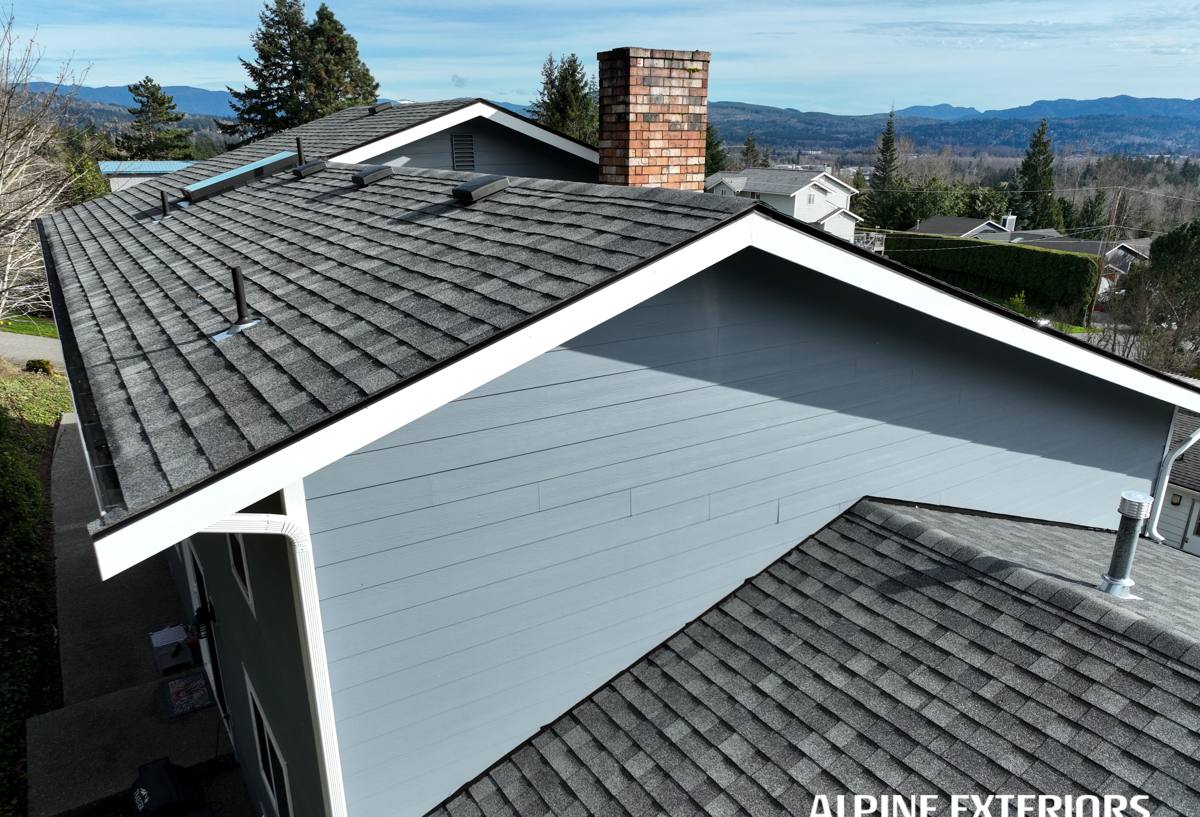
What Sumas' Climate Actually Does to a Roof
It helps to be specific about the mechanisms, not just the weather. Three things drive most of the roofing calls we get in this part of Whatcom County:
Driving rain and wind-driven moisture
Storms coming through this corridor don't just fall straight down - wind pushes rain sideways under shingle tabs and around flashing details that would stay dry in a calmer climate. Roofs with skimped underlayment, short flashing laps, or poorly sealed penetrations (vents, chimneys, skylights) are the ones that develop hidden leaks first, often years before a stain shows up on a ceiling.
Moss and organic growth
Shaded roof planes, tree cover, and consistent dampness are exactly the conditions moss needs. Once moss gets a foothold, it holds moisture against the shingle surface, lifts tabs as it grows, and works its way under the shingle edge over several seasons. Left alone, a mossy roof ages faster than a clean one, even with the same shingle underneath it.
Salt-influenced air and freeze-thaw swings
The air moving through this part of Whatcom County still carries some marine influence, and combined with the occasional hard freeze in winter, that's a slow but real stress on fasteners, flashing metal, and shingle granules over the life of a roof. It's not the dominant factor the way it is on the immediate coastline, but it adds up over twenty-plus years.
None of this means asphalt shingles are the wrong choice for Sumas - they're the most common roofing material in this area for good reason. It means the installation details have to account for these conditions rather than follow a generic spec sheet.
What a Correct Installation Actually Includes
A shingle roof is a system, not just a layer of shingles nailed to plywood. Here's what we consider non-negotiable on a home in this climate:
Underlayment
We use a synthetic underlayment as the primary water-resistant barrier under the shingles, and we add self-adhered ice-and-water shield along eaves, valleys, and any low-slope transitions - the spots where wind-driven rain and ice damming are most likely to force water backward under the shingle courses.
Flashing
Step flashing at walls and chimneys, properly lapped valley flashing, and new flashing at every roof penetration - not just caulk over the old metal. Flashing is the single most common failure point we find on older Sumas roofs, and it's almost always cheaper to do right the first time than to chase a leak later.
Ventilation
Balanced intake and exhaust ventilation keeps the attic close to outdoor temperature, which reduces condensation on the underside of the roof deck and slows ice damming in cold snaps. Poor ventilation also shortens shingle life from the inside out, since trapped heat and moisture accelerate wear regardless of what's happening on the outside surface.
Fastening and nailing pattern
Manufacturer-specified nail placement and count, driven flush (not overdriven or underdriven), matter more in a windy corridor than most homeowners realize. Overdriven nails cut through the shingle mat and become leak points; underdriven nails let shingles lift in wind. We follow the manufacturer's pattern exactly, because it's also what keeps the warranty valid.
Choosing a Shingle for This Climate
Not every asphalt shingle product is built the same way, and the right choice depends on your roof's exposure, budget, and how much moss pressure the site has.
| Shingle Type | Best For | Trade-Offs |
|---|---|---|
| 3-tab shingles | Budget-conscious re-roofs, simple roof lines | Shorter lifespan, less wind resistance than architectural styles |
| Architectural (dimensional) shingles | Most Sumas homes; better wind rating and appearance | Higher upfront cost than 3-tab, still needs proper ventilation to hit full lifespan |
| Algae-resistant (copper-granule) shingles | Shaded lots, north-facing planes, homes with heavy tree cover | Slight cost premium; reduces but doesn't eliminate the need for moss upkeep |
| Impact-resistant / high-wind rated shingles | Exposed sites, open lots with less windbreak | Higher material cost; overkill on sheltered, tree-lined lots |
For most homes in and around Sumas, we recommend a mid-to-upper-tier architectural shingle with algae-resistant granules. It's not the cheapest option on the shelf, but on a roof plane that stays shaded for half the day, the difference in how long it stays clean and how well it resists moisture intrusion is worth the modest price difference over a 3-tab product.
Our Process, Start to Finish
- On-site inspection. We walk the roof (not just the yard), check the decking condition, note flashing and ventilation issues, and look at how the site's tree cover and slope affect drainage and moss exposure.
- Written estimate. You get a clear scope - tear-off, decking repair allowance if needed, underlayment type, flashing plan, shingle product, and ventilation work - not a vague lump-sum number.
- Tear-off and deck inspection. We remove the old roofing down to the deck and replace any damaged or soft sheathing before anything new goes down. Covering up bad decking is how roofs fail early.
- Underlayment and flashing installation. Ice-and-water shield at eaves and valleys, synthetic underlayment across the field, new flashing at every wall, chimney, and penetration.
- Shingle installation. Installed to the manufacturer's nailing pattern and exposure spec, with attention to hip, ridge, and valley detailing where most leaks start.
- Ventilation check. We confirm intake and exhaust are balanced for the attic's size, adding or correcting vents where needed.
- Final walkthrough. We show you the completed roof, review the workmanship warranty, and register manufacturer warranty paperwork where applicable.
Signs Your Sumas Roof Needs Attention
Most shingle roof failures in this climate give warning signs well before there's an active leak. Worth checking for, especially after a hard windstorm or heading into fall:
- Granules collecting in gutters or at downspout outlets
- Shingle tabs that are curling, cupping, or lifting at the edges
- Visible moss or dark algae streaking, especially on north-facing or shaded planes
- Cracked, rusted, or visibly separated flashing around chimneys and vents
- Daylight visible through the attic roof deck, or damp insulation after a storm
- Missing shingles or exposed nail heads after high wind
- Sagging spots on the roof plane, which can indicate deck or structural issues underneath
Catching these early is almost always a repair. Ignoring them for a season or two in this climate tends to turn a repair into a full replacement.
What Drives the Cost
Every roof is priced on its own specifics, but these are the factors that move the number most on jobs in this area:
| Factor | Why It Matters |
|---|---|
| Roof size and pitch | Steeper roofs take longer and require more safety setup, which affects labor cost |
| Number of layers to remove | Tear-off of multiple existing layers costs more than a single-layer removal |
| Decking condition | Rotted or soft sheathing found during tear-off adds material and labor to replace |
| Roof complexity | Valleys, dormers, and multiple penetrations mean more flashing work and material |
| Shingle tier | 3-tab, standard architectural, and algae-resistant/premium lines carry different material costs |
| Ventilation upgrades | Adding or correcting intake/exhaust vents is a smaller add-on cost that protects the whole roof's lifespan |
We'd rather walk your roof and give you real numbers than throw out a broad range that doesn't mean much until we've seen the site. What we can say honestly: paying for correct flashing, underlayment, and ventilation up front is cheaper than paying for a leak repair - or a premature second re-roof - down the line.
Why a Crew That Already Works Sumas Matters
Roofing crews that mostly work drier or more sheltered areas sometimes underbuild for what this corner of Whatcom County actually throws at a roof - lighter underlayment, fewer flashing details, ventilation sized for a milder climate. A crew that works Sumas and the surrounding county regularly sees how roofs here age over real winters, knows which planes on a typical lot layout collect moss first, and builds accordingly instead of learning that lesson on your roof.
Local presence also matters for the parts homeowners don't think about until they need them: being reachable quickly if a storm causes damage, standing behind workmanship without a multi-hour drive between us and the job, and knowing the permitting and inspection process for this part of the county without extra delay.
Get a Straightforward Estimate
If your Sumas home needs a new roof, a repair, or you just want an honest read on how much life is left in the one you've got, we're glad to take a look. The estimate is free, there's no pressure attached to it, and you'll get a clear, written answer - not a sales pitch. Use the form below to get started.