 Ferndale Siding
 Storms Treat Birch Bay Roofs Differently Than Roofs Inland
Birch Bay sits right on the water, and that changes what a roof has to survive year after year. A roof a few miles inland in Whatcom County deals with rain and the occasional windstorm. A roof in Birch Bay deals with all of that plus near-constant salt air, wind gusts that come straight off open water with nothing to slow them down, and a moss season that can run most of the year in a marine climate this wet. None of these factors show up on a roof as one dramatic failure. They show up as a slow accumulation of small problems that eventually add up to a leak, a lifted shingle run, or a section of flashing that finally gives out during the next real storm.
That's the piece homeowners often don't hear from a contractor who doesn't work this specific stretch of coastline regularly: storm damage repair in Birch Bay isn't just "fix what broke." It's fixing what broke while accounting for why it broke here, so the same spot doesn't fail again next winter.
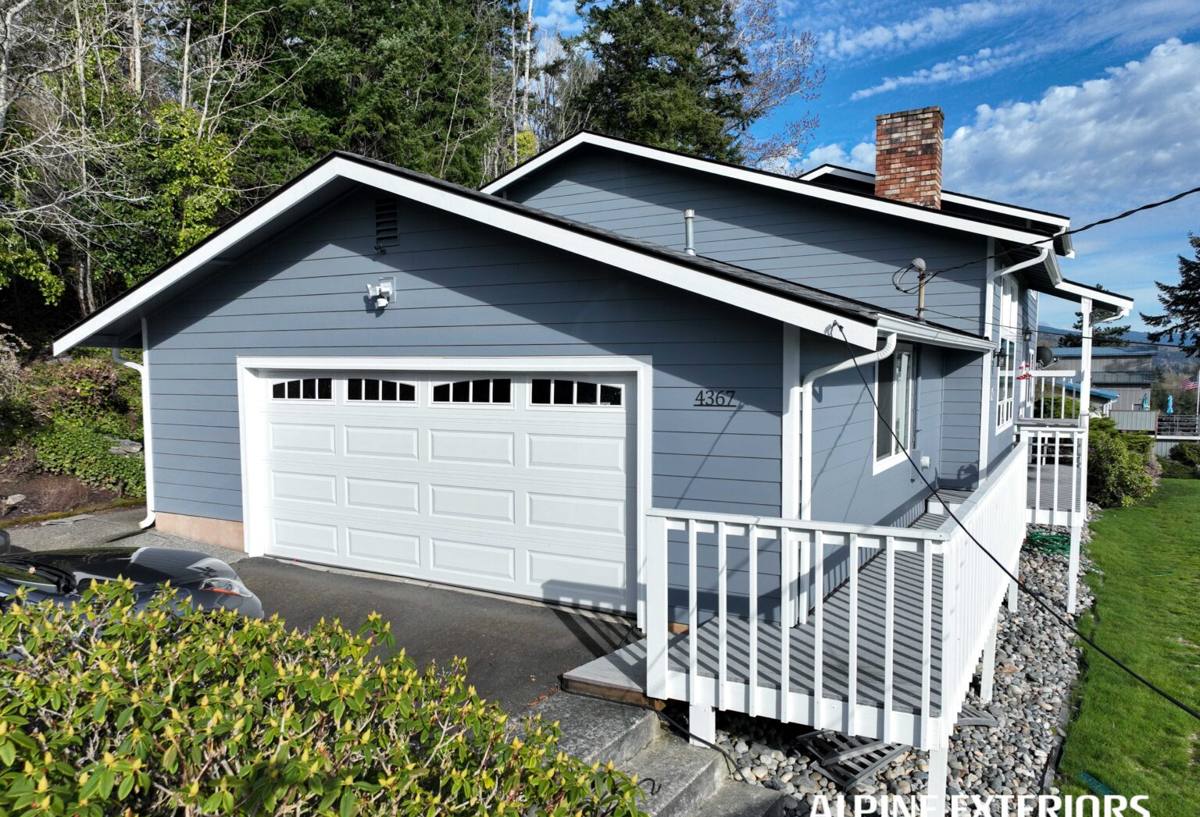
What Storm Damage Actually Looks Like Up Close
Wind-Driven Damage
Wind off the water doesn't just push against a roof — it gets underneath edges and lifts. Shingles near eaves, ridges, and rake edges are the first to go because that's where wind uplift concentrates. Once a shingle's seal breaks, it may look intact from the ground but no longer sheds water the way it's supposed to. Repeated wind events without repair between them are how a single lifted tab turns into a soaked deck.
Moss, Trapped Moisture, and Slow Rot
Moss doesn't cause storm damage on its own, but it sets a roof up to fail faster once a storm hits. A moss mat holds moisture against shingles and underlayment far longer than open air would, softening materials and degrading granule adhesion over time. When wind or heavy rain then stresses that same section, it fails at a lower threshold than a clean, dry roof would. A lot of what looks like "storm damage" after a bad weekend is really moss-weakened roofing that finally gave out.
Salt Air and Metal Fatigue
Flashing, fasteners, gutter hardware, and any exposed metal on a Birch Bay roof age differently than the same materials a few miles inland. Salt-laden air accelerates corrosion on standard fasteners and lower-grade flashing metal, and corroded metal doesn't hold a seal or a nail as well as it should. This matters most at the details — valleys, chimney flashing, vent boots — because that's where a small amount of corrosion turns into an active leak path during wind-driven rain.
Signs It's Time for an Inspection
- A leak or water stain appeared on a ceiling or in the attic after a windstorm
- You can see missing, cracked, or curled shingles from the ground
- Granules are collecting in gutters or at downspout outlets
- Flashing around a chimney, skylight, or vent looks lifted, rusted, or gapped
- Moss or dark streaking covers a significant section of the roof
- Gutters pulled away from the fascia or a downspout came loose in high wind
- It's been several years since the roof was last inspected, storm or not
Common Storm Damage Signs and What They Usually Mean
| What You See | Likely Cause | How Urgent |
|---|---|---|
| Ceiling stain after a storm | Broken shingle seal or failed flashing letting water track along the deck | High — needs inspection soon to find the entry point |
| Shingle tabs missing or lifted at the edges | Wind uplift, often worse where moss already weakened adhesion | Moderate to high depending on how much of the roof is affected |
| Heavy granule buildup in gutters | Accelerated shingle wear, sometimes from age, sometimes storm abrasion | Moderate — worth checking remaining shingle life |
| Rust streaks below flashing or vents | Salt-air corrosion on fasteners or flashing metal | Moderate — usually a targeted repair before it becomes a leak |
| Thick moss mats on north-facing slopes | Shade, moisture retention, and Whatcom County's long wet season | Low urgency alone, but raises risk during the next storm |
What a Correct Storm Repair Actually Involves
Matching Materials, Not Just Covering Holes
A patch that doesn't match the existing roofing in type, weight, and often color creates a weak seam and can shorten the life of the surrounding material. Correct repair means sourcing shingles or panels that integrate properly with what's already on the roof, tying new courses in under the existing ones rather than face-nailing a patch on top.
Flashing Detail Work
Most storm-related leaks trace back to flashing, not the field of the roof. A proper repair re-does the flashing at the damaged area rather than just sealing over old, corroded metal with caulk — caulk is a short-term fix, not a repair. Valleys, step flashing along walls, and counterflashing at chimneys all need to be reset correctly so water sheds the way the roof was designed to shed it.
Underlayment and Valley Protection
Wherever the deck is exposed during a repair, that's the moment to check the underlayment condition and upgrade valley protection if it's due. In a climate that sees as much driving rain as Whatcom County does, valleys and other water-concentration points benefit from ice-and-water style membrane underneath, not just standard felt, especially on a coastal roof that stays damp longer between storms.
Repair Scope and Cost Factors
Every storm repair is different, but the scope generally comes down to a handful of factors. Isolated flashing or a single damaged section can often be handled as a targeted repair running from a few hundred to around a thousand dollars. Larger wind-damaged areas, multiple leak points, or a roof that was already near the end of its service life before the storm hit start to push into full section replacement or, in some cases, a conversation about a full re-roof — which is a different scope and a different investment entirely. An honest inspection tells you which category you're actually in before any work starts.
| Factor | Why It Matters | Effect on Scope |
|---|---|---|
| Size of the affected area | A single flashing failure vs. wind damage across a whole slope | Small areas = targeted repair; large areas = section or full replacement |
| Roof age and remaining life | Repairing a roof near the end of its lifespan can mean paying twice | May shift the recommendation from repair to replacement |
| Extent of moss and moisture damage found underneath | Hidden rot changes what needs to come out, not just what's visible | Can expand scope once the roof is opened up |
| Material availability and matching | Discontinued or weathered shingle lines are harder to match cleanly | May require a larger tie-in area for a clean, uniform look |
| Access and roof pitch | Steeper or harder-to-reach roofs take longer and need more safety setup | Adds labor time regardless of the repair's size |
How Our Process Works
- Inspection first. We walk the roof, check the attic from the inside where it's safe to do so, and document what we find before recommending anything.
- Straight answer on scope. We tell you plainly whether this is a targeted repair, a partial re-roof, or something bigger — and why.
- Temporary protection if needed. If there's active exposure, we get the area weathertight before the next rain, even if the full repair takes a few days to schedule.
- The actual repair. Matching materials, correct flashing work, and underlayment addressed wherever the deck is opened up.
- Cleanup and walkthrough. Debris and old materials removed, and we walk you through exactly what was done and why.
Insurance Documentation, Handled Honestly
Storm damage repairs sometimes involve a homeowner's insurance claim, and we're straightforward about our role in that process: we document what we find — photos, notes on cause and extent — so you and your insurer have an accurate record. We don't inflate a scope of work to chase a bigger claim number, and we don't downplay damage to make a job look simpler than it is. If a claim is involved, that documentation is meant to reflect the roof's actual condition, nothing more.
Preventing the Next Storm From Doing the Same Damage
A repaired roof stays repaired longer with a little regular attention, especially in a location that gets this much wind and moisture. A few habits make a real difference over the following storm seasons:
- Clean gutters and downspouts at least twice a year so water isn't backing up under the roof edge during heavy rain
- Have moss treated or removed before it forms thick mats, particularly on shaded, north-facing slopes
- Check flashing and exposed fasteners for early rust or lifting once a year, before the winter storm season starts
- Trim back tree limbs that can whip against the roof surface in high wind
- Get a post-storm walk-around after any named windstorm, even if nothing looks obviously wrong from the ground
Why a Crew That Already Works Birch Bay Matters
A contractor who works Birch Bay regularly already knows which slopes take the worst of the wind coming off the water, which materials hold up against the salt air here versus how they perform inland, and how long moss actually takes to become a real problem in this specific microclimate. That local knowledge shortens the inspection, sharpens the diagnosis, and means less guessing about whether a given repair will actually hold through the next storm season. It also means showing up familiar with how homes are built in this part of Whatcom County, rather than treating a coastal roof the same way you'd treat one in a drier, more sheltered part of the state.
If a recent storm left you with a leak, missing shingles, or damage you're not sure how serious it is, we're happy to take a look. The estimate is free, there's no pressure to move forward, and you'll get a straight answer about what the roof actually needs — just fill out the form below to get started.