 Ferndale Siding
 Board & Batten Siding Built for Birch Bay's Waterfront Climate
Birch Bay sits right on the water, which gives homes here a look and a set of problems that inland Whatcom County properties don't deal with in the same way. Board and batten siding — the vertical-plank-and-strip look that reads as clean, modern, and a little bit coastal cottage at the same time — is one of the most requested siding profiles out here, and for good reason. It suits the architecture of a lot of Birch Bay homes, from newer builds to older beach cabins getting a full exterior refresh. But board and batten is also a profile that punishes a sloppy install faster than most, especially this close to the water. This page covers what board and batten actually needs to hold up in Birch Bay, what a correct installation looks like, and how we approach the job.
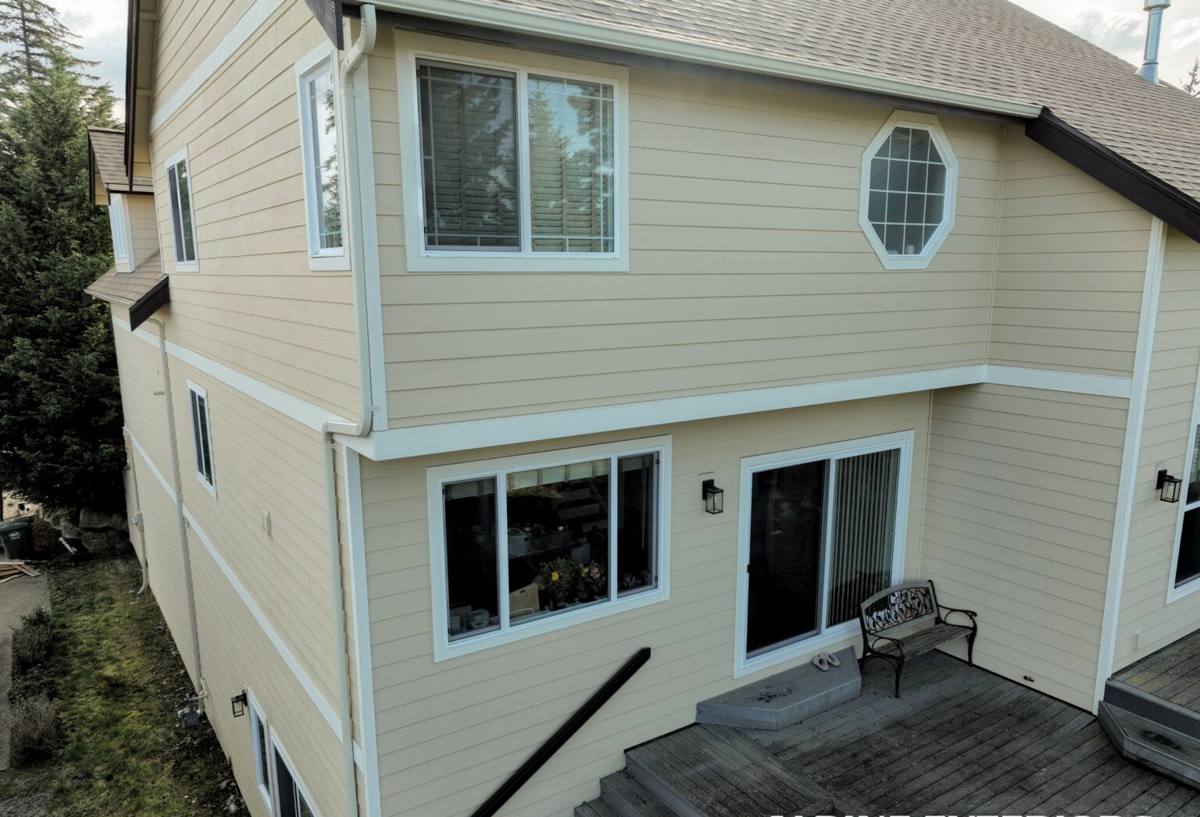
What Birch Bay's Climate Does to Siding
Three things define exterior work in this part of Whatcom County: salt air, driving rain off the water, and a moss season that runs longer than most homeowners expect.
Salt Air
Airborne salt from the bay settles on every exterior surface, including siding, fasteners, and trim. It accelerates corrosion on anything that isn't rated for it and speeds up the breakdown of paint films and caulk. Fasteners matter more here than almost anywhere else in the county — the wrong nail or screw can start bleeding rust through the siding face within a couple of seasons.
Driving Rain
Birch Bay gets wind-driven rain that hits siding at an angle, not just straight down. That matters specifically for board and batten because the vertical battens create dozens of extra seams compared to horizontal lap siding. Each seam is a potential path for water to get pushed behind the cladding if it isn't detailed correctly.
Moss
The long wet season here means moss and algae growth on north-facing and shaded walls is a near-certainty, not a possibility. Siding material that absorbs moisture gives moss something to root into and hold onto; material that doesn't gives it nothing to grab.
None of these three things are unique to Birch Bay on their own, but the combination — salt, driving rain, and moss, on a home that's often more exposed than a similar house a few miles inland — is what makes the installation details on this page non-negotiable rather than optional upgrades.
Why Board & Batten Is Riskier to Get Wrong Than Lap Siding
Horizontal lap siding is a forgiving profile — each course overlaps the one below it, so water naturally sheds downward and off the wall. Board and batten works differently. The vertical battens cover the seams between wide boards, and the whole system depends on:
- Correct water-resistive barrier and flashing behind every board and batten strip
- A drainage gap (rainscreen) so any water that does get behind the cladding can drain and dry out instead of sitting against the wall sheathing
- Fastening that penetrates framing correctly without over- or under-driving, since board and batten carries more visible fastener points than lap siding
- Batten spacing and reveal that's consistent, both for looks and for even water shedding
Skip any one of these and board and batten will still look right on installation day. The problems — trapped moisture, rot in the sheathing, moss colonizing damp seams — usually show up two to five years later, which is exactly why so many bad installs get blamed on "the weather" instead of the workmanship.
What a Correct Board & Batten Installation Involves
Drainage Plane First
Before any siding goes up, the wall needs a properly lapped water-resistive barrier and, on a home exposed to Birch Bay's rain and salt air, a rainscreen gap behind the cladding. This is the single biggest factor in whether board and batten lasts or fails early, and it's invisible once the job is done — which is exactly why it's worth asking any contractor to walk you through it before they start.
Flashing at Every Transition
Windows, doors, roof lines, and any place the wall changes plane need flashed correctly, not just caulked. Caulk is a maintenance item, not a waterproofing strategy — it will need to be renewed over the life of the siding, but the flashing underneath is what actually keeps water out long-term.
Fastening
Given the salt air, we use fasteners rated for coastal and corrosive exposure, driven to the manufacturer's spec — not overdriven, which crushes the material and opens a path for water, and not underdriven, which leaves fasteners proud and prone to catching debris or working loose over time.
Batten Spacing and Reveal
Consistent batten spacing isn't just cosmetic. Even spacing means even water shedding across the wall face, which matters when the rain is coming in sideways off the bay.
Why We Install James Hardie Board & Batten and Nothing Else
Board and batten is available in vinyl, engineered wood (LP SmartSide), and fiber cement. We install James Hardie fiber cement exclusively, and on a home exposed to Birch Bay's salt air and moisture, the reasons matter more than they might inland.
Vinyl board and batten is affordable and low-maintenance in mild climates, but it expands and contracts with temperature swings, and in a salt-air, high-wind coastal environment the seams and fastener slots that allow for that movement are exactly the kind of detail that lets driving rain find its way behind the panel. Engineered wood products use wood fiber with a resin binder, which performs well when installed and maintained correctly, but wood-based products are more sensitive to sustained moisture exposure than fiber cement — a real concern in a location with Birch Bay's long wet season and heavy moss pressure.
James Hardie fiber cement doesn't have those vulnerabilities. It's non-combustible, dimensionally stable across temperature and moisture swings, and Hardie's HZ5 product line is specifically engineered for high-moisture, coastal-adjacent climates like this one. The ColorPlus factory finish is baked on under controlled conditions, so it resists fading and holds up to salt air better than field-applied paint, and it carries a stronger, transferable warranty than most alternatives. We standardized on Hardie because it's the product we're comfortable warranting our workmanship against, in this specific climate.
Board & Batten Profile and Color Notes
Hardie's board and batten system comes in a range of widths and reveals, and can be ordered in factory ColorPlus finishes or primed for field painting. For a Birch Bay property, we typically steer homeowners toward ColorPlus finishes specifically because the factory-cured finish holds up better to salt air over time than a site-applied paint job, and it removes a maintenance task from your list for years.
Cost Factors on a Birch Bay Board & Batten Project
| Factor | Why It Matters Here |
|---|---|
| Wall exposure to wind/water | Sides facing the bay often need more attention to flashing and rainscreen detailing than sheltered sides |
| Existing sheathing condition | Moisture-damaged sheathing found during tear-off adds repair cost but is far cheaper to fix now than after new siding is installed |
| Batten spacing/width chosen | Narrower spacing means more material and more labor hours per wall |
| ColorPlus vs. primed for paint | Factory finish costs more upfront but removes a repainting cycle over the siding's life |
| Trim and transition complexity | Homes with more windows, dormers, or roofline breaks require more flashing and detail work |
We don't quote board and batten off a square-footage number alone — an accurate estimate requires seeing the specific walls, the current sheathing condition where accessible, and the trim details involved.
Our Process for Birch Bay Board & Batten Jobs
- On-site assessment — we look at wall exposure, existing siding and sheathing condition, and any moisture or moss issues already present
- Written estimate — scope, materials, and pricing laid out clearly, no surprise add-ons buried in fine print
- Tear-off and inspection — old siding comes off and we inspect sheathing before anything new goes up; any rot or damage gets flagged and addressed, not covered over
- Drainage plane and flashing — water-resistive barrier, rainscreen, and flashing installed to spec at every window, door, and transition
- Board and batten installation — Hardie boards and battens installed with corrosion-rated fasteners at correct spacing and reveal
- Final walkthrough — we go over the finished work with you before calling the job done
Maintenance Checklist for Board & Batten in Birch Bay
- Rinse siding annually to clear accumulated salt residue, especially on walls facing the water
- Check caulk joints around windows, doors, and trim every year or two and renew as needed — caulk is a wear item
- Watch north-facing and shaded walls for early moss growth and clean it off before it establishes
- Keep gutters and downspouts clear so roof runoff isn't dumping extra water onto siding below
- Trim back vegetation that keeps a wall shaded and damp longer than the rest of the house
Why Hiring a Crew That Already Works Birch Bay Matters
Board and batten installed to a generic spec sheet, without accounting for wind-driven rain and salt exposure, can look fine for a few years and still fail early. A crew that regularly works Birch Bay and the surrounding Whatcom County coastline already knows which walls need extra flashing attention, what fastener corrosion looks like locally, and how much of a rainscreen gap actually makes sense for this exposure. That local pattern recognition is the difference between a board and batten job that's still tight and dry in fifteen years and one that needs sheathing repairs in five.
If you're considering board and batten siding for a Birch Bay home, we're happy to take a look and give you a straightforward, no-pressure estimate — including an honest read on what your specific walls actually need. There's a form below to get that started.