 Ferndale Siding
 Everson Decks Face a Specific Kind of Wear
Everson sits inland from the salt air that rolls off Bellingham Bay and the Strait of Georgia, but that doesn't mean local decks get a break. Whatcom County's long wet season, heavy morning dew, and shaded lots along the Nooksack River corridor keep deck surfaces damp for months at a stretch. Add in the moss and algae that thrive here from October through April, and you've got the three things that shorten a deck's life fastest: standing moisture, biological growth, and freeze-thaw cycling on fasteners and connections.
We work on decks throughout the Ferndale area, and the pattern in Everson is consistent. Homes with mature tree cover or north-facing decks show moss and slick spots years before homes in open, sunny yards. Decks built low to the ground with poor airflow underneath rot from the joists up before the surface boards ever look bad. If you own a deck out here, the climate is working against it every single week it isn't dry.
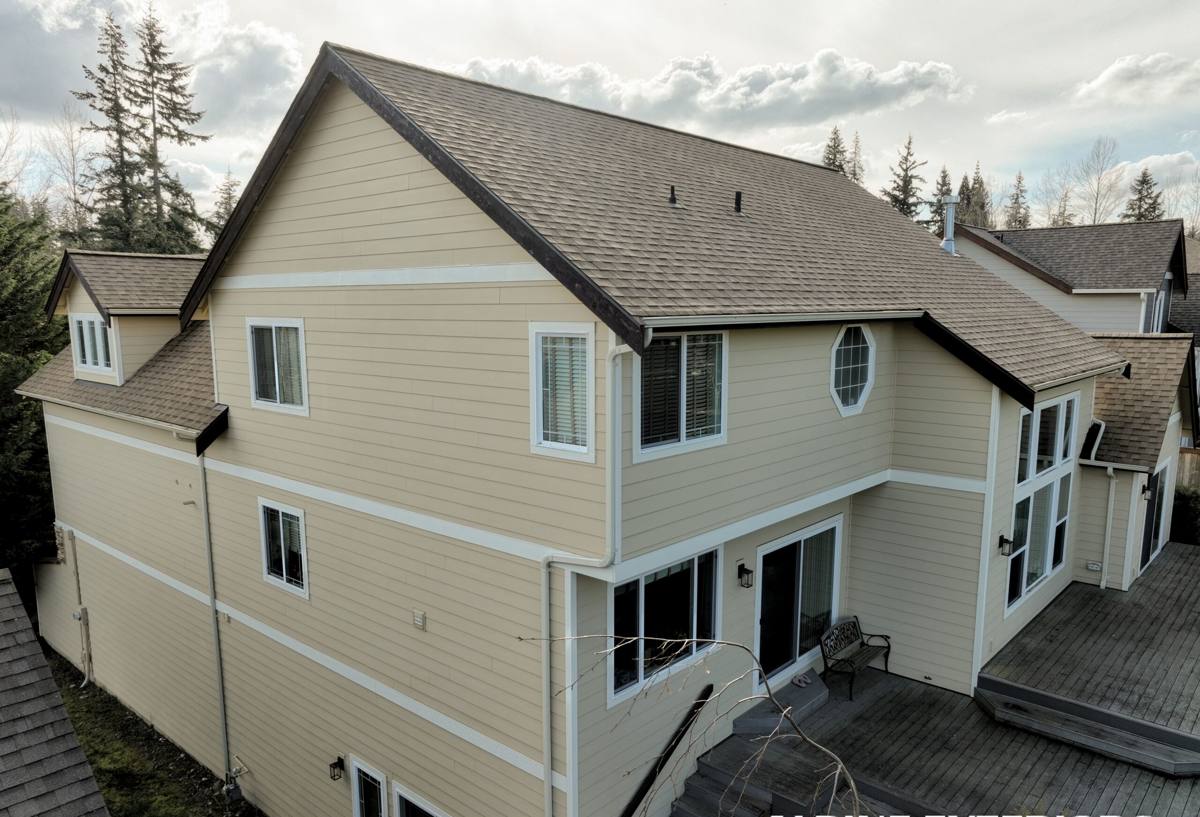
What Actually Causes Deck Damage in This Climate
Moisture That Doesn't Get a Chance to Dry
Driving rain off the Puget Sound lowlands, combined with our short daylight hours in winter, means wet wood stays wet longer here than in drier parts of the state. Water that gets trapped between boards, under flashing, or against a ledger board doesn't evaporate quickly — it sits and works into the wood grain.
Moss and Algae
Moss isn't just cosmetic. It holds moisture directly against the decking surface and, on stairs and ramps, it turns into a genuine slip hazard. Left untreated for a season or two, moss roots can lift and separate surface fibers on softer woods.
Fastener and Hardware Corrosion
Galvanized nails, screws, and joist hangers that aren't rated for ground contact or high-moisture exposure will rust and weaken faster in our climate than manufacturers' generic timelines suggest. Rust stains bleeding through decking boards are one of the most reliable signs we see of hardware that's failing underneath.
Signs Your Deck Needs Repair, Not Replacement
Most decks we look at in Everson don't need to be torn out — they need targeted repair to the parts that actually failed. Here's how we sort it out:
- Soft, spongy, or spring boards when you walk across them
- Visible rust streaks below fastener heads or hardware
- Gaps or separation where the deck ledger meets the house
- Wobble in railing posts or stair stringers
- Persistent moss or dark staining that returns quickly after cleaning
- Cracked or split boards near butt joints and stair treads
- Visible daylight or gaps in flashing where the deck meets siding
If the framing underneath — the ledger, joists, and posts — is structurally sound, repair is almost always the right call. Replacement becomes necessary when rot has traveled into the structural members themselves, when the ledger connection to the house has failed, or when repeated patch repairs have already been tried without addressing the underlying moisture source.
What a Correct Repair Actually Involves
A repair that only replaces the boards you can see, without addressing what's underneath, tends to fail again within a season or two in this climate. A repair done right starts with the framing:
Ledger and Structural Connection
The ledger board — where the deck attaches to the house — is the single most important structural connection and the most common source of hidden rot. We check flashing at this joint on every repair, because a failed or missing ledger flashing detail lets water run straight into the house's rim joist, not just the deck.
Joists and Posts
We probe framing members for soft spots rather than assuming they're fine because the surface boards look new. Localized sistering (bolting a new piece of lumber alongside a damaged joist) is often enough; full joist replacement is reserved for members that have lost real structural capacity.
Fasteners and Hardware
Any hardware we open up gets replaced with connectors and fasteners rated for the exposure, not just whatever grade was on hand at the original build. This matters more here than in drier climates because standard galvanized hardware corrodes faster under sustained damp conditions.
Surface Boards and Railings
Decking, stair treads, and railing components get replaced to match existing material where possible, with attention to proper gapping between boards so water sheds instead of pooling.
Repair vs. Replacement: How We Decide
| Factor | Repair Usually Makes Sense | Replacement Usually Makes Sense |
|---|---|---|
| Framing condition | Ledger, joists, and posts are sound | Rot has reached multiple structural members |
| Age of deck | Under 15–20 years, built to a reasonable standard | Original construction is outdated or undersized for current code |
| Extent of damage | Isolated to specific boards, stairs, or a section of railing | Damage is spread across the whole structure |
| Prior repairs | First real repair, or a well-maintained deck | Deck has been patched repeatedly without solving root causes |
| Budget approach | Lower upfront cost, extends usable life | Higher upfront cost, resets the clock on the whole structure |
Our Process for an Everson Deck Repair
1. On-Site Inspection
We walk the whole deck — surface, railings, stairs, and underneath where accessible — probing suspect areas rather than just looking at them. This is where we find the hidden ledger or joist issues that don't show from the top.
2. Written Scope and Estimate
You get a plain-English breakdown of what's failing, what we recommend repairing versus replacing, and why. No pressure toward a full rebuild if a repair will genuinely hold up.
3. The Repair Itself
We address the framing and moisture path first, then hardware, then the visible surface work. Anywhere we open up decking to reach structure underneath, we correct flashing and drainage details before closing it back up — otherwise the same failure just happens again in a different spot.
4. Cleanup and Walkthrough
We walk the finished work with you, point out what was done, and flag any maintenance items — like a spot that'll need moss treatment more often — so there are no surprises later.
Materials and Why We Use Them
Our standard is to match repair materials to how they'll actually perform in Whatcom County's wet, shaded conditions — not just what's cheapest or fastest to install. For structural framing, that means pressure-treated lumber rated for ground contact where the original framing calls for it, stainless or hot-dip galvanized fasteners in high-exposure spots, and self-adhering flashing tape at every ledger and post connection we open up. For decking surfaces, both treated wood and composite have real trade-offs worth knowing:
- Pressure-treated wood: Lower material cost, can be refinished or spot-repaired easily, but needs regular cleaning and periodic sealing to resist moss and moisture in this climate.
- Composite decking: Resists rot and doesn't need staining, but individual boards can be harder to source and match years later, and it still needs cleaning to stay ahead of moss and algae buildup.
We'll walk through which fits your specific deck and budget rather than pushing one option across the board.
Keeping a Repaired Deck in Good Shape
A repair holds up a lot longer with a little seasonal attention, especially given how long our wet season runs:
- Sweep leaves and debris off the surface regularly, especially in fall
- Clean moss and algae off boards and stairs before it gets a foothold — earlier is easier
- Check that gaps between boards are clear so water can drain through, not pool on top
- Look underneath once a year for new staining, soft spots, or rust bleeding through
- Reseal or restain wood decking on the manufacturer's recommended schedule, not just when it looks faded
- Keep gutters and downspouts near the deck clear so runoff isn't dumping extra water onto it
Why It Matters That We Already Work in Everson
A crew that already works this part of Whatcom County knows which failure patterns to check first — where moss builds up fastest, which ledger details tend to have been under-flashed on older builds, and how much drying time to actually expect between rain events when scheduling a repair. That's the difference between a repair that's guessing at the cause and one that's addressing what we've actually seen fail on decks like yours, in this exact climate, before.
If your deck has soft spots, rust stains, stubborn moss, or just doesn't feel as solid as it used to, we're happy to take a look. Fill out the form below for a free, no-pressure estimate — we'll tell you honestly whether it's a repair or a bigger project, and why.