 Ferndale Siding
 Birch Bay Decks Deal With Conditions Most Repair Guides Don't Cover
Birch Bay sits right on the water, and that changes what a deck goes through compared to a deck a few miles inland in Ferndale proper. Salt-laden air corrodes metal fasteners and connectors faster than plain moisture does. Wind off the bay drives rain sideways into ledger boards, stair stringers, and the undersides of rail posts that a typical deck never has to deal with. And Whatcom County's long, damp shoulder seasons mean moss and algae get a running start every fall and don't fully let go until late spring. A repair plan that ignores any one of those factors tends to fail again within a couple of years — which is why so many of the decks we get called out to in Birch Bay have already had one round of patchwork that didn't hold.
This page is about deck repair specifically — not full rebuilds, not new construction. Most decks in this area don't need to be torn out; they need the right sections addressed correctly, with hardware and framing choices that account for where the deck actually sits.
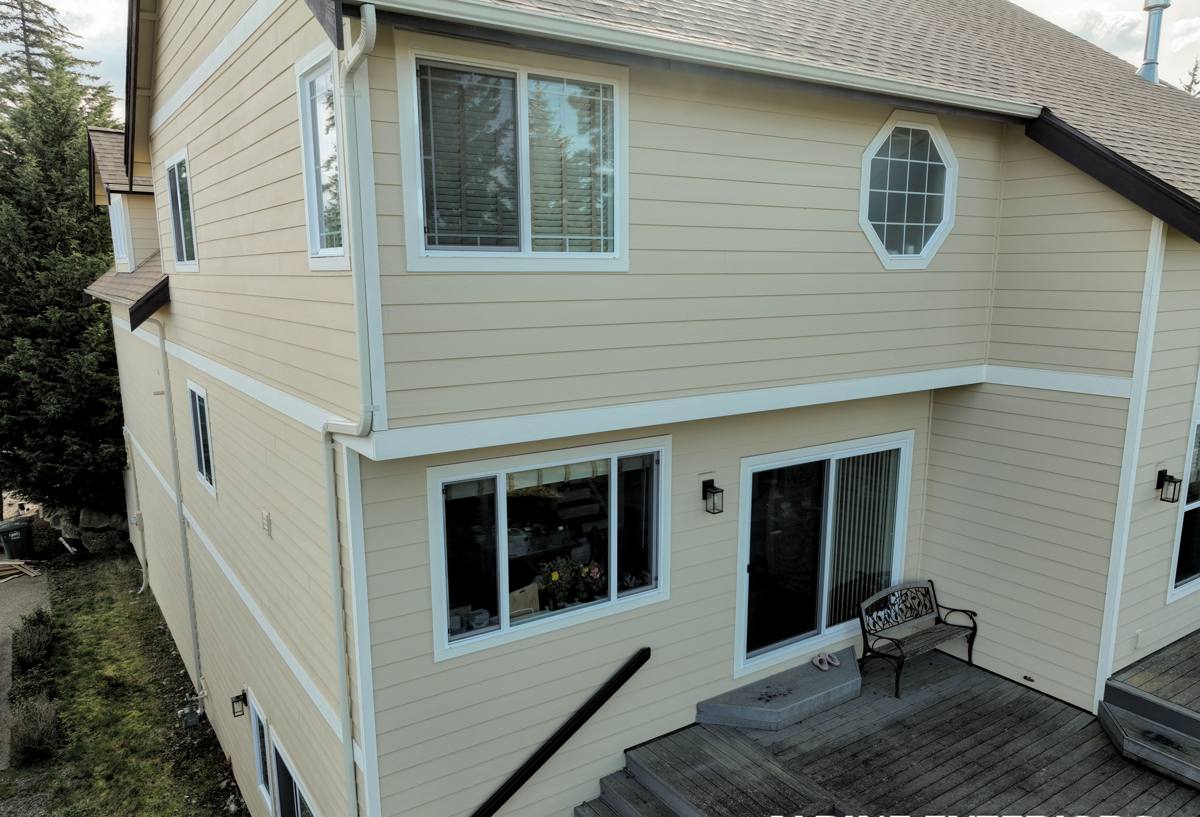
What Salt Air and Driving Rain Actually Do to a Deck
It helps to understand the failure pattern before talking about the fix. On a bay-front or near-bay property, damage tends to show up in a predictable order:
- Fasteners first. Standard coated screws and nails start to corrode and weep rust stains well before the wood around them fails.
- Ledger board and rim joist. Wind-driven rain gets pushed into the gap where the deck meets the house, especially if the original flashing was minimal or missing.
- Post bases and stair stringers. These sit closest to grade, where splash-back and standing moisture concentrate.
- Decking boards and railings. Surface wear, cupping, and moss growth show up last, which is exactly why homeowners often notice the cosmetic problem while the structural one has already been developing underneath for a year or two.
That order matters for repair planning. Replacing a few gray, moss-stained boards on top while the ledger connection or a post base underneath is already compromised is a cosmetic fix on a structural problem — it looks better and doesn't hold.
Signs a Birch Bay Deck Needs Repair Now
Some of these are urgent, some are early warnings. Either way, they're worth a look before the next wet season sets in.
- Soft, spongy, or bouncy spots underfoot, especially near the house or at stair landings
- Rust streaking from screw heads, joist hangers, or bolts
- A ledger board that looks separated, gapped, or has visible water staining where it meets the siding
- Posts or stair stringers that feel loose when you push on them
- Persistent moss or black-green algae film that comes back within weeks of cleaning
- Railings that flex more than they used to, or newel posts with any wiggle
- Gaps opening up between decking boards beyond normal seasonal movement
- Visible rot, soft wood you can press a finger into, or a hollow sound when tapped
None of these mean the whole deck is a loss. Most are localized and fixable — but they need to be caught and addressed with the right materials, not just patched over.
What a Correct Repair Actually Involves
Diagnosis before demolition
We start by finding out how far the damage actually goes, not just where it's visible. That means probing the ledger connection, checking joist hangers and post bases for corrosion or rot, and confirming whether flashing was installed correctly the first time. A repair scoped only to what's visible from the top almost always misses something underneath.
Ledger and flashing work
If the ledger board or its flashing is the source of water intrusion, that gets corrected as part of the repair — not left in place under new boards. This is the single most common root cause we find behind repeat deck failures near the water, and it's the step that's easiest to skip if a contractor is only pricing surface work.
Framing and structural connections
Any joist, beam, or post showing rot or corrosion gets sistered, reinforced, or replaced — sized and fastened to current structural connection standards, not just matched to whatever was there originally, since older decks in this area were often built before current hardware and attachment requirements.
Decking and railing
Surface boards and railing components are addressed last, once the structure underneath is sound. This is also the point where a homeowner can choose to match existing material or switch a repaired section to something with different maintenance needs, discussed below.
Fasteners and Hardware: The Detail That Determines How Long a Repair Lasts
In a bay-front environment, hardware choice matters as much as the wood itself. Standard galvanized fasteners are built for general outdoor exposure, not sustained salt air, and they're often the first thing to fail on these decks. Our standard for repair work in Birch Bay is stainless steel fasteners and connectors at any point exposed to direct weather or salt-laden air, with hot-dip galvanized as the minimum elsewhere. It costs more up front than standard coated hardware, but replacing corroded screws and hangers every few years costs more over time — and a fastener failure at a structural connection is not a cosmetic problem.
| Hardware Type | Typical Lifespan Near Salt Air | Best Use |
|---|---|---|
| Standard coated screws/nails | 2–5 years before visible corrosion | Not recommended for exposed coastal repairs |
| Hot-dip galvanized | 8–15 years, depending on exposure | Framing not in direct salt spray path |
| Stainless steel (305/316) | Decades under normal maintenance | Ledger connections, post bases, any direct-exposure hardware |
Moss, Algae, and the Maintenance Side of Repair
Even a perfectly repaired deck will grow moss again in this climate if nothing changes about drainage and airflow underneath. Part of our repair process includes checking that water can actually get off the deck surface and out from underneath it — clearing debris from gaps, correcting any spots where boards trap standing water, and confirming under-deck ventilation hasn't been blocked by landscaping or added skirting. Chemical cleaning treatments help in the short term, but they're a maintenance step, not a repair, and we're upfront about which is which so homeowners aren't paying repair rates for what's really a seasonal cleaning task.
Repair vs. Replace: How We Help You Decide
Not every deck with problems needs to come out. The decision usually comes down to how much of the structure — not the surface — is compromised.
| Factor | Leans Toward Repair | Leans Toward Replacement |
|---|---|---|
| Ledger/framing condition | Sound or isolated damage | Widespread rot or corrosion at multiple connections |
| Age of structure | Under 15–20 years, built to reasonable standards | Older deck built before current attachment/flashing practices |
| Extent of surface damage | Scattered boards or rail sections | Most of the decking and railing failing at once |
| Original construction quality | Decent framing, isolated hardware failure | Undersized framing or missing flashing from the start |
We'll always tell you honestly which side of that line your deck falls on, including when replacement is the more cost-effective long-term choice rather than repeated repairs.
Our Process for Birch Bay Deck Repairs
- On-site inspection, including probing ledger, posts, and framing — not just a visual walk-around
- Written scope covering exactly what's being repaired and why, with hardware and material specifics
- Structural and flashing corrections first, surface work second
- Stainless or hot-dip hardware matched to exposure, not a single default across the whole deck
- Final check on drainage and airflow so the repair isn't undone by the next wet season
Why a Crew That Already Works Birch Bay Matters
A contractor who mostly works inland decks in Whatcom County can still do competent general carpentry, but they may not default to stainless hardware, may not think to check flashing at the ledger as a first step, and may not recognize early corrosion versus normal weathering. We work on decks in this specific coastal microclimate regularly enough to know where problems tend to start and what actually holds up here versus what looks fine for a season or two. That's less about brand-name materials and more about sequencing the repair correctly and choosing hardware for the environment the deck actually sits in, not a generic spec sheet.
Get a Straight Answer on Your Deck
If your deck has soft spots, rust staining, a loose rail, or moss that keeps coming back no matter what you do, it's worth a look before another wet season adds to the damage. We offer free, no-pressure estimates for Birch Bay and the surrounding Ferndale area — you'll get a clear picture of what's actually going on underneath and what it takes to fix it right. Fill out the form below to get started.