 Ferndale Siding
 Decks on Lummi Island Take a Different Kind of Beating
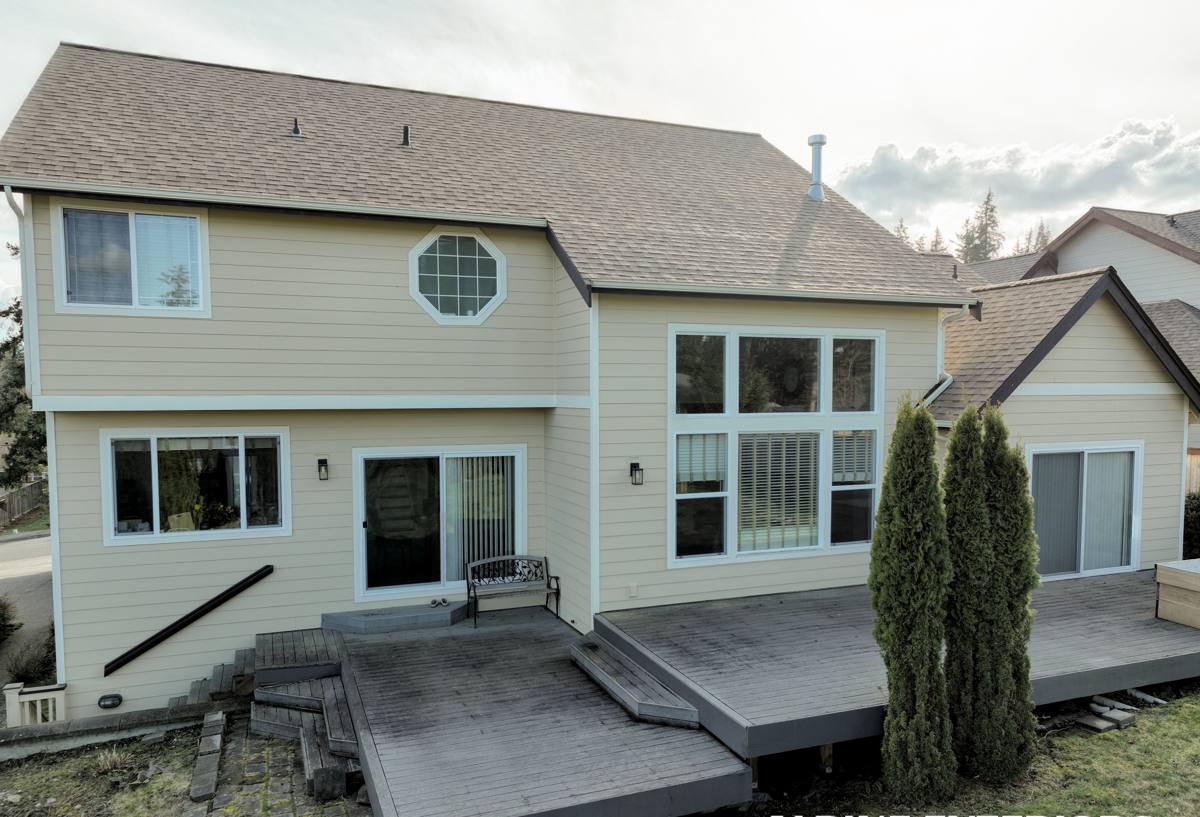
A deck on Lummi Island lives a harder life than one twenty miles inland. You've got salt-laden air coming off the water, wind-driven rain that gets pushed sideways under railings and against ledger boards, and a wet, shaded season that can stretch from October well into spring. Add in the moss and algae growth that thrives in that kind of damp, low-sun environment, and you've got a structure that's constantly fighting moisture intrusion, fastener corrosion, and slow surface breakdown — even when it looks fine from a distance.
We've replaced and repaired decks all over Whatcom County, and the ones nearest the water always tell the same story: it's rarely the decking boards that fail first. It's the framing underneath, the ledger connection to the house, and the fasteners holding it all together. By the time the surface boards look bad enough to complain about, there's usually already a deeper problem that's been building for years.
What "Correct" Actually Means for a Salt-Air Deck
A deck replacement done right for Lummi Island isn't just about picking nicer boards. It's about building the whole system — framing, fasteners, flashing, and drainage — to handle salt exposure and constant moisture cycling. That means:
- Fasteners and structural hardware rated for coastal/high-corrosion use, not standard galvanized
- Ledger board flashing that actually sheds water away from the house rim joist, not just a bead of caulk
- Joist tape or a comparable barrier over framing lumber to stop moisture wicking into end grain and fastener holes
- Airflow underneath the deck so wood can dry out between rain events instead of sitting damp
- Decking material and gap spacing chosen for drainage, not just appearance
Skip any one of these and you're not really getting a "new" deck — you're getting the same failure pattern on a delay.
Why the Ledger Connection Matters Most
The ledger board — where the deck attaches to the house — is the single most common failure point we see on coastal decks in this area. It's a horizontal wood member bolted directly to your home's rim joist, sitting in a spot where water naturally wants to collect. If it isn't flashed correctly, water gets behind it, soaks the rim joist, and you end up with rot that's hidden behind siding or decking until it's a much bigger repair. On a deck replacement, this connection gets rebuilt and flashed properly every time — it's not optional and it's not something we skip to save a step.
Material Options and How They Hold Up Locally
There's no single "right" decking material for every home — it depends on budget, how much upkeep you want to do, and how close you are to the water. Here's how the common options actually perform under Whatcom County's coastal conditions:
| Material | Salt Air / Moisture Behavior | Maintenance | Typical Lifespan |
|---|---|---|---|
| Pressure-treated wood | Needs sealing regularly; end cuts are vulnerable if not resealed | Annual cleaning/sealing recommended | 10-15 years with upkeep |
| Cedar | Naturally rot-resistant but still needs periodic sealing near salt air | Sealing every 1-2 years | 15-20 years with upkeep |
| Composite decking | Doesn't absorb moisture like wood; handles salt air well | Occasional cleaning, no sealing | 25+ years, varies by product warranty |
| PVC/capped polymer | Fully moisture-resistant surface, best for constant damp exposure | Low — mainly cleaning off moss/algae film | 25+ years, varies by product warranty |
Composite and capped polymer boards have become the more common choice for waterfront and near-waterfront properties simply because they don't give moisture anywhere to soak into. That said, plenty of homeowners still prefer real wood for the look and are willing to keep up with sealing — that's a legitimate choice as long as you go in knowing the maintenance commitment.
The Moss and Algae Problem
Lummi Island's combination of shade, moisture, and mild temperatures is close to ideal growing conditions for moss and algae on horizontal wood or composite surfaces. Beyond making the deck look neglected, moss holds moisture against the board surface longer than the surface would otherwise stay wet, which accelerates rot in wood decking and can dull or stain composite surfaces over time. It also makes the deck surface genuinely slick and dangerous underfoot during our wet months.
A few things that make a real difference on a new deck build:
- Board spacing and gapping set correctly so water drains through instead of pooling
- Avoiding low spots or dead-flat framing that lets water sit
- Choosing a decking surface texture that doesn't trap organic debris in deep grooves
- Keeping nearby vegetation trimmed back so the deck gets some sun and airflow
Signs Your Lummi Island Deck Needs Replacing, Not Patching
Not every deck problem means a full tear-off. But there are signs that point away from a simple repair:
- Soft, spongy, or spring-back decking in multiple areas rather than one isolated board
- Visible gaps, rust streaks, or movement at the ledger board connection
- Posts or framing that feel loose or show rot at ground contact points
- Railings that wobble under normal pressure — a safety issue, not cosmetic
- Fasteners that are heavily corroded or "bleeding" rust stains into the wood
If the problems are limited to one or two boards and the framing underneath is solid, a repair can make sense. But if we find rot or corrosion at the structural level, patching the surface just hides the real issue and you'll be back to the same conversation in a year or two.
Our Process for a Deck Replacement
1. On-Site Assessment
We walk the existing deck, check the framing and ledger connection where accessible, and talk through what you actually use the space for — that shapes size, layout, and material recommendations.
2. Removal and Framing Inspection
Once the old decking and structure come out, we get a full look at the ledger connection and rim joist. This is where hidden moisture damage from the old build usually shows up, and it gets addressed before anything new goes on.
3. Rebuild with Corrosion-Resistant Hardware
New framing, ledger flashing, joist protection, and fasteners rated for the coastal exposure this location sees.
4. Decking Installation
Boards installed with correct spacing for drainage and expansion, whether that's wood, composite, or capped polymer.
5. Railings, Stairs, and Finish Details
Railings and stairs built to current code requirements, with the same attention to fastener choice and water management as the deck surface itself.
6. Final Walkthrough
We go over the finished deck with you, including basic care guidance specific to the material installed.
Why a Crew That Already Works Lummi Island Matters
Building a deck for coastal conditions isn't complicated once you know what to plan for, but it does require actually planning for it. A crew that mostly builds decks in dry, inland conditions may default to standard fasteners, skip extra flashing steps, or not think twice about drainage details that matter enormously here. We work throughout Whatcom County, including the coastal and island properties around Ferndale, and we build accordingly — corrosion-resistant hardware, proper ledger flashing, and drainage-conscious layout aren't upsells for us, they're the standard approach for anything going in near the water.
We also understand the practical side of working on Lummi Island — material deliveries, scheduling around weather windows, and access considerations that inland jobs don't involve. That familiarity keeps projects on track instead of running into surprises mid-build.
What Affects the Cost of a Deck Replacement Here
| Factor | Why It Matters |
|---|---|
| Deck size and layout complexity | Multiple levels, angles, or built-in features add material and labor time |
| Decking material chosen | Wood, composite, and capped polymer span a wide price range |
| Extent of framing/ledger damage found | Hidden rot discovered during tear-off can add scope |
| Railing style and code requirements | Height, spacing, and material affect both cost and safety compliance |
| Site access | Material staging and access on island and waterfront lots can affect labor time |
Because framing condition often isn't fully known until the old deck is opened up, we build room into the estimate process to address what we actually find rather than guessing upfront and surprising you later.
Get a Straight Answer on Your Deck
If your deck is showing its age — soft spots, rust stains, a railing that doesn't feel as solid as it used to — it's worth having someone look at the framing before deciding between a repair and a full replacement. We'll give you a straightforward assessment of what we find and what we'd recommend, no pressure either way. Reach out for a free estimate using the form below.