 Ferndale Siding
 Birch Bay's Waterfront Climate Asks More of Your Siding
Birch Bay sits right on the water, and that changes what your siding has to survive year after year. Homes here don't just deal with Pacific Northwest rain — they deal with salt-laden air blowing off the bay, near-constant humidity, and long stretches of shade and moisture that keep moss and algae growing on north-facing walls for much of the year. Add the driving, wind-pushed rain that comes with winter storms off the water, and you've got a combination that punishes ordinary siding materials fast.
Salt air is corrosive to metal fasteners and trim, and it accelerates the breakdown of coatings that aren't built to resist it. Constant moisture and shade feed moss, mold, and mildew. And wind-driven rain doesn't just hit siding straight-on — it gets pushed sideways and upward, finding gaps and seams that would stay dry in a calmer climate. If your siding, flashing, or caulking has any weak points, Birch Bay's exposure will find them.
This is the environment we install in constantly, and it's exactly why we standardized on James Hardie fiber cement siding rather than offering a mix of products. A material that performs fine in a sheltered inland yard can fail years early a few miles away on Birch Bay's open shoreline.
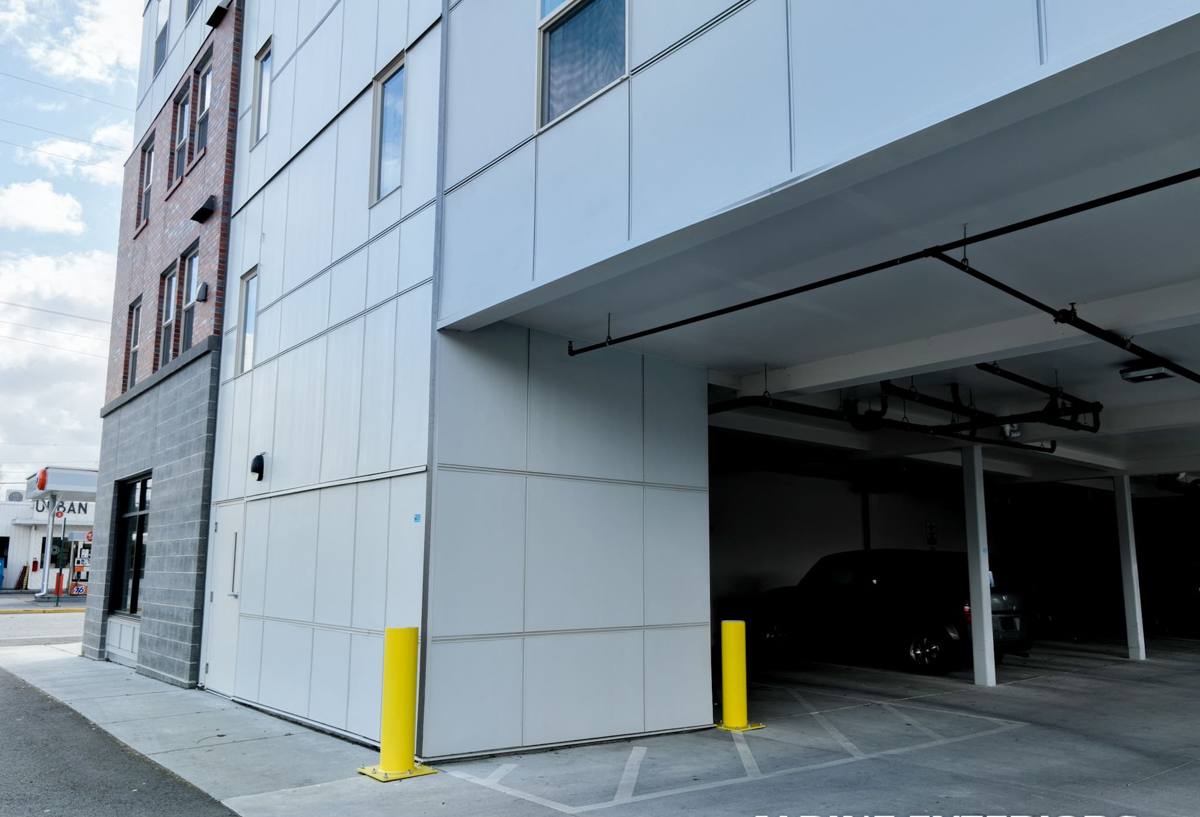
Why James Hardie Is the Right Material for This Exposure
James Hardie siding is fiber cement — a mix of cement, sand, and cellulose fiber engineered to resist moisture, pests, and fire. It doesn't rot, it doesn't swell when wet, and it isn't a food source for the mold and mildew spores that thrive in Birch Bay's damp, shaded conditions. That matters more here than almost anywhere else in Whatcom County, because homes closer to the water stay damp longer after every rain event.
The HZ5 Engineering Advantage
James Hardie builds its siding in different formulations for different climate zones, and the Pacific Northwest falls into their HZ5 engineered zone — designed specifically for regions with sustained moisture exposure. That's a meaningful distinction: it means the product in your walls was engineered with weather like Birch Bay's in mind, not a generic national spec.
ColorPlus Factory Finish
James Hardie's ColorPlus finish is baked on in a controlled factory environment and backed by its own finish warranty, which matters in a salt-air environment where field-applied paint tends to chalk, fade, and fail at the edges faster than it would inland. A factory-cured finish holds its color and its bond to the substrate better under repeated wet-dry cycling and salt exposure.
What a Correct Installation Actually Involves
Fiber cement siding is only as good as the installation behind it. Most of the siding failures we get called out to inspect in coastal Whatcom County neighborhoods aren't material failures — they're installation shortcuts that let moisture in behind a product that was never designed to sit wet.
- Proper weather-resistive barrier: A continuous, correctly lapped water-resistive barrier behind the siding, not a patched-together vapor barrier from the original build.
- Rainscreen or drainage gap where appropriate: Given Birch Bay's wind-driven rain and prolonged dampness, a drainage gap behind the siding lets any moisture that does get past the surface dry out instead of sitting against the sheathing.
- Correct flashing at every penetration: Windows, doors, decks, and roof lines are where wind-driven rain gets pushed into a wall system. Flashing has to be installed in the right sequence, not just caulked over.
- Manufacturer-specified fastening: James Hardie has exact fastener spacing, type, and placement requirements. Skipping these voids warranty coverage and creates weak points where salt-air corrosion starts.
- Correct clearances and gaps: Gaps at trim, corners, and the bottom of the siding keep water from wicking up into the board and let the assembly breathe and drain.
- Sealed and painted cut edges: Any field-cut edge of Hardie board needs to be sealed per spec — an exposed cut edge is a moisture entry point waiting to happen.
None of these steps are visible once the job is finished, which is exactly why they get skipped by crews that aren't held to a standard. They only show up years later, as moisture damage behind siding that looks fine from the street.
How Salt Air, Rain, and Moss Interact on a Birch Bay Home
These three stressors don't act independently — they compound each other. Salt air keeps surfaces slightly damp longer than dry inland air would, which extends the window for moss and algae to take hold. Moss then holds moisture directly against the siding surface, which is where correct product choice and installation detail matter most.
| Climate Factor | Effect on Siding | How Correct Hardie Installation Addresses It |
|---|---|---|
| Salt-laden air | Accelerates coating breakdown and fastener corrosion | Factory ColorPlus finish plus corrosion-resistant, manufacturer-specified fasteners |
| Wind-driven rain | Pushes moisture into seams, laps, and penetrations | Proper flashing sequence, lap spacing, and sealed penetrations |
| Extended shade and humidity | Feeds moss, algae, and mildew growth on siding faces | Non-organic fiber cement substrate that doesn't feed growth; drainage gap keeps surfaces drying faster |
| Freeze-thaw swings | Stresses joints and caulked seams over time | Correct expansion gaps and manufacturer-approved sealants at every joint |
Our Process for Birch Bay Projects
Every Birch Bay home we work on gets the same disciplined process, because the stakes for getting it wrong are higher this close to the water.
1. On-Site Assessment
We look at the home's actual exposure — which walls take the brunt of the wind and rain off the bay, where moss and staining have already taken hold, and what condition the sheathing and existing water barrier are in once old siding comes off.
2. Removal and Substrate Inspection
We don't just re-side over existing problems. If there's rot, hidden moisture damage, or a compromised water barrier under the old siding, that gets identified and addressed before any new material goes up.
3. Water Management Installation
This is the step that determines whether the siding lasts 10 years or 40. We install the weather-resistive barrier, drainage detailing, and flashing to spec before a single piece of Hardie board goes on the wall.
4. James Hardie Installation to Manufacturer Spec
Fastener pattern, board spacing, corner and trim detailing, and sealed cut edges — all installed to the specifications required to keep the manufacturer's warranty intact.
5. Final Walkthrough
We walk the finished job with the homeowner, explain what was done and why, and cover basic care going forward.
Why Hiring a Crew That Already Works Birch Bay Matters
Siding installation isn't one-size-fits-all across Whatcom County. A crew that mostly works drier, more sheltered inland neighborhoods can do a technically fine job and still miss details that matter specifically on the water — drainage detailing tuned for wind-driven rain, flashing sequences that account for salt-air corrosion, or simply recognizing early moss and moisture patterns for what they are.
We work Birch Bay and the surrounding Ferndale and Whatcom County coastline regularly, which means we've seen how homes here actually age — what fails first, what holds up, and where the old siding usually let water in. That local pattern recognition is worth more than a generic install checklist.
What to Ask Any Contractor Bidding a Birch Bay Siding Job
- Are they installing to James Hardie's published fastening and clearance specifications, not just "close enough"?
- Do they include a drainage gap or rainscreen detail given the wind-driven rain exposure here?
- How do they handle flashing at windows, doors, and deck penetrations?
- Are they James Hardie-trained or certified, and can they speak to the HZ5 zone specifically?
- What does their workmanship warranty cover, separate from the manufacturer's material warranty?
Cost Factors for a Birch Bay Hardie Siding Project
Every home is different, but the factors that move the price on a Birch Bay project tend to be the same ones that affect performance.
| Factor | Why It Affects Cost |
|---|---|
| Condition of existing sheathing and water barrier | Hidden moisture damage found during tear-off adds repair scope before new siding can go on |
| Home size and wall complexity | More corners, penetrations, and trim detail mean more labor and flashing work |
| Siding profile and finish selection | Lap, shingle, and panel styles, plus ColorPlus color options, vary in material cost |
| Site access | Waterfront lots and tighter setbacks can affect staging and equipment access |
| Drainage and flashing detail required | Homes with higher wind-rain exposure may need more extensive drainage detailing, which adds labor but pays off in longevity |
Caring for Hardie Siding in a Salt-Air Environment
James Hardie siding is low-maintenance compared to wood or vinyl, but "low-maintenance" doesn't mean "no maintenance" — especially this close to the water.
- Rinse siding periodically with a garden hose to clear accumulated salt residue and organic buildup.
- Keep gutters clean and functioning so overflow doesn't run down and pool against the siding.
- Trim back vegetation and tree cover where practical to reduce shaded, damp conditions that encourage moss.
- Inspect caulked joints, trim, and flashing annually and have any gaps resealed before they let water in.
- Address any early moss or algae growth promptly rather than letting it establish and hold moisture against the surface.
If you're considering a siding replacement for a home in Birch Bay, we're happy to take a look, walk the exterior with you, and give you a straightforward, no-pressure estimate for what a correctly installed James Hardie system would look like on your home.