 Ferndale Siding
 Board & Batten Siding in Blaine: A Look That Has to Earn Its Keep
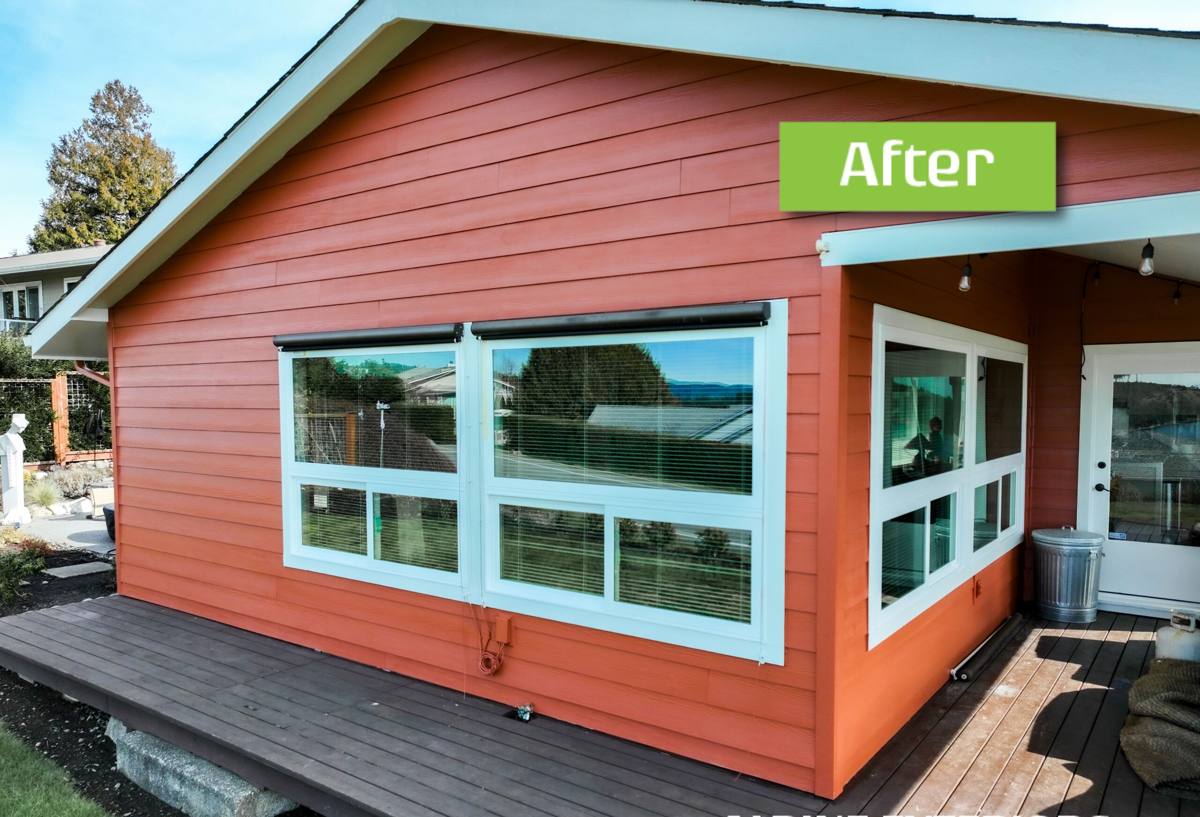
Board and batten has become one of the most requested siding profiles in Whatcom County, and it's easy to see why. The vertical lines read as clean, modern farmhouse, or classic Pacific Northwest depending on the trim and color choices around it, and it works equally well as a full exterior or as an accent on gables, dormers, and entry walls. But in Blaine, this style has to do more than look good. The same wide-open exposure to Semiahmoo Bay and the Strait of Georgia that gives this area its views also means homes here take a steady diet of salt-laden wind, wind-driven rain, and a moss season that can run most of the year on shaded or north-facing walls. A board and batten installation that isn't built for that combination will show problems years before a properly specified one does.
This page focuses on exactly that: what board and batten siding needs to hold up in Blaine's coastal climate, what a correct installation actually involves, and how our process is built around the conditions this area throws at an exterior.
Why Board & Batten Fits This Area — And Where It Can Go Wrong
The board and batten profile is popular here for good reason. Wide vertical panels with narrow battens covering the seams give a home strong architectural lines, and it pairs naturally with the board-and-batten or shingle-and-board combinations common on Whatcom County homes. It's also a favorite for partial applications — a gable end, a porch surround, a garage face — used to break up a large wall or add contrast against traditional lap siding.
The risk isn't the style itself, it's what's underneath it. Board and batten relies on vertical seams and batten strips to manage water, and every one of those seams is a place where wind-driven rain can be pushed up and under the material if the drainage plane, flashing, and fastening aren't done correctly. In a drier inland climate, a mediocre installation might get away with it for a while. On a property exposed to Semiahmoo Bay's wind and rain, mistakes get found fast.
What Local Homes Are Actually Fighting
- Salt air: Airborne salt accelerates corrosion on exposed fasteners, uncoated trim, and metal flashing, and it can degrade lesser paint systems faster than inland exposure.
- Driving rain: Storms off the water push rain sideways into wall assemblies, testing every seam, joint, and penetration in a way that calmer climates don't.
- Long moss season: Shaded walls, tree cover, and Whatcom County's damp stretches from fall through spring create ideal conditions for moss and algae to take hold on any siding material that holds moisture at the surface.
- Temperature swings: Coastal humidity combined with cooler nights means siding and trim go through repeated wet-dry, expand-contract cycles that stress caulked joints and fastener holes over time.
What a Correct Board & Batten Installation Requires
Board and batten is not more difficult to install than lap siding, but it is less forgiving of shortcuts, because there are more vertical seams and more battens fastened through the field of the wall. In a climate like Blaine's, a handful of details separate a system that lasts decades from one that needs rework in five to seven years.
The non-negotiables we build every board & batten job around
- A drainage gap (rainscreen) behind the panels so any moisture that does get past the surface has somewhere to go instead of sitting against the sheathing.
- A continuous, correctly lapped weather-resistive barrier underneath, with all seams and penetrations sealed before a single panel goes up.
- Corrosion-resistant fasteners sized and spaced to the manufacturer's specification — this matters more here than in drier inland areas because of salt exposure.
- Proper flashing at every window, door, and roof-to-wall intersection, plus kick-out flashing wherever a roofline meets a sidewall.
- Battens fastened directly into framing, not just through the panel into sheathing, so the joint stays tight over years of wet-dry cycling.
- Factory-finished panels wherever possible, so field-painted cut edges and fastener heads are the only places relying on touch-up coating.
- Correct clearance at the base of the wall and at grade, so splash-back and standing water aren't sitting against the bottom course.
Skip any one of these and the failure mode is predictable: water intrusion behind the panels, soft sheathing, or moss and algae taking hold at the seams where moisture lingers longest.
Why We Install James Hardie Board & Batten — And Nothing Else
This is a decision we made as a company standard, not a sales pitch, and it's worth explaining plainly. We install James Hardie fiber cement exclusively. We don't install vinyl, LP SmartSide, primed spruce, cedar, or other fiber cement brands, and we're upfront with homeowners about why.
James Hardie's board and batten systems are engineered specifically for the kind of climate stress Blaine deals with. The panels are non-combustible, which matters given the wildfire smoke seasons the whole region has seen in recent years, and they don't provide the organic material that moss and mildew feed on the way wood-based products can. Hardie's HZ5 product line is engineered for the moisture demands of the Pacific Northwest specifically, and the ColorPlus factory finish is baked on and warrantied against fading and cracking — a real advantage in a climate where repainting every few years isn't something most homeowners want to sign up for.
We've made the call not to install lower-cost alternatives because the trade-offs don't hold up here. Vinyl board and batten looks the part from a distance but can warp, fade, and doesn't hold caulked joints the way a fiber cement system does over decades of coastal weather. Wood and wood-composite products require far more maintenance to keep moss and rot at bay in a climate this damp. Fiber cement brands other than Hardie may perform reasonably, but we don't have the same confidence in their long-term coating warranty or installation-sensitivity track record that we do with Hardie, so we simply don't install them.
Board & Batten Options: A Straight Comparison
| Factor | James Hardie Fiber Cement | Vinyl | Wood / Wood Composite |
|---|---|---|---|
| Moss and moisture resistance | Strong — non-organic material, factory-sealed finish | Resists moisture but seams can trap water and grow algae | Weakest — organic material feeds moss and rot without upkeep |
| Salt air / coastal durability | Engineered for coastal exposure (HZ5 line) | Can chalk and become brittle over time near salt air | Requires frequent sealing/staining to hold up |
| Finish longevity | ColorPlus factory finish, long warranty | Color molded in but fades and chalks with UV exposure | Paint/stain needs reapplication every few years |
| Fire resistance | Non-combustible | Combustible | Combustible |
| Upfront cost | Higher material and labor cost | Lowest upfront cost | Mid-to-high, varies by species |
| Long-term maintenance cost | Low — occasional wash, minimal repainting | Low labor but shorter functional lifespan | High — regular refinishing required |
None of these products are inherently "bad." The comparison is about which one holds up with the least maintenance burden in Blaine's specific mix of salt air, rain, and moss — and that's consistently been fiber cement done right.
Our Process for a Blaine Board & Batten Project
Every project starts with an honest look at the wall, not just a quote based on square footage.
1. On-site assessment
We walk the exterior, check for existing moisture damage, note shaded and moss-prone walls, and look at how the roof and existing trim direct water around the home. This is where a crew that already works this area has an advantage — we already know which wall orientations and roof conditions tend to cause trouble in Blaine's weather pattern.
2. Tear-off and sheathing check
Old siding comes off and the sheathing gets inspected before anything new goes up. If there's hidden rot or soft spots from a prior installation that trapped moisture, we address that before it gets covered again.
3. Weather barrier and drainage plane
We install a continuous weather-resistive barrier and rainscreen system so the wall assembly has a real drainage path, not just a single line of defense.
4. Panel and batten installation
Panels and battens go up to Hardie's fastening and spacing specifications, with flashing detailed at every window, door, and roofline intersection along the way — not added as an afterthought.
5. Final walk-through
We review the finished exterior with the homeowner, check trim and caulk lines, and make sure every question about care and maintenance is answered before we consider the job done.
Why Local Experience Matters on This Job
Board and batten installation isn't regionally specific in theory — the fastening pattern is the same everywhere. What differs is judgment: knowing which walls in a given property need extra flashing attention because of prevailing wind direction off the water, recognizing early moss growth patterns before they become a maintenance headache, and understanding how Whatcom County's building department and inspection expectations apply to a re-side. A crew that already works Blaine and the surrounding Ferndale area isn't guessing at any of that — it's routine.
Living With Board & Batten Siding in a Coastal Climate
Even a correctly installed system benefits from basic upkeep, especially this close to the water:
- Rinse shaded or north-facing walls periodically to keep moss spores from establishing, especially heading into the wetter months.
- Keep gutters clear so overflow isn't running directly down wall sections at the top of the siding.
- Trim back vegetation and tree cover close to the house to cut down on the shade and moisture that encourage moss growth.
- Have caulked joints and trim intersections checked periodically — they're the first place wear shows up, even on a well-installed system.
None of this is heavy maintenance. It's the difference between a board and batten exterior that still looks sharp at year fifteen and one that's fighting moss and soft trim by year five.
If you're planning a board and batten project for a home in the Blaine area, we're happy to walk the exterior with you, talk through what your walls specifically need, and put together a straightforward, no-pressure estimate using the form below.