 Ferndale Siding
 Blaine's Coastal Climate Is a Different Kind of Test for Siding
Blaine sits right on the water, and that changes what siding has to survive compared to homes further inland in Whatcom County. Salt-laden air off the bay works its way into seams, fastener heads, and any spot where a coating is thin or a cut edge was left unsealed. Add the driving rain that comes in sideways during winter storms, and siding here takes on moisture from angles that a builder-grade installation in a calmer microclimate never has to account for. Then there's moss and algae season, which in this part of Washington isn't really a season at all — it's most of the year. Shaded north walls, tree-lined lots, and the persistent damp keep organic growth active almost continuously.
None of this means Blaine homes need exotic materials. It means they need a siding product that's genuinely engineered for wet, coastal conditions, installed by people who understand why the details matter here and not just in the manual. That's the whole basis of how we work.
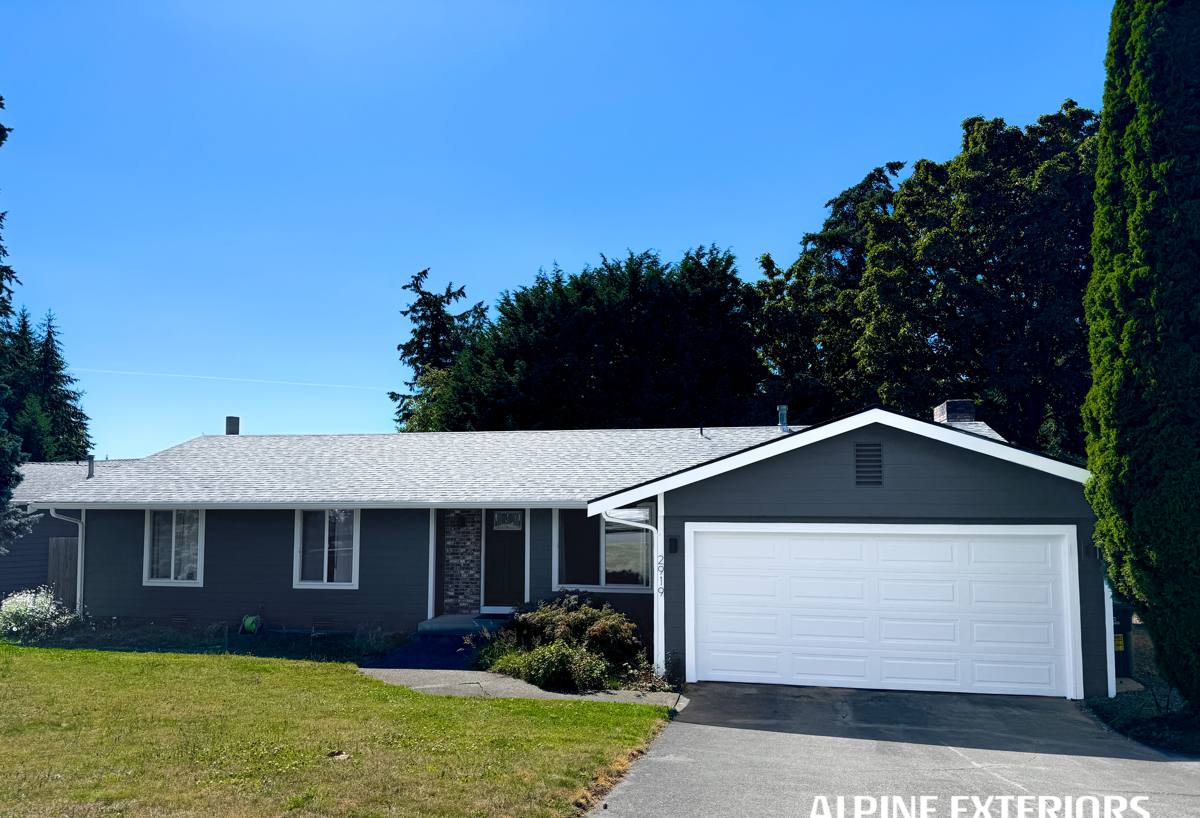
Why We Install Only James Hardie Fiber Cement
We don't install vinyl, LP SmartSide, Cemplank, Allura, primed spruce, or cedar. That's a deliberate standard, not a limitation we apologize for. Each of those products has legitimate strengths — cedar looks great, vinyl is inexpensive, engineered wood siding installs fast — but each also carries a real-world trade-off that shows up on a coastal Whatcom County wall over time: wood-based products absorb moisture at cut edges and need consistent paint and caulk maintenance to stay ahead of rot; vinyl can warp, fade, and doesn't hold a factory finish the way fiber cement does; some composite panels are more sensitive to installation errors than most crews want to admit. We'd rather stand behind one product system we trust completely than offer five products we'd each have to caveat.
What Fiber Cement Gets Right
James Hardie siding is cement, sand, and cellulose fiber, cured into a rigid board that doesn't feed mold, doesn't attract insects, and won't burn. It doesn't expand and contract with humidity the way wood does, which matters directly in a place where humidity barely drops. The ColorPlus factory finish is baked on under controlled conditions rather than field-applied, so it resists the fading and chalking that site-applied paint shows first, especially on walls that face the weather coming off the water.
Being Honest About the Trade-Offs
Fiber cement is heavier than vinyl and less forgiving of sloppy installation — it has to be cut, fastened, and flashed correctly, or the product's advantages are wasted. It also costs more upfront than vinyl or basic engineered wood. We think that trade-off is worth it for a house that's going to sit through decades of Blaine winters, but a homeowner should hear that plainly rather than have it glossed over.
What Correct Installation Involves Here
Fiber cement siding fails early almost exclusively because of installation mistakes, not because of the product itself. In a high-moisture, salt-exposed area like Blaine, the margin for error is smaller than it would be in a dry inland climate.
Rainscreen and Drainage
We install with a drainage gap behind the siding wherever the wall assembly calls for it, so any moisture that does get past the cladding has somewhere to go besides sitting against the sheathing. On a coastal lot with sustained wind-driven rain, that gap is the difference between water that dries out and water that becomes a long-term problem.
Fasteners, Flashing, and Cut Edges
Every cut edge gets sealed before it goes on the wall — factory edges come primed, but field cuts don't, and an unsealed cut edge is exactly where coastal humidity finds a way in. Fasteners are placed and set to Hardie's specification, not just "close enough," because over-driven or under-driven nails are one of the most common causes of early siding failure. Flashing at windows, doors, and roof-to-wall intersections gets layered correctly so water sheds outward at every transition, which matters more on a house that takes rain from multiple directions than one tucked away from the wind.
Choosing a Hardie Product Line for a Blaine Home
Hardie's HZ5 product line is engineered for the Pacific Northwest's freeze-thaw and moisture cycle, and it's what we default to for Blaine and the rest of Whatcom County. Beyond that, the choice of profile is mostly about the look you want and how the house is exposed.
| Product Line | Best Fit | Coastal Consideration |
|---|---|---|
| HardiePlank Lap Siding | Most home styles; the standard choice | Wide range of exposure widths; performs well on wind-exposed walls when lapped and fastened to spec |
| HardiePanel Vertical Siding | Modern builds, accent walls, gables | Fewer horizontal laps means fewer water-catching ledges, useful on rain-heavy elevations |
| HardieShingle | Craftsman and cottage-style homes | More surface texture can hold moss longer in shaded, damp spots — good drainage detailing matters more here |
| HardieTrim | Fascia, corners, window and door trim | Keeps trim from being the weak point where the siding system otherwise performs well |
Color, Finish, and Moss Resistance
ColorPlus finish is worth explaining rather than just naming. It's a multi-coat, baked-on finish applied at the factory, which is a more controlled process than painting siding on site after installation. That matters for two reasons in Blaine: the finish holds up better against UV and salt exposure than field-applied paint, and touch-up product is available for the rare nick or scratch, so you're not repainting an entire wall to fix a small mark. No factory finish makes a wall immune to moss — moss grows on the grime and organic film that collects on any exterior surface in a wet climate, not on the paint itself — but a durable, even finish makes periodic gentle washing far more effective at keeping walls looking clean, since the color underneath isn't degrading at the same time.
How We Approach a Blaine Siding Job
Every job starts with a walk of the exterior to look at what's actually driving the replacement decision — moisture damage, failing paint, an outdated product, or just a house that's ready for an upgrade — and to check the sheathing and framing underneath once the old siding is off, since that's the only real way to know what condition the wall is in.
- On-site assessment of existing siding, trim, and any visible moisture or rot damage
- Inspection of sheathing and wall assembly once old material is removed
- Weather-resistive barrier repair or replacement where needed, with attention to how it integrates with window and door flashing
- Drainage gap installation per the wall assembly and local exposure conditions
- Hardie HZ5 fiber cement installation to manufacturer fastening and clearance specifications
- Sealed cut edges and correctly lapped, layered flashing at every penetration and transition
- Final walkthrough covering care, cleaning, and what to watch for over the first year
Cost Factors for a Blaine Fiber Cement Job
We don't quote a number until we've seen the house, but a few things consistently move the price on jobs in this area:
| Factor | Why It Matters |
|---|---|
| Amount of sheathing repair needed | Coastal moisture exposure sometimes means hidden rot behind old siding that has to be addressed before new siding goes on |
| Wall height and access | Multi-story or steep-lot homes take longer to scaffold and work safely |
| Product mix | Combining lap siding with shingle accents or vertical panel sections adds labor and material complexity |
| Trim and detail work | Homes with more window and door openings, or more architectural detail, take more flashing and trim labor |
| Tear-off and disposal | Removing and hauling old siding, especially layered-over material, adds time before the new siding work even starts |
As a broad range, full fiber cement siding replacement on a typical single-family home in this area runs from the high five figures into six figures depending on size and scope — we'll give you a firm number after we've actually looked at the house, not before.
Why a Crew That Already Works in This Area Matters
A lot of what separates a siding job that lasts twenty-plus years from one that starts showing problems in five comes down to judgment calls made on the wall — where to add an extra strip of flashing, how tight to run a drainage gap, whether a particular corner needs extra attention because of how the wind hits it. Those judgment calls get better with repetition in the same conditions. A crew that regularly works Blaine and the rest of Whatcom County's coastal edge has already seen how salt air, driving rain, and moss behave on real houses here, not just in a manual written for a national audience. That's not a marketing point — it's the practical reason local experience shows up in how long a siding job actually holds up.
If your Blaine home needs new siding, or you're just trying to figure out what shape your current siding is in, we're happy to take a look. There's a form below for a free estimate, and there's no pressure attached to asking.