 Ferndale Siding
 Why Roofs in Blaine Wear Differently Than Roofs Inland
Blaine sits right on the water at the northern edge of Whatcom County, and that location shapes everything about how a roof ages here. Salt-laden air off the bay works its way into fasteners, flashing, and vent components year-round. Add in driving rain that comes sideways during winter storms, and a roof takes on moisture from angles a typical rain-resistant design was never tested against. Then there's shade and humidity: a lot of Blaine lots have mature trees and cooler, damp microclimates that never fully dry out between rain events, which is exactly what moss and algae need to take hold.
None of this means a roof in Blaine has to fail early. It means the materials, fastening, flashing details, and ventilation have to be chosen and installed with those specific stresses in mind. A roof replacement done to a generic standard will underperform here. One done for this climate will hold up the way it's supposed to.
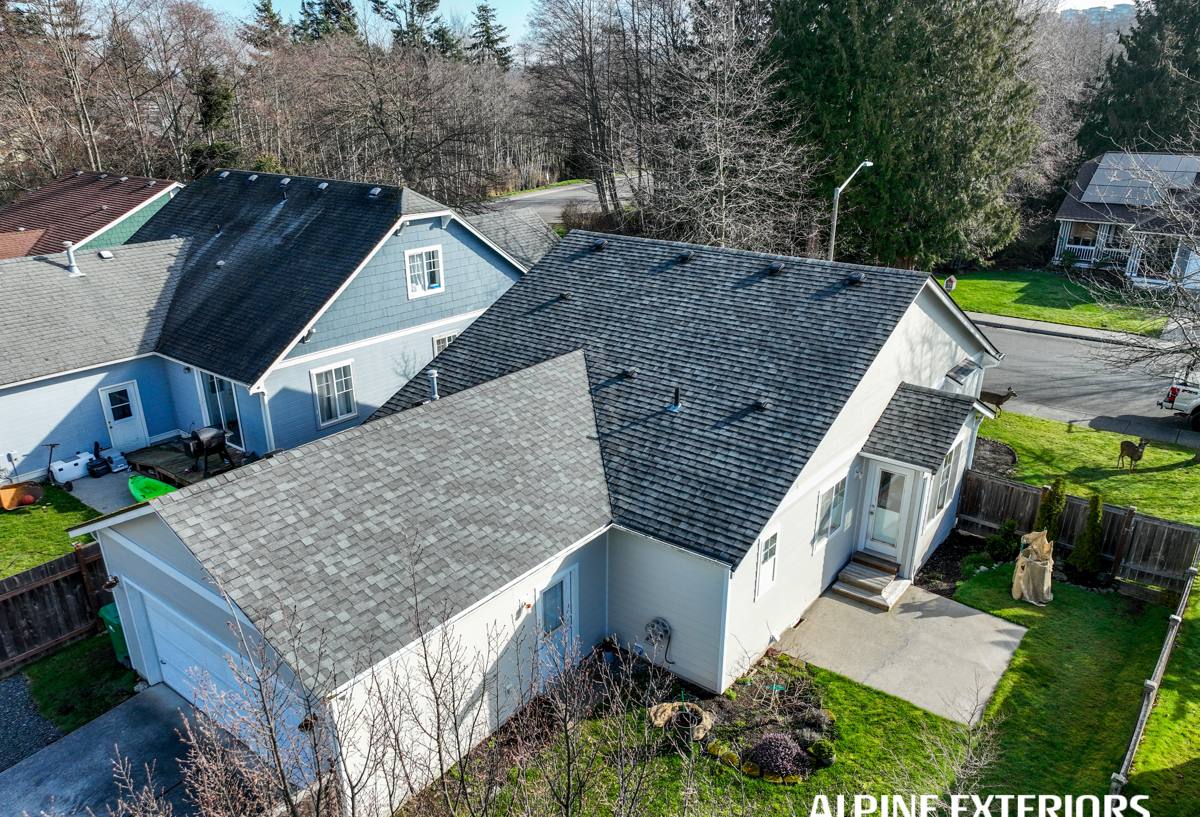
Signs a Blaine Roof Needs Replacement, Not Another Repair
What you can see from the ground or attic
Granule loss showing up in gutters, shingles that look cupped or curled at the edges, and dark streaking that keeps coming back after cleaning are all signs the roofing material itself is breaking down, not just dirty. In the attic, look for daylight around vent stacks or the ridge, damp or discolored insulation, and any wood that feels soft when you press on it near the eaves.
What tells us it's past a patch
A patch makes sense when the problem is isolated — one section of flashing, one damaged area from a fallen branch. Replacement becomes the honest recommendation when the underlayment has broken down across large sections, when moss has been established long enough to lift shingle edges in multiple areas, or when the roof is old enough that repairing one spot just means the next spot fails within a season or two. We'll tell you plainly which situation you're in before we quote anything.
What a Correct Roof Replacement Actually Involves
A roof replacement is more than swapping old shingles for new ones. Done right, it addresses everything underneath that determines whether the new roof lasts.
- Full tear-off to bare decking — never installing new material over old, which traps moisture and hides deck damage
- Deck inspection and repair or replacement of any soft, rotted, or delaminated sheathing before anything new goes down
- A synthetic or felt underlayment rated for the exposure, with ice-and-water shield at eaves, valleys, and penetrations
- New flashing at every roof-to-wall transition, chimney, skylight, and vent — reused flashing is a common shortcut and a common leak source
- Proper intake and exhaust ventilation so the attic can actually dry between rain events instead of staying damp
- Correct fastening pattern and nail placement for the wind exposure at this location, not just the manufacturer's minimum
Skipping any one of these doesn't show up on day one. It shows up in year three or four, as a leak, premature moss growth, or shingles that fail well before their rated lifespan.
Choosing a Roofing Material for a Coastal Whatcom County Home
There's no single "best" roofing material for every house — it depends on your roof's exposure to sun and shade, your budget, and how the house is built. Here's how the common options actually compare for a home dealing with salt air, driving rain, and moss pressure.
| Material | Typical Lifespan | Moss & Algae Resistance | Wind & Salt-Air Durability | Relative Cost |
|---|---|---|---|---|
| Standard 3-tab asphalt shingle | 15–20 years | Low without treatment | Moderate | Lowest |
| Architectural (laminate) asphalt shingle | 25–30 years | Moderate; better with algae-resistant granules | Good | Moderate |
| Standing seam metal | 40–50+ years | High — sheds moisture, little for moss to grip | Excellent | Highest |
| Synthetic/composite shingle | 30–50 years | Good, especially with treated products | Good to excellent | Moderate to high |
Architectural asphalt shingles remain the most common choice in this area because they balance cost and performance well, especially with algae-resistant granules built in. Metal roofing costs more upfront but sheds moss pressure and salt exposure better than anything else on this list, which matters most on shaded, north-facing sections of a roof. We'll walk you through the honest trade-offs for your specific roof rather than pushing one product across the board.
A note on why we're careful about certain products
Some lower-cost or older-style products can look like a good deal on paper but come with real maintenance burden in a wet, shaded climate — more frequent moss treatment, more sensitivity to installation quality, or warranty terms that don't hold up well against constant moisture exposure. Our standard is to recommend what performs well over the long haul in this specific climate, even when that means steering you away from the cheapest listed price.
Ventilation and Moisture Control: The Part Most Homeowners Never See
Moss doesn't just grow because a roof sits in shade — it grows because the roof surface stays damp longer than it should. Two things control that: how well water sheds off the surface, and how well the attic below is ventilated. An attic that isn't breathing correctly stays warm and moist, which condenses on the underside of the deck and accelerates rot from the inside, on top of whatever moss is doing on the outside.
When we replace a roof, we check that intake vents at the eaves and exhaust at the ridge (or through properly placed roof vents) are balanced for the size of the attic. This is one of the most overlooked factors in roof longevity in Whatcom County, and it's often the difference between a roof that needs moss treatment every year and one that mostly takes care of itself.
Our Roof Replacement Process
1. On-site inspection and honest assessment
We get on the roof, check the attic, and look at flashing, decking, and ventilation — not just the shingle surface. You get a straight answer on whether you need a full replacement, a partial, or just a repair.
2. Material and scope discussion
We walk through material options for your roof's specific exposure and budget, with real lifespan and maintenance expectations, not sales pressure.
3. Site protection and tear-off
Landscaping, siding, and gutters get protected before tear-off starts. Decking is inspected as it's exposed, with any damaged sections replaced before new underlayment goes down.
4. Installation
New underlayment, flashing, ventilation components, and roofing material go in to manufacturer spec and to the fastening standards appropriate for this area's wind and rain exposure.
5. Cleanup and final walkthrough
Magnetic sweep for nails, full debris removal, and a walkthrough so you know exactly what was done and what to expect going forward.
Why It Matters That We Already Work in Blaine
A crew that only occasionally works this far north treats Blaine like any other job. A crew that works here regularly knows which parts of town hold onto moss longer because of tree cover, which roof orientations take the worst of the driving rain off the bay, and how to schedule tear-off days around the weather windows that actually exist here instead of guessing. We're also familiar with local permitting requirements and typical construction in Whatcom County homes, which keeps the project moving instead of stalling on paperwork or surprises.
That local familiarity also means we're not learning on your roof. We've already seen how salt air affects fastener choice and how shaded valleys behave differently than open slopes in this specific stretch of coastline, and we build that into the plan from the first inspection.
Roof Replacement Checklist for Blaine Homeowners
- Confirm the contractor is licensed and carries current liability insurance and workers' comp
- Ask for a full tear-off, not an overlay, on any roof more than one layer deep already
- Get specifics on underlayment, flashing, and ventilation — not just the shingle brand
- Ask how the estimate accounts for salt-air exposure and moss history on your specific roof
- Get the workmanship warranty in writing, separate from the manufacturer's material warranty
- Confirm a written plan for debris cleanup, including a nail sweep of the yard and driveway
Get a Straight Answer on Your Roof
If you're not sure whether your roof needs a full replacement or a repair, the best next step is a real inspection, not a guess from the ground. We'll take a look, tell you honestly what we find, and put together a free, no-pressure estimate using the form below.