 Ferndale Siding
 Board & Batten in Lynden: A Style That Has to Earn Its Keep
Board and batten has deep roots in Whatcom County's farm architecture, and it's easy to see why it still fits Lynden so well. The vertical lines suit the gables, dormers, and barn-influenced rooflines you find on a lot of homes out here, and it reads as substantial without looking fussy. But board and batten is also one of the least forgiving siding profiles when it's installed wrong, because every batten creates a seam, and every seam is a place water can get behind the wall if the detailing isn't right. On a home in Lynden, where the siding has to shrug off long stretches of wet weather year after year, that detail work is the whole ballgame.
This page is about doing board and batten correctly for this specific area — not board and batten in general. If you're comparing bids for a Lynden project, the questions below are the ones that actually separate a siding job that lasts twenty-five-plus years from one that starts failing at the battens in five.
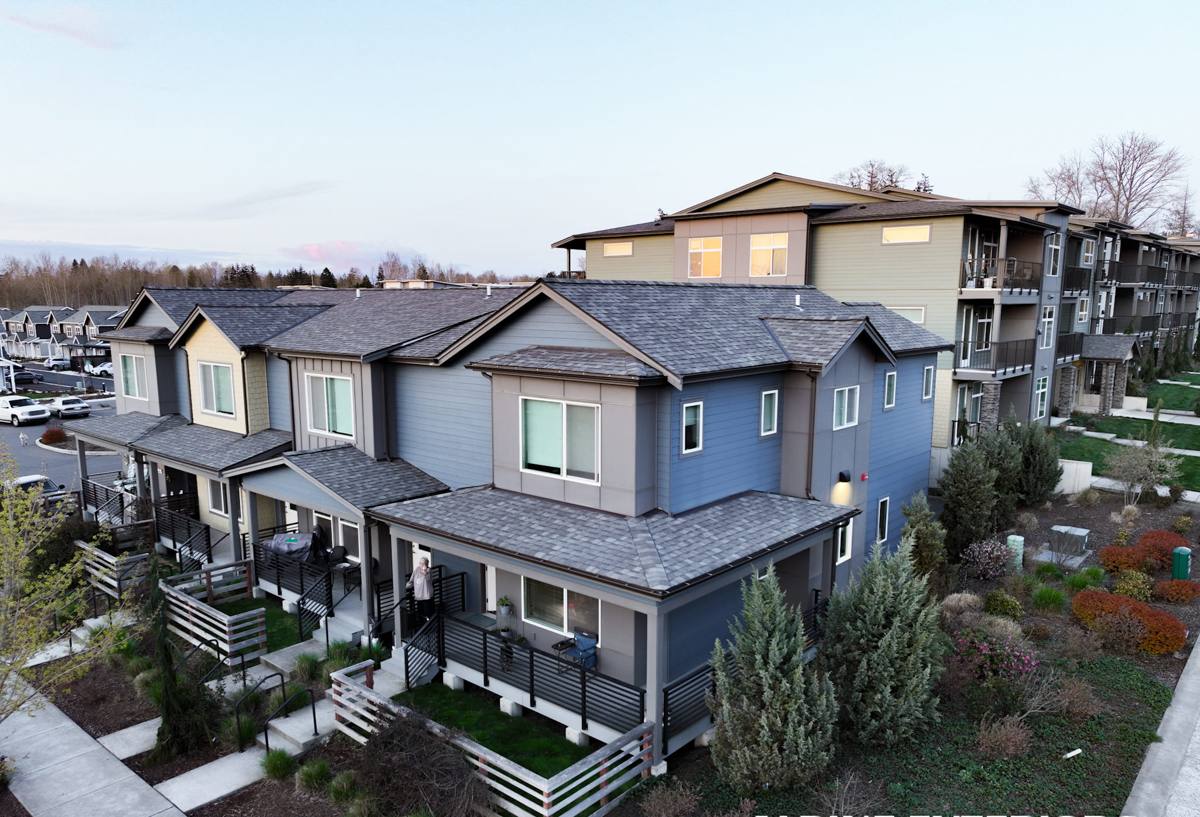
What Whatcom County Weather Does to a Board & Batten Wall
Lynden sits a short drive inland from Ferndale and the Salish Sea shoreline, and while it doesn't take the direct salt spray a waterfront property does, the broader Whatcom County air still carries enough salt content to accelerate corrosion on fasteners, flashing, and any metal trim over time. Combine that with the region's long stretch of driving rain — wind-pushed precipitation that hits walls at an angle instead of falling straight down — and you get a climate that actively tests every horizontal joint in a board and batten system.
Lynden's open farmland and larger lots mean many homes get more direct wind exposure than a tightly built-up neighborhood would, which pushes rain harder against south and west-facing walls. At the same time, properties with mature trees or tree lines nearby stay shaded and damp longer after a storm, which is exactly the condition that grows moss and algae on siding. Whatcom County's moss season isn't a short window — it runs most of the fall, winter, and spring — and vertical battens with poor drainage detailing give moss and mildew more edges and shadow lines to take hold on than a flat lap profile does.
The three failure points we watch for
- Batten-to-panel seams that were caulked instead of properly lapped or flashed, letting wind-driven rain track behind the panel
- No rainscreen gap, which traps moisture against the wall sheathing instead of letting it drain and dry
- Fasteners driven into battens only, without solid backing at every course, which loosens over time as wood and cement products expand and contract with moisture
What a Correct Board & Batten Installation Actually Involves
Board and batten looks simple from the street — vertical panels, vertical strips over the seams — but the assembly behind it is what determines whether it lasts. A correct install starts with a drainable water-resistive barrier over the sheathing, then a rainscreen gap (typically furring strips or a purpose-built drainage mat) that lets any moisture that does get past the cladding drain out and the wall cavity breathe. Skipping the rainscreen is the single most common shortcut we see on board and batten jobs, because it's invisible once the siding is up and it saves the installer real time and material cost.
From there, flashing matters more on board and batten than on almost any other siding profile. Every window, door, and horizontal trim transition needs proper head flashing and kick-out flashing so water is directed out and away from the wall rather than allowed to run behind the panel. Batten spacing and fastening pattern need to follow the manufacturer's engineered spec, not the installer's habit — fastener spacing that's too wide leaves the panel vulnerable to wind uplift in a storm, and Whatcom County gets its share of winter windstorms off the water.
What we check before we call a job done
- Rainscreen gap installed and continuous behind the full field of siding
- Flashing integrated at every window, door, and roof-to-wall transition
- Battens fastened into solid framing or blocking, not just the panel substrate
- Bottom edge of the siding held off grade and hardscape per manufacturer clearance
- All cut edges of fiber cement factory-sealed or field-sealed before installation
Why We Install Only James Hardie for This Application
We get asked, especially on board and batten projects, why we don't offer LP SmartSide, vinyl, cedar, or primed spruce as options. It's a fair question, because each of those has a place in the market and each has real strengths. Cedar board and batten looks beautiful when it's new, but it's a wood product in a wet climate — it needs ongoing sealing and refinishing to keep moisture out of the grain, and Whatcom County's damp season doesn't give it much time to dry between storms. Primed spruce and engineered wood products like LP SmartSide hold up better than raw wood but still rely on their factory coating and field caulking staying intact at every batten seam to keep water out of the substrate; once moisture gets past that layer, wood-based cores can swell or delaminate. Vinyl board and batten is low-maintenance and inexpensive, but it's a thin, flexible material with visible seams and joints, and it's simply not engineered to handle the kind of driving, wind-pushed rain this region sees the way a rigid fiber cement panel is.
James Hardie fiber cement is non-combustible, doesn't rot, and is manufactured specifically for climate exposure through its HZ5 product engineering, which is built around Pacific Northwest weather patterns. The factory-applied ColorPlus finish is baked on and warrantied against peeling and cracking, so the batten seams and panel faces hold their color and their seal far more consistently than a field-painted product does. It's also the system we can stand behind with a strong transferable warranty, which matters on a job where the installation quality and the material quality both have to hold up for decades, not years.
Our Process for a Lynden Board & Batten Project
- On-site assessment. We look at wall exposure, existing moisture damage, window and trim condition, and how the home's orientation sets it up against prevailing wind and rain direction.
- Product and profile selection. We walk you through HardiePanel vertical siding paired with HardieTrim battens, discuss reveal width and batten spacing that suits the home's proportions, and go over ColorPlus finish options.
- Tear-off and substrate check. Old siding comes off and we inspect the sheathing underneath for rot or damage before anything new goes up — this is where hidden problems from a prior installation usually show up.
- Water-resistive barrier and rainscreen. We install a drainable barrier and rainscreen gap as the foundation layer, not an afterthought.
- Flashing and trim. Windows, doors, and roof transitions get flashed before panels go on.
- Panel and batten installation. Fastened to manufacturer spec, with attention to fastener backing and spacing at every batten.
- Final inspection and walkthrough. We review the completed job with you and confirm every seam, joint, and clearance is correct.
Cost Factors for Board & Batten Siding in Lynden
Every home is different, but the variables below are the ones that most often move the price on a board and batten project in this area. We'll always give you a firm, itemized number after an on-site look — this table is meant to help you understand what's driving that number.
| Factor | Why It Matters |
|---|---|
| Wall height and gable complexity | Tall gable ends and dormers common on Lynden farmhouse-style homes need more cutting, scaffolding, and precise batten alignment |
| Existing siding removal and substrate repair | Rot or damage found under old siding adds sheathing repair before new panels can go on |
| Rainscreen system type | Furring strips versus a manufactured drainage mat affects labor and material cost, though both are worth doing right |
| Batten reveal and spacing pattern | Tighter batten spacing uses more trim material and more fastening labor per square foot |
| Window and trim count | Each opening needs individual flashing work, which adds time regardless of overall wall area |
| Finish selection | Factory ColorPlus finish costs more up front than field-primed panel but eliminates a repaint cycle down the road |
Living With Board & Batten Siding in This Climate
Once it's installed correctly, James Hardie board and batten is genuinely low-maintenance, but "low-maintenance" doesn't mean "no attention." In Whatcom County's moss season, it's worth doing an annual walk-around, especially on shaded or north-facing walls, to check for moss or algae buildup at the battens and clean it gently before it holds moisture against the surface long-term. Keep gutters clear so roof runoff isn't dumping extra water down a wall section, and keep landscaping trimmed back a few inches from the siding so air can circulate and walls can dry between storms. A correctly installed system with a working rainscreen handles incidental moisture on its own — these habits just keep the surface looking good and catch small issues before they become bigger ones.
What to Ask Before Hiring a Board & Batten Crew in Lynden
Board and batten hides its installation quality behind a clean-looking finish, which makes it an easy siding style for a shortcut installer to get away with mistakes on — at least for the first few years. Before you hire anyone for a Lynden project, it's worth asking directly about the items below.
- Do they install a rainscreen gap behind board and batten as standard practice, or only if asked?
- Can they describe their flashing approach at windows, doors, and roof transitions before work starts?
- Are they James Hardie certified or specifically experienced installing HardiePanel and HardieTrim systems?
- Will they show you fastener spacing and backing details, not just the finished appearance?
- Do they carry manufacturer and workmanship warranties, and will those transfer if you sell the home?
- Have they worked on homes in Lynden or nearby Whatcom County towns, and do they understand the local wind and rain exposure?
Why Local Experience in Lynden and Ferndale Matters
A crew that regularly works in Whatcom County knows how prevailing wind direction plays out differently on an open Lynden lot versus a tree-sheltered Ferndale property, and adjusts flashing and rainscreen detailing accordingly instead of applying a one-size-fits-all approach. That local pattern recognition — knowing which walls take the worst of the driving rain, which properties are prone to heavier moss growth, and how the area's damp season affects drying time during installation — is the difference between a board and batten job that's built for this specific climate and one that was just built to spec on paper.
If you're considering board and batten siding for a home in Lynden, we're happy to take a look and walk you through what it would involve for your specific property. There's no pressure and no cost to get a straight answer — just fill out the form below to schedule a free estimate.