 Ferndale Siding
 Why Board & Batten Works So Well in Sudden Valley
Board and batten has become one of the most requested siding styles in the Sudden Valley area, and it's easy to see why. The wide vertical boards and narrow battens covering each seam give a home a clean, tailored look that suits both the craftsman-style houses and the newer modern-farmhouse builds going up in this part of Whatcom County. It also reads well against the wooded, tree-lined lots common to the area, where a busy horizontal lap pattern can get visually lost but strong vertical lines hold up.
Board and batten isn't just a look, though. Done correctly, it's also one of the more forgiving profiles for shedding water down a wall plane instead of across it, which matters a great deal here. Done incorrectly — thin material, no drainage gap, battens face-nailed straight through into the sheathing — it can trap moisture behind the boards and fail faster than almost any other siding style. This page is about doing it the right way, specifically for homes in this community.
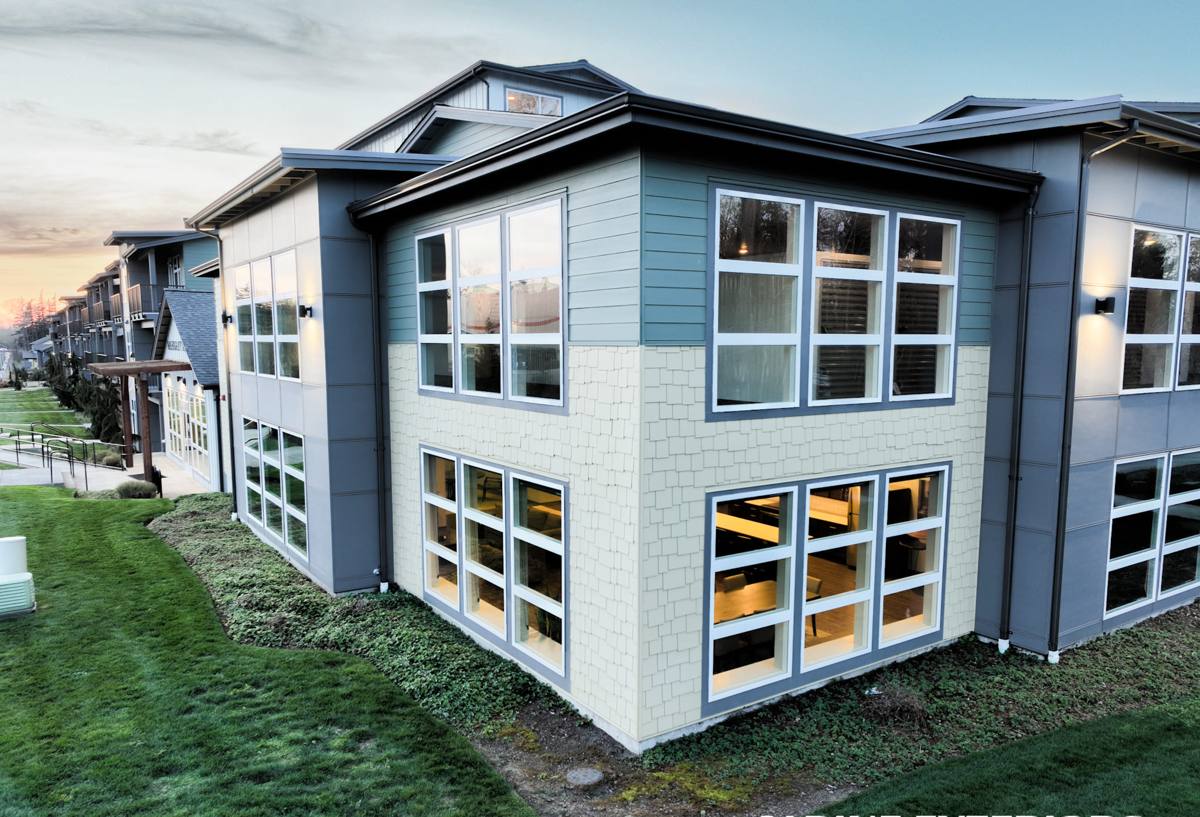
What This Climate Actually Demands From a Vertical Siding System
Salt Air and Driving Rain
Homes in and around Ferndale sit close enough to the water that salt-laden air is a real factor in how fast exterior materials age. Salt air accelerates corrosion on fasteners and metal flashing, and it works on paint and caulk faster than it does further inland. Combine that with the sideways, wind-driven rain that comes through Whatcom County in the fall and winter, and any gap, unsealed joint, or exposed fastener in a board and batten system becomes a point of entry sooner than a homeowner would expect.
A Long Moss Season
Shaded, tree-covered lots and a wet season that runs many months out of the year mean moss and algae growth is close to constant on north- and west-facing walls. Moss holds moisture directly against a wall's surface. On a siding product that isn't dimensionally stable or properly sealed at the factory, that constant damp contact is exactly what leads to swelling, soft spots, and paint failure over time.
Put those two factors together — salty, humid air and long stretches where a wall face barely dries out — and you get a climate that is genuinely hard on siding. It's not a place where a "good enough" install or a soft substrate product gets away with cutting corners.
What Correct Board & Batten Installation Actually Involves
Board and batten looks simple from the curb, but the installation details are what determine whether it lasts 10 years or 40. For Sudden Valley homes specifically, we treat the following as non-negotiable:
A Real Drainage Gap
Vertical siding needs a rainscreen gap — a ventilated space between the back of the panel and the weather-resistant barrier — so that any moisture that does get behind the boards can drain and dry instead of sitting against the wall. Face-nailing boards flat against the sheathing with no gap is a shortcut that causes problems years later, especially in a climate with this much sustained moisture.
Correct Fastening and Board Spacing
Battens need consistent spacing and blind or properly countersunk fasteners driven into framing, not just sheathing, using fasteners rated to resist the corrosion that salt air accelerates. Gaps between boards need to account for seasonal material movement so nothing binds, cracks, or pulls loose.
Flashing at Every Transition
Windows, doors, roof lines, and any horizontal trim break are where vertical siding fails first if flashed poorly, because they're the points where water is forced to change direction. Every one of these transitions gets properly lapped, back-flashed, and sealed before a single board goes up over it.
Sealed Cuts and Ends
Any factory edge that gets field-cut needs to be primed and sealed before installation, not after. An unsealed cut end is one of the most common places moisture gets into fiber cement siding, and it's an easy thing for a crew in a hurry to skip.
The Material: James Hardie Vertical Siding, Not Wood or Vinyl
We install James Hardie fiber cement exclusively — HardiePanel vertical siding with HardieTrim boards for the battens — and we don't offer wood, vinyl, LP SmartSide, or other fiber cement brands as an alternative for this style. That's a deliberate standard, not a sales preference, and it's worth explaining why for a climate like this one.
- Real wood or primed spruce board and batten looks great on day one but is organic material in a climate that stays damp for months at a time. It needs regular repainting and is genuinely vulnerable to the rot and moss-related moisture problems this area produces.
- Vinyl board and batten is low-maintenance in the sense that it doesn't need paint, but it's a thin, flexible plastic panel that can warp in temperature swings, doesn't hold up well to wind-driven debris, and reads visually flat compared to a true fiber cement board.
- LP SmartSide is an engineered wood product with a resin-treated strand substrate. It performs reasonably when installed and maintained exactly to spec, but it's still wood-based, meaning cut edges, fastener points, and any lapse in sealant maintenance carry real moisture risk over a long wet season.
- James Hardie fiber cement is cement, sand, and cellulose fiber — it is non-combustible, doesn't rot, and is engineered specifically for climates like the Pacific Northwest through Hardie's HZ5 product line. The ColorPlus factory finish is baked on and warrantied against fading and peeling, which matters when battens and cut lines are exposed to salt air and constant UV-to-rain cycling.
We standardized on Hardie because it's the one system that consistently holds its dimensions, its finish, and its seams through this specific combination of salt air, driving rain, and moss exposure — without asking a homeowner to repaint or recaulk every few years to keep it that way.
Comparing Board & Batten Material Options for This Climate
| Material | Moisture Behavior Here | Maintenance Burden | Typical Lifespan |
|---|---|---|---|
| Cedar / primed wood | Absorbs moisture; vulnerable to moss and rot in shaded, damp areas | Repainting/staining every 3-5 years | 15-25 years with diligent upkeep |
| Vinyl | Doesn't rot, but can warp; seams and panels can loosen in wind | Low, but limited repair options if damaged | 15-25 years |
| LP SmartSide | Engineered wood core; needs intact sealant/paint at all cuts and edges | Periodic caulk/paint inspection | 20-30 years to spec |
| James Hardie fiber cement | Non-combustible, dimensionally stable, engineered for wet Pacific Northwest climates | Occasional wash-down; factory finish holds color | 30+ years installed and maintained to spec |
Our Process for a Sudden Valley Board & Batten Project
- On-site assessment. We look at sun/shade exposure, existing moisture damage, current siding condition, and the wall assemblies behind it before quoting anything.
- Tear-off and sheathing check. We remove the old siding and inspect the sheathing underneath for rot or soft spots — a common finding on older homes in this area where moisture has been working on the wall for years unseen.
- Weather barrier and rainscreen installation. A new weather-resistant barrier goes on, followed by furring strips or a purpose-built rainscreen product to create the drainage gap vertical siding needs.
- Flashing at every penetration. Windows, doors, vents, and roof transitions are flashed and sealed before boards go up.
- HardiePanel and HardieTrim installation. Boards and battens are installed to Hardie's fastening and spacing specifications, with all cut ends primed and sealed on site.
- Final inspection and cleanup. We walk the finished job with the homeowner and clean the site fully before we leave.
Maintaining Board & Batten Siding in This Climate
Even the right material benefits from a little seasonal attention. For homeowners in the Sudden Valley area, we recommend:
- Rinsing down north- and west-facing walls once or twice a year to slow moss and algae buildup before it takes hold
- Keeping gutters clear so overflow doesn't run directly down a wall face during heavy rain
- Trimming back tree limbs and shrubs that keep a wall shaded and damp longer than the rest of the house
- Checking caulking at trim and window edges annually, since even a good sealant job benefits from periodic inspection
- Watching for any soft spots or discoloration near ground level, where splash-back and standing moisture are most common
Why Hiring a Crew That Already Works This Area Matters
Board and batten in Whatcom County isn't a generic install. A crew that hasn't worked salt-air, high-moss, high-rainfall sites before can install a technically "correct" system on paper and still miss the details that matter here — drainage gap sizing, fastener corrosion resistance, or how aggressively to flash a north-facing wall that never fully dries out. We work this specific region regularly, which means we're not guessing at how this climate behaves on a wall — we're building for the conditions we already see every week.
If you're weighing board and batten for a home in the Sudden Valley area, we're happy to walk the property, look at what's there now, and talk through what a correct James Hardie installation would involve for your specific house. There's no pressure and no cost to get an estimate — just a straightforward look at what your home needs.