 Ferndale Siding
 Building a Deck That Actually Holds Up in Cordata
A deck in the Cordata area lives a different life than one built inland or in a drier climate. Between the marine air rolling in off the water, the long stretches of driving rain that define a Whatcom County winter, and a moss season that can run six months or longer, an improperly built deck starts showing problems fast — soft boards, rusted fasteners, slick surfaces, and framing that rots from the inside out before anyone notices. We build and repair decks for homeowners in and around Cordata and Ferndale, and this page covers what actually matters when you're putting a deck on a home in this part of the county.
This isn't a generic deck-building overview. It's specific to what we see repeatedly on jobs in this neighborhood: the soil drainage, the wind exposure, the way moisture sits under decking that wasn't spaced or ventilated correctly. If you're planning a new deck, replacing boards on an old one, or trying to figure out why yours already feels spongy after a few winters, this is the ground-level detail that matters.
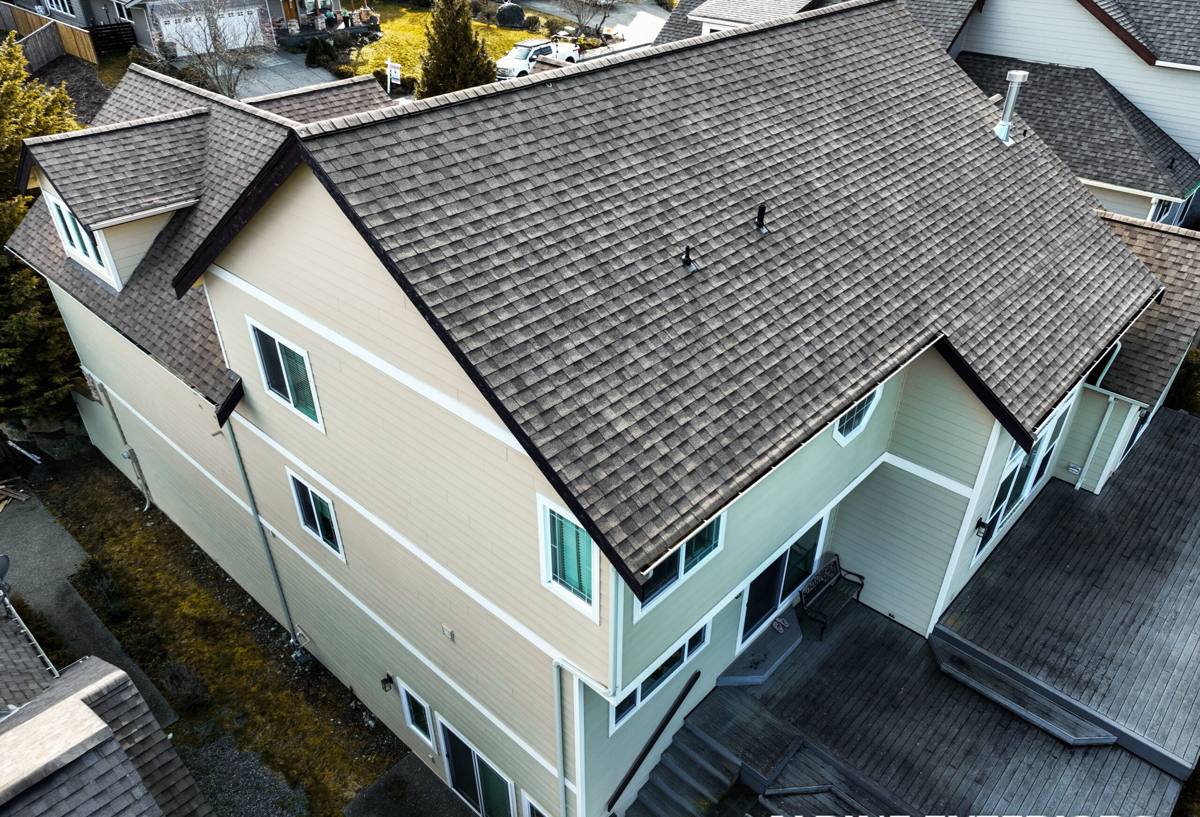
What Cordata-Area Homes Are Up Against
Salt Air and Metal Fasteners
Whatcom County sits close enough to the water that airborne salt is a real factor on exterior metal, even a few miles inland. Ordinary galvanized nails and screws corrode faster here than the box label suggests, and once a fastener starts rusting, it weakens, streaks the surrounding wood or composite, and eventually fails. Any deck built to last needs fasteners rated for coastal or marine exposure, not just "exterior grade" hardware pulled off a generic shelf.
Driving Rain and Water Management
Rain here doesn't just fall straight down — wind-driven rain gets pushed sideways under railings, into ledger board connections, and behind any trim that wasn't flashed properly. A deck that isn't detailed for driving rain will eventually leak at the house connection, which is the single most common source of hidden rot we find on older decks in this area. Water management isn't an afterthought here; it has to be designed into the ledger flashing, the decking gaps, and the grading underneath from day one.
The Long Moss Season
Shaded decks, north-facing decks, and anything under overhanging trees in this climate will grow moss and algae for a large part of the year. Beyond looking bad, a mossy deck surface holds moisture against the boards constantly and gets dangerously slick underfoot. Material choice, board spacing, and even deck orientation all affect how much moss pressure a given deck will deal with — and how much maintenance it'll demand from the homeowner afterward.
What a Correctly Built Deck Involves
Footings and Framing
Everything above ground depends on what's below it. Footings need to sit below frost depth and bear on undisturbed, properly compacted soil — a shortcut here is invisible until the deck starts to sag or pull away from the house years later. Framing lumber should be pressure-treated and rated for ground contact where it's within a few inches of soil or sits in a damp crawlspace, and every cut end and drilled hole needs to be field-treated, since factory treatment doesn't penetrate a fresh cut.
Ledger Attachment
The ledger board — where the deck ties into the house — is the single highest-risk connection on the entire structure. It needs proper flashing that sheds water away from the house framing, correct structural fasteners (not just deck screws), and in most cases a code-required attachment method rather than a decorative ledger board bolted on without flashing. This is where we find the worst rot on older decks in this area, almost always from missing or poorly installed flashing.
Decking Material Choice
The surface material has to handle standing moisture, moss growth, and repeated wet-dry cycling without cupping, splitting, or going slick. We'll walk through the trade-offs by material below, but the short version: whatever you choose, it needs to be installed with proper gapping for drainage and airflow underneath, not tight-fit for looks.
Fasteners and Hardware
Every structural connector — joist hangers, post bases, hurricane ties, screws — should be stainless steel or a coating explicitly rated for treated lumber and coastal exposure. Mixing metals (say, a standard zinc screw into a stainless hanger) sets up galvanic corrosion that eats the weaker metal from the inside. It's a small detail that gets skipped on a lot of budget deck jobs and causes real structural problems ten years down the road.
Comparing Decking Materials for This Climate
| Material | Moisture behavior | Moss/algae resistance | Maintenance |
|---|---|---|---|
| Pressure-treated wood | Absorbs and releases moisture readily; can cup or check if not sealed | Low — needs regular cleaning and sealing to resist growth | Annual cleaning, periodic sealing/staining |
| Cedar | Naturally moisture-resistant, but still an organic material | Moderate — some natural resistance, still needs upkeep in shade | Regular cleaning, periodic oiling/sealing |
| Composite (capped) | Doesn't absorb moisture into the core; capped shell resists water | Higher — smooth cap sheds surface moisture faster | Periodic washing; no sealing/staining needed |
| PVC decking | Fully non-absorbent | High, though algae can still film on any surface in deep shade | Occasional washing only |
There's no single right answer for every homeowner — cost, appearance preference, and how much upkeep you're willing to do all factor in. What we won't do is install any of these materials without the drainage gapping and ventilation underneath that this climate demands, regardless of which one you pick. A composite deck installed with poor airflow underneath will still trap moisture and grow moss just as readily as a poorly installed wood deck.
Our Process for a Cordata Deck Project
- On-site assessment — we look at grading, drainage, sun/shade exposure, and, for replacements, the condition of the existing framing before quoting anything.
- Design and material selection — sized to your budget and how the space will actually be used, with honest trade-offs explained rather than pushed toward whatever has the best margin.
- Permitting — most new decks and many substantial rebuilds in Whatcom County require a permit; we handle that process rather than leaving it on you.
- Footings and framing — built to code depth and spacing for this soil and climate, with treated lumber and field-treated cuts throughout.
- Ledger flashing and structural connections — the step we treat as non-negotiable, since it's where nearly every deck failure we've repaired actually started.
- Decking installation — proper board spacing for drainage and airflow, correct fastener pattern, and attention to how water will move off the surface.
- Final walkthrough — we go over what maintenance the specific material you chose actually needs, honestly, so there are no surprises in year three.
Maintenance Checklist for a Whatcom County Deck
- Sweep debris and standing leaves off the surface regularly, especially in fall — trapped organic matter feeds moss and holds moisture against the boards
- Check and clear gaps between boards at least once a season so water and debris keep draining instead of pooling
- Look underneath the deck once a year for standing water, soft framing, or rust streaking near fasteners and connectors
- Re-seal or re-stain wood decking on the schedule the product actually calls for, not "when it looks bad"
- Wash composite or PVC decking periodically to keep algae film from building up, particularly in shaded sections
- Inspect the ledger board area at the house connection for any sign of staining, gaps in flashing, or soft siding above it
- Trim back overhanging vegetation where practical to cut down shade and improve airflow across moss-prone sections
Common Mistakes We Fix or Avoid
A lot of the deck repair calls we get in this area trace back to a handful of repeatable mistakes: ledger boards attached without flashing, decking installed tight with no drainage gap, standard hardware used instead of coastal-rated fasteners, and footings that were never sized or set correctly for the soil. None of these show up as a problem on day one — they show up three, five, or eight years later as soft spots, rust stains, or a deck that's started to separate from the house. Building it right the first time costs less over the life of the deck than dealing with hidden rot later.
Why a Crew That Already Works Cordata Matters
Deck-building fundamentals don't change from region to region, but the details that determine whether a deck lasts fifteen years or fails in five absolutely do. A crew that's already built and repaired decks around Ferndale and the wider Whatcom County area knows how much drainage gap this soil and rainfall actually require, which fastener grade is worth paying for versus which is overkill, and how much shade tolerance a given site really needs based on how it sits relative to the sun and prevailing wind. That's knowledge you can't get from a spec sheet — it comes from having stood under a lot of local decks pulling up bad boards and seeing exactly where they failed first.
Permits and Practical Planning
Whatcom County and the City of Ferndale generally require permits for new deck construction and for substantial rebuilds, particularly anything attached to the house or built above a certain height off grade. Requirements can shift, and we confirm current permit thresholds and inspection requirements as part of every project rather than assuming last year's rules still apply. Planning ahead for permit timing also matters if you're hoping to have a deck ready for a specific season — driving rain and moss aren't the only things this climate throws at a build schedule.
If you're planning a new deck in Cordata or dealing with an older one that's showing signs of trouble, we're happy to take a look and give you a straightforward, no-pressure estimate — just fill out the form below.