 Ferndale Siding
 Why Windows Perform Differently in Cordata
Cordata sits inland enough from Bellingham Bay to avoid the worst of direct salt spray, but not far enough to escape it entirely. Moist, salt-tinged air moves through Whatcom County on prevailing winds off the Strait of Georgia, and it settles into window tracks, hardware, and frame seams just like it does on siding and trim. Add in the region's long stretch of driving rain from fall through spring, plus a moss season that seems to run nearly year-round on shaded north- and west-facing walls, and you have a climate that is genuinely hard on windows — not because any one factor is extreme, but because the combination never really lets up.
Older aluminum-frame and single-pane windows, common in homes built before energy codes tightened up, were never designed for this. They condensate heavily in winter, let cold air track in around the sash, and give moss and mildew a foothold in the corners where water sits. Replacing them with properly rated, correctly installed energy-efficient windows is one of the few home upgrades that pays off in comfort, lower heating bills, and reduced maintenance all at once.
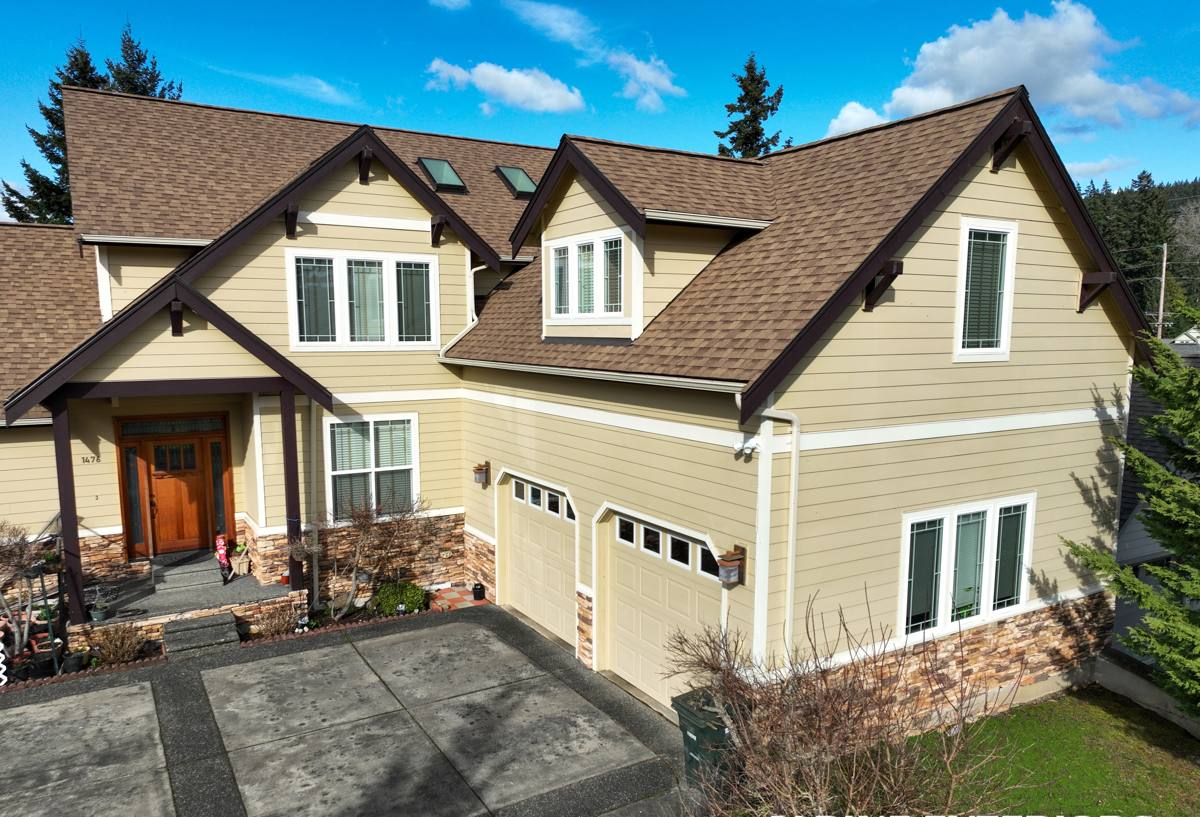
Signs Your Current Windows Are Working Against You
Not every window that looks fine from the curb is doing its job. In our experience working on homes throughout the Ferndale and Whatcom County area, these are the most common tells that windows have reached the end of their useful life:
- Condensation or fog trapped between panes — a sign the seal has failed and the insulating gas has escaped
- Cold drafts near the frame even with the window latched shut
- Visible moss, algae, or dark staining building up in the lower track or sill
- Wood sills or jambs that feel soft, spongy, or show paint blistering
- Windows that are difficult to open, close, or lock — a sign the frame has warped or settled
- Noticeably higher heating costs compared to similarly sized homes nearby
Any one of these on its own might just mean a repair. Several together, especially on a home more than 20-25 years old, usually means the windows are past the point where patching makes sense.
What "Energy-Efficient" Actually Means
The term gets used loosely in marketing, so it helps to know what's actually being measured. Every legitimate replacement window comes with an NFRC (National Fenestration Rating Council) label listing performance numbers, and those numbers matter more than the brand name on the box.
The ratings that matter in this climate
U-factor measures how well the window resists heat loss — lower is better, and it's the most important number for our cool, wet winters. Solar Heat Gain Coefficient (SHGC) measures how much solar heat passes through the glass; in Western Washington we generally want a moderate SHGC that lets in some free winter warmth without overheating south-facing rooms in summer. Air leakage tells you how much outside air sneaks in around the sash — critical for stopping the drafts and moisture infiltration that lead to mold and moss growth around window openings.
For most Cordata and Ferndale homes, we recommend double-pane windows with low-E coatings and argon gas fill as the baseline, with triple-pane reserved for homes with unusually high heating costs, north-facing exposure, or owners planning to stay long enough for the extra upfront cost to pay back in comfort and energy savings.
Frame Material: The Decision That Matters Most Locally
Glass technology is fairly standardized across the industry now — the bigger performance and durability differences come down to frame material, especially in a climate with this much moisture exposure.
| Frame Material | Moisture & Salt-Air Behavior | Maintenance | Typical Fit |
|---|---|---|---|
| Vinyl | Won't rot or corrode; performs well in coastal-influenced air | Low — occasional cleaning | Best value for most replacement projects |
| Fiberglass | Excellent stability, resists warping through wet/dry cycles | Low | Best long-term durability, higher upfront cost |
| Wood / Wood-clad | Attractive but vulnerable if seals or cladding are compromised | Higher — needs monitoring at joints and sills | Best where a specific traditional look is required |
| Aluminum | Conducts cold and can corrode with prolonged salt-air exposure | Moderate | Generally not our first recommendation for this area |
We don't push one material on every job. A north-facing wall that catches driving rain and stays shaded most of the day is a different situation than a sheltered, south-facing opening under a deep eave. Frame choice should follow the specific exposure of each window, not a single house-wide default.
Why we're selective about aluminum-frame replacements
Aluminum frames aren't inherently bad windows, but they're a poor match for this specific climate. Metal conducts heat and cold efficiently, which works against the whole point of an energy-efficient upgrade, and bare or poorly finished aluminum is more prone to corrosion when it sits in salt-influenced coastal air year after year. That's a maintenance and performance trade-off worth knowing about upfront, not a defect — it's simply not what we lead with when a homeowner is asking us to solve drafts and moisture problems.
Our Installation Process
The window unit itself is maybe half the equation. The other half is how it's installed — and this is where a lot of energy-efficiency claims quietly fall apart if the crew doesn't have siding and weather-barrier experience.
- On-site assessment — we check existing framing condition, look for hidden water damage or rot, and measure each opening individually rather than assuming uniform sizes
- Removal — old windows come out carefully to protect the surrounding siding and trim, with immediate weatherproofing of the open rough opening
- Flashing and water management — proper flashing tape and drainage planes are installed so any water that reaches the opening is directed back out, not trapped behind the wall
- Integration with the existing wall system — because we work on siding as well as windows, we tie the new window's weather barrier into the surrounding wall assembly correctly, rather than treating it as an isolated swap
- Air-seal and insulation — gaps around the frame are sealed and insulated to stop drafts, not just caulked at the surface
- Final adjustment and cleanup — sashes are checked for smooth operation and a tight seal before we consider the job done
Skipping or rushing the flashing and drainage step is the single most common cause of window-related water damage we see when we're called in to fix someone else's installation. A window with an excellent U-factor rating still fails if water gets behind it.
Common Mistakes That Cost Homeowners Later
- Installing a new window into a rotted or undersized opening without addressing the underlying framing first
- Skipping proper flashing because it adds labor time, relying on caulk alone
- Ignoring how the new window ties into the existing siding's drainage plane
- Choosing a frame material based purely on price without accounting for the specific wall's sun and rain exposure
- Leaving old, failing exterior trim in place around a brand-new window
Any of these can leave a homeowner with a window that looks new but still lets in drafts, still grows moss in the corners, or worse, starts hidden rot in the wall behind it.
Why Local Installation Experience Matters
Ferndale and the surrounding Whatcom County communities, Cordata included, have wall assemblies and exposure patterns that differ from what you'd find in a drier inland climate. A crew that primarily works siding and exteriors in this specific area already knows which walls take the worst of the driving rain, how moss tends to establish itself on shaded elevations, and what proper flashing looks like once it's tied into local siding systems. That local pattern-recognition shortens the assessment phase and reduces the chance of installation mistakes that only show up after a wet winter.
Caring for New Windows in This Climate
Energy-efficient windows are low-maintenance, not no-maintenance, especially here. A few habits keep them performing well:
- Rinse tracks and sills periodically to clear salt residue and organic debris before it holds moisture
- Check weep holes (drainage openings) on the exterior sill to make sure they're clear and draining
- Watch for moss or algae starting in shaded corners and clean it early, before it holds water against the frame
- Re-caulk exterior trim joints if you notice cracking or separation, rather than waiting for a leak
Ready for an Honest Assessment?
If your windows in Cordata are drafty, fogged, hard to operate, or just older than the rest of your home's exterior, we're happy to take a look and tell you plainly what we'd recommend — no pressure, no inflated urgency. Fill out the form below to schedule a free estimate.