 Ferndale Siding
 Siding Repair in Cordata: Why It's Not Just a Patch Job
Cordata sits inside the same wet, wind-exposed weather belt that defines Whatcom County exterior work generally — long stretches of gray, damp weather, salt-tinged air moving off the water, and driving rain that comes in sideways more often than straight down. Siding here isn't decoration. It's the layer standing between that weather and the framing, sheathing, and insulation underneath. When a section of siding fails, the problem is rarely just the piece that looks bad — it's usually what's been happening behind it while nobody was looking.
This page is specifically about siding repair for homes in and around Cordata, not a full re-side. Most homes don't need to be stripped down to the studs — they need someone to correctly diagnose what's actually wrong, fix the cause instead of the symptom, and put the wall back together in a way that holds up to another few decades of this climate.
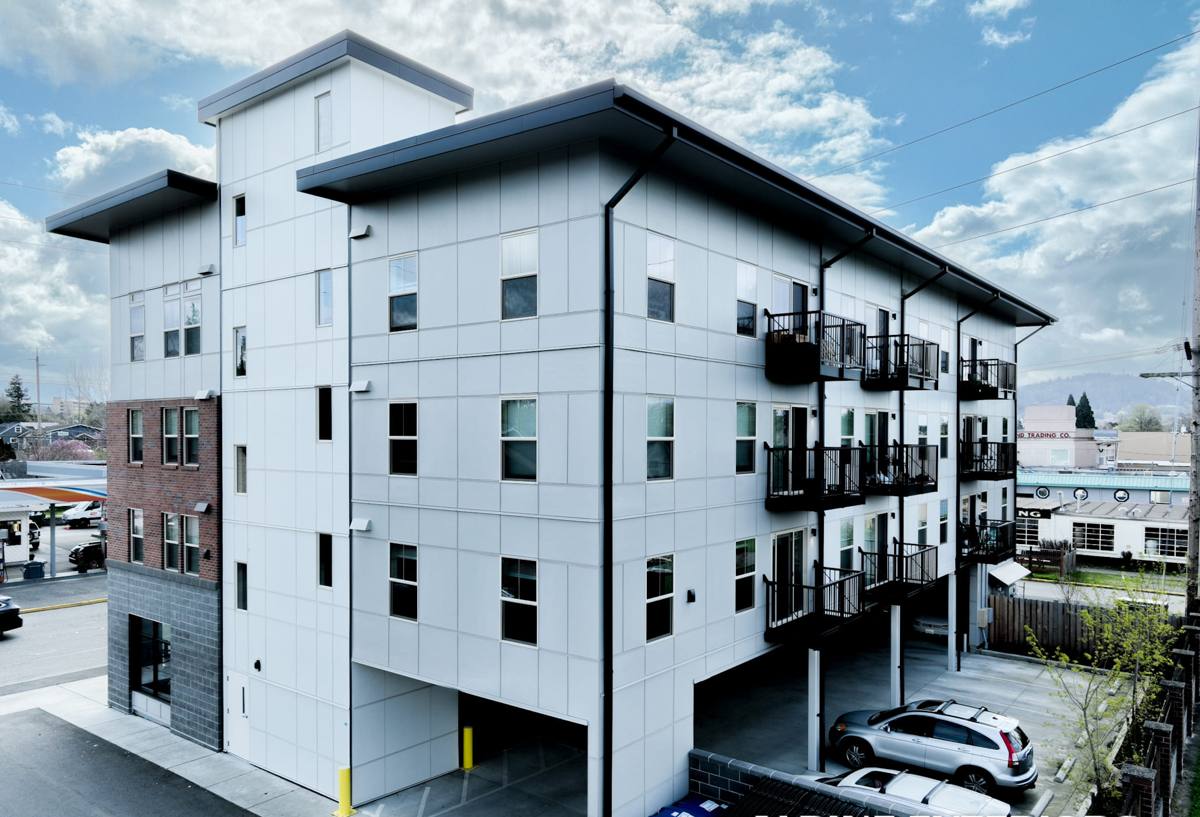
What This Climate Does to Siding Over Time
Driving Rain and Wind-Driven Moisture
Storms coming off the water don't just drop rain straight down — wind pushes it sideways and upward, forcing water into places it was never designed to go: under lap joints, around window and door trim, and into any seam where caulk has started to fail. A wall that would stay dry in a calm rain can still take on water during a windy front, which is why repair work has to account for wind-driven exposure, not just rainfall totals.
Salt Air and Coastal Exposure
Homes closer to open water and estuary air deal with a slow, steady corrosive load: salt-laden moisture accelerates the breakdown of paint films, speeds up fastener corrosion, and shortens the useful life of anything that relies on a surface coating to stay protected. Over years, this shows up as premature paint failure, rust streaking from fasteners, and finishes that chalk or fade faster than the manufacturer's timeline suggests they should.
The Long Moss Season
Western Washington's wet season runs long, and shaded or north-facing walls in tree-covered areas can stay damp for months at a stretch. Moss and algae take hold in exactly those conditions, and once established they hold moisture directly against the siding surface around the clock. That constant dampness is what turns a cosmetic nuisance into a real moisture problem for the substrate underneath.
Common Siding Repair Issues We See in This Area
Not every symptom means the same thing, and not every problem is equally urgent. Here's a general guide to what different signs usually indicate:
| Symptom | Likely Cause | Urgency |
|---|---|---|
| Soft or spongy panel when pressed | Trapped moisture or rot behind the siding | High |
| Peeling or bubbling paint/finish | Failed caulk joint or moisture intrusion underneath | Medium |
| Dark streaking or green film | Moss/algae buildup from shade and limited airflow | Low now, rises over time |
| Cracked or split boards near corners | Fastener movement, freeze-thaw cycling, or impact damage | Medium |
| Gaps opening at trim or window casings | Caulk failure or original installation shortcuts | High |
| Warped, bowed, or buckled panels | Water absorption into a wood-based or moisture-sensitive material | High |
The urgency column matters because a moss stain and a soft panel are not the same repair. One is cosmetic maintenance; the other means water has already found its way past the surface and is doing damage you can't see from the sidewalk.
What a Correct Siding Repair Actually Involves
Diagnosing the Real Problem First
A repair that only addresses what's visible tends to fail again within a season or two. Before any board comes off, the goal is to figure out how water is actually getting in — a failed seal, a bad flashing detail, a nail pattern that's let a board work loose — because replacing the surface material without fixing the entry point just buys time.
Following the Water, Not Just Patching the Hole
Correct repair work traces the moisture path back to its source. That can mean checking flashing above windows and doors, looking at how trim meets siding, and probing adjacent boards that look fine on the surface but may already be holding moisture. A patch that ignores the surrounding area often just relocates the problem a few inches over.
Matching Material and Finish
Repairs stand out badly when the replacement piece doesn't match the existing siding's profile, texture, or color. On factory-finished fiber cement, that means sourcing the matching product line and finish rather than using whatever's on hand and painting over it later — a mismatched patch is both a cosmetic problem and a sign the repair was rushed.
Repair or Replace? How We Help You Decide
Not every damaged area needs a full re-side, and not every home can be saved with spot repairs. A few honest signals we walk through with homeowners:
- Damage limited to one or two isolated areas, with the rest of the siding sound — usually a good candidate for repair
- Soft spots, rot, or moisture damage showing up in multiple, unrelated areas of the house — often a sign the whole envelope is aging out
- Siding material still structurally sound but just cosmetically weathered (fading, chalking, moss) — cleaning and maintenance may be enough
- Original installation issues (poor flashing, wrong fastening, missing weather barrier details) repeating across the house — repair will keep failing until the underlying install is corrected
- Age of the siding relative to its expected service life, especially for wood-based or engineered wood products that are more moisture-sensitive than fiber cement
We'll tell you plainly if a repair is the right call — there's no reason to sell a full re-side to a house that just needs a few boards addressed correctly.
Why Our Repairs Are Built Around James Hardie Fiber Cement
We install and repair with James Hardie fiber cement exclusively — we don't install vinyl, LP SmartSide, primed wood, or cedar siding, and that standard carries through to repair work as well. When a repair calls for new material, we use Hardie's climate-engineered HZ product line and match it to the existing ColorPlus factory finish wherever possible, rather than reaching for a generic patch material and painting it on-site to blend in.
The reason comes down to how this climate treats different materials over time. Wood-based siding absorbs moisture and can swell, warp, or rot at cut edges and fastener points — exactly the failure points we see most often on older homes here. Vinyl can crack in cold snaps and fade unevenly, and it isn't repairable in the same targeted way fiber cement is; damaged sections usually have to be swapped whole. Fiber cement, installed and repaired correctly, is dimensionally stable, doesn't feed moss and mildew the way wood can, and holds its factory finish far longer than field-applied paint — which matters directly in a place with this much sustained damp weather.
If your home currently has a different siding material, we'll still assess and repair it honestly. But when the scope of damage points toward a larger project, our recommendation is Hardie fiber cement, for the same reasons we've standardized on it for every install we do.
Our Siding Repair Process
- On-site inspection — walking the full exterior, not just the area you called about, since related issues often hide nearby
- Moisture and probe testing — checking suspect areas for hidden softness or trapped water before scoping the repair
- Written repair plan — a clear scope of what's being replaced, what's being resealed, and why
- Material sourcing and matching — ordering the correct Hardie profile, plank width, and ColorPlus finish to match the existing wall
- Repair execution — removing only what needs to come out, correcting the underlying moisture path, then installing and sealing to manufacturer spec
- Final walkthrough — reviewing the finished work with you before we consider the job done
What Affects the Cost of a Siding Repair
| Factor | Why It Matters |
|---|---|
| Extent of hidden moisture damage | Rot found once boards come off often extends beyond the original visible area |
| Wall height and accessibility | Second-story or steep-site work takes more setup time and equipment |
| Matching existing finish | Sourcing the correct ColorPlus color and profile takes more effort than an unmatched patch |
| Flashing or trim work involved | Repairs tied to a flashing failure require more than a siding swap alone |
| Season and weather window | Wet-season timing can affect scheduling and how work is sequenced to keep the wall protected |
We don't publish flat per-square-foot repair pricing because the honest answer depends on what we find once we're actually looking at the wall — but we'll always explain the scope and the reasoning behind it before any work starts.
Why It Matters to Hire a Crew That Already Works in Cordata
A contractor who regularly works Ferndale and the surrounding Whatcom County neighborhoods has already seen how the local housing stock ages under this specific weather — which wall orientations moss up first, where older homes tend to have flashing shortcuts from their original construction, and how salt air and tree shade interact on a given lot. That local pattern recognition shortens the diagnosis step and helps avoid repairs that look fine for a season and then fail again once the wet months return.
It also means accountability doesn't disappear once the truck leaves. A crew based in the area is the one you'll call if something needs a second look, and that ongoing presence tends to show in how carefully the first repair gets done.
If you're dealing with a soft spot, a cracked board, or siding that just doesn't look right anymore, we're happy to take a look and give you a straight answer — no pressure, no upsell, just an honest assessment and a free estimate.