 Ferndale Siding
 Board & Batten Siding, Built for Custer's Weather
Custer sits in a stretch of Whatcom County where the weather doesn't do anything halfway. You get salt-tinged air moving in off the water, long stretches of driving rain through fall and winter, and a moss season that seems to start earlier and last longer every year. Vertical board and batten siding has become a popular choice out here for good reason — it has a clean, distinct look that suits both older farmhouses and newer builds, and when it's installed with the right materials and details, it handles this climate better than people expect. When it's installed wrong, it fails faster than almost any other siding profile. This page covers what board and batten actually needs to hold up on a Custer home, what correct installation looks like, and why we only do this work in James Hardie fiber cement.
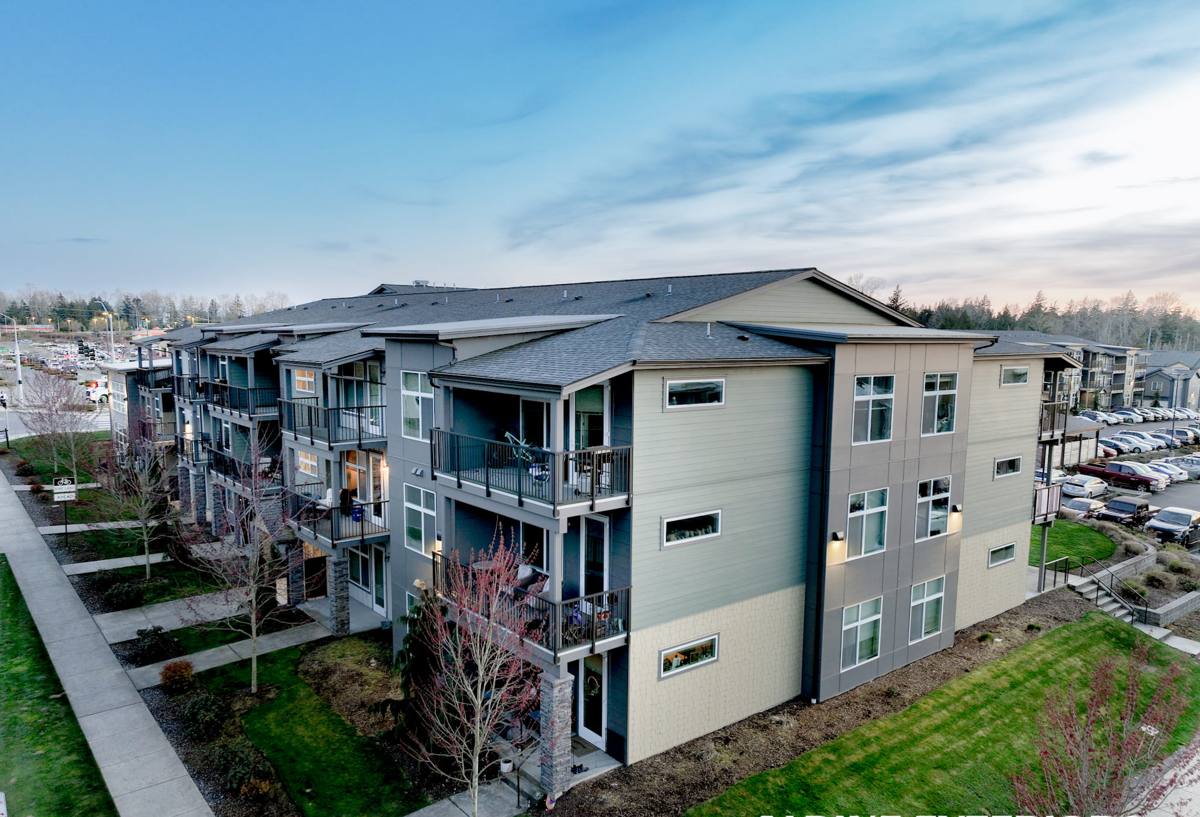
What Board & Batten Siding Is — and Isn't
Board and batten is a vertical siding pattern: wide flat panels or boards installed with narrower strips (battens) covering the seams between them. It's an old design, originally developed for barns and outbuildings where the vertical lines shed water off a wall quickly and the batten strips kept wind and rain from working into the seams. That same water-shedding logic is exactly why it works well on a home exposed to Custer's weather, but only if the underlying materials and fastening are right. A board and batten pattern is a look — it can be built out of vinyl, engineered wood, or fiber cement, and the material underneath that pattern is what actually determines whether the wall stays dry and intact for the next twenty or thirty years.
Why We Only Install This Profile in James Hardie
We install James Hardie fiber cement board and batten exclusively — we don't offer it in vinyl, engineered wood, or any other substrate. Fiber cement doesn't absorb water the way wood-based products do, doesn't warp or delaminate at the seams, and is non-combustible. Hardie's vertical siding and batten trim are manufactured with consistent dimensions and a factory-applied ColorPlus finish, which matters more on a vertical profile than almost any other siding style, because every seam and batten joint is a place where a lesser material can start to fail first. We'd rather turn down a job than install a product we know won't hold up to what this area throws at it.
What Custer's Climate Actually Demands From This Siding
Salt Air and Coastal Exposure
Custer's proximity to the saltwater of the Salish Sea means homes here deal with airborne salt in a way that inland Whatcom County properties don't. Salt-laden air accelerates corrosion on fasteners, flashing, and any exposed metal trim, and it degrades cheap paint finishes faster than a standard exterior coating. This is one of the reasons fastener choice and flashing material matter as much as the siding itself — a board and batten wall is only as durable as its weakest hardware.
Driving Rain and Wind-Driven Moisture
Storms moving through this part of Whatcom County frequently bring rain sideways, not straight down. On a vertical siding profile, that means water is pushed against the battens and into any gap where flashing or caulking is incomplete. A lap-siding installer who hasn't worked much vertical siding can miss details here — board and batten has different water-management requirements than horizontal lap, and treating it the same way is one of the most common causes of early failure.
A Long, Damp Moss Season
Between the rain and the region's tree cover, moss and algae growth on north-facing and shaded walls is a near-constant maintenance issue for homes out here. Moss holds moisture against a wall surface and, over time, works into any seam that isn't tightly sealed. Fiber cement resists moss growth far better than wood-based siding, but the batten joints and bottom edges still need to be detailed correctly, or moss will find the one weak point in the wall.
What a Correct Board & Batten Installation Involves
A lot of what makes board and batten succeed or fail happens behind the siding, before the first board goes up. This is the sequence we follow on every job:
Water-Resistive Barrier and Flashing First
A continuous water-resistive barrier goes on the wall sheathing before any siding, with proper overlaps and flashing at every window, door, and penetration. On a vertical profile, flashing details at the top and bottom of each wall section matter even more, since water has a clear path to travel down along the battens if it gets behind them.
Furring and Rainscreen Gap
Board and batten performs best with a small air gap (a rainscreen) between the back of the panel and the water-resistive barrier. This lets any moisture that does get past the surface drain and dry out instead of sitting against the wall — a detail that matters a lot more in a climate like Custer's than in a dry one.
Fastening and Batten Placement
Fasteners have to be corrosion-resistant, sized and spaced to Hardie's published specifications, and driven correctly — not overdriven, which cracks the material, and not underdriven, which leaves it loose. Battens need consistent spacing and coverage over the panel seams, with enough overlap that wind-driven rain can't track sideways underneath them.
Caulking, Sealing, and Finish Work
Every seam, corner, and trim intersection gets sealed with a high-quality, paintable sealant rated for exterior use — not a bead of caulk slapped on as an afterthought. Factory-finished ColorPlus panels also need touch-up paint matched correctly at cut edges and fastener heads so the finish stays uniform and protected.
Board & Batten vs. Other Siding Choices for This Climate
| Factor | James Hardie Board & Batten | Vinyl Board & Batten | Engineered Wood Board & Batten |
|---|---|---|---|
| Moisture resistance | Does not absorb water; stable in wet seasons | Sheds water but seams and edges can trap it | Vulnerable at cut edges and joints if moisture gets in |
| Moss/algae resistance | Resists growth well with correct detailing | Moderate; surface can hold moisture at panel laps | Wood-based core is more susceptible over time |
| Salt air / coastal durability | Strong when paired with corrosion-resistant hardware | Can become brittle and discolor over years | Finish and core more sensitive to salt exposure |
| Fire resistance | Non-combustible | Combustible | Combustible |
| Long-term finish | Factory ColorPlus finish, transferable warranty | Color can fade; no repaint option without full replacement | Requires ongoing repainting/sealing |
Our Process on a Custer Project
- On-site walk-through to assess current siding, moisture damage, and exposure on each elevation
- Detailed proposal covering scope, materials, and realistic timeline before any work begins
- Removal of old siding and inspection of sheathing for rot or damage before covering anything up
- Installation of water-resistive barrier, flashing, and rainscreen furring per manufacturer spec
- James Hardie board and batten installation with corrosion-resistant fasteners and correct batten spacing
- Sealing, caulking, and finish touch-up at every seam, corner, and trim detail
- Final walk-through with the homeowner before we consider the job done
What to Look For Before You Hire a Board & Batten Crew
Not every siding contractor has real experience with vertical profiles — plenty of crews mostly install lap siding and treat board and batten as a minor variation, which is where corners get cut. Before hiring anyone for this work in Custer, it's worth asking:
- Have they installed board and batten specifically, not just lap siding, in this region?
- Do they install a rainscreen gap, or nail battens directly to the water-resistive barrier?
- What fastener type and flashing materials do they use, and are they rated for coastal exposure?
- Will they show you the sheathing before it's covered, in case of hidden moisture damage?
- Is their warranty tied to correct installation, or just to the material itself?
Maintenance Once It's Installed
James Hardie board and batten is low-maintenance compared to wood or vinyl alternatives, but "low-maintenance" doesn't mean "no maintenance" — especially in a climate that grows moss on everything left alone too long. A yearly rinse-down, a look at caulked seams for cracking, and prompt attention to any gutter or drainage issue near the siding will keep a correctly installed wall performing for decades. ColorPlus finishes hold their color far longer than field-applied paint, but touch-up at any fastener or cut-edge point should be done as soon as it's noticed, not left for a season.
Why a Ferndale-Based Crew Matters for Custer Homes
Board and batten siding done right is detail work, and details are exactly what suffer when a contractor is unfamiliar with local conditions or driving in from outside the region for a single job. Working regularly around Ferndale and the surrounding Whatcom County communities, including Custer, means we're not guessing at how salt air, driving rain, and moss season affect a wall here — we're building for it every time, on every batten joint and flashing detail. That's the difference between siding that looks good for a season and siding that's still doing its job in twenty years.
If you're weighing siding options for a home in Custer, we're glad to take a look and give you a straightforward, no-pressure estimate — just fill out the form below.