 Ferndale Siding
 Why Custer Roofs Take a Beating Different From Inland Homes
Custer sits close enough to the water and open farmland that its roofs deal with a combination most inland Washington homes never see: salt-laden air moving in off the coast, long stretches of driving rain, and a moss season that can run most of the year in shaded, north-facing sections of a roof. None of these on their own is unusual for Whatcom County. Together, applied year after year, they wear a roof down faster than the calendar alone would suggest.
Salt air is corrosive to exposed metal — nail heads, flashing edges, and fastener strips take the brunt of it, especially on roofs facing open fields or closer to the water where wind carries moisture further inland. Driving rain, especially when it comes in at an angle during a windstorm, finds every weak seam around a vent pipe, chimney, or valley and pushes water where it shouldn't go. And moss doesn't just sit on the surface looking bad — its root structure lifts shingle edges and holds moisture against the roof deck, which is where slow, hidden rot usually starts.
None of this means a Custer roof is doomed to fail early. It means the repair work has to actually account for these conditions instead of treating every roof like it's in a dry, sheltered subdivision somewhere else.
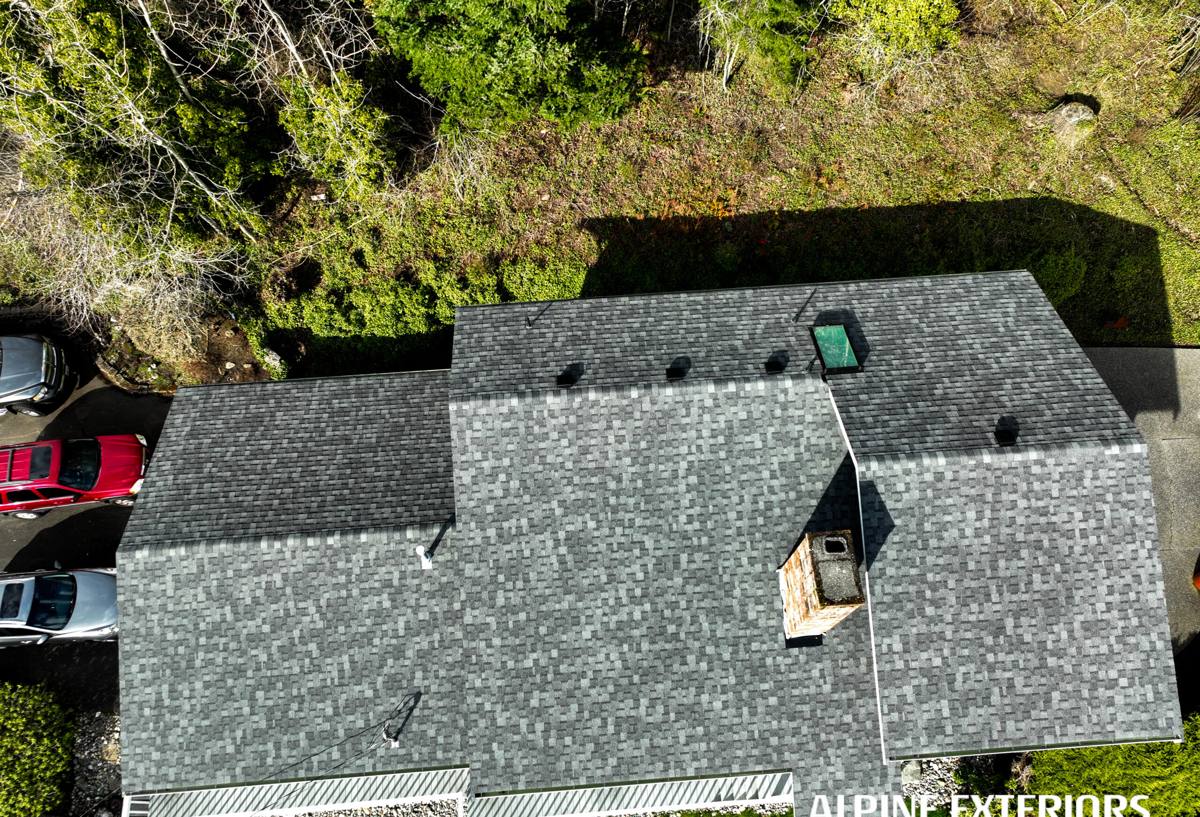
Signs a Custer Roof Needs Repair
Most roof problems don't show up as a dramatic leak on day one. They build slowly, and catching them early is what keeps a repair a repair instead of a replacement. Homeowners in this area should watch for:
- Dark streaking or thick moss growth concentrated on the shaded or north-facing slopes
- Granules collecting in gutters or at downspout outlets
- Shingles that look cupped, curled at the edges, or visibly lifted after a windstorm
- Soft or discolored spots on interior ceilings, especially near chimneys, skylights, or where two roof planes meet
- Rust staining running down from metal flashing or exposed fasteners
- Daylight visible through the roof deck from inside an unfinished attic
- Gutters overflowing during heavy rain even when they aren't full of debris — often a sign water is finding a shortcut off the roof
Any one of these by itself might be minor. Two or three together, especially after a wet winter, usually means it's worth having someone look before the next storm season.
What a Correct Roof Repair Actually Involves
A roof repair that actually holds up here isn't just a patch of new shingles laid over the trouble spot. It has to address why the damage happened in the first place, or the same failure shows up again in a year or two.
Flashing and Penetrations
Most leaks trace back to flashing — the metal or membrane material around chimneys, vent pipes, skylights, and roof valleys — rather than the shingle field itself. In an area with frequent driving rain, flashing has to be lapped and sealed correctly for wind-driven water, not just gravity-fed drainage. A repair that only replaces a few shingles but leaves cracked or poorly lapped flashing underneath will leak again the next time wind pushes rain sideways.
Underlayment and Decking
Once shingles are pulled back, the underlayment and the wood decking beneath it tell the real story. If moisture has been sitting under lifted or moss-damaged shingles for a while, the decking can be soft or delaminating. Patching shingles over compromised decking doesn't fix anything — it just hides the problem until it's bigger and more expensive.
Moss and Debris Removal
Moss has to be removed carefully, not scraped aggressively, which can tear the shingle mat underneath. After removal, the affected area gets treated to slow regrowth, and we check whether the shingles underneath are still sound or need replacing. Given how much of Custer sits under tree cover or in shaded pockets, this step alone is often the difference between a roof that lasts its full expected life and one that doesn't.
Ventilation
Poor attic ventilation traps moisture against the underside of the roof deck, which accelerates rot and can void a shingle manufacturer's warranty entirely. Part of a proper repair is checking that intake and exhaust venting are actually balanced, not just present.
Roofing Materials We Work On in Custer
Custer homes are covered in a mix of materials, and each one fails differently and needs a different repair approach. Here's how we think about the most common ones in this area:
| Material | Common Issue Locally | Repair Approach |
|---|---|---|
| Composition (asphalt) shingle | Granule loss, curling, moss lift at shaded edges | Section replacement matched to existing shingle age/color where possible; full flashing check |
| Cedar shake / shingle | Moss and moisture retention, splitting, slower drying in shaded areas | Selective shake replacement, moss treatment, ventilation review — we're upfront that shake needs more ongoing maintenance in a wet climate |
| Metal roofing | Fastener corrosion from salt air, sealant breakdown at seams and penetrations | Fastener replacement with corrosion-resistant hardware, re-sealing seams and flashing |
| Low-slope / torch-down membrane | Ponding water, seam separation, punctures from debris | Seam repair or patch, drainage correction where ponding is the root cause |
On cedar shake specifically, we'll always be straight with a homeowner: it can look great and it has a long history in this region, but in a climate with this much sustained dampness and moss pressure, it asks for more frequent upkeep than composition shingle or metal. That's not a knock on the material — it's just the honest maintenance trade-off, and we'd rather a homeowner know that going in than be surprised later.
Our Roof Repair Process
- Inspection. We get on the roof (not just a ground-level look) and check the attic from the inside where accessible, since interior signs often tell us more than the exterior does.
- Diagnosis. We trace visible damage back to its actual cause — flashing, ventilation, moss, age, or a combination — rather than treating symptoms.
- Written scope and estimate. Before any work starts, the homeowner gets a clear explanation of what's wrong, what we recommend, and what it costs — no vague line items.
- Repair. Damaged materials come out, decking is assessed and replaced where needed, flashing and underlayment are corrected, and new material is matched to the existing roof as closely as possible.
- Cleanup and debris removal. Old material, nails, and moss debris are cleared from the roof, gutters, and property.
- Final check. We walk the repair and confirm drainage and flashing are performing before calling the job done.
Repair or Replace? How We Help You Decide
Not every damaged roof needs full replacement, but some do — and a contractor who only offers one answer regardless of what they find isn't giving an honest assessment. These are the factors that actually drive the decision:
| Factor | Leans Toward Repair | Leans Toward Replacement |
|---|---|---|
| Roof age | Under roughly two-thirds of the material's expected lifespan | Near or past the end of its expected service life |
| Extent of damage | Localized — one slope, one flashing detail, a few sections | Widespread across multiple slopes or repeated in the same areas |
| Decking condition | Sound, dry, no soft spots found on inspection | Soft, delaminated, or rotted decking found in multiple areas |
| Repair history | First or second repair on this roof | Recurring repairs in the same or nearby locations |
| Moss/moisture pattern | Surface growth, shingle mat still intact underneath | Moss has been present long enough to compromise the shingle or deck below it |
Costs for a targeted repair — flashing correction, section reshingling, moss remediation with minor deck work — often run from a few hundred dollars up to a couple thousand, depending on scope and access. A full replacement is a much larger investment, but pushing repairs past the point they're solving the actual problem usually costs more in total once you count multiple service calls. We'll tell you honestly which side of that line your roof is on.
Living With a Custer Roof: Maintenance Between Repairs
A repair buys time and stops active damage, but a few habits between professional visits go a long way in this climate:
- Keep gutters clear, especially heading into fall storm season — overflowing gutters push water back under the roof edge
- Trim back tree limbs that keep a section of roof shaded and damp longer than the rest
- Have moss treated before it spreads across a full slope, not after
- Check the attic once or twice a year for musty smells, daylight gaps, or damp insulation
- After any significant windstorm, do a visual check from the ground for lifted or missing shingles
- Don't pressure-wash a roof — it drives water under shingles and strips protective granules
Why Hire a Crew That Already Works in Custer
A roofer who works across Whatcom County regularly knows which slope orientations hold moss longest in this specific pocket of the county, which materials have actually held up to the salt air and rain patterns here, and how to sequence a repair around our wetter months instead of getting caught mid-job by a storm. That familiarity shows up in small but real ways — matching shingle color and profile to an older roof, knowing which flashing details tend to fail first on homes built in a certain era locally, and being realistic about timelines during the rainy months rather than overpromising.
It also matters for accountability. A local, established crew is easy to reach if a question comes up after the work is done, and stands behind the workmanship because they're not driving in from out of the area for a one-time job.
Scheduling and What to Expect
Roof repair work in this region is weather-dependent — we schedule around dry windows whenever possible, and for active leaks we prioritize getting a temporary fix in place quickly even if the full repair has to wait for a better weather stretch. Once the repair is complete, we stand behind our workmanship, and we're happy to explain exactly what was done and why, including photos of what we found before it was covered back up.
If you're noticing moss buildup, a stain on a ceiling, or just haven't had your roof looked at in a while, it's worth getting ahead of it before the next round of Whatcom County rain. We offer free, no-pressure estimates — fill out the form below and we'll take a look and give you a straight answer on what your roof actually needs.