 Ferndale Siding
 Why Bellingham Homes Need Windows Built for This Climate
Bellingham sits close enough to the water and to open farmland that homes here take a steady beating from moisture, salt-laden air, and wind-driven rain that doesn't just fall straight down — it gets pushed sideways into siding, trim, and window frames. Add Whatcom County's long, low-sun winters and the moss season that comes with them, and you've got conditions that expose bad window installations fast. A window that would hold up fine in a dry inland climate can start failing here in a few years if it wasn't installed with this weather in mind.
We work on homes throughout the Bellingham area regularly, and the patterns repeat: fogged double panes from failed seals, soft trim around window openings, and interior sills that stay damp longer than they should. None of that is inevitable. It's usually a sign that the original window, the flashing behind it, or both were not matched to what this climate actually does to a house.
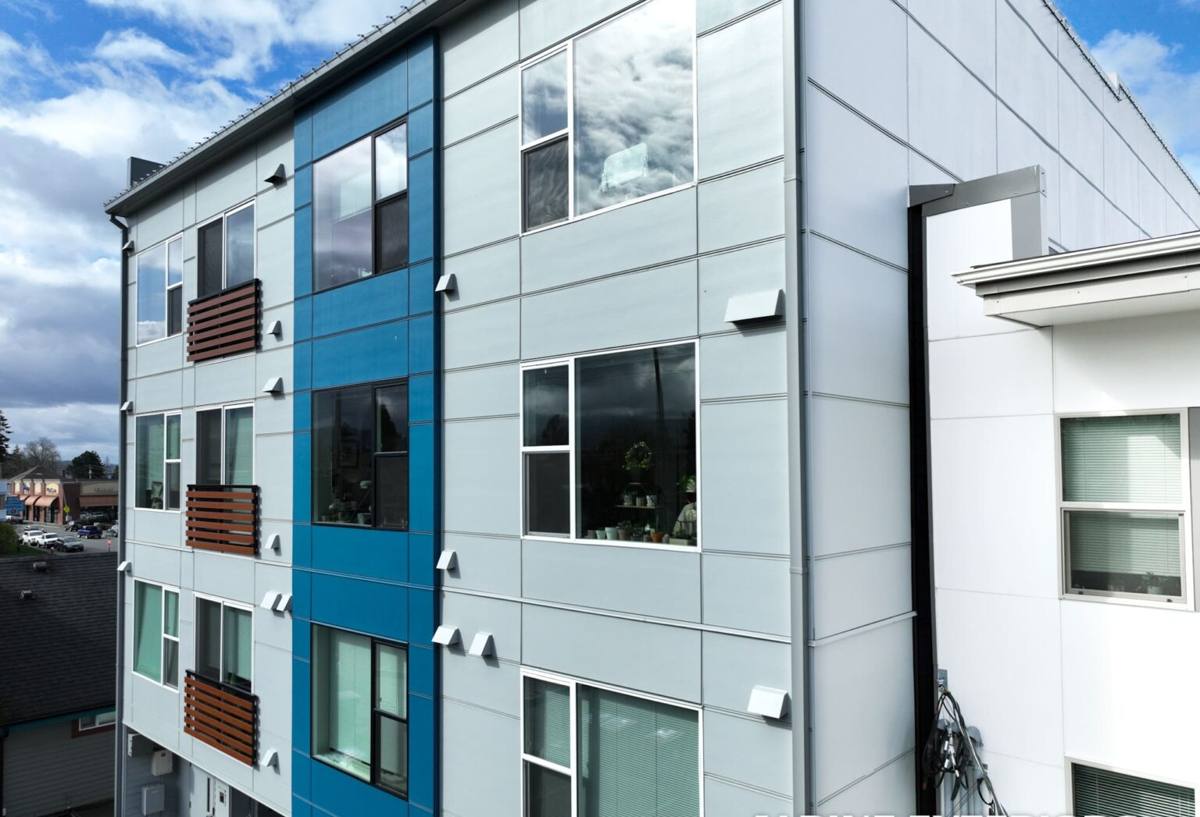
What "Custom" Actually Means Here
"Custom" doesn't just mean picking a color. It means the window is sized and specified for the actual rough opening in your wall — not a stock size that gets shimmed and gapped to fit — and the frame, glass, and hardware are chosen for how that specific wall faces the weather. A window on a west-facing wall catching driving rain off open exposure needs a different sealing approach than a sheltered window on a covered porch wall.
Frame Material Options
Most Bellingham-area replacements we do fall into a few frame categories, each with real trade-offs worth understanding before you buy:
- Vinyl — Good value, low maintenance, and solid moisture resistance. Quality varies a lot between manufacturers, so we stick with lines that have a track record for weather sealing rather than the cheapest option available.
- Fiberglass — More dimensionally stable through temperature swings, holds paint well if you want a custom color, and tends to outperform vinyl over the long haul in wet climates. Costs more up front.
- Wood-clad — Warmest look, especially for older or craftsman-style homes, but the wood interior means you're managing humidity and finish maintenance for the life of the window. We only recommend it when a homeowner understands and wants that upkeep.
- Aluminum — Durable and slim-profile, but a poor insulator unless it's thermally broken, and prone to condensation in our damp winters if it isn't detailed correctly. We use it selectively, not as a default.
Glass Packages for Marine Air and Driving Rain
Glass matters as much as frame material. For most Bellingham homes we spec double-pane units with low-E coatings and argon fill as the baseline — it cuts heat loss through the glass and helps control condensation on the interior side during cold, wet stretches. Homes closer to open water or with heavy wind exposure sometimes benefit from upgraded spacer systems, since the spacer bar between the panes is often where seals fail first under constant temperature and moisture cycling.
Signs Your Current Windows Are Losing the Battle
Before we ever talk about replacement, we look for a specific set of symptoms that tell us whether a window has a fixable problem or has reached the end of its service life:
- Fogging or a hazy film between the panes — the seal has failed and the insulating gas is gone
- Soft or discolored wood/trim at the sill or jamb, especially on the wall's weather-facing side
- Visible moss or dark streaking building up on the frame or sill in shaded, damp corners
- Drafts you can feel with a hand near the frame on a windy day
- Windows that are difficult to open, close, or lock — frames can swell or warp with sustained moisture exposure
- Condensation on the inside of the glass that doesn't clear once the room warms up
Some of these are cosmetic and don't mean you need full replacement yet. Others — especially soft trim or persistent interior condensation — usually mean water is already getting past the window assembly into the wall, and waiting tends to turn a window job into a siding and framing repair.
What a Correct Installation Actually Involves
The window unit itself is maybe half the job. The other half is everything around it, and it's the part that determines whether the window performs for fifteen years or leaks in three.
Flashing and Water Management
Every opening needs a proper flashing sequence — sill pan flashing to catch and direct any water that gets past the window, and side and head flashing that integrates with the house wrap or building paper in the correct shingle-lap order so water is always directed outward and down, never trapped behind the siding. This is the single most common thing we find done wrong on older installs in this region, and it's the reason a window can look fine from outside while quietly rotting the wall behind it.
Sealing and Insulation
Around the frame, we insulate the gap between the window and the rough opening — not packed so tight it bows the frame, not left so loose that air and moisture move through it — and seal the exterior with a sealant rated for sustained wet exposure, not a general-purpose caulk that will crack and open a gap within a couple of seasons. Interior air sealing matters too, since a warm, humid house pushing moisture out through a poorly sealed frame is a common cause of the condensation and mold staining we see around older windows here.
Our Process, Start to Finish
- On-site assessment — We look at each opening individually: wall orientation, current condition of trim and sheathing, and what's actually causing any problems you've noticed.
- Honest recommendation — We tell you which windows genuinely need replacement, which can be repaired, and which are fine, along with frame and glass options suited to that wall's exposure.
- Written estimate — Clear pricing per window, no vague allowances, so you know what you're paying for before work starts.
- Installation — Old window removal, inspection of the opening for hidden rot or moisture damage, correct flashing and sealing, and new window setting and finishing.
- Walkthrough and cleanup — We check operation on every window, clean up the work area, and go over care basics before we leave.
Cost Factors Homeowners Should Understand
Window pricing varies a lot based on a handful of specific factors, not just the brand name on the sticker. Here's what actually drives cost on most Bellingham-area jobs:
| Factor | Why It Affects Cost |
|---|---|
| Frame material | Vinyl is the entry point; fiberglass and wood-clad cost more upfront but often less in long-term maintenance |
| Window size and configuration | Large picture windows, bays, and custom shapes require more precise fabrication and installation labor |
| Wall condition | Rot or moisture damage found once the old window is out adds repair scope before the new one can go in |
| Glass upgrades | Upgraded spacer systems, tempered glass for safety code areas, or added coatings raise per-unit cost |
| Number of openings | Whole-house replacement typically brings a better per-window rate than one or two at a time |
| Access and site conditions | Second-story or hard-to-reach openings take more time and equipment |
We'd rather walk you through these line by line on-site than quote a number over the phone that doesn't reflect your actual house.
Why a Crew That Already Works Bellingham Matters
A window is only as good as the detail work around it, and that detail work depends on understanding what the local weather actually does to a house over time — not just in a brochure, but on the walls we've opened up here. A crew that works Whatcom County regularly knows which wall orientations take the worst of the driving rain, where moss tends to build up and hold moisture against trim, and which flashing details actually hold up through a full wet season rather than just looking right on installation day.
That local pattern recognition is also what keeps a job from turning into a surprise. When we pull an old window and find soft sheathing behind it, that's not a shock to us — it's a known risk in this climate, and we handle it as part of the job rather than treating it as a change-order ambush.
Living With Custom Windows in a Wet, Salty Climate
Good windows still need basic upkeep here. A little seasonal attention keeps them performing for their full lifespan:
- Rinse salt residue and grime off exterior glass and frames a couple of times a year, especially on wind-exposed walls
- Check exterior caulk lines annually for cracking or separation, particularly after a hard winter
- Keep gutters and downspouts clear so runoff isn't sheeting directly across window heads
- Wipe down interior sills during cold snaps if you notice condensation forming, and improve room ventilation if it's a recurring issue
- Clear moss or organic buildup from sills and tracks before it holds moisture against the frame
A Few Questions Worth Asking Before You Hire Anyone
- Will you flash the sill and jambs, and can you explain your sequence?
- What's the warranty on the window itself, and separately, on your installation labor?
- How do you handle rot or damage discovered once the old window is removed?
- Can you show me the specific frame and glass options you'd recommend for this wall's exposure, and why?
- Do you carry current liability insurance and, if required, local licensing?
Any contractor who can't answer these clearly and specifically for your house is worth a second look before you sign anything.
If your windows in the Bellingham area are fogging, drafty, or just past their prime, we're happy to take a look and give you a straightforward, no-pressure estimate — no obligation, just an honest read on what your home actually needs. Use the form below to get started.