 Ferndale Siding
 Why Windows Wear Out Faster in Marietta
Marietta sits close enough to Bellingham Bay and the open water of the Strait of Georgia that homes here take on a different kind of weather load than houses just a few miles inland in Ferndale proper. Salt-laden air works into hardware, fasteners, and unprotected wood over time. Driving rain off the water pushes water sideways into gaps and joints that would stay dry in a calmer climate. And Whatcom County's long, damp, low-sun stretch from fall through spring keeps north- and shade-facing walls wet enough, long enough, for moss and algae to take hold on sills, trim, and anything else that doesn't dry out between storms.
None of that is dramatic on its own. It's cumulative. A window that's a fine performer in a dry climate can fail early in Marietta simply because the installation didn't account for constant moisture exposure and salt air corrosion. When we talk about "energy-efficient windows" for this neighborhood, we're really talking about two things at once: how well the window itself holds heat in and cold air out, and how well the whole assembly — frame, flashing, sealant, sill — sheds water and resists corrosion year after year.
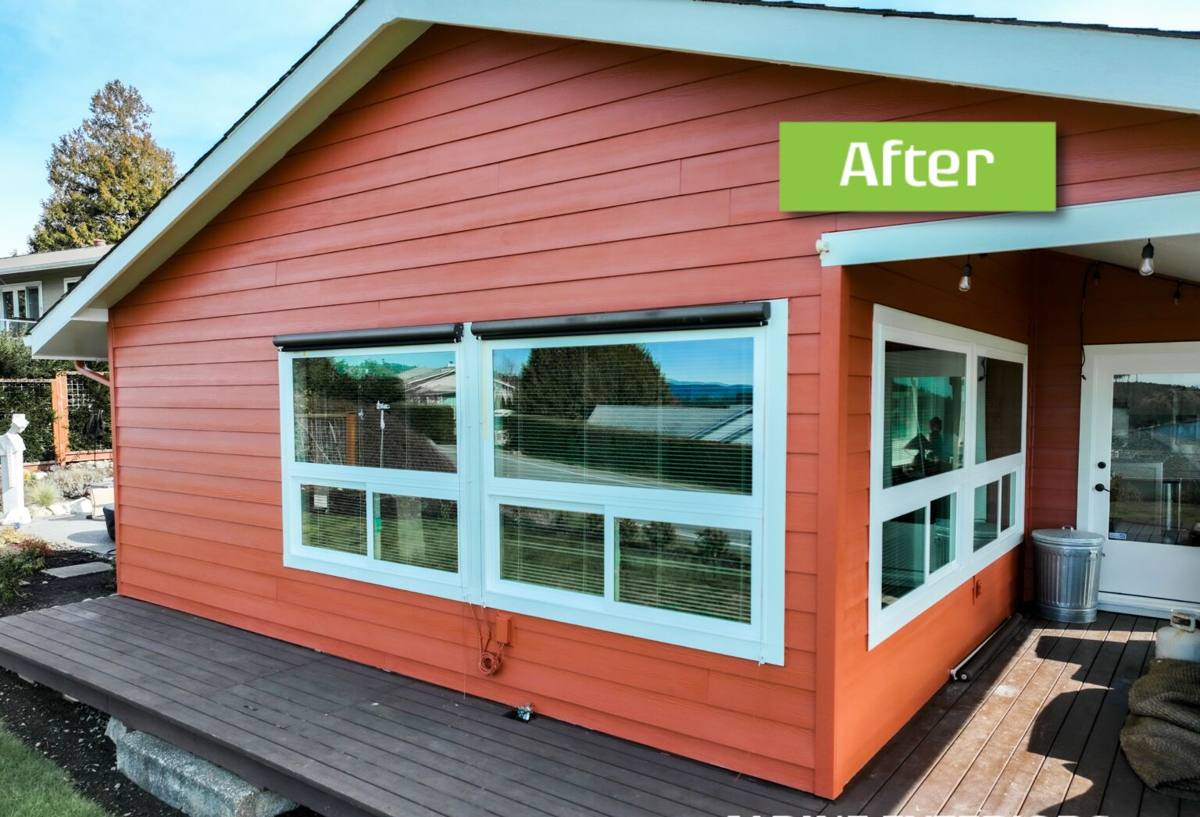
What Energy-Efficient Actually Means Here
Glazing and Gas Fills
Most energy-efficient replacement windows today use double or triple glazing with a low-emissivity (low-E) coating and an inert gas fill — usually argon — between the panes. The low-E coating reflects radiant heat back into the room in winter and blocks unwanted solar heat gain in summer, while the gas fill slows heat transfer through the glass unit itself. For a marine climate like Whatcom County's, where the bigger issue is usually heat loss rather than cooling load, we generally steer homeowners toward glass packages tuned for a lower U-factor (how much heat escapes) over an aggressive solar heat gain coefficient, since Marietta doesn't see the intense summer sun that drives cooling-focused glass choices in drier parts of the state.
Frame Material Matters More Near Salt Air
The frame is where salt air and constant moisture do the most damage. Aluminum frames without a thermal break conduct cold straight through and are prone to corrosion and pitting near the coast. Wood frames look great but need consistent upkeep — paint, caulking, and inspection — to keep water out of end grain and joints, and that upkeep burden is real in a climate that stays damp for months at a time. That's why our standard recommendation for Marietta homes is vinyl or fiberglass framing: both resist corrosion, don't require repainting, and handle the freeze-thaw and wet-dry cycling of this climate without the maintenance schedule wood demands. We'll still install wood or wood-clad windows when a homeowner wants that look and understands the upkeep involved — it's a legitimate choice, just a different maintenance commitment.
Frame Material Comparison for Coastal Whatcom County
| Frame Material | Salt Air / Moisture Resistance | Maintenance | Typical Fit for Marietta |
|---|---|---|---|
| Vinyl | Very good — won't rust or corrode | Low — occasional cleaning | Strong default for most homes |
| Fiberglass | Excellent — very stable, resists warping | Low | Great for larger openings or full sun/shade cycling |
| Wood / Wood-Clad | Fair — vulnerable if finish fails | High — regular painting/sealing | Only with a real maintenance commitment |
| Bare Aluminum | Poor near salt air — pitting and corrosion | Moderate | Not recommended this close to the water |
Signs Your Current Windows Are Losing the Battle
Homeowners in Marietta usually call us for one of a handful of recurring issues, and most of them trace back to the same root cause: moisture getting somewhere it shouldn't over a long period.
- Condensation building up between panes (a sign the seal on a double- or triple-pane unit has failed)
- Soft or discolored wood at the sill or bottom corners of the frame
- Moss or dark green growth on exterior sills, trim, or the bottom rail of the window
- Noticeable draft or cold spot near the window even when it's fully closed and latched
- Hardware — locks, cranks, hinges — that's stiff, corroded, or hard to operate
- Peeling or bubbling paint around the frame, especially on north- or west-facing walls
- A visible gap or daylight around the frame when you look closely from inside
Any one of these on its own isn't an emergency. Several of them together, especially on the sides of the house that take the brunt of driving rain, usually means the window and its flashing are due for replacement rather than another round of caulk and patch.
How We Install: Built for Wet, Salty Weather
Assessment and Water Path Planning
Before we touch an opening, we look at how water actually moves across that wall — where driving rain hits hardest, whether the opening sits under an eave or is fully exposed, and what condition the existing sheathing and framing are in once the old window comes out. This is where we catch hidden rot or moisture damage that isn't visible from outside, which is more common on Marietta homes facing the water than on more sheltered inland properties.
Flashing and Moisture Barrier
This is the step that matters most in this climate and the one that's easiest to shortcut. We integrate flashing tape and a sloped sill pan at every opening so that any water that does get past the window sheds outward and down, not into the wall cavity. The house wrap or weather-resistive barrier gets properly lapped over the flashing, not just taped on top of it, so the whole assembly works as one continuous water-shedding system rather than a window sitting inside a hole hoping for the best.
Setting and Sealing the Window
The window itself gets shimmed level and plumb, fastened per the manufacturer's schedule, and insulated around the frame with low-expansion foam or backer rod rather than packed too tight, which can bow the frame and affect how well it operates. Exterior sealant goes on last, over properly prepared surfaces, using a sealant rated for this climate's constant wet-dry cycling rather than a general-purpose caulk that will crack and open a path for water within a year or two.
Final Check
Before we consider a job done, we operate every window, check that weatherstripping seats correctly, and walk the exterior to confirm flashing laps and sealant lines look right. A window that's beautiful on the inside but poorly flashed on the outside is a problem waiting to show up during the next atmospheric river event.
Energy Savings and Comfort in a Marine Climate
Whatcom County doesn't have brutal winters, but it has a lot of them — long stretches of damp, cool weather where a home is calling for heat almost constantly from October through April. Old, single-pane or poorly sealed windows lose heat continuously during that stretch, and they also let in cold drafts that make a room feel chillier than the thermostat suggests, which often leads homeowners to run the heat higher than they'd need to with a tight, well-sealed window. Upgrading doesn't just lower a heating bill — it changes how rooms actually feel, especially rooms with west- or north-facing glass that catch the worst of the wind and rain off the water.
Condensation control is the other underrated benefit. A properly sealed, low-E, gas-filled window keeps interior glass surface temperature closer to room temperature, which cuts down on the interior condensation that shows up on cold mornings and, over time, contributes to mold or mildew around window frames — a real concern in a climate this damp.
Living With It: Maintenance in Salt Air and Moss Season
Even the best window and installation benefit from a little seasonal attention in this climate. None of this is complicated, but skipping it lets small issues turn into water intrusion problems.
- Rinse salt residue and grime off exterior glass and frames a couple times a year, more often on water-facing walls
- Clear moss and organic debris off sills and tracks before it holds moisture against the frame
- Check that weep holes on the bottom of the frame are clear so water can drain out, not pool
- Inspect exterior caulk lines each fall before the wet season sets in, and touch up any cracked or separated sealant
- Operate locks and cranks periodically so hardware doesn't seize up from disuse and moisture
- Keep gutters and downspouts clear so roof runoff isn't sheeting directly down onto window heads
What Drives Cost on a Marietta Window Project
Every home is different, but the same handful of factors tend to move the price of a window replacement project up or down. We walk through these with homeowners during the estimate so there are no surprises once work starts.
| Cost Factor | Why It Matters |
|---|---|
| Number and size of openings | More and larger windows mean more material and labor |
| Frame material chosen | Vinyl, fiberglass, and wood-clad carry different material costs |
| Condition of existing sheathing/framing | Hidden rot or water damage found during removal adds repair scope |
| Access and exposure | Upper-story or water-facing openings can require more setup and weather protection during install |
| Glass package | Double vs. triple pane, and specific low-E coatings, affect unit cost |
| Trim and finish work | Matching existing exterior trim or siding detail adds finishing time |
We'll always give you a straight range up front and explain what's driving it, rather than a number with no explanation behind it. Broadly, homeowners should expect per-window costs to vary widely based on the factors above — it's not a job where a flat, one-size number is honest.
Why a Crew That Already Works Marietta Makes a Difference
A lot of window problems in this part of Whatcom County don't come from bad windows — they come from installations done to a generic standard that doesn't account for driving rain and salt air. A crew that regularly works Marietta and the surrounding Ferndale waterfront knows which walls take the worst weather, checks for the rot patterns that show up here specifically, and doesn't treat flashing and sealant as an afterthought. That local pattern recognition is hard to replicate with a one-size-fits-all install crew passing through the area on a single job.
We also stand behind our own installation work, which matters more in a climate where a poorly flashed window might look fine for a year or two before a leak shows up. If you're weighing window replacement for a Marietta home, we're glad to take a look, explain what we're seeing, and give you a straightforward, no-pressure estimate — no obligation, just a clear picture of what your home actually needs. Use the form below to get started.