 Ferndale Siding
 Decks Built for Everson's Weather, Not Just Its Looks
A deck in Everson has to do more than look good in June. It has to shed water all winter, resist the mildew and moss that show up wherever shade and moisture linger, and hold its fasteners and framing together through repeated wet-dry cycles year after year. Whatcom County's marine-influenced climate keeps the whole region damp for months at a time, and while Everson sits inland along the Nooksack River valley rather than right on the water, that river-valley setting brings its own version of the same problem: fog, humidity, and slow-draining ground that keep wood surfaces wet longer than they'd stay in a drier part of the state. Add in the driving rain that blows through in the fall and winter storm cycles, and a deck built without that reality in mind starts showing soft spots, black staining, and loose railings well before it should.
We build and rebuild decks for homeowners in and around Everson with that climate as the starting point, not an afterthought. The framing, the fasteners, the flashing details, and the material choice all get selected with this valley's rain and moss season in mind, not a generic build-anywhere spec.
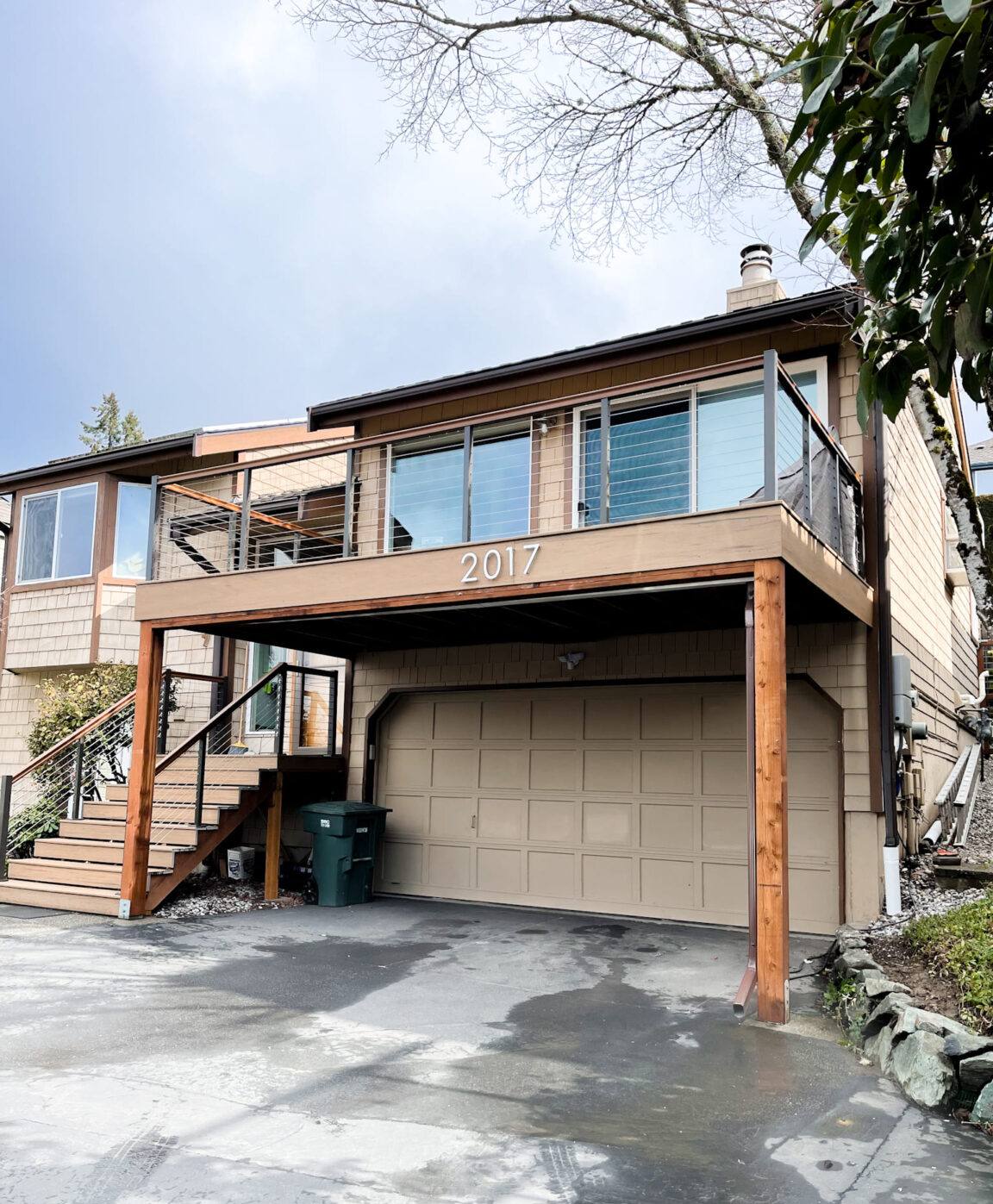
What Everson's Climate Actually Does to a Deck
Every deck failure we get called out to repair traces back to one of a handful of causes, and almost all of them are moisture-related:
- Ledger board rot where the deck attaches to the house — the single most common structural failure point when flashing wasn't installed or was installed wrong
- Joist and beam decay from water sitting on top of framing lumber that was never protected with joist tape or proper flashing
- Corroded fasteners — the wrong screws or nails rust, stain the decking, and lose their grip over time
- Moss and algae growth on decking boards, stairs, and railings, especially in shaded, low-airflow spots that stay damp longer during the region's long wet season
- Footing movement or heaving when footings weren't poured to the proper frost depth for the area
None of these are exotic problems. They're the predictable result of building a deck without accounting for how much moisture this part of Whatcom County holds onto for months at a stretch. The fix isn't complicated engineering — it's disciplined, correct installation of details that are easy to skip.
Choosing a Decking Material That Fits This Climate
There's no single "best" decking material — there's a best material for your budget, your maintenance appetite, and how much sun or shade your deck actually gets. Here's how the main options stack up for a wet, moss-prone climate like Everson's:
| Material | Upfront Cost | Maintenance | Moisture Resistance | Typical Lifespan |
|---|---|---|---|---|
| Pressure-treated lumber | Lowest | Annual cleaning, periodic sealing/staining | Good if sealed and maintained; poor if neglected | 10–15 years |
| Cedar | Moderate | Regular sealing to keep natural rot resistance intact | Naturally decay-resistant, but still needs upkeep in constant damp | 15–20 years |
| Composite decking | Higher | Occasional washing, no sealing/staining | Very good — won't rot, resists moss staining better than wood | 25–30 years |
| PVC/capped decking | Highest | Lowest — just periodic cleaning | Excellent — fully moisture-sealed board | 25–30+ years |
For homeowners who want the traditional look of real wood and don't mind seasonal upkeep, cedar remains a solid choice as long as it's sealed and cleaned on a schedule. For anyone tired of re-staining a deck every couple of years, or who has a shaded, slow-drying spot where moss keeps coming back, composite or PVC decking earns its higher upfront cost through decades of lower maintenance. We'll walk through the real trade-offs for your specific site and sun exposure rather than push one product line.
Framing Lumber Matters Just as Much as the Decking
Homeowners often focus entirely on the decking surface and forget that the framing underneath — joists, beams, posts — is what actually holds the structure together. We frame with lumber rated for ground contact where it's required, and we don't cut corners on fastener grade even though it's invisible once the decking goes down.
The Structural Details That Determine Whether a Deck Lasts
This is where most deck problems actually start, and it's the part homeowners can't see once the project is finished:
- Ledger flashing: a proper flashing system — not just caulk — where the deck ledger meets the house siding or sheathing, so water is directed away from the wall rather than trapped behind it
- Joist protection: flashing tape over the top of every joist so standing water can't soak into end grain and cut cutouts
- Fastener selection: hot-dip galvanized or stainless steel hardware rated for treated lumber, so fasteners don't corrode and streak the decking or lose holding strength
- Footing depth: footings poured below the local frost line and sized for the actual load, not guessed at
- Airflow underneath: proper spacing and, where the deck sits low to the ground, ventilation so moisture doesn't get trapped beneath the structure
- Board spacing and drainage: gapping set to let water drain through rather than pool on the surface, which is one of the biggest contributors to slick moss growth on the walking surface itself
Every one of these is a standard best practice in the trade — none of it is exotic. The difference between a deck that's still solid in fifteen years and one that's rotting at the ledger in five almost always comes down to whether these details were actually followed or skipped to save an afternoon.
Permits, Guardrails, and Local Code Requirements
Deck construction in Whatcom County is subject to building code requirements around footing depth, guardrail height, stair geometry, and ledger attachment, and most decks above a certain height or size require a permit before work starts. Requirements can vary depending on your deck's height, size, and whether it's attached to the house, so we handle the permit conversation as part of the estimate rather than leaving it for you to sort out. Building to code isn't just paperwork — guardrail height and baluster spacing exist specifically to keep people safe on stairs and elevated platforms, and proper footing depth is what keeps a deck from heaving or settling unevenly through freeze-thaw cycles.
Our Process, Start to Finish
- On-site consultation — we look at your existing structure (if there is one), the sun/shade pattern, drainage, and how you actually plan to use the space
- Design and material selection — we walk through decking material, railing style, and layout options with honest pros and cons for your site
- Permit handling — we prepare and submit what's required so you're not chasing paperwork
- Demo and framing — old structure removed if applicable; new framing built with proper flashing, fasteners, and footing depth
- Decking and railing installation — installed to manufacturer spec (for composite/PVC) or standard best practice (for wood), with attention to board spacing for drainage
- Final walkthrough — we inspect the finished deck with you and go over care and maintenance specific to the material you chose
Living With Your Deck Through Whatcom County's Wet Season
A well-built deck still needs some seasonal attention, especially heading into and through the long stretch of wet weather that defines a Pacific Northwest fall and winter. A simple maintenance rhythm keeps most problems from ever starting:
- Sweep leaves and debris off the deck surface regularly in fall — trapped organic matter is what feeds moss and algae growth
- Rinse or lightly scrub decking a couple of times a year, more often in shaded areas that stay damp longer
- Check and re-seal or re-stain wood decking on the schedule appropriate for the product (typically every 1–3 years)
- Inspect railings and stair connections annually for looseness — a sign fasteners may be corroding or wood is softening
- Keep gutters and downspouts near the deck clear so runoff isn't dumping extra water onto or under the structure
- Watch for standing water on the deck surface after storms — pooling usually means a drainage or slope issue worth having looked at
Why a Crew That Already Works in Everson Matters
Deck construction that's technically sound on paper can still fail in practice if the crew building it doesn't understand how this specific climate behaves. We already work throughout the Ferndale and greater Whatcom County area, which means we're familiar with local permitting expectations, the frost depth footings need to clear here, and the moss and moisture patterns that show up in shaded, low-airflow yards common to the Nooksack valley. That local familiarity shortens the permit process, avoids rework from guessing at requirements, and means if something needs a warranty check or adjustment down the road, you're not waiting on a crew that has to drive in from out of the area.
We're not the cheapest bid you'll get, and we won't pretend a low-maintenance material is the right call for every budget. What we will do is tell you honestly what a given material and build will cost you in maintenance over time, build the structural details correctly the first time, and stand behind the work.
If you're planning a new deck or need an honest look at whether an existing one is still sound, we're happy to come take a look. Fill out the form below for a free, no-pressure estimate.