 Ferndale Siding
 Decks in Everson Take a Different Kind of Beating
Everson sits inland from Ferndale in the Nooksack River valley, and that location changes how a deck ages compared to one closer to the coast. You get less salt air out here, but you get more standing moisture — low-lying ground near the river, heavy morning dew, and long stretches of overcast, damp weather that never quite dry out a deck's underside between rains. Add Whatcom County's long moss season and the freeze-thaw swings that hit the valley harder than the coastline, and you end up with decks that look fine on top while the framing underneath is quietly failing.
We've replaced enough decks around Ferndale and the surrounding Whatcom County communities, including Everson, to know the pattern: homeowners call about a soft board or a wobbly rail, and the real problem is a ledger board or set of joists that's been trapping moisture for years. Deck replacement done right in this area isn't just swapping old boards for new ones — it's rebuilding the structure to actually shed water instead of holding it.
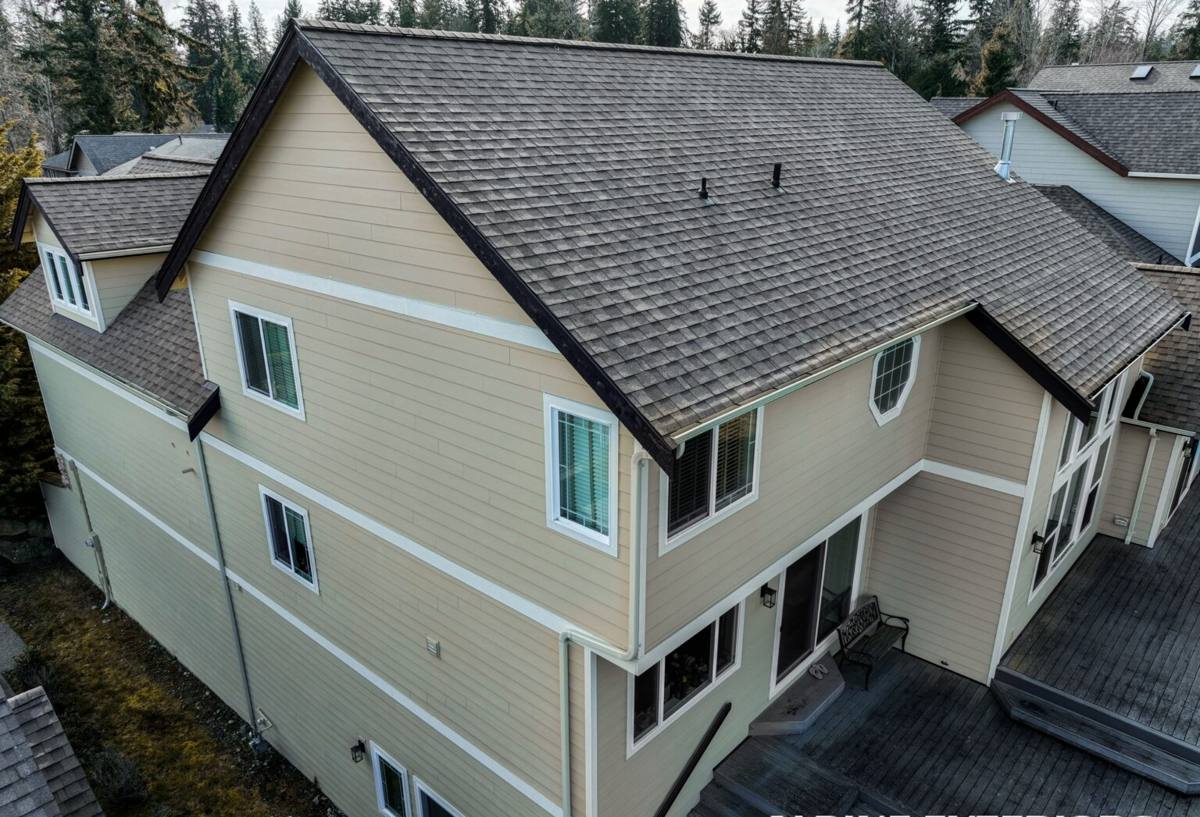
How to Tell a Deck Needs Replacement, Not Repair
Not every tired-looking deck needs to be torn out. But there are signs that mean patching individual boards is throwing money at a problem that's already past that point:
- Soft, spongy spots in the decking that give slightly underfoot, especially near the house or in shaded corners
- Visible sag between joists, or a deck surface that isn't as flat as it used to be
- Rust streaks or corrosion around fasteners and connectors
- A ledger board pulling away from the house, or gaps opening up where the deck meets the siding
- Persistent moss or algae film that comes back within weeks of cleaning
- Railing posts that flex or wobble when pushed
- Footings that have shifted, cracked, or heaved — common after a hard freeze-thaw winter in the valley
Any one of these on its own might be repairable. Two or three together usually mean the deck's structural life is over, even if the decking boards themselves look salvageable. Replacing boards over compromised framing just buys a year or two before the same problems resurface.
What Actually Goes Into a Correct Deck Replacement
Framing First
The framing is the part nobody sees and the part that determines whether the deck lasts ten years or thirty. That means joists sized and spaced correctly for the span and the load, hardware rated for exterior ground-contact use, and a ledger board properly flashed where it meets the house — not just bolted on and caulked. In a valley climate where the ground stays damp longer than it does closer to Bellingham Bay, flashing details at the ledger and around every post base matter more, not less.
Footings and Posts
Footings need to sit below frost depth and be sized for the soil they're in. Freeze-thaw cycling in the Nooksack valley can heave an undersized or shallow footing over a few winters, which is exactly what causes that slow, creeping sag homeowners often mistake for "the deck settling."
Ventilation and Drainage
A deck built tight against the ground or against the house without airflow underneath will trap moisture no matter what decking material sits on top. Correct replacement includes grading the ground below the deck to drain away from the house and leaving enough clearance for air to move.
Fasteners and Hardware
Everything from joist hangers to structural screws needs to be rated for exterior, ground-contact, or coastal-grade exposure depending on location. Mixing incompatible metals — the wrong screw in the wrong hanger — is a common shortcut that leads to corrosion and failure well before the wood itself would have given out.
Decking Material Options
Everson homeowners generally choose between three categories of decking material. Each has real trade-offs, and the right choice depends on budget, how much upkeep you're willing to do, and how long you plan to stay in the house.
| Material | Upfront Cost | Maintenance | How It Handles This Climate |
|---|---|---|---|
| Pressure-treated wood | Lowest | Annual cleaning, periodic staining/sealing | Performs well if sealed regularly; neglect leads to graying, splintering, and faster moss growth in shaded, damp spots |
| Cedar | Mid-range | Regular oiling or staining to hold color and resist moisture | Naturally more rot-resistant than treated pine, but still needs upkeep in a valley climate this damp |
| Composite / capped composite | Highest | Occasional washing, no staining or sealing | Resists moisture absorption and moss staining far better long-term, though composite still needs correct ventilation underneath |
We don't push one material on every homeowner. A well-built, properly sealed wood deck can last decades in this climate; it just asks more of you in ongoing maintenance. Composite costs more up front but removes most of that maintenance burden — which matters if the deck sits in a shaded or low-drainage spot on the property where moss and moisture are a constant fight. We'll walk through what your specific site conditions call for rather than defaulting to the most expensive option.
Our Deck Replacement Process
- On-site assessment. We look at the existing deck's framing, footings, and ledger connection — not just the surface — to confirm replacement is the right call and identify any drainage or grading issues contributing to the damage.
- Plan and quote. You get a clear breakdown of materials, structural scope, and price before anything is torn out.
- Permitting. Deck work above a certain height or size typically requires a permit through Whatcom County. We handle that process so it's not on you to track down.
- Removal. Full teardown of the old structure, checking the house's ledger connection and siding for any hidden water damage the deck was masking.
- Rebuild. New footings where needed, correctly flashed ledger, code-compliant framing, and your chosen decking and railing material installed to spec.
- Final walkthrough. We check the finished deck with you, and go over any maintenance the material you chose will need going forward.
Permits and Local Considerations in Everson
Deck replacement in Everson falls under Whatcom County's building permit requirements for most projects, particularly anything involving new footings or a deck attached to the house above a modest height. Because parts of Everson sit in the Nooksack River's floodplain, some properties may also have additional considerations around footing depth or elevation that don't come up on a typical Ferndale in-town lot. We check this as part of the initial assessment so there are no surprises once the permit application goes in.
We're not going to pretend every lot in the area has the same conditions — soil, drainage, and flood risk vary block by block along the river valley. What we can tell you is that we check for it rather than building to a generic spec and hoping it holds up.
Why It Matters to Hire a Crew That Already Works This Area
A deck built to a spec sheet that ignores where it's actually going up is a deck that fails early. Crews unfamiliar with Whatcom County's inland valley conditions sometimes build to a coastal or a dry-climate standard — under-flashing the ledger, skipping ventilation gaps, using hardware rated for a drier environment. None of that shows up on installation day. It shows up two or three winters later as soft framing and premature rot.
We've worked on homes throughout Ferndale and the surrounding Whatcom County communities, including Everson, long enough to know how the valley's moisture, moss, and freeze-thaw cycles actually behave over a full year, not just on the day we're on site. That's the difference between a deck that needs replacing again in eight years and one that holds up for decades.
Keeping a New Deck in Good Shape
Whatever material you choose, a few habits go a long way in this climate:
- Sweep debris and standing leaves off the deck regularly, especially in fall — trapped organic matter feeds moss and holds moisture against the boards
- Keep gutters and downspouts clear so runoff isn't dumping extra water onto or near the deck
- Reseal or restain wood decking on the schedule the manufacturer recommends — don't wait until it looks gray and worn
- Check the ledger flashing and any spot where the deck meets the house once a year for gaps or wear
- Clear moss promptly with a deck-safe cleaner rather than a pressure washer alone, which can force water into seams
Get a Straight Answer on Your Deck
If your Everson deck is showing soft spots, sag, or persistent moss no amount of cleaning fixes, it's worth having someone look at the framing underneath before deciding between repair and replacement. We'll give you a straightforward, no-pressure assessment and a written estimate — no guessing, no upsell on materials you don't need. Fill out the form below to get started.