 Ferndale Siding
 Building Decks in Fairhaven's Marine Climate
A deck in Fairhaven lives a harder life than a deck built twenty miles inland. This part of Whatcom County sits close enough to the water that salt-laden air reaches wood, metal, and finish coatings year-round, and the driving rain that blows in off the Sound doesn't fall straight down the way it does in a sheltered valley — it drives sideways into end grain, fastener heads, and any seam that isn't properly flashed. Add a moss season that can stretch from October well into spring, and you have a structure that needs to be built differently than a deck in a dry, inland climate. We're based in Ferndale and have built and repaired decks throughout this area long enough to know which shortcuts show up as callbacks two winters later.
This page covers what a deck actually needs to hold up in Fairhaven specifically — material choice, framing details, fasteners, and drainage — not generic deck-building advice that ignores the coastal conditions this neighborhood deals with.
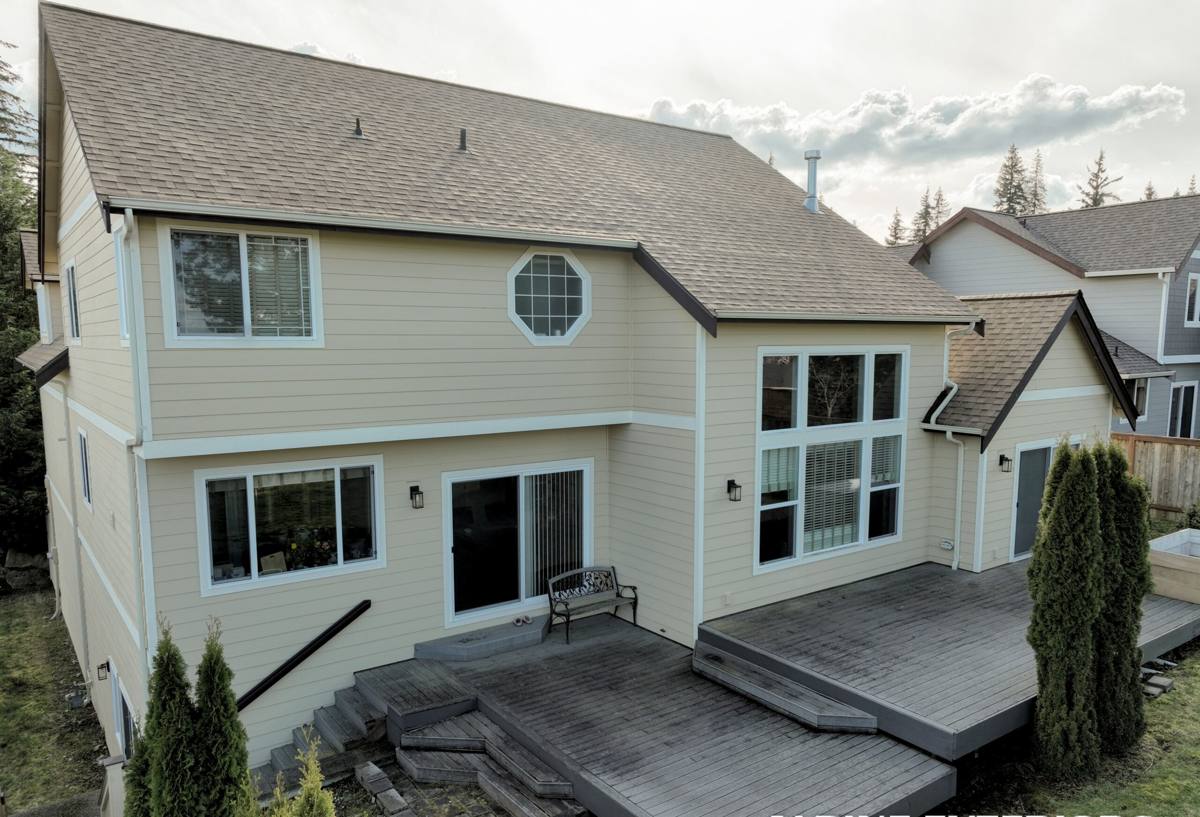
What Coastal Conditions Do to an Unprotected Deck
Salt Air and Metal Fasteners
Salt in the air accelerates corrosion on anything less than fully corrosion-rated hardware. Standard electro-galvanized screws and joist hangers can start rusting within a couple of seasons this close to the water. Once a fastener corrodes, it loses holding strength and can stain the wood or decking around it — and a rusted-out joist hanger is a structural problem, not a cosmetic one.
Driving Rain and End-Grain
Wind-driven rain finds the weak points in a deck that vertical rain never reaches: exposed end grain on joists and rim boards, gaps around ledger boards, and butt joints in decking. Wood soaks up water fastest through end grain, so any cut end left unsealed becomes a spot for rot to start, even on treated lumber.
Moss, Algae and Trapped Moisture
Shaded lots, tree cover, and a long wet season mean moss and algae get a real foothold on deck surfaces and framing that don't get airflow or sun. Beyond making boards slick underfoot, moss holds moisture against the wood, which is exactly the condition that leads to soft spots and premature decay.
Choosing Decking Material for Fairhaven's Climate
There's no single "right" material for every project — it depends on budget, how much upkeep you want to do, and how much sun or shade the deck gets. Here's how the common options actually perform in this specific climate:
| Material | Moisture Behavior Here | Maintenance | Typical Lifespan | Approx. Cost Range |
|---|---|---|---|---|
| Pressure-treated fir/hem-fir | Resists rot when sealed; needs regular upkeep in wet shade | Annual cleaning, reseal every 2-3 years | 15-20 years | $ |
| Cedar | Naturally decay-resistant, but salt air and moss will gray and soften it faster than in a dry climate | Reseal or stain every 1-2 years to hold color and protection | 15-25 years | $$ |
| Composite (capped) | Doesn't absorb water or rot; still needs cleaning where moss gets a grip | Occasional wash, no sealing or staining | 25-30+ years | $$$ |
| PVC decking | Fully moisture-proof surface; best choice for heavy shade or ground-level decks that stay damp | Wash as needed | 30+ years | $$$$ |
For lots with heavy tree cover or a north-facing deck that rarely dries out, we usually steer homeowners toward composite or PVC — not because wood is a bad product, but because the maintenance burden of keeping wood sealed and moss-free in that kind of shade is real, and most people underestimate it until year three.
Framing and Substructure: Where Fairhaven Decks Actually Fail First
The part of a deck nobody sees is usually the part that fails first here, because it's the part most likely to get built with standard-climate assumptions. A few details we treat as non-negotiable:
- Posts set on elevated bases, never buried directly in soil or sitting flush on a wet slab
- Joists and beams rated and treated for ground contact where they're anywhere near soil, moss, or standing water
- Structural screws or through-bolts at critical connections instead of nails, which back out as wood cycles wet and dry
- Joist hangers and structural hardware rated for coastal or marine-grade exposure, not standard interior-rated hardware
A deck that looks fine on the surface can still be failing underneath if these details were skipped. It's the number one thing we check when we're asked to look at an older deck in this area before deciding whether it's worth repairing or replacing.
Fasteners, Flashing and Connections Built for Salt Air
Because we're a siding contractor first, we pay close attention to how a deck ties into the house — the ledger board connection and its flashing is one of the most common failure points on any deck, and it's also the point where deck work overlaps directly with exterior wall protection.
Every ledger attachment gets proper flashing that sheds water out and away from the house sheathing, tied in correctly with the existing house wrap or weather barrier rather than just caulked over it. Caulk alone is not a flashing detail — it's a maintenance item that will eventually fail, and when it does, water gets behind the siding at exactly the spot where a deck attaches. For fasteners exposed to weather, we use stainless steel or coated hardware rated for corrosive environments, not standard interior-grade screws that will streak and weaken within a couple of wet seasons.
Drainage, Slope and Airflow: Beating the Moss Season
Moss and rot both need the same thing to take hold: standing moisture with nowhere to go. A deck built to handle Fairhaven's long wet season is built to move water off and away as fast as possible:
Surface and Board Gaps
Decking boards need consistent spacing to let water drain through rather than pool on the surface, and to let air circulate underneath so the underside of the boards can dry out between rain events.
Slope Away From the House
The deck surface should have a slight slope directing water away from the house rather than toward the ledger board connection, keeping water from pooling against the one seam where it can do the most damage.
Under-Deck Ventilation
Skirting or under-deck areas need airflow, not a sealed-off dark space. A closed-off underside with no ventilation is where we most often find moss creeping onto framing and joists that never get a chance to dry.
Our Deck Building Process
- Site visit and assessment — we look at sun/shade exposure, drainage, soil, and how the deck will tie into the house before recommending materials.
- Design and material selection — we walk through the material comparison honestly, including what each option actually costs to maintain over time in this climate, not just the upfront price.
- Permitting — most deck projects in this area require a permit; we handle that process so it's not on you to figure out.
- Framing — posts, footings, beams, and joists built with corrosion-rated hardware and proper ground clearance from day one.
- Ledger flashing and tie-in — done to integrate correctly with your home's existing weather barrier, not just caulked and left.
- Decking and fastening — boards installed with correct spacing for drainage and airflow, using fasteners rated for coastal exposure.
- Railings and finishing — stairs, railings, and any final sealing or staining completed to code and to spec.
- Final walkthrough — we go over the finished deck with you and explain what maintenance it actually needs going forward.
Maintenance Checklist for Fairhaven Deck Owners
Even a well-built deck needs some seasonal attention in this climate. A short list that covers most of it:
- Rinse salt film off the surface and railings a few times a year, especially after dry spells followed by rain
- Clear leaves, needles, and debris out of board gaps before they trap moisture and feed moss
- Scrub or treat mossy or algae-prone spots before they get slick and before they hold water against the wood
- Check fastener heads and hardware annually for rust or backing-out, particularly near the ledger connection
- Reseal or restain wood decking on the schedule appropriate to the product — don't wait until it's visibly gray and dry
- Trim back vegetation that's shading the deck or blocking airflow underneath
Why Hire a Crew That Already Works in Fairhaven
Anyone can frame a deck. Building one that's still solid in ten years in a neighborhood exposed to salt air, driving rain, and a long moss season takes knowing what fails here specifically, not what fails in a textbook or a dry-climate build guide. Because we're already working in and around Fairhaven regularly, we know the material choices that hold up, the fastener grades worth paying for, and the flashing details that keep a deck project from turning into a siding repair job two years later. Being based in Ferndale also means we're a short drive away for a warranty check or a follow-up question — not a crew that did one job in the neighborhood and disappeared.
If you're planning a new deck or looking at repairing or replacing one that's showing its age, we're happy to take a look and walk you through your options. Reach out for a free, no-pressure estimate using the form below.