 Ferndale Siding
 Siding Built for Life on Lummi Island
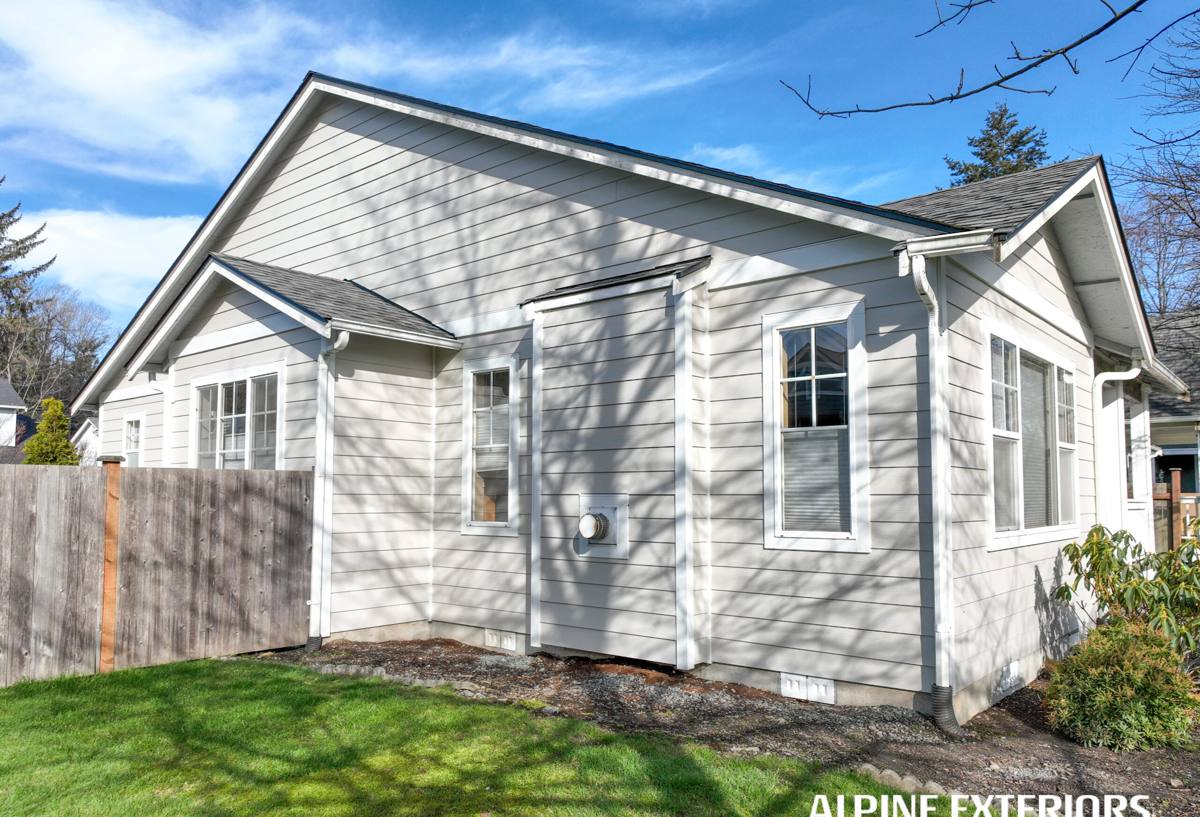
Lummi Island sits out in Hale Passage, fully exposed to marine weather that mainland Ferndale neighborhoods only get a lighter version of. Homes here take salt-laden air off the water, driving rain that comes sideways during winter storms, and long stretches of shade and dampness that keep moss and algae growing on siding almost year-round. Add the fact that every board, fastener, and crew member has to get here by ferry, and it's easy to see why siding decisions on the island carry more weight than they do a few miles inland. We install James Hardie fiber cement siding exclusively, and Lummi Island is exactly the kind of environment that product line was engineered to handle.
What Salt Air and Driving Rain Actually Do to Siding
Salt air isn't just a smell — it's airborne moisture carrying dissolved minerals that accelerate corrosion on fasteners, flashing, and any metal trim on a house. Over years, that speeds up rust bleed, loosens fastening, and can compromise the very details that are supposed to keep water out. Driving rain compounds the problem: wind-driven water finds every gap, lap, and penetration a normal rainstorm never touches, forcing water up and under siding that was installed to a standard meant for gentler weather.
Moss and algae growth is the third piece. Shaded north- and west-facing walls on the island stay damp far longer after a storm than a sunny mainland elevation would, and organic growth on siding isn't just cosmetic — trapped moisture under moss and lichen keeps a wall assembly wet for extended periods, which is where wood-based products and some fiber cement competitors start to struggle.
Why This Matters for Material Choice
A siding product that performs fine in a typical Whatcom County subdivision can fall short on an island lot with unobstructed exposure to the water. James Hardie's HZ5 product line is specifically formulated for climates with prolonged moisture exposure and freeze-thaw cycling — which describes Lummi Island's winters well. It's engineered to resist moisture-related damage without the swelling, delamination, or rot risk that comes with wood-based or wood-derived siding products in this kind of environment.
Why We Install Only James Hardie
We don't offer vinyl, LP SmartSide, cedar, or primed wood siding, and on a site like Lummi Island the reasons are concrete, not theoretical:
- Non-combustible core: fiber cement doesn't feed a fire the way wood-based siding can — relevant on an island with its own fire response realities.
- Dimensional stability: Hardie boards don't swell and contract with humidity swings the way wood and wood-composite products do, which matters when a wall spends half the year damp.
- Factory-cured ColorPlus finish: baked-on finish resists the fading and moisture intrusion that field-applied paint on wood siding is prone to, especially under UV plus salt exposure.
- Moss and algae resistance: the material itself doesn't provide the same organic food source or absorb moisture the way wood substrates do, so growth stays more of a surface issue than a structural one.
- Warranty structure: a manufacturer-backed, transferable warranty that holds up when the product is installed to spec — worth more on a coastal property where owners want that protection documented for resale.
We're not going to tell you vinyl or cedar can't be made to work anywhere. But on a site with this level of salt and wind exposure, the maintenance burden and long-term risk profile of those products is exactly what pushed us to standardize on one system we can install correctly and stand behind.
What a Correct Installation Looks Like Here
Fiber cement performs well in marine climates only when it's installed correctly — the product doesn't do the job on its own. On Lummi Island specifically, we pay close attention to:
Flashing and Water Management
Every window, door, and penetration gets flashed to shed wind-driven rain, not just gravity-fed drainage. That means head flashing with proper end dams, correctly lapped weather-resistant barrier, and drainage planes that let any moisture that does get behind the siding find its way back out rather than sitting against the wall sheathing.
Fastener and Trim Selection
In a salt-air environment, fastener quality is not a place to cut corners. We use fasteners and trim accessories rated for corrosion resistance in coastal conditions, because a fastener that rusts and loosens becomes a leak path years before the siding itself would ever fail.
Clearances and Ventilation
Hardie's install specs call for minimum clearances from grade, roofing, and decks — clearances that matter more on a damp island lot where ground moisture and vegetation growth are more aggressive. We also make sure the assembly can breathe and dry, so any moisture that gets in doesn't stay trapped.
Caulking and Joints
Every joint and butt seam gets sealed with a product rated for the movement and moisture conditions here, not a generic caulk that will chalk and crack after one or two hard winters.
Working an Island Job: Why Local Experience Matters
Lummi Island isn't accessed like a typical Ferndale or Whatcom County address — everything, from the crew to every board of siding, rides the ferry over. That changes how a project has to be planned:
- Material staging: we order and stage full material loads in advance so we're not making repeat ferry trips mid-project for a missing piece of trim.
- Ferry schedule awareness: crew arrival and departure times are built around the ferry schedule, not the other way around, so a job doesn't lose half a day to a missed sailing.
- Weather windows: island weather can shift faster than the mainland forecast suggests, so we build in flexibility rather than promising a rigid day-by-day timeline.
- Respect for a smaller community: parking, staging, and noise all get handled with more care on an island where every house has neighbors who notice a work crew.
A crew that hasn't worked the island before will often underestimate all four of these, which shows up as delays, rushed details, or corners cut to make up lost time. We've built our process around the reality of getting a job done right out here, not around pretending it's the same as a job three miles off the highway in Ferndale.
Our Process for a Lummi Island Hardie Install
- On-site assessment: we look at the home's actual exposure — which walls take the worst weather, where moss is already established, and where existing water damage or rot needs addressing before new siding goes up.
- Product and color selection: we walk through Hardie's plank, shingle, and panel options and ColorPlus color choices, factoring in how a given color and texture will read against the island's coastal light and greenery.
- Logistics planning: we plan the ferry schedule, material delivery, and crew days as one package before we ever set a start date.
- Tear-off and inspection: removing old siding lets us check sheathing and framing for any hidden moisture damage — common on older island homes — before anything new goes on.
- Water-resistive barrier and flashing: installed to shed wind-driven rain, not just standard drainage.
- Hardie installation to manufacturer spec: correct fasteners, clearances, and joint treatment throughout.
- Final walkthrough: we review the completed work with the homeowner before we call the job done.
Comparing Options in a Marine Climate
| Factor | James Hardie Fiber Cement | Vinyl Siding | Wood / Wood-Composite |
|---|---|---|---|
| Salt air / corrosion resistance | Strong — non-organic substrate, factory finish | Moderate — can become brittle over time | Weaker — prone to moisture uptake near the coast |
| Moss and algae behavior | Surface growth, doesn't feed on material | Surface growth, can trap moisture at seams | Growth often signals underlying moisture retention |
| Wind-driven rain performance | Excellent when flashed and installed to spec | Can allow water intrusion at loose panels/seams | Vulnerable at joints and end grain |
| Fire resistance | Non-combustible | Melts/deforms under heat | Combustible |
| Finish longevity | Factory-baked ColorPlus finish | Can fade, especially darker colors | Field-applied paint/stain needs recoating |
Cost Factors for a Lummi Island Project
| Factor | Why It Affects Cost |
|---|---|
| Ferry and logistics | Material delivery and crew transport add scheduling and freight considerations not present on mainland jobs |
| Existing damage | Moisture-damaged sheathing or framing found during tear-off adds repair scope before new siding goes on |
| House size and complexity | Roofline, trim detail, and number of penetrations (windows, vents, fixtures) all affect labor hours |
| Product line and profile | HZ5 boards, plank width, and shingle vs. lap profile carry different material costs |
| Color and finish | Standard ColorPlus colors versus custom or premium finishes affect material pricing |
| Access and staging | Waterfront or steep-lot homes may need extra staging time and equipment |
Maintaining Hardie Siding in an Island Climate
Even a resistant product benefits from basic upkeep in this environment. A periodic gentle wash removes salt residue and slows moss and algae buildup before it becomes visible staining. Keeping gutters clear and vegetation trimmed back from walls reduces the shaded, damp conditions organic growth needs. Caulking and trim should be checked every few years, since sealant is typically the first component to age in a coastal climate, well before the siding itself shows wear.
Simple Homeowner Checklist
- Rinse siding annually, or more often on shaded, north-facing walls
- Trim back shrubs and trees that keep walls shaded and damp
- Inspect caulking at trim, windows, and joints every 2-3 years
- Check fasteners and flashing for rust bleed after major storms
- Keep gutters and downspouts clear so water isn't dumping against the wall
- Address any soft spots or discoloration promptly rather than waiting
Ready to Talk About Your Home
Lummi Island homes deal with a version of Whatcom County weather that's more concentrated than most — more salt, more wind-driven rain, more shade and moss. A siding system and an installation crew both need to be matched to that reality. If you'd like a straightforward look at what your home needs, we offer a free, no-pressure estimate — just fill out the form below and we'll go from there.