 Ferndale Siding
 Marietta's Siding Challenge: Salt Air, Rain, and Moss
Marietta sits low and close to the water just outside Ferndale, and that location shapes what siding has to survive here. Salt-laden air moves in off the bay and settles on exterior walls year-round, accelerating corrosion on fasteners and trim and breaking down finishes that aren't built to handle it. Add in Whatcom County's long wet season — months of driving rain that comes in sideways during winter storms rather than falling straight down — and siding on a Marietta home is under near-constant moisture load, not just occasional exposure.
Then there's moss. North- and west-facing walls that stay shaded and damp for weeks at a stretch grow moss and mildew streaking faster than siding on a drier, sunnier lot would. None of this makes Marietta a hard place to keep a house looking good — it just means the siding has to be the right material, installed the right way, with drainage and flashing details that actually account for local weather instead of a generic install job.
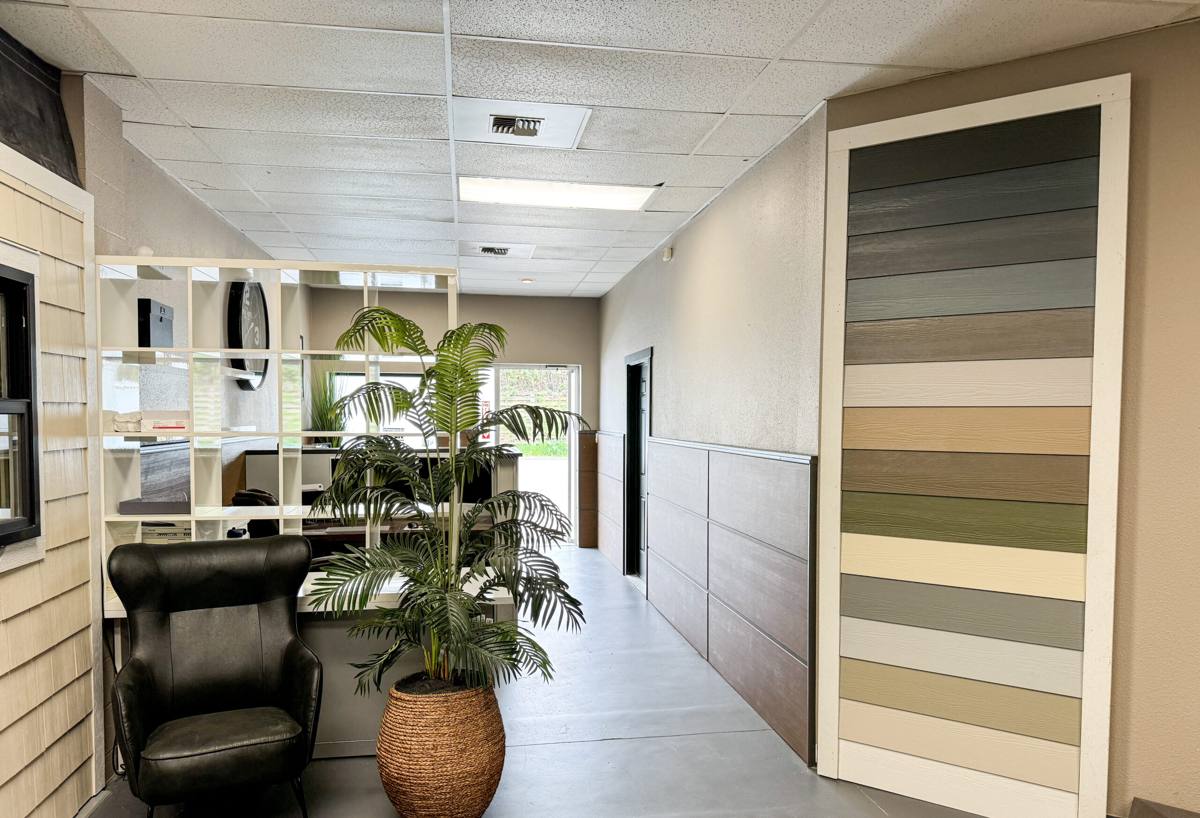
Why James Hardie Fiber Cement Fits Coastal Whatcom County Homes
James Hardie siding is made from cement, sand, and cellulose fiber — it's non-combustible and doesn't rot, delaminate, or feed insects the way wood-based products can. That matters a lot near the water. Wood siding and wood-based composites absorb moisture at cut edges and joints; over years of salt air and driving rain, that moisture cycling is what causes swelling, soft spots, and paint failure. Fiber cement doesn't work that way — it holds its shape and its finish under repeated wet-dry cycles far better.
Hardie also engineers its siding by climate zone. The HZ5 product line used throughout the Pacific Northwest is formulated for regions with more moisture exposure and freeze-thaw activity than the HZ10 line sold in hot, dry climates. That's not marketing language — it changes the moisture content and formulation of the board itself. For a Marietta home, that climate-specific engineering is the whole point: the siding is built for exactly the weather it's going to face.
What a Correct Installation Looks Like on a Marietta Home
Moisture Management Behind the Siding
The siding itself is only part of the system. Behind every board should be a weather-resistive barrier, correctly lapped and taped, with flashing at every window, door, and roofline penetration. On homes exposed to driving rain off the water, we pay particular attention to kick-out flashing where rooflines meet walls — a spot that's easy to skip and one of the most common places water finds its way behind siding on coastal homes.
Fastening and Clearances
James Hardie publishes a specific fastening schedule — nail type, spacing, and placement — and following it is what keeps boards secured without cracking or over-driving fasteners that break the water seal. Clearances matter just as much: siding needs to sit clear of grade, roof surfaces, decks, and other horizontal surfaces so water doesn't wick up into the board from below. Skipping these clearances is one of the most common causes of premature siding failure we see on re-siding jobs, coastal or not.
Finish and Trim Details
Factory-applied ColorPlus finish is baked on under controlled conditions and holds up better than field-applied paint, especially in a climate that doesn't offer many good drying days. Trim, caulk joints, and butt joints all need to be sealed with a product rated for the movement and moisture conditions here — caulk that's the wrong type, or applied too thin, is a fast way to let driving rain track behind otherwise correctly installed siding.
Our Process, Start to Finish
Every Marietta project runs through the same sequence, because skipping steps is how moisture problems get built into a wall for the next twenty years:
- Site walk and exterior assessment, including a look at existing moisture damage, trim condition, and roofline flashing
- Sheathing inspection once old siding is removed — any soft or water-damaged sheathing gets addressed before anything new goes up
- Weather-resistive barrier and flashing installed at every penetration, lapped correctly for water shedding
- James Hardie siding installed to the manufacturer's fastening schedule and clearance requirements
- Trim, corners, and caulk joints finished with materials rated for coastal, high-moisture conditions
- Final walkthrough to confirm fastening, sealing, and finish before we call the job done
Hardie Siding Styles That Work Well in Marietta
James Hardie makes several siding profiles, and the right one depends on the home's architecture and how much wind and rain exposure a given wall sees.
| Profile | Best Suited For | What to Know |
|---|---|---|
| HardiePlank Lap | Most Marietta homes, traditional and modern styles | The most common choice; wide range of widths and textures, straightforward maintenance |
| HardieShingle | Accent gables, dormers, coastal cottage-style homes | Staggered or straight-edge look; more detail work at installation, especially around trim |
| HardiePanel | Modern builds, garage walls, accent sections | Vertical panel look; joints need careful battens or trim to manage water at seams |
Most homes in this area do best with lap siding as the primary field material, with shingle or panel used selectively as an accent — but the right mix depends on the house.
What Drives Cost on a Marietta Siding Project
There's no single number that applies to every home, but the same handful of factors drive most of the variation we see from house to house.
| Factor | Why It Matters |
|---|---|
| Home size and story height | More square footage and second-story access both add material and labor time |
| Tear-off vs. overlay conditions | Full removal of old siding costs more up front but lets us inspect and fix sheathing issues before they're sealed behind new siding |
| Trim and architectural detail | Gables, dormers, and multiple roof intersections all add flashing and cutting time |
| Moisture or rot damage found underneath | Not uncommon on older homes near the water; repair costs depend on how far it extends |
| Site access | Tight lots, landscaping, or limited staging space can slow the job down |
We give a written estimate after the site walk, not before, because guessing at these factors from a photo or a phone call isn't useful to either of us.
Living With Fiber Cement Through a Whatcom County Moss Season
James Hardie siding is low-maintenance compared to wood, but "low-maintenance" isn't "no-maintenance" — especially in a climate that grows moss on anything shaded and damp for long enough. A little seasonal attention keeps the siding and the finish looking right for the long haul:
- Rinse the exterior with a garden hose once or twice a year to clear salt residue, pollen, and early moss growth before it takes hold
- Keep shrubs, trees, and vines trimmed back so walls get airflow and sunlight, especially on north- and west-facing sides
- Check caulk joints at trim, corners, and penetrations annually — caulk is the first thing to fail, well before the siding itself
- Watch for moss or mildew streaking below gutters and downspouts, which usually means a drainage issue rather than a siding problem
- Avoid pressure washing directly at the siding's edges and joints, which can force water behind the boards
- Repaint any field-cut edges that weren't factory-sealed, since raw cut edges are more absorbent than the finished face
None of this is heavy upkeep — it's the difference between siding that looks good at year fifteen and siding that starts showing streaking and soft caulk by year five.
Why a Crew That Already Works Marietta Matters
Siding installation isn't one-size-fits-all, and a crew that's already worked homes in this part of Whatcom County has a real advantage: we already know which walls take the worst of the wind-driven rain, which older homes tend to have sheathing issues under their original siding, and what flashing details actually hold up here versus on paper. That local pattern recognition shows up in the estimate, in the install, and in how the job holds up five and ten years out.
It also means accountability. We're not driving in from out of the area for a one-off job — we work Ferndale and the surrounding Whatcom County communities regularly, and our name is on the work we leave behind. If something needs a follow-up look, we're close by and easy to reach.
If you're weighing a siding replacement on a Marietta home, we'll walk the exterior with you, point out what we see, and give you a straight answer on what it needs. Reach out for a free, no-pressure estimate using the form below.