 Ferndale Siding
 Why Windows Wear Differently in Kendall
Kendall sits back from the water compared to the rest of Whatcom County, but that doesn't mean the climate goes easy on a home's windows. The valley holds moisture longer than the open coastline does. Fog settles into the low ground overnight, tree cover keeps siding and trim damp well after a storm has passed, and the long stretch of gray months between fall and spring means window frames rarely get a full chance to dry out. Add in the driving rain that comes sideways during winter systems off the Sound, and you've got conditions that find every weak point in a window installation eventually.
The broader marine influence across Whatcom County also plays a role. Even away from the immediate shoreline, the air carries more moisture and salt-laden humidity than homeowners moving here from drier climates expect. Combined with Kendall's tree canopy and shaded lots, that moisture load is a big part of why moss and algae take hold on window sills, trim boards, and lower sashes faster here than in most parts of the country. None of this means windows fail quickly — it means they need to be installed correctly for these specific conditions, or the small gaps show up as real problems within a few years.
What This Means for an Older Window
If your home still has original wood windows from decades back, or aluminum-frame windows from a remodel that's now aging, the failure pattern is predictable: wood swells and sticks in wet months, then shrinks and gaps in dry spells, opening seams that let in more moisture the next time it rains. Aluminum frames conduct cold straight through, which means condensation forms on the interior glass and frame — and that condensation, sitting against wood trim day after day through a long wet season, is what actually causes rot. The window itself may look fine from the street while the framing behind it is already compromised.
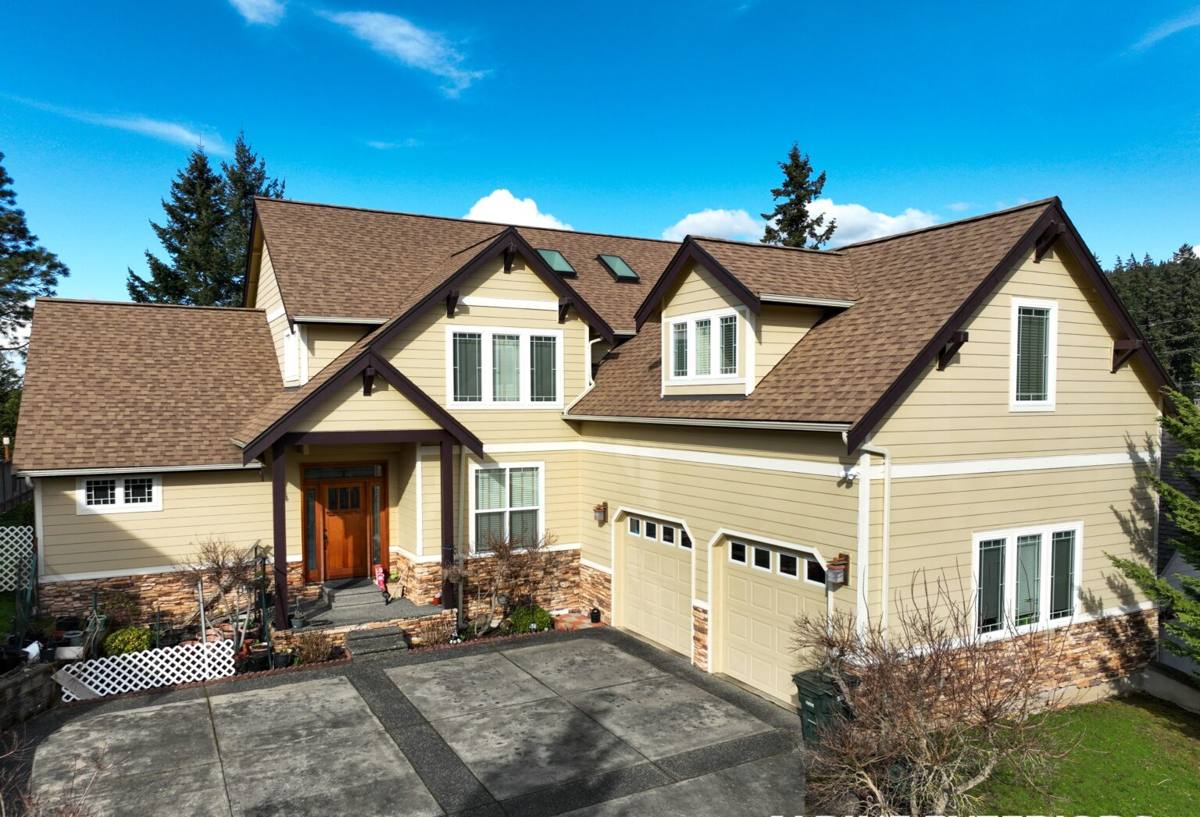
What a Correct Window Replacement Actually Involves
Swapping an old window for a new one is the easy part. The work that determines whether that window performs for the next 20 years happens around the opening, not in the unit itself.
Flashing and Moisture Management
Every window opening needs to be flashed so that any water that gets past the exterior trim is directed back out and away from the wall framing — never trapped behind it. This means sill pan flashing at the bottom of the opening, house wrap integrated correctly with the window flange, and head flashing above that laps over the housewrap rather than under it. In a climate with as much driving rain as Whatcom County sees, a shortcut here is the single most common reason a "new" window ends up with rot in the wall cavity within a few years — and it's invisible from outside until the damage is already done.
Insulation and Air Sealing
The gap between the window frame and the rough opening needs to be filled with a proper low-expansion foam or backer rod and sealant — not stuffed with fiberglass insulation alone, which does little to stop air movement. Gaps here are a major source of drafts and energy loss, and in a wet climate an improperly sealed gap can also wick moisture into the wall.
Fit and Squareness
A window that isn't shimmed level, plumb, and square will bind, won't lock tightly, and will wear its weatherstripping unevenly. This is a common issue with older installs and one of the first things we check when a homeowner tells us a window has started letting in a draft or noise it never had before.
Comparing Frame Materials for This Climate
We get asked often about the difference between window frame materials, especially from homeowners comparing quotes. Here's an honest breakdown of what we see hold up in Whatcom County conditions.
| Frame Material | Moisture Behavior | Maintenance | Typical Cost Range |
|---|---|---|---|
| Vinyl | Won't rot; seams and welds matter more than the material itself | Low — occasional cleaning | Lower |
| Fiberglass | Very stable, minimal expansion/contraction with temperature swings | Low | Mid to upper-mid |
| Wood-clad | Good insulator; exterior cladding protects wood, but any breach in the cladding lets moisture reach wood | Higher — cladding seams and interior wood need periodic checks | Higher |
| Aluminum | Conducts cold, prone to interior condensation in our winters | Low, but condensation issues persist regardless | Lower to mid |
Our standard for homes in and around Kendall leans toward vinyl or fiberglass for most replacements, simply because they don't give moisture a foothold the way wood or bare aluminum can. That's a maintenance and moisture-behavior judgment on our part, not a claim that other materials are unusable — wood-clad windows can perform well when the cladding and flashing details are done right and the homeowner is willing to keep an eye on them.
Signs Your Windows in Kendall Need Attention
- Visible fogging or moisture between the panes of a double-pane window — the seal has failed
- Wood trim or sills that feel soft, discolored, or show moss/algae growth
- Drafts you can feel near the frame even when the window is fully latched
- Windows that are difficult to open, close, or lock, especially after rain
- Condensation forming on the interior glass or frame during cold mornings
- Noticeably higher heating bills compared to similar-sized homes nearby
- Visible gaps or cracked caulking around the exterior trim
How We Approach a Kendall Window Replacement
Assessment First
We start by looking at more than the window itself — we check the trim, the sill, and the wall area immediately around the opening for signs of moisture damage that should be addressed before new windows go in. Installing a new window over a rotted sill just hides the problem for a while; it doesn't fix it.
Install Day
Openings are prepped, flashed, and sealed to manage water the way this climate demands, windows are shimmed square and plumb, and gaps are filled with proper sealant rather than left to chance. We work room by room to keep the home protected from weather during the swap rather than opening up multiple exterior walls at once.
Final Check
Every window gets operated, latched, and inspected before we consider the job done — checking for smooth operation, a tight seal, and clean, weathertight trim work outside.
Why a Crew That Works Kendall Regularly Makes a Difference
Whatcom County covers a lot of ground, from the coastline in Ferndale and Blaine to the foothill communities like Kendall closer to the mountains. Homes here see a different moisture pattern than homes directly on the water, and a crew that only occasionally works this far out doesn't always know to check for it. A contractor who's done work throughout the Ferndale and Kendall area repeatedly will already know what to expect from an older home's rough openings, how the local moss and moisture pattern behaves on window sills, and what flashing details hold up here versus what fails within a couple of seasons.
There's also a practical side: a local crew can get to a callback quickly if something needs adjusting after the first hard rain of the season, instead of a homeowner waiting on a company based hours away.
Mistakes We Commonly Find From Prior Installs
- Housewrap tucked under the window flange instead of lapped over it, sending water behind the wall
- No sill pan flashing, relying on caulk alone to keep water out at the bottom of the opening
- Gaps filled entirely with fiberglass insulation instead of sealant, leaving a path for air and moisture
- Windows installed slightly out of square, leading to premature weatherstripping wear
- Exterior trim caulked over without addressing soft or damaged wood underneath
None of these show up on a walkthrough the day the job is finished. They show up two, three, or five winters later — which is exactly why the installation details matter more than they seem to at the time.
Keeping New Windows Performing Through Moss Season
Once new windows are in, upkeep in this climate is straightforward but shouldn't be skipped. Rinse sills and tracks a couple of times a year to keep moss and algae from establishing, especially on shaded sides of the house. Check exterior caulking annually for cracking or gaps, since even good sealant has a service life. Keep gutters and downspouts clear so water isn't sheeting down past window heads more than it should. None of this is heavy maintenance — it's the same kind of periodic attention most exterior surfaces need in a wet climate, and it goes a long way toward protecting the installation work underneath.
What Affects the Cost of a Kendall Window Job
Every home is different, so we won't quote a number without seeing the openings, but the main cost factors are consistent: the number of windows, the frame material chosen, whether any rot repair is needed at the openings before installation, window size and style (a large picture window costs more than a standard slider), and access — second-story or hard-to-reach openings take more time. Homes with existing moisture damage around the openings will need that addressed first, which is worth budgeting for rather than skipping.
If your windows in Kendall are showing their age, or you just want an honest read on whether they're still doing their job, we're glad to take a look. The estimate is free, there's no pressure, and you'll get a straight answer about what your home actually needs — use the form below to get started.