 Ferndale Siding
 Building Decks for the Sumas Climate
A deck in the Sumas area lives outside year-round, and Whatcom County doesn't make that easy. Damp, salt-laden air moving in off the Sound, long stretches of driving rain through fall and winter, and a moss season that can run six months or more all put steady pressure on any structure that sits exposed to the weather. A deck built the way it might be built in a dry climate — standard hardware, tight board spacing, no real drainage plan — will show problems within a few years out here: rusted fasteners bleeding rust stains into the wood, soft spots where water sits, and a slick green film that makes stairs and landings genuinely dangerous underfoot.
None of that is inevitable. It comes down to material choices and construction details that are matched to this specific climate, not a generic build. That's the difference between a deck that needs to be rebuilt in eight years and one that's still solid in thirty.
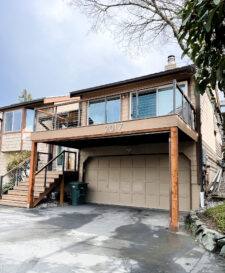
What a Correctly Built Deck Requires Here
A deck is a structure first and a surface second. Before anyone talks about decking boards or railing style, the framing underneath has to be right for a climate that stays wet for most of the year.
Corrosion-Resistant Hardware Throughout
Every joist hanger, structural screw, bolt, and post base on a deck in this region should be rated for coastal or wet-service exposure — hot-dip galvanized at minimum, stainless steel where it counts most, like ledger connections and any hardware in direct contact with pressure-treated lumber. Standard zinc-coated hardware corrodes faster than most homeowners expect once salt-influenced moisture is in the mix, and a rusted-through joist hanger is a structural failure waiting to happen, not just a cosmetic issue.
Airflow and Drainage Under the Deck
Wood and composite decking both need air moving underneath and around them to dry out between rain events. Framing that's built too tight to the ground, or landscaping that grows up against the joists, traps moisture against the underside of the deck where it never fully dries. That's where rot starts on wood-framed decks, usually from the bottom up, long before it's visible from the top.
Board Spacing and Fastening
Gapping between deck boards needs to account for both drainage and the seasonal swelling and shrinking that comes with a wet-to-dry cycle. Too tight, and boards cup or trap debris that holds moisture and feeds moss growth. Too loose, and you get an uneven, less finished surface. Hidden fastener systems, when used correctly, also help by eliminating the screw-head pockets where water and grime collect on the surface.
Choosing the Right Decking Material
There's no single "best" decking material — there's a best fit for how a homeowner wants to use the deck, how much upkeep they're willing to do, and what budget they're working with. Here's how the common options actually compare once you factor in a climate with heavy annual rainfall and a long moss season.
| Material | Moisture Behavior | Moss/Algae Resistance | Maintenance | Typical Lifespan |
|---|---|---|---|---|
| Pressure-treated wood | Absorbs and releases moisture; can cup or warp if not sealed | Low — needs regular cleaning and re-sealing | Annual cleaning, re-staining every 2-3 years | 15-20 years with upkeep |
| Cedar | Naturally moisture-resistant, but still an open-grain wood | Moderate — better than PT, still needs care | Sealing every 1-2 years to hold color and resist decay | 15-25 years with upkeep |
| Composite decking | Doesn't absorb water or rot | Better resistance, but can still grow surface film if not cleaned | Occasional washing, no staining or sealing | 25-30+ years |
| PVC/capped polymer | Fully non-absorbent | Best resistance of the group | Lowest — periodic rinse-off | 25-30+ years |
Composite and capped polymer boards cost more up front, but in a climate where wood is fighting moisture nearly year-round, the reduced maintenance often makes up the difference over the life of the deck. That said, a well-built and properly maintained cedar or PT deck is a perfectly sound choice for homeowners who don't mind the upkeep — it's a trade-off, not a wrong answer.
The Ledger Board: The Single Most Important Detail
Where a deck attaches to the house is the single point most likely to cause expensive damage if it's done wrong. The ledger board connects the deck framing directly to the home's rim joist, and if it isn't flashed correctly, driving rain gets forced behind it and into the wall structure — leading to hidden rot that can go undetected for years, well past the deck itself.
A correct ledger installation includes:
- Proper structural fasteners rated for the connection, not just deck screws
- Flashing that directs water out and away from the house, lapped correctly with the existing siding or house wrap
- A gap or drainage plane behind the ledger so any water that does get past the flashing has somewhere to go besides into the wall
- Correct bolt spacing sized to the actual load the deck will carry, not a generic pattern
This is also exactly the kind of detail that's invisible once the deck is finished, which is why it's worth asking a contractor directly how they handle ledger flashing before work starts.
Footings, Frost Depth, and Structural Support
Deck footings in Whatcom County need to be set below the local frost depth so the ground freezing and thawing each winter doesn't heave the posts out of level over time. Post spacing and footing size also need to be sized to the actual span and load of the deck — a large elevated deck built for entertaining carries very different loads than a small ground-level platform, and the footings should reflect that rather than using a one-size-fits-all approach. Getting this wrong doesn't usually show up in year one; it shows up as a slowly leaning or bouncing deck a few years down the road.
Permits and Code Requirements
Most decks above a certain height or attached to the home require a building permit, and that typically means inspections at the footing stage and again once framing is complete before decking goes down. Guardrail height, baluster spacing, and stair rail requirements are all set by code and aren't optional details — they exist because deck falls are a real and preventable cause of injury. A contractor who already builds decks in this area should be able to walk you through what's required for your specific project before the first post hole is dug, and should pull the permit as part of the job rather than leaving that step to the homeowner.
Our Process, Start to Finish
1. On-Site Assessment
We look at the site itself — grade, drainage, sun exposure, how the deck will tie into the house — before talking materials. The right build depends on what the lot and the existing structure are actually giving us to work with.
2. Design and Material Selection
We walk through decking material, railing style, and layout based on how the space will actually be used, along with an honest look at maintenance expectations for each option.
3. Permitting
We handle the permit application and coordinate inspections so the homeowner isn't stuck navigating that process alone.
4. Framing and Structural Work
This is where the ledger flashing, corrosion-resistant hardware, footing depth, and airflow underneath all get set correctly — the parts of the job that don't show once it's finished but determine how long the deck lasts.
5. Decking, Railing, and Finish Work
Board installation, railing, stairs, and any finish work like staining or sealing happens last, with a final walkthrough before we call the job done.
Keeping a Deck Sound Once It's Built
Even a well-built deck needs some seasonal attention in this climate. A short annual routine goes a long way toward avoiding moss buildup and catching small issues before they become expensive ones.
- Clear leaves and debris from between boards and off the surface before fall rains set in
- Rinse or lightly scrub composite and PVC decking once or twice a year to prevent surface film buildup
- Re-seal or re-stain wood decking on the schedule appropriate to the product — don't wait until it's visibly gray and dry
- Check that plantings and mulch aren't crowding up against the framing or blocking airflow underneath
- Look at fastener heads and railing connections once a year for any early rust staining
- Keep gutters and downspouts near the deck clear so runoff isn't draining directly onto or under it
Why Local Deck-Building Experience Matters in Sumas
A crew that already works in and around Sumas and the rest of Whatcom County has already worked out what generic decking guidance doesn't cover — which hardware actually holds up here, how footing depth needs to be handled on local soil, and what the permitting process actually looks like with area building departments. That local knowledge shows up in fewer surprises during the build and a deck that's genuinely suited to this specific climate rather than built to a national average.
If you're planning a new deck or need an honest assessment of an existing one, we're glad to take a look and talk through your options. Reach out for a free, no-pressure estimate using the form below.