 Ferndale Siding
 Why Siding on the Lummi Peninsula Takes More Punishment Than Siding Inland
Homes along the Lummi Peninsula and the shoreline of Bellingham Bay sit in one of the toughest siding environments in Whatcom County. It isn't one big problem — it's three smaller ones working on your walls at the same time, year after year. Salt-laden air off the water accelerates corrosion on fasteners, trim, and anything metal. Wind-driven rain off the Strait doesn't fall straight down; it hits siding sideways, working into laps, seams, and butt joints that would stay dry on a more sheltered inland lot. And Whatcom County's long, wet, low-sun winters mean moss and algae get months of ideal growing conditions on north-facing and shaded walls.
None of that is unique to any one house — it's the baseline for the area. But it means a siding product and installation method that's "fine" in a drier or more sheltered part of the state can fail early here. Caulk that would last a decade in Spokane can crack and open a gap in a fraction of that time when it's flexing through freeze-thaw cycles and staying damp for weeks at a stretch. That's the starting point for every decision on this page.
What This Climate Actually Requires From a Siding Product
Moisture Behavior Matters More Than Looks
The single biggest factor in how long siding lasts near the water isn't color or texture — it's how the material handles repeated wetting and drying without swelling, cupping, or losing its bond to paint and caulk. Wood-based products (cedar, primed spruce) are naturally more absorbent and need consistent maintenance to stay ahead of moisture. Engineered wood products like LP SmartSide use a resin-treated wood strand core that resists moisture better than raw wood but is still an engineered wood product at its core, with wood's general sensitivity to sustained damp exposure at cut edges and seams if they aren't sealed and kept sealed. Vinyl doesn't absorb water, but it expands and contracts significantly with temperature swings, and in driving coastal wind it can rattle, bow, or blow off at the corners over time.
Salt Air and Fastener Corrosion
Every siding system depends on its fasteners, flashing, and trim staying intact for decades. Salt air accelerates corrosion on standard fasteners and lower-grade trim hardware. This is a detail that's easy to overlook because it's invisible on install day and only shows up as staining or loosening years later.
Why We Install Only James Hardie Fiber Cement
We don't install LP SmartSide, vinyl, Cemplank, Allura, primed spruce, or cedar — not because those products have nothing going for them, but because we've made a professional call about what performs best, longest, in exactly this climate, and we'd rather stand behind one system we know inside and out than offer five we install less often.
- Non-combustible core: Fiber cement won't feed a fire the way wood-based sidings can, which matters more every year as wildfire smoke seasons stretch into the Pacific Northwest.
- Engineered for this climate: James Hardie's HZ5 product line is specifically engineered for the wetter, more humid conditions found in the Pacific Northwest, as opposed to a one-size-fits-all national formulation.
- Factory-applied ColorPlus finish: baked-on color and sealant applied under controlled factory conditions resists fading, chipping, and cracking far better than field-applied paint, and it's backed by its own finish warranty separate from the substrate warranty.
- Track record when installed to spec: fiber cement has decades of real-world performance data in coastal Pacific Northwest conditions specifically, not just lab testing.
Vinyl, LP, Cemplank, and Allura are all reasonable products in the right application. We simply won't put our name on a job with a material we don't think gives Whatcom County homeowners the best odds against salt air, driving rain, and moss over a 30- to 50-year horizon.
What a Correct Installation Actually Involves Here
Fiber cement siding fails early almost exclusively because of installation mistakes, not the material itself. In a marine climate the margin for error is smaller, so the details below aren't optional extras — they're the job.
The Drainage Plane Comes First
Before a single piece of siding goes up, the wall needs a continuous weather-resistive barrier and, ideally, a rainscreen gap that lets any water that does get behind the siding drain and dry out instead of sitting against the sheathing. Skipping or shortcutting this step is the single most common cause of hidden rot behind siding that "looked fine" for years.
Flashing and Fastening
Every window, door, and penetration needs proper flashing detail so wind-driven rain is shed away from the wall rather than funneled behind it. Fasteners need to be corrosion-resistant and driven to the manufacturer's specified depth and placement — over-driven or under-driven fasteners are a leading cause of premature cracking and callback repairs.
Caulking and Joint Placement
Butt joints and caulked seams are the weak points in any lap siding system. Correct spacing, back-priming of cut edges, and quality sealant at joints all matter more here than in a sheltered inland location, simply because those joints face more sustained wind-driven moisture.
Product Lines and Colors That Fit Coastal Whatcom County Homes
| Product | Best Use | Why It Fits This Area |
|---|---|---|
| HardiePlank Lap Siding | Most common wall application | Traditional lap look, wide color range, proven long-term performer in wet coastal exposure |
| HardieShingle | Accent areas, gables, dormers | Cedar-shake appearance without cedar's moisture and pest maintenance burden |
| HardiePanel | Modern/board-and-batten styling | Clean vertical lines, works well on accent walls and contemporary remodels |
| HardieTrim | Corners, window and door casing | Matches the siding's moisture resistance so trim doesn't become the weak point |
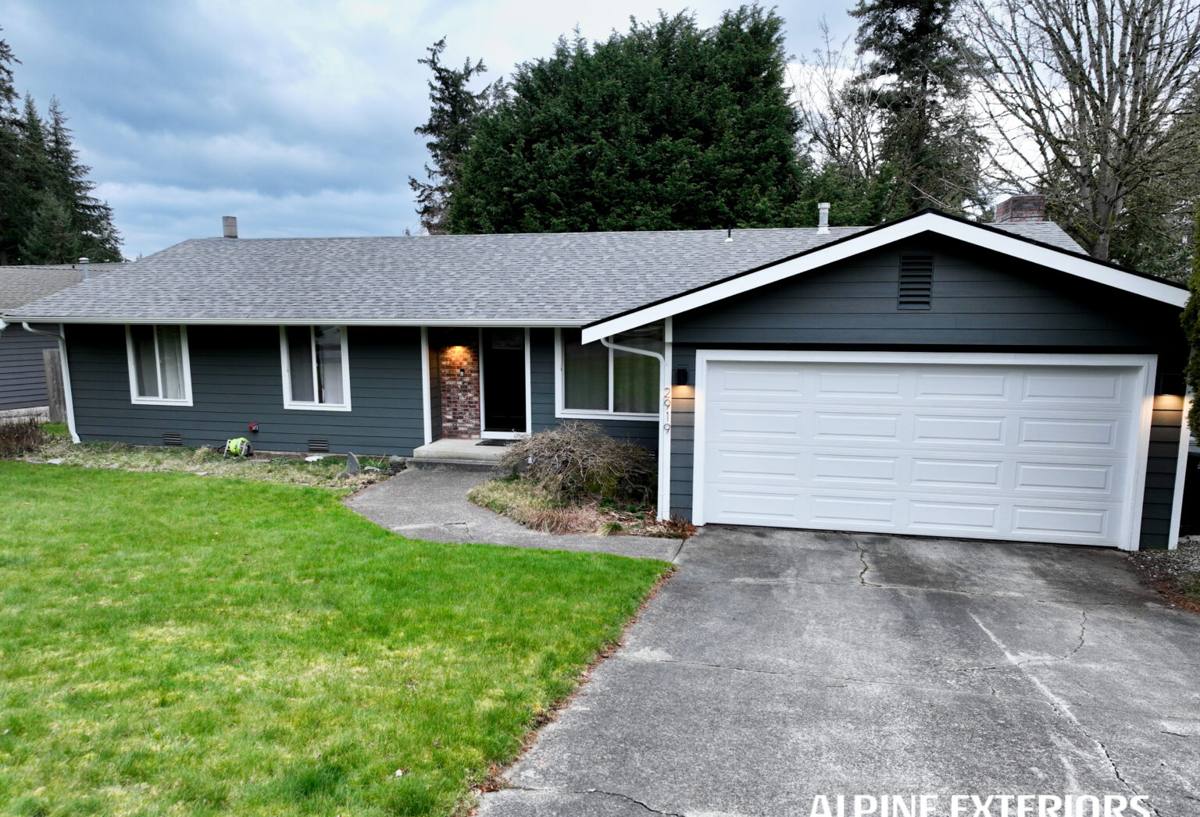
Darker ColorPlus tones can look striking against the grey Whatcom County sky, but darker colors absorb more heat and can be worth discussing against your home's sun exposure. Lighter and mid-tone colors also tend to show algae streaking less noticeably on shaded, north-facing walls, which is a real consideration on wooded or water-adjacent lots.
Our Process for a Lummi Nation Siding Project
- On-site assessment: we walk the exterior, check for existing moisture damage, note sun/shade and wind exposure on each elevation, and measure.
- Written estimate: product selection, color, scope of tear-off (if applicable), and a clear cost breakdown — no vague allowances.
- Tear-off and inspection: removing old siding lets us actually see the sheathing and framing underneath and catch hidden rot before it's covered back up.
- Weather barrier and drainage plane installation: the step that determines how the wall performs for the next 30+ years.
- Fiber cement installation: to manufacturer fastening, spacing, and clearance specifications, not shortcuts.
- Trim, flashing, and caulking: the detail work that keeps water out of joints and penetrations.
- Final walkthrough: we go over the finished work with you before calling the job done.
What Drives Cost on a Job Like This
| Factor | Why It Affects Cost |
|---|---|
| Home size and elevation count | More wall area and more complex rooflines mean more material and labor |
| Existing siding removal | Tear-off, disposal, and sheathing inspection add time versus a bare-wall install |
| Hidden moisture or rot damage | Discovered during tear-off; repair scope isn't known until the old siding is off |
| Trim and detail complexity | Multiple gables, dormers, or accent materials add labor beyond flat wall runs |
| Product line and profile | HardieShingle accents and custom trim cost more than straight lap siding |
| Site access | Waterfront and wooded lots can complicate staging and equipment access |
Because hidden damage is common on older homes in this climate, we don't give firm numbers until we've seen the wall in person — an estimate based on photos or square footage alone isn't reliable enough to be useful to you.
Maintaining Fiber Cement Siding in a Salt-Air, High-Moss Environment
James Hardie siding is low-maintenance compared to wood, but "low-maintenance" doesn't mean "no maintenance," especially this close to the water. A short annual routine keeps it performing the way it's supposed to for decades.
- Rinse siding annually with a garden hose to remove salt residue and airborne grime, especially on water-facing elevations.
- Check caulked joints around windows, doors, and trim once a year for cracking or separation, and have them resealed before gaps open up.
- Watch shaded and north-facing walls for early moss or algae growth and address it before it spreads or holds moisture against the surface.
- Trim back vegetation and tree limbs that keep any wall section shaded and damp longer than the rest of the house.
- Inspect fastener heads and trim corners periodically for early signs of rust staining, particularly closest to the water.
Why Hiring a Crew That Already Works This Area Matters
Siding installed to the letter of the manufacturer spec still needs to be adapted to the specific exposure of a given lot — how much direct wind a wall takes, how much shade it sits in, how close it is to salt water. A crew that regularly works Ferndale, Whatcom County, and the surrounding Lummi Nation area has already seen how homes in this specific exposure age over time, which elevations tend to develop moss first, and where moisture problems tend to hide behind older siding. That local pattern recognition is worth more than a national average install approach, and it's part of why we stay focused on this region rather than spreading thin across the state.
If your current siding is showing moss staining, cracked caulk lines, soft spots, or fastener rust, or if you're planning ahead for a replacement, we're happy to take a look and walk you through what we're seeing — no pressure, no obligation. Reach out for a free estimate using the form below.