 Ferndale Siding
 Siding Built for Where Lummi Nation Homes Actually Sit
Homes around Lummi Nation sit close to the water — Bellingham Bay, Lummi Bay, the Nooksack delta flats — which puts them in one of the toughest siding environments in Whatcom County. Salt-laden air off the bay accelerates corrosion on fasteners and trim, wind-driven rain finds every gap in a sloppy install, and the shaded, moisture-heavy winters here keep moss and algae growing on siding for months at a stretch. None of that is unusual for this part of the county. What matters is whether the siding on your house was actually specified and installed to handle it, or whether it was installed the same way a crew would install it in a dry inland subdivision.
We only install James Hardie fiber cement siding, and on Lummi Nation homes that choice is not cosmetic — it's a direct response to the conditions this area produces year-round. This page covers what that means in practice: what the climate does to siding here, what a correct installation looks like, and how we run the job from estimate to final walk-through.
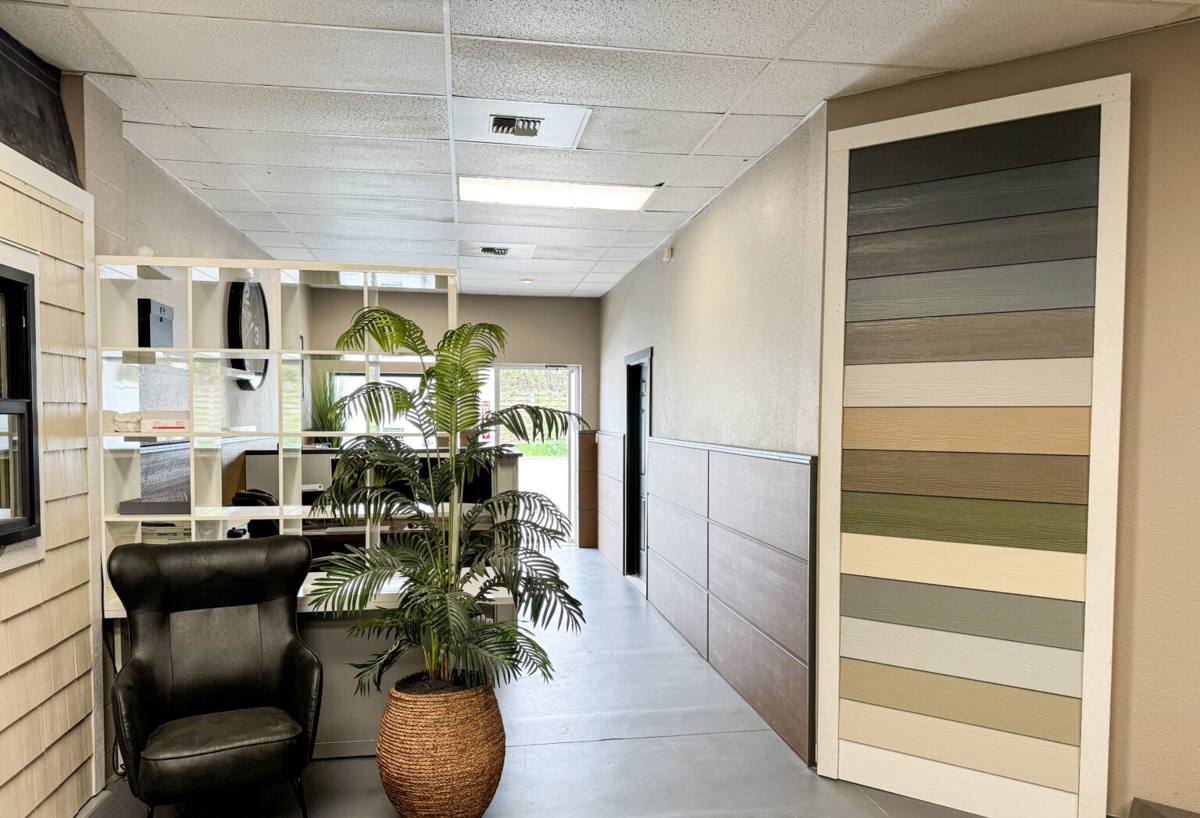
What Salt Air, Rain, and Moss Actually Do to Siding
Salt Air and Corrosion
Airborne salt from the bay settles on every exterior surface, including siding, trim, and — critically — the fasteners holding it on. Standard fasteners corrode faster in a marine-influenced environment like this, and once a fastener starts rusting, it can telegraph a rust streak through the siding face or lose holding power over time. This is why fastener spec isn't an afterthought on a Lummi Nation job; it's one of the first things we check.
Driving Rain and Water Intrusion
Storms off the water tend to come in sideways, not straight down. That means rain gets pushed up under laps, into unsealed joints, and behind trim that wasn't flashed correctly. A siding system can look fine from the curb for years while water is quietly working its way behind it — the damage shows up as rot, mold, or a soft spot in the wall sheathing long after the original install crew is gone.
Moss and Algae Season
Whatcom County's wet, mild winters give moss and algae a long window to establish themselves on shaded, north-facing, and tree-covered walls — common conditions around Lummi Nation's tree-lined lots. Some siding materials handle sustained moisture and organic growth far better than others. Untreated wood-based products can soften and swell where moss holds moisture against the surface; a factory-finished fiber cement product resists that far better, though even Hardie siding needs the same basic upkeep — occasional gentle washing — to look its best.
Why We Install Only James Hardie Fiber Cement Here
We made a standard, and we hold to it on every job, including Lummi Nation. James Hardie fiber cement is non-combustible, dimensionally stable in wet-dry cycling, and available in HZ5 formulations engineered for the kind of moisture exposure this region sees. The factory-applied ColorPlus finish is baked on under controlled conditions — not brushed on in the field — which gives it better adhesion and fade resistance than field-applied paint, and it comes with a real, transferable warranty backing both the substrate and the finish.
We don't install LP SmartSide, vinyl, Cemplank, Allura, primed spruce, or cedar, and we're upfront about why. Vinyl can warp and get brittle with age and temperature swings, and it doesn't hold paint if you ever want to change the color. Wood-based and engineered-wood products depend heavily on maintaining an intact paint or finish layer to keep moisture out — miss a repaint cycle in a wet climate like this and the material underneath starts to suffer. Cedar is a beautiful, legitimate material, but it demands consistent refinishing and is more vulnerable to the sustained moisture and moss conditions common here. Other fiber cement brands aren't bad products, but we've standardized on one system so our crews install it the same correct way every time, and so the warranty coverage is clean and consistent for every homeowner we work with.
What a Correct Installation Involves
Fiber cement siding performs the way it's supposed to only when the details underneath it are right. On a salt-air, high-rain site like Lummi Nation, we pay particular attention to:
- Weather-resistive barrier: A continuous, properly lapped water barrier behind the siding, with no gaps at penetrations or seams.
- Flashing at every transition: Windows, doors, decks, and roof lines all get flashed so driving rain sheds outward instead of tracking behind the siding.
- Correct fastener spec: Corrosion-resistant fasteners driven to Hardie's specification — proper depth, spacing, and placement matter as much as the fastener material itself.
- Proper clearances: Siding held clear of grade, roof lines, and decks so water and debris can't wick moisture into the bottom edge.
- Caulking and joint treatment: Butt joints and trim seams sealed per manufacturer spec, not just caulked over as an afterthought.
- Painted or factory-finished cut edges: Any field-cut edge gets sealed so it doesn't become the one unprotected spot on the wall.
Skip any one of these and the siding itself can be top quality and still fail early. This is where a lot of installation problems actually originate — not in the product, but in the details underneath it.
Our Process on a Lummi Nation Siding Installation
1. On-Site Assessment
We walk the exterior, check the current siding and sheathing condition, note sun/shade exposure and moss patterns on the walls, and look at how the house is currently handling water at rooflines, decks, and grade.
2. Product and Line Selection
We help you choose the right Hardie line, profile, and finish for the home — factoring in the site's salt-air and moisture exposure, HOA or neighborhood expectations if applicable, and your budget.
3. Tear-Off and Sheathing Check
Old siding comes off and we inspect the sheathing underneath. If there's rot or water damage from a prior installation, we flag it and address it before anything new goes up — covering a damaged wall with new siding just hides the problem.
4. Water Barrier and Flashing
New weather-resistive barrier and flashing go in at every window, door, and penetration before a single piece of siding is hung.
5. Installation to Manufacturer Spec
Siding, trim, and fasteners go in per James Hardie's published installation requirements — not shortcuts, not "close enough."
6. Final Walk-Through
We walk the finished job with you, point out what we did and why, and make sure you're clear on the basic care the siding needs going forward.
Cost Factors on a Lummi Nation Home
Every home is different, but these are the factors that most often move the price on a siding installation in this area:
| Factor | Why It Matters Here |
|---|---|
| Sheathing condition | Rot or water damage from prior water intrusion adds repair scope before new siding goes on |
| Home size and complexity | More corners, dormers, and trim detail means more labor and material |
| Hardie product line | Panel and lap styles, and HZ5 vs. standard formulations, vary in material cost |
| Site access | Waterfront and tree-lined lots can limit staging and scaffolding options |
| Trim and flashing scope | Full flashing correction on an older home adds labor but is not optional |
| Color and finish | Factory ColorPlus finishes vs. field-painted options affect material pricing |
We give straight, itemized estimates so you can see exactly where the cost comes from — no vague lump-sum numbers.
Why Local Experience with This Specific Area Matters
A crew that mostly works dry, inland neighborhoods can install siding that looks correct and still be underprepared for what a bay-adjacent site like Lummi Nation throws at a house. Knowing which walls will carry the heaviest moss load, how far driving rain actually travels up a wall in this area's storms, and which fastener and flashing details actually hold up near saltwater isn't something you learn from a spec sheet — it's something you learn by installing siding on homes in this exact environment, repeatedly, and seeing how it performs years later. We're based in Ferndale and work this part of Whatcom County regularly, which means the decisions we make on your job aren't generic — they're shaped by what actually holds up here.
Signs Your Current Siding Isn't Keeping Up
- Soft or spongy spots when you press on the siding, especially near the bottom edge or below windows
- Persistent moss or algae that comes back within weeks of cleaning
- Visible rust streaking below fasteners or trim nails
- Cracked, buckled, or separating panels or lap joints
- Peeling or bubbling paint that keeps recurring in the same spots
- Rising energy bills with no other clear explanation, which can point to compromised wall performance
Any of these are worth a professional look before they turn into a sheathing or framing repair.
Get a Straight Answer on Your Home
If you're weighing a siding replacement for a Lummi Nation home, we'll come take a real look — at the current siding, the sheathing underneath, and the specific exposure your walls get — and give you a clear, itemized estimate with no pressure to sign anything on the spot. Reach out below to schedule a free estimate.