 Ferndale Siding
 Siding Repair Built for Lynden's Weather, Not Just the Damage You Can See
Homes in and around Lynden take a steady beating from Whatcom County weather. You're close enough to the water to catch salt-laden air, far enough inland to still get pounded by driving winter rain, and surrounded by enough tree cover and damp shade that moss finds a foothold on north- and west-facing walls for a good chunk of the year. None of that is dramatic on its own. What it does over time is quietly work its way into seams, laps, and fastener points until a small problem becomes a rot problem. Siding repair here isn't just patching what looks bad — it's figuring out why that spot failed and making sure the fix doesn't fail the same way in three years.
We work on homes throughout the Ferndale and Lynden area regularly, which means we're not guessing at how local siding ages. We know which elevations take the worst of the weather, which product types tend to show trouble first, and what a repair actually needs to hold up through another wet season.
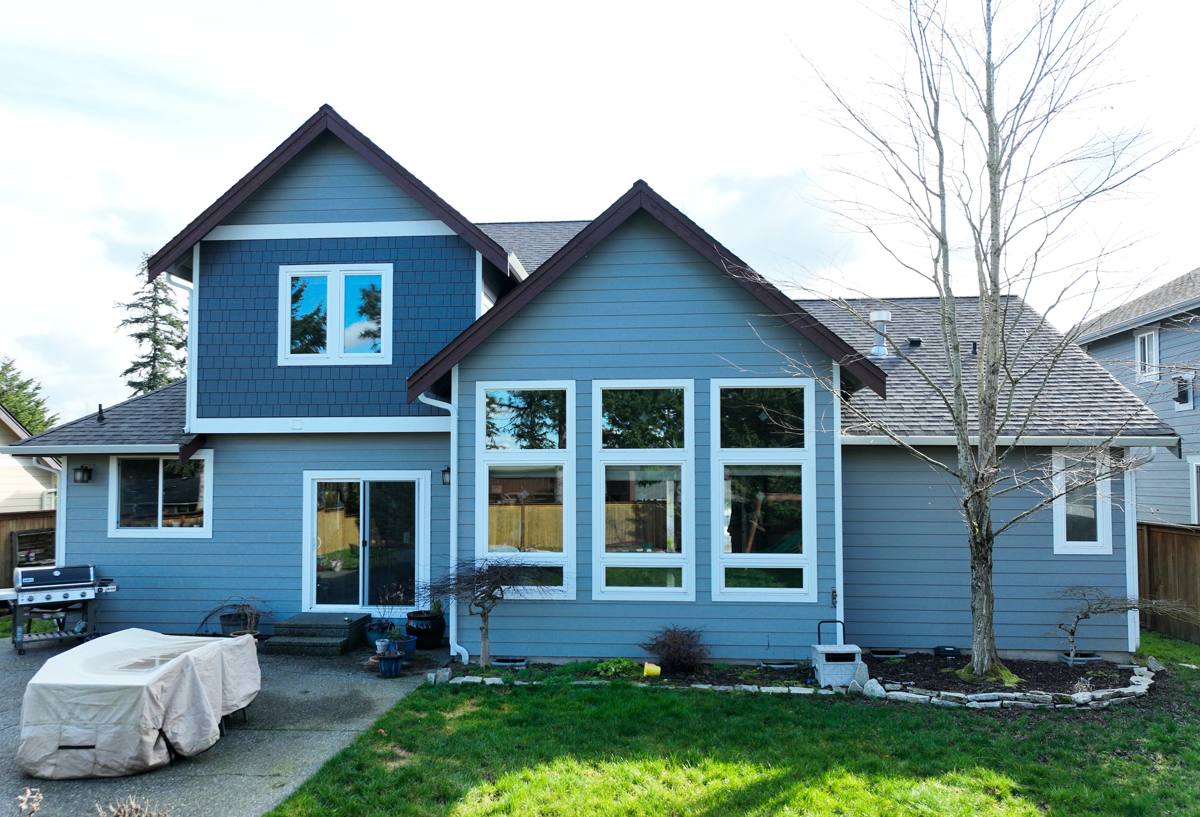
Common Signs a Lynden Home Needs Siding Repair
Most siding problems don't announce themselves. They show up as small, easy-to-dismiss details that point to something bigger underneath. Homeowners who catch these early save real money.
- Soft or spongy spots when you press on the siding, especially near the bottom courses or around window trim
- Visible cracking, splitting, or bubbling paint on individual boards
- Persistent moss or algae streaking on shaded or north-facing walls that keeps coming back after cleaning
- Gaps opening up at seams, corners, or where siding meets trim, flashing, or the foundation
- Discoloration or dark staining that suggests water is tracking behind the surface instead of running off it
- Warping, buckling, or boards that no longer sit flat against the wall
- Increased drafts or a musty smell near exterior walls inside the house
Any one of these can be minor. Several together, or one that's been ignored for a season or two, usually means moisture has already gotten past the surface.
What's Really Happening Behind Damaged Siding
Siding is the first line of defense, but it's not the only layer doing the work — there's a weather-resistive barrier, flashing, and sheathing behind it that all depend on the siding staying intact and properly lapped. When siding cracks, gaps, or lets moisture sit against it for extended periods, water finds its way behind that first layer. In a climate like ours, where driving rain is common and things don't dry out quickly, that trapped moisture doesn't evaporate — it sits, and it starts breaking down sheathing and framing before it ever shows up as a visible problem on the wall.
This is why we don't treat siding repair as a cosmetic fix. Before we replace a single board, we check what's happening behind it. A repair that ignores the substrate underneath is a repair that gets redone in a couple of years — and by then the damage is usually worse and more expensive.
Why Moss Season Matters More Than People Think
Moss itself doesn't eat through siding, but it holds moisture against the surface far longer than open air would, and its root structure works into any existing crack or seam. On shaded Lynden lots with mature trees, moss can hold a wall damp for weeks at a time during our wet months. That constant dampness is what accelerates rot at fastener points and butt joints — the exact spots a repair needs to address, not just the moss itself.
Repair vs. Replacement: How We Decide
Not every damaged section needs a full re-side, and not every "repair job" is actually a good use of money. We look at the scope, the age and condition of the surrounding siding, and what's happening structurally before recommending either path.
| Factor | Points Toward Repair | Points Toward Replacement |
|---|---|---|
| Extent of damage | Isolated to one or two elevations or sections | Spread across most of the home |
| Underlying sheathing | Dry, solid, no rot found on inspection | Soft, delaminated, or rotted in multiple spots |
| Age of existing siding | Newer product, still within its expected service life | Original siding nearing or past end of life |
| Product type | Matching material still available or a clean transition is possible | Discontinued product or a poor match to existing siding |
| Root cause | Isolated issue (one bad flashing detail, one damaged board) | Systemic issue (widespread moisture intrusion, failed original installation) |
We'll walk you through which side of that table your home falls on, in plain terms, before we quote anything.
What a Correct Siding Repair Actually Involves
A repair that's done right is more than swapping a bad board for a new one. Depending on what we find, the scope typically includes:
- Removing damaged siding carefully to expose the sheathing and weather barrier underneath
- Inspecting for rot, soft spots, or compromised framing — and addressing it before anything new goes back on
- Checking and correcting flashing details, especially around windows, doors, and butt joints, since bad flashing is behind a large share of the repairs we see
- Restoring or replacing the weather-resistive barrier where it's been compromised
- Installing new siding with correct fastening, clearances, and caulking practices — not just matching the look of what was there
- Priming and finishing cut edges so the repair doesn't become the next failure point
Skip any one of those steps and you've covered up the problem instead of fixing it. That's the difference between a repair that lasts and one that's a temporary patch.
Why We Repair With James Hardie Fiber Cement — And Nothing Else
When a repair calls for new material, or when repeated repairs signal it's time to talk about a larger re-side, we only install James Hardie fiber cement siding. We don't carry vinyl, LP SmartSide, cedar, primed spruce, or other fiber cement brands. That's a deliberate standard, not a sales pitch.
In a climate that combines salt air, sustained rain, and long stretches of damp shade, the material matters as much as the workmanship. Fiber cement is non-combustible and dimensionally stable, so it doesn't swell, cup, or rot the way wood-based products can when moisture gets past the surface repeatedly. Hardie's ColorPlus factory finish is baked on under controlled conditions, which holds up better against the kind of moss, mildew, and UV exposure this area sees than a field-applied paint job. And Hardie's HZ5 product line is engineered specifically for wetter, harsher climates like ours — it's built for exactly the conditions Lynden homes face every winter.
We're not going to tell you every other siding product is worthless — vinyl and engineered wood have their place and their fans. But for the repairs and replacements we stand behind, we've seen enough of what holds up in this climate and what doesn't to commit to one system and do it consistently well.
Matching New Hardie Siding to Existing Siding
If your home already has Hardie siding, a repair section is usually a clean match — same profile, same ColorPlus color line, minimal blending work. If your home has a different product, we'll be upfront about how a Hardie repair section will look next to what's there, and whether a broader replacement makes more visual and practical sense than patching around a mismatch.
Our Process for Lynden Siding Repair Calls
We keep the process straightforward because homeowners deserve to know what's happening to their house and why.
- Inspection: We look at the damaged area and the surrounding siding, not just the spot you called about, since related issues often hide nearby.
- Diagnosis: We identify the actual cause — flashing failure, trapped moisture, aging material, impact damage — and explain it in plain terms.
- Honest scope: We tell you if it's a simple repair, a larger repair, or if replacement is genuinely the smarter long-term move, even if that's not the answer that gets us the bigger job.
- The work: Removal, structural check, correction of the underlying issue, and installation done to manufacturer spec — not shortcuts to make the visible problem disappear.
- Follow-up: We stand behind the work and are reachable if something doesn't look or perform the way it should.
Checklist: What to Ask Before Hiring a Siding Repair Contractor
Whether you call us or someone else, these questions separate a real repair from a cosmetic patch:
- Will you inspect the sheathing and framing behind the damaged siding, or just replace the visible boards?
- What caused this damage, and how will the repair prevent it from happening again in the same spot?
- Are you checking and correcting flashing, or just caulking over what's there?
- What siding product are you using for the repair, and why?
- Is the crew doing the repair the same crew that will stand behind it if something goes wrong later?
- Do you work in this area regularly, or is this a one-off job for you?
Why Hiring a Crew That Already Works Lynden Matters
A siding repair contractor who only occasionally works this side of Whatcom County is guessing at things a local crew already knows — which elevations take the worst wind-driven rain, how fast moss regrows on shaded lots near the river bottoms and tree lines, and which older subdivisions have siding products that are difficult to match today. That local knowledge shows up in fewer surprises during the work and a repair that's sized correctly the first time, instead of a return trip six months later for a problem that should have been caught during the initial inspection.
We treat every repair call in Lynden the same way we'd want a contractor to treat our own home: find the real cause, fix it correctly, and use a material that's actually built for what this area throws at a house year after year.
If you've noticed soft spots, cracking, persistent moss, or gaps in your siding, we're happy to take a look and give you a straight answer about what it needs. Reach out for a free, no-pressure estimate using the form below.