 Ferndale Siding
 New-Construction Windows in Marietta: Built for the Site, Not Just the Opening
Marietta sits close enough to Bellingham Bay and the Nooksack estuary that homes here take a different kind of weathering than houses a few miles inland. If you're building new or adding a room that needs new-construction windows (as opposed to pocket replacements dropped into an existing frame), the window itself is only half the job. The other half is how it's tied into the wall assembly before siding ever goes on — flashing, weather-resistive barrier (WRB) integration, and sill drainage. Get that wrong and you won't see the problem for a year or two, by which point it's inside the wall, not on top of it.
We install new-construction windows for homes and additions in the Marietta area regularly, and most of the failures we get called to fix later trace back to shortcuts taken during this exact stage — not to a bad window.
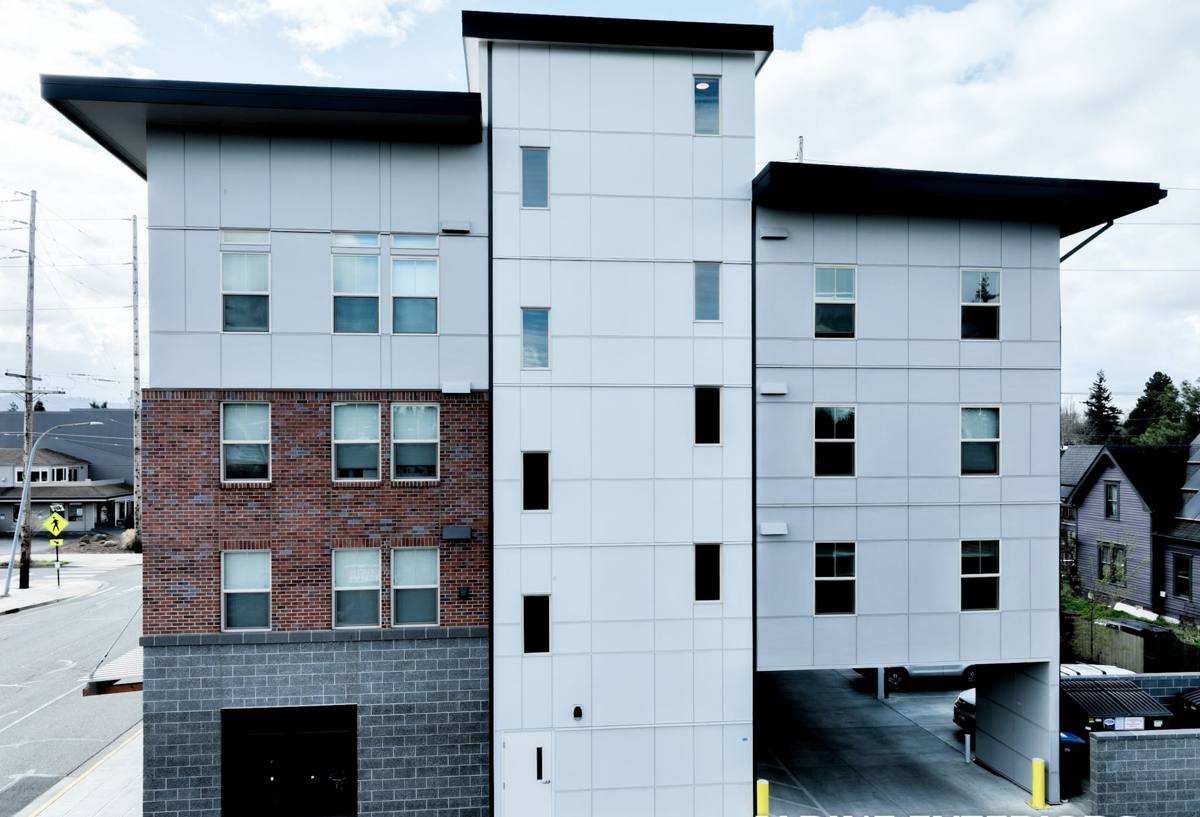
Why Marietta's Climate Changes the Job
Three things define window performance out here, and they're all present in Marietta:
Salt Air
Proximity to the water means airborne salt settles on exterior surfaces year-round. It accelerates corrosion on hardware, fasteners, and lower-grade metal flashing. It also degrades cheap sealants faster than the manufacturer's stated service life would suggest, especially on south and west exposures that also take direct weather.
Driving Rain
Whatcom County doesn't just get a lot of rain — it gets wind-driven rain off the Strait and the Sound, which pushes water sideways into wall assemblies rather than letting it run straight down. A window that's fine in a calm-rain climate can leak here if the sill pan or flashing laps aren't sequenced correctly, because wind pressure can force water uphill and sideways at the sill and jambs.
Long Moss Season
Cool, damp conditions persist for most of the year in this part of Washington. Anywhere water sits or drains slowly — window sills, trim ledges, the tops of exterior casing — grows moss and algae if it isn't detailed to shed water quickly. That's cosmetic at first, but trapped moisture behind growth eventually finds its way into caulk joints and wood trim.
None of this means Marietta needs exotic products. It means the installation details that are "optional" in a drier, calmer climate are not optional here.
What a Correct New-Construction Window Install Actually Involves
New-construction windows have a nailing fin around the perimeter, which gets fastened to the sheathing before the WRB and siding go on. That gives us the chance to build proper drainage into the wall from the start — something a replacement/pocket install can't fully do since it works inside an existing frame. On new construction, we control the whole path water can take, which is the real advantage of doing it right the first time.
- Sill pan flashing — a sloped, sealed pan under the window opening so any water that gets past the window has a way out, not a way in.
- WRB integration in the correct shingle-lap order — housewrap and flashing tape lapped so water always sheds onto the layer below it, never behind it.
- Corner and jamb flashing that resists both gravity-fed water and wind-driven water pushed sideways.
- Head flashing with a drip edge that kicks water away from the top of the window rather than letting it run down the face of the wall.
- Correct shimming and fastening so the frame isn't racked, which affects both operation and long-term seal integrity.
- Backer rod and sealant at the interior and exterior, not just a bead of caulk smeared over the trim.
Skip any one of these steps and the window itself becomes almost irrelevant — water will find the gap in the sequence, not the gap in the glass.
New-Construction vs. Replacement Windows: Which One Are You Actually Doing?
Homeowners often use "replacement windows" and "new-construction windows" interchangeably, but they're different products installed differently. If you're building new, doing an addition, or removing siding down to the studs, new-construction is almost always the right call because it lets us rebuild the drainage plane properly.
| Factor | New-Construction Window | Replacement (Pocket) Window |
|---|---|---|
| Installed when | Before siding/trim, into open framing | Into an existing, intact frame |
| Flashing control | Full — sill pan, WRB laps, head flashing all built fresh | Limited — relies on existing frame's condition |
| Best for | New builds, additions, full siding tear-off jobs | Swapping old windows without disturbing siding |
| Long-term moisture control in driving rain | Strongest, since drainage is rebuilt from scratch | Only as good as the existing opening |
| Disruption | More involved — exterior trim and siding tie-in required | Less invasive, faster |
If your project already involves open wall framing, new-construction windows aren't the "extra" option — they're the correct one. Trying to save a step by using replacement-style units in an open-frame situation usually costs more later in callbacks and repairs.
Choosing Window Materials and Glass for This Exposure
We don't push one brand over another — the right choice depends on your budget, exposure, and how much upkeep you want to take on. A few honest trade-offs worth knowing before you decide:
Frame Material
Vinyl frames handle Whatcom County's moisture well and need the least maintenance, which is why they're common on both new builds and additions here. Fiberglass costs more but resists warping and holds paint better if you want a specific trim color long-term. Wood and wood-clad windows look great but need real upkeep in a climate that's damp most of the year — if that maintenance schedule isn't realistic for your household, we'll say so rather than sell you a product that'll disappoint you in year five.
Glass Package
For homes facing prevailing weather off the water, a good low-E, argon-filled dual-pane unit is the baseline we recommend — it cuts condensation risk on cold, damp mornings and helps with energy costs. Triple-pane can make sense for west- and north-facing exposures that take the brunt of wind and rain, but it's a cost-versus-benefit conversation we'll walk through with your specific site, not a blanket upsell.
Hardware
Given the salt air, we pay attention to hardware finish and fastener material at every install — cheap fasteners are the first thing to show corrosion, and once a fastener fails, the flashing it's holding usually goes with it.
Our Process for Marietta New-Construction Window Installs
- Site assessment. We look at your exposure — which walls face prevailing wind and rain, whether you're near enough to the water for salt exposure to matter, and how the roofline and grading affect water flow around openings.
- Coordination with your framing timeline. New-construction windows go in at a specific point in the build sequence. We coordinate with your builder or work directly if you're managing the project, so window installation lines up correctly with sheathing, WRB, and siding steps.
- Flashing and drainage plane build-out. Sill pans, jamb and head flashing, and WRB lap sequencing happen before the window ever gets set.
- Window setting, shimming, and fastening. Frames get leveled, squared, and fastened per manufacturer spec, then checked for operation before trim goes on.
- Sealant and trim. Interior and exterior sealant, then trim and casing, detailed to shed water rather than trap it.
- Final walkthrough. We check operation, seals, and finish with you before calling the job done.
Why It Matters That We Already Work in Marietta
Marietta isn't a generic zip code to us. We already know which exposures around the neighborhood take the worst of the wind-driven rain off the water, and we've seen firsthand what happens when flashing details get rushed in this specific climate — moss buildup on poorly-sloped sills, corroded fasteners on lower-grade hardware, and water staining inside walls that traces back to a WRB lap that ran the wrong direction. That local pattern recognition means fewer surprises on your job and a install crew that isn't learning the local climate at your expense.
Before You Sign: A Practical Checklist
- Confirm whether your project needs new-construction or replacement windows — don't let a contractor default to whichever is easier for them.
- Ask specifically how sill pan flashing and WRB lap sequencing will be handled, not just "we'll flash it properly."
- Get the glass package (dual-pane vs. triple-pane, low-E coating, argon fill) spelled out in writing, not just "energy efficient windows."
- Ask about fastener and hardware material given the salt air exposure.
- Confirm who coordinates timing with your framer or builder so windows go in at the right stage.
- Ask what the warranty covers — the window unit itself versus the installation and flashing work are usually two separate warranties.
What to Expect After Installation
A correctly installed new-construction window in this climate should need very little from you beyond normal cleaning and an occasional visual check of exterior sealant joints, especially after the first full wet season. If you notice moss or algae building up faster on one window than others, or any staining on interior trim, that's worth a quick look — usually it's a maintenance item, not a structural one, but catching it early is what keeps it that way.
If you're planning new construction or an addition in Marietta and want windows installed the right way from the framing stage forward, we're happy to walk the site with you and give you a straightforward, no-pressure estimate using the form below.