 Ferndale Siding
 Why Windows Wear Out Faster in Marietta
Marietta sits close enough to the water that homes here take on a different kind of weathering than houses further inland. Salt-laden air off the bay works its way into window hardware, fasteners, and metal components year-round, while Whatcom County's long wet season keeps wood trim, sills, and frame joints damp for months at a stretch. Add a moss season that runs longer here than in drier parts of the state, and you've got a climate that's genuinely hard on window assemblies — not because any one factor is extreme, but because the combination rarely lets up.
Older windows in this area often show their age through swollen sashes, corroded balances, fogged glass, and soft trim long before a homeowner in a milder climate would expect to replace anything. That's not a defect in how the house was built — it's what driving rain and salt air do to a window over fifteen or twenty years without the right materials and detailing.
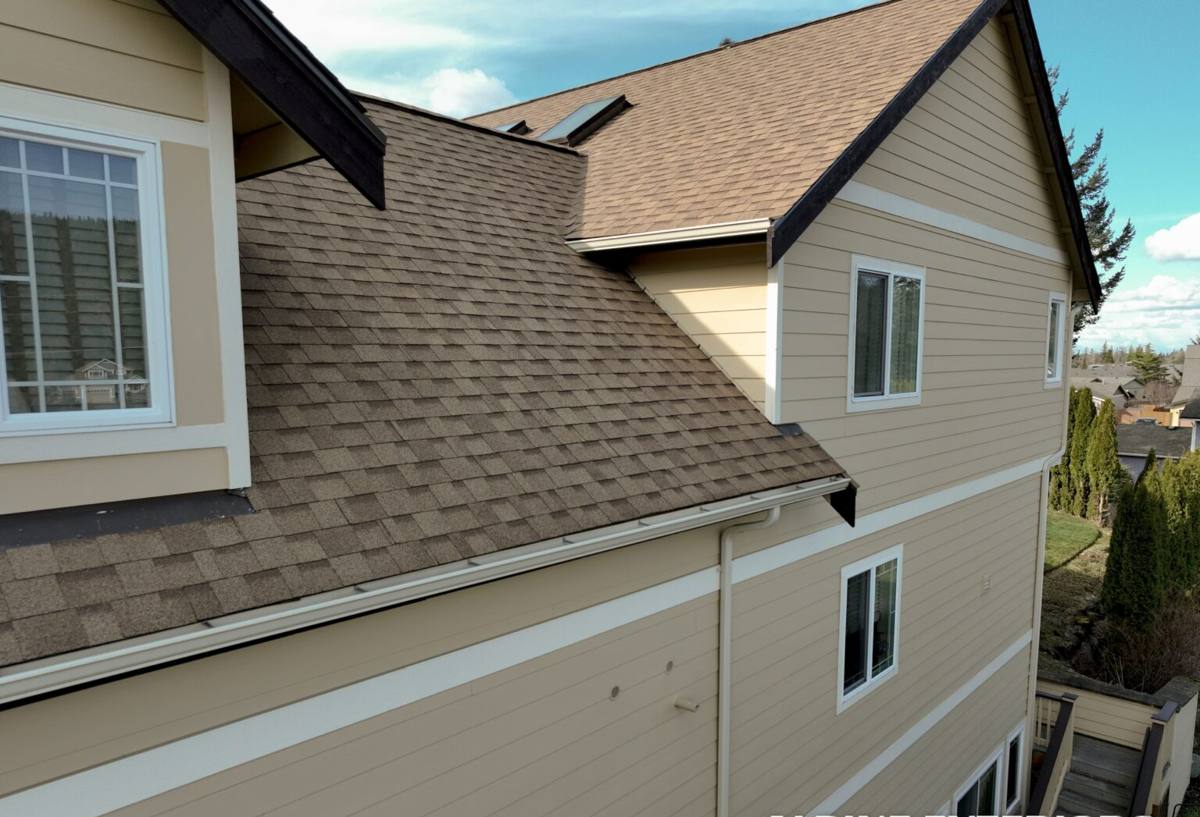
Signs a Marietta Home Actually Needs Replacement
Not every drafty window needs full replacement — sometimes a repair, new weatherstripping, or reglazing solves the problem. But there are signs that point to the frame or seal itself failing, which repair can't fix:
- Fogging or a visible haze between panes — the seal on the insulated glass unit has failed and moisture is trapped inside
- Sashes that stick, drag, or won't stay open without a prop
- Soft or spongy wood at the sill or lower corners of the frame
- Visible gaps between the frame and siding, or daylight around the trim
- A noticeable draft or cold spot even with the window fully latched
- Paint that keeps failing on the frame no matter how often it's touched up
- Condensation forming on the interior glass or sill during cold, wet stretches
If you're seeing two or more of these on the same window, replacement is usually the more sensible investment than another round of repairs.
What a Correct Window Replacement Job Involves
The window unit itself is only part of the job. In a climate like this, the installation details matter as much as the product — arguably more, since a good window installed poorly will fail at the seams long before the glass or frame gives out.
Removing the old window without damaging what's around it
Old trim, siding, and sheathing around the opening get inspected as soon as the window is out. This is often the first real look at what's been happening behind the frame — and in older Marietta homes, it's not unusual to find soft sheathing or hidden rot that never showed on the interior side.
Flashing and moisture management
This is the step that determines whether a window lasts twenty years or leaks within five. Proper installation means flashing tape or membrane integrated correctly with the house's weather-resistive barrier, a sloped sill pan to direct any water that does get past the window back outside, and careful sequencing so water always drains down and out — never behind the siding. Skipping or rushing this step is the single most common cause of window-related rot we see in this region.
Air sealing and insulation
The gap between the new frame and the rough opening needs to be sealed with the right materials — not just stuffed with fiberglass, which does little to stop air movement. Low-expansion foam or backer rod and sealant, sized correctly for the gap, keeps drafts out without bowing the frame.
Finish work
Trim, caulking, and paint or stain get finished to shed water, not trap it. That includes back-caulking trim boards before installation and leaving the bottom edge of exterior trim unsealed where drainage is needed, rather than sealing every joint solid.
Choosing Materials That Hold Up to Salt Air and Rain
Material choice matters more here than in a drier, inland climate. We steer homeowners toward products with a track record in coastal and marine-influenced conditions rather than whatever's cheapest at a big-box store, because the maintenance burden and failure modes differ a lot by material.
| Frame Material | Moisture & Salt Air Performance | Maintenance Needs | Best Fit |
|---|---|---|---|
| Vinyl | Good — won't rot or corrode; UV-stable formulations hold color well | Low; occasional cleaning | Most Marietta homes on a value-to-performance basis |
| Fiberglass | Very good — dimensionally stable in temperature swings, resists moisture intrusion | Low | Larger openings, homes wanting a slimmer sightline |
| Aluminum | Prone to corrosion and condensation in salt air unless thermally broken and coated well | Moderate to high | Only with marine-grade finishes; generally not our first recommendation here |
| Wood / Wood-Clad | Attractive but vulnerable at joints and end grain if the cladding or finish is breached | High; regular inspection and refinishing | Homeowners prioritizing a specific historic or interior look who accept the upkeep |
We're not against wood or aluminum windows on principle — both have their place. But we set expectations honestly: in a marine climate with this much sustained moisture, they demand more upkeep to avoid the exact failures — soft wood, corroded hardware, failed seals — that bring homeowners to us for replacement in the first place.
Glass packages worth asking about
Beyond the frame, the glass package affects comfort and condensation resistance. Double-pane, argon-filled units with a Low-E coating are a sensible baseline for this region; homeowners on the water side of Marietta or with west- or south-facing exposure to driving rain sometimes step up to a higher-performance coating or triple-pane unit, particularly on walls that take the brunt of storms off the bay.
Our Window Replacement Process
- On-site assessment — we look at every window being considered, check for hidden moisture or rot around the openings, and talk through which ones genuinely need replacement versus repair.
- Measuring and product selection — exact measurements for each opening, and a walkthrough of material, glass package, and style options based on your home and budget.
- Written estimate — a clear, itemized quote before any work starts, with no surprise add-ons once the crew is on site.
- Removal and inspection — old windows come out carefully, and we flag any sheathing or framing damage found before closing anything up.
- Installation — flashing, air sealing, and the new window set to manufacturer specifications and adjusted for square, level, and plumb.
- Finish and cleanup — trim, caulking, and touch-up work completed, job site cleaned, and old windows hauled away.
- Final walkthrough — we check operation on every window with you before calling the job done.
What Affects the Cost of a Window Replacement Project
Pricing on window replacement varies a lot from house to house, and honestly, anyone quoting a firm number sight unseen is guessing. What we can tell you is what actually moves the price up or down:
| Factor | Why It Matters |
|---|---|
| Number of windows | Per-unit cost drops somewhat with volume, but total project cost scales with count |
| Frame material | Fiberglass generally costs more than vinyl; wood-clad more than either |
| Glass package | Higher-performance coatings and triple-pane glass add cost but improve comfort and efficiency |
| Opening condition | Hidden rot or sheathing damage found during removal adds repair work before the new window can go in |
| Window size and type | Large picture windows, bays, and custom shapes cost more than standard double-hung or slider sizes |
| Access and site conditions | Second-story windows or difficult access can add labor time |
We give straightforward, itemized estimates so you can see exactly what's driving the number — not a vague lump sum.
Why Hiring a Crew That Already Works in Marietta Matters
Window replacement isn't a one-size-fits-all trade. A crew that mostly works inland, drier climates may not think twice about flashing details or drainage gaps that are non-negotiable this close to the water. We work throughout Ferndale and the surrounding Whatcom County communities, including Marietta, so we've seen firsthand how salt air and sustained rain affect window installations over time — what fails first, what holds up, and where corners get cut on jobs that later need to be redone.
That local experience also means fewer surprises during the estimate. We know what to expect when we open up an older wall in this area, and we price and plan accordingly rather than discovering problems mid-job and scrambling.
Maintaining New Windows Through the Wet Season
A correctly installed window still benefits from basic upkeep, especially through the wetter months. A short annual checklist goes a long way:
- Clear debris and moss from window sills and tracks before fall rains set in
- Check exterior caulking each year for cracking or gaps and re-caulk as needed
- Wipe down hardware periodically to keep salt residue from building up on tracks and locks
- Test operation each season — sashes that start sticking can indicate swelling or a developing issue
- Keep gutters and downspouts clear so water isn't sheeting down over window heads
- Inspect interior sills after heavy storms for any sign of moisture intrusion
None of this takes much time, but it catches small problems — a failing seal, a gap in caulk — while they're still cheap and easy to fix.
Get a Straightforward Estimate
If your windows in Marietta are drafty, fogged, sticking, or just past their useful life, we're happy to take a look and give you an honest assessment — no pressure, no upsell. Fill out the form below to schedule a free estimate and find out what your home actually needs.